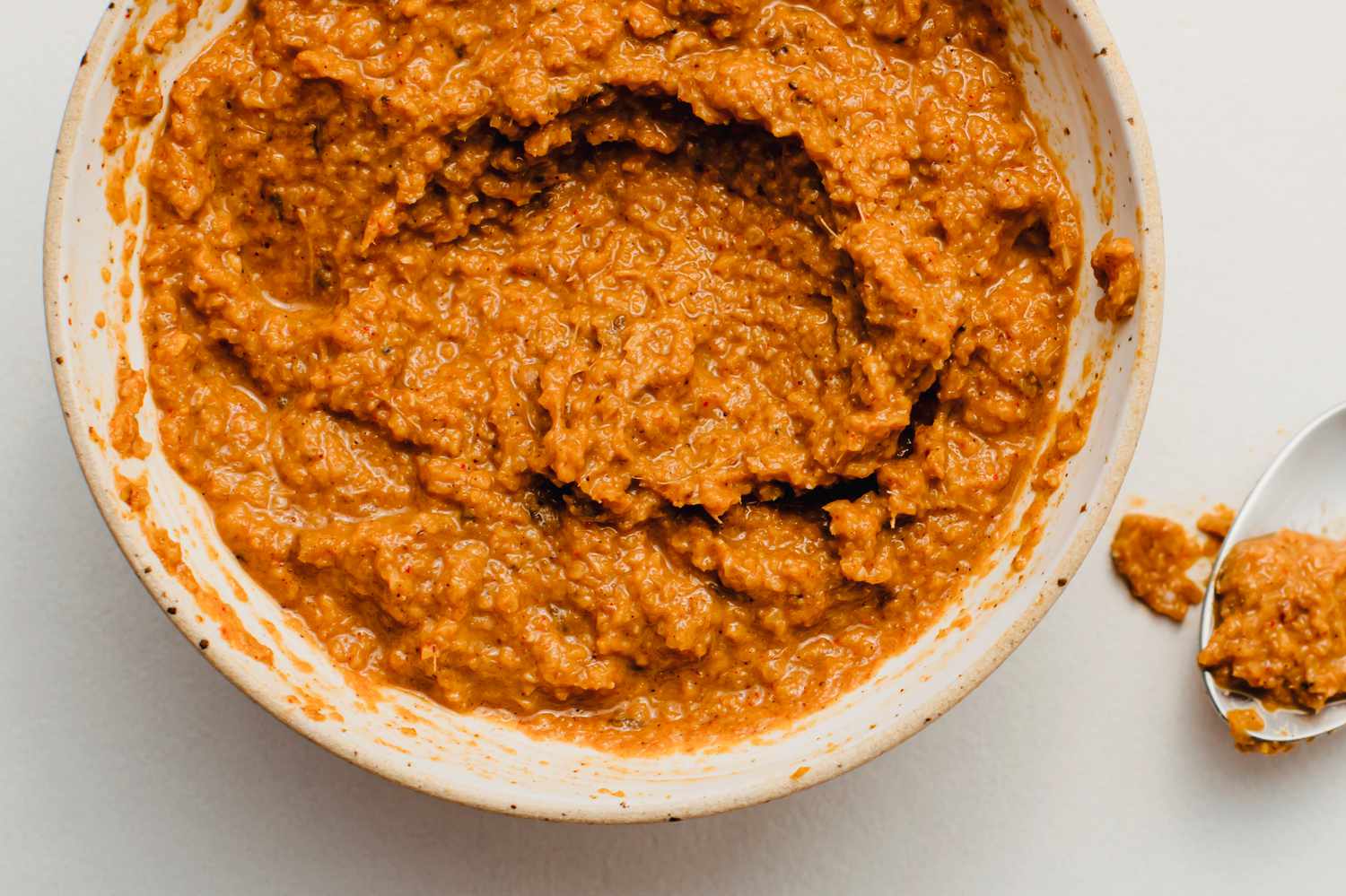
Massaman Curry Paste
Massaman is the curry that came with Persian and Muslim traders centuries ago and stayed in southern Thailand. It's slower than the other Thai curries (a proper hour-and-a-half stew), and the spice profile is different too: cardamom, cinnamon, cloves and star anise alongside the usual aromatics. Best made the day before; it's even better warmed up.
Overview
Massaman (kaeng matsaman, "Muslim curry") arrived in southern Thailand from Persian-Muslim traders in the 17th century. The paste blends Thai aromatics (lemongrass, galangal, shallots, garlic) with classical Persian/Indian whole spices (cardamom, cinnamon, cloves, star anise, nutmeg, mace). The result is unlike any other Thai curry: deep, warm-spiced, almost-Indian in profile but with the unmistakable Thai underpinnings of fish sauce, palm sugar, lime and coconut.
The cooking is also different. Where green and red curries plate in 10 minutes, massaman is a slow-cooked stew: tougher cuts of meat (beef shoulder, lamb leg) braised for 60-90 minutes. Potatoes, onions and peanuts go in. The finished dish is rich, sticky, and best made the day before to deepen.
This is the only Thai curry that improves overnight in the fridge.
The Recipe
For about 200 g of paste:
Ingredients
- 6-8 dried red chillies (mild; about 25 g)
- 2 stalks lemongrass (bottom 10 cm, sliced)
- 30 g fresh galangal
- 8 garlic cloves
- 6 large shallots (about 150 g; massaman uses more than green/red)
- 4 kaffir lime leaves
- 8 green cardamom pods (seeds only)
- 1 stick cinnamon (about 5 cm, crushed)
- 4 cloves
- 1 small piece star anise (1 point)
- 1 teaspoon nutmeg (grated)
- 1 teaspoon mace
- 1 tablespoon coriander seeds
- 1 teaspoon cumin seeds
- 1 teaspoon white peppercorns
- 1 tablespoon shrimp paste
- 1 teaspoon salt
Method
- Roast the shallots and garlic. Wrap unpeeled shallots and garlic cloves in foil; roast at 200 C for 30 minutes. The roasting deepens the flavour; this is unique to massaman.
- Soak chillies in just-boiled water for 20 minutes. Drain.
- Toast whole spices. Cardamom seeds, cumin, coriander, peppercorns, cinnamon shards, cloves, star anise: 60-90 seconds in a dry pan. Grind to powder.
- Pound the paste. Lemongrass, galangal, kaffir lime, salt first. Roasted shallots and garlic (peeled now), then chillies, then the ground spices, then shrimp paste and nutmeg.
Store: 2 weeks fridge, 3 months freezer.
The Curry (Massaman Beef)
The signature massaman dish. Beef chuck or shoulder slow-cooked in coconut milk with potatoes, peanuts and tamarind.
Ingredients
- 3-4 tablespoons massaman paste
- 800 g beef shoulder (cubed in 4 cm pieces)
- 400 ml coconut milk (full-fat)
- 200 ml chicken stock or water
- 500 g new potatoes (halved or quartered if large)
- 2 medium onions (chunked)
- 1 stick cinnamon
- 4 cardamom pods (bruised)
- 2 bay leaves
- 80 g roasted peanuts (unsalted)
- 2 tablespoons fish sauce
- 2 tablespoons palm sugar
- 2 tablespoons tamarind paste (or juice of 1 lime)
- Salt to taste
Method
- Heat 2 tablespoons oil in a heavy casserole pot. Sear the beef in batches until browned on all sides (do not crowd). Set aside.
- Add half the coconut milk to the pot. Cook over medium-high heat for 2-3 minutes until the cream "cracks" (oil rises to the surface).
- Add the paste. Fry for 3-4 minutes, stirring constantly. The mixture darkens and becomes intensely fragrant.
- Return the beef to the pot. Stir to coat in the paste.
- Add the remaining coconut milk, stock or water, cinnamon, cardamom and bay leaves.
- Bring to a simmer. Cover. Cook on the lowest heat for 60 minutes.
- Add the potatoes and onions. Stir. Cover again.
- Cook another 30 minutes, until the beef is tender (it should fall apart with a fork) and the potatoes are cooked through.
- Stir in fish sauce, palm sugar, tamarind paste. Cook another 5 minutes.
- Add the peanuts. Stir. Taste; adjust salt, sweet, sour.
- Off heat, let stand 10 minutes before serving over jasmine rice.
To make ahead
Massaman improves overnight. Make the day before, cool, refrigerate. Reheat gently the next day; the flavours have melded and deepened.
Why Massaman Is Different
- Slow-cooked, not fast-stir-fried. Other Thai curries take 10 minutes; massaman takes 90 minutes plus.
- Tougher meat cuts. Beef shoulder, lamb shoulder, lamb shanks. The long cook tenderises them.
- Whole spices. Cardamom pods, cinnamon stick, bay leaves stay in the curry during cooking. They go in WHOLE, not just as paste components.
- Tamarind, not lime. The sour element is tamarind. Older recipes use both.
- Peanuts. A handful of crushed roasted peanuts stirred in late. Texture and flavour.
- Potatoes are mandatory. Massaman without potato is incomplete.
Variations
Massaman Lamb
The original Persian-Muslim recipe was probably lamb. Use boneless leg of lamb or shoulder, cubed. Same method as beef.
Massaman Chicken (the Quick Version)
Boneless chicken thigh, cubed. Reduces cooking time to 35 minutes total (no slow-cook needed). Some say this isn't really massaman; it's still excellent.
Pumpkin Massaman (Vegetarian)
Replace meat with chunks of butternut squash or kabocha pumpkin. Add 200 g firm tofu (cubed, pan-fried first). 30 minutes total cook.
Serving
Massaman beef is one of the great Thai dishes. Serve over jasmine rice, with a wedge of lime, and maybe a side of Thai cucumber salad to cut the richness.
A spoonful of chilli crisp on top adds a bit of heat to the otherwise mild curry.
Common Mistakes
The beef is tough. Under-cooked. Cook the beef longer; a fork should pull it apart without resistance. 60-90 minutes is the minimum.
The curry is too sweet. Reduce the palm sugar; increase the tamarind. Massaman should be sweet-sour-salty-spicy in balance.
The flavour is one-note. Whole spices not toasted, or all the spice came from the paste. Adding whole spices during the cook (cinnamon, cardamom, bay) layers in extra warmth that pure paste-flavour lacks.
The peanuts are soggy. Added too early. Stir in only in the last 5-10 minutes.
The curry tastes thin. Coconut milk diluted with stock too much, or the cream didn't crack at the start. Use full-fat coconut milk; reduce the stock by half; let it simmer longer to thicken.
Where Next
- Yellow Curry Paste: the close cousin; both have Indian influence.
- Red Curry Paste: the everyday fast curry.
- Coconut Milk Technique: the cracking-cream method.
- Massaman Curry Paste recipe: canonical recipe.
- Thai Curry Course landing: back to the main course.
Recipes mentioned here
More like this
Chakalaka
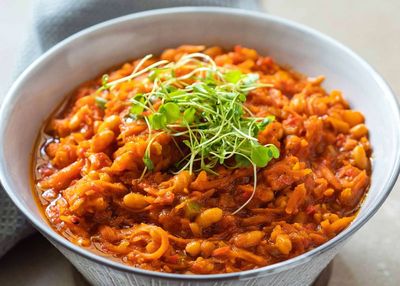
Onion is softened in oil; garlic, ginger and curry powder bloom. Carrots cook briefly to tender-crisp. Peppers (red and green) and chillies join. Tomatoes simmer everything down. Tinned baked beans go in last with a splash of vinegar to balance. Eaten warm or at room temperature; tastes better the next day.
Easy Ugandan Curry Potatoes
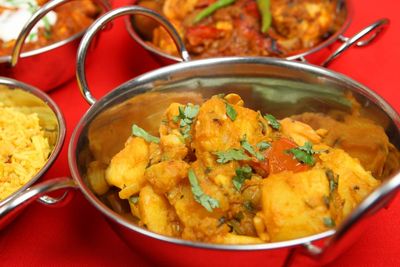
Ugandan curry potatoes are one of those everyday dishes that say more about a country's cooking than the showpiece feast plates do. Curry powder reached Uganda via the Indian and Goan communities of the East African coast and the railway-building era, and was quickly absorbed into the local repertoire as a flavour for stews rather than as a separate cuisine. The result here is mild, fragrant and unmistakably Ugandan: small chunks of waxy potato cooked through in a sauce built on onions sweated until soft, fresh tomato simmered down, and a generous spoon of mild yellow curry powder bloomed in the oil. Garlic and ginger run quietly underneath; a single chopped chilli does the heat work if you want it. It is a vegetarian dish in most homes, though it sits happily alongside fried fish or chicken stew on a fuller plate. The difficulty for a home cook is low, it is almost foolproof, but watch the potatoes; the dish is best when they hold their shape and the sauce just hugs them rather than dissolving everything into a mash. Eat with chapati to mop up the gravy, or with steamed rice, posho, or matooke.
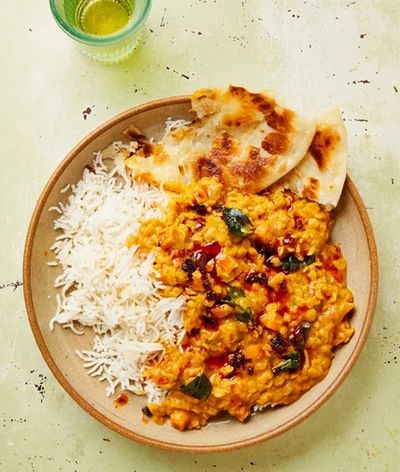
Malaysian Dhal Curry
Yellow split peas (chana dal) simmer with onion, turmeric and tomato until very soft. The lentils break down into a thick soup. Right at the end, a tempering of mustard seeds, curry leaves, dried red chillies, garlic and shallots is poured sizzling-hot over the surface. The aromatic oil seeps through; the dish transforms.
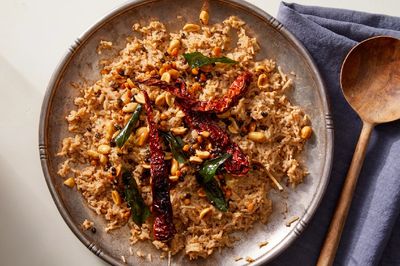
Tamarind Rice
A spiced tamarind paste is built with a dry-roast of coriander, cumin, fenugreek, chana dal and dried red chilli ground to a powder, then tamarind extract is simmered with the powder, turmeric, jaggery and salt until thick. A temper of peanuts, mustard seeds and curry leaves is bloomed in sesame oil and folded through cooked rice with the tamarind paste, the dish left to rest so the flavour settles. Famously gets better overnight.