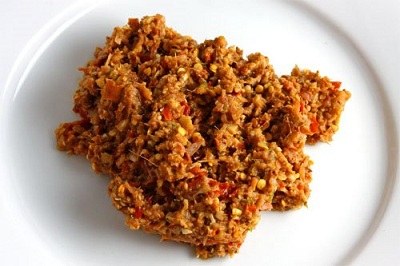
Thai Red Curry Paste (Kruang Kaeng Dang)
Thailand's red curry paste: dried red chillies, lemongrass, galangal, kaffir lime, garlic and shrimp paste pounded into a deep.
Overview
Thai red curry paste is a balance of heat from chillies, brightness from citrus, and umami from shrimp paste. Toasting the coriander and cumin seeds before grinding awakens their essential oils. This paste forms the flavor foundation for authentic Thai red curries. Made fresh, it's noticeably superior to commercial versions, vibrant in color, aromatic, and with cleaner flavor.
Ingredients
Fresh Aromatics
- 3 lemon grass stalks (tender lower portions only)
- 10 fresh red chillies (seeded and sliced)
- 115 grams shallots (finely chopped)
- 4 garlic cloves (peeled)
- 1 cm piece fresh galangal (peeled, sliced, and bruised)
- Stems from 4 fresh coriander sprigs
Spices & Flavor
- 1 tablespoon coriander seeds
- 2 teaspoons cumin seeds
- 1 teaspoon fine sea salt
- 1 teaspoon grated citrus rind (lime or lemon)
- 1 cm cube shrimp paste (about 1 teaspoon)
Oil
- 30 ml groundnut oil (or neutral oil)
Method
Stage 1 - Prepare Aromatics
- Slice the tender lower portion of the lemon grass stalks into thin rings (discard tough upper portions).
- Bruise the sliced lemongrass with the side of a knife to release oils.
- Peel the galangal with a spoon or knife, slice thinly, and bruise similarly.
Stage 2 - Grind Fresh Paste Base
- Place the bruised lemongrass, red chillies, shallots, garlic, galangal, and coriander stems in a large mortar.
- Using a pestle, grind steadily, working the ingredients into a paste.
- The mortar-and-pestle method (not a food processor) creates better texture and flavor by crushing rather than heating the ingredients.
- Gradually add the groundnut oil as you grind, incorporating it slowly to create a smooth paste.
Stage 3 - Toast Spices
- While grinding the fresh paste, heat a dry wok or frying pan over medium heat for 1 minute.
- Add the coriander seeds.
- Toast, shaking the pan frequently, for 1 minute until fragrant.
- Add the cumin seeds.
- Continue toasting for another 30-45 seconds until the combined spices release a rich, warm aroma.
- Be careful not to brown or burn them; burned spices are bitter and must be discarded.
- Immediately pour the toasted seeds into a mortar and grind to a fine powder.
Stage 4 - Combine All Elements
- Add the citrus rind to the fresh paste in the mortar.
- Mix well.
- Add the ground toasted spice powder.
- Stir thoroughly to distribute the spices evenly.
- Warm the shrimp paste by wrapping it in foil and holding it briefly over a flame, or by warming it in a small dry pan for 15-20 seconds.
- Add the warmed shrimp paste to the paste.
- Pound and stir until fully incorporated.
- Add the salt and mix completely.
Notes
- Timing: This paste is best used immediately after making, when flavors are brightest and most vibrant.
- Shrimp Paste: Warming it before adding makes it easier to incorporate. The aroma is strong but mellows with cooking.
- Citrus Rind: Fresh lime zest is traditional; lemon works but lime is preferred.
- Mortar & Pestle: Essential for proper texture; food processors heat the paste and create a mushy consistency.
- Chilli Heat: Leaving seeds in creates more heat; removing most or all seeds yields a milder paste. This recipe includes seeds removed for moderate heat.
- Spice Toasting: This step is non-negotiable; it develops the complex aromatics that make Thai red curry distinctive.
Variations
Extra Hot: Leave chilli seeds in and increase to 12-15 chillies. Milder Version: Increase shallots and reduce fresh chillies to 6-8. With Galangal Depth: Add an extra ½ cm piece of galangal for pronounced brightness. For Coconut Curries: Use exactly as written; the paste is formulated for coconut milk cooking.
Serving
Use in: Thai curries, curry soups, curry-based braised dishes Typical ratio: 2-3 tablespoons paste per 400 ml coconut milk (adjusting to taste preference) Cooking technique: Fry the paste briefly in hot oil or a bit of the coconut cream before adding liquid Temperature: Use immediately after making or refrigerate
Storage
- Refrigerate in an airtight glass container for up to 4-5 days maximum
- For longer storage, wrap portions in foil and freeze for up to 2 months
- The fresh herbs in this paste don't preserve well; it's best used within 3 days for optimal flavor
- If storing, pour a thin layer of oil over the surface to help preserve it
- Do not refrigerate long-term; fresh herbs deteriorate and oxidize
This wonderful classic curry paste from Thailand has an amazing fragrant characteristic that works beautifully with coconut-based curries. The combination of fresh aromatics, toasted spices, and shrimp paste creates complex depth.
More like this
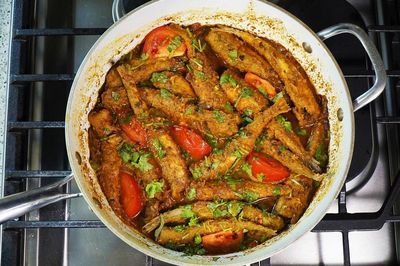
Curry Smelts
Trinidadian comfort food that brings together the East Indian and Afro-Caribbean strands of Trini cookery in one pan: small whole fried fish (a West African and Caribbean coastal habit) drowned in a Trinidadian East Indian curry sauce. The fish are smelts, sardines or whitebait, whole, head-on, eaten with a small bite to remove the spine. Once fried they sit crisp; when the curry sauce hits, the outer crust softens slightly and absorbs the gravy while the centre stays meaty. The sauce is the dish's signature: roasted geera (dry-toasted cumin) gives a smoky, nutty depth that pre-ground supermarket cumin can't touch, anchar masala adds a fermented-tangy edge (it's the Trinidadian pickled-mango spice mix), and Caribbean curry powder rounds the warmth. Whole pierced Scotch bonnet scents without flooring. Smell when the spices bloom in hot oil is heavy and pungent in the best possible way. Not difficult but it's a two-pan dance, so timing matters. A daily-cookery dish across Trinidad and Tobago and the Indo-Trinidadian diaspora, eaten with steamed rice or with sada roti torn and used as a scoop.
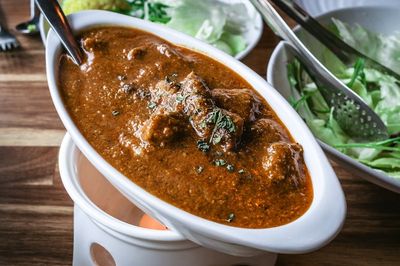
Lamb Achari
A Punjabi-inspired achari curry featuring pickle spices like panch poran and dried chillies, balanced with sweet mango chutney and tangy lime pickle. This dish captures the essence of Indian pickles in a rich, flavorful lamb curry.
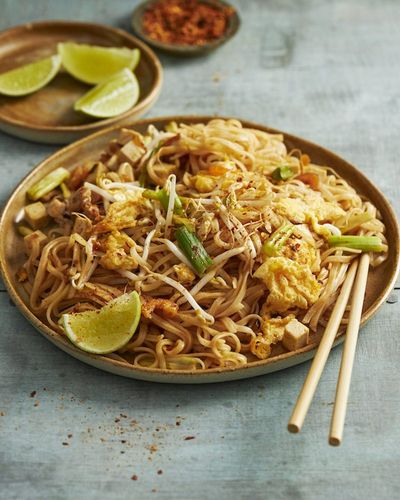
Prawn and Pork Pad Thai
This classic Thai dish of noodles is both aromatic and lightly spicy, serving well as either a main course or a starter. Pad Thai combines stir-fried rice noodles with tender chicken, pork, and prawns in a balanced sauce of curry paste, oyster sauce, and fish sauce. Fresh herbs, crushed peanuts, and a squeeze of lime complete this iconic Thai street food favourite.
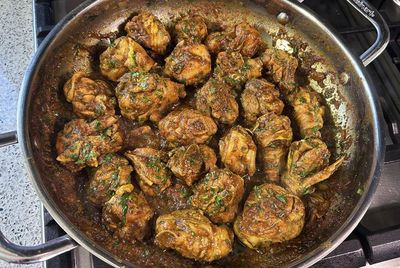
Bunjay-Style Curry Chicken
A dry curry rather than a saucy one, "bunjay" is Trinidadian patois for "fry-down", the technique of cooking meat in its own juices until the gravy completely disappears and the spices coat the surface of the meat in a sticky, glaze-like crust. The flavour is concentrated rather than diluted; nothing's been thinned with water or coconut milk, so what you taste is bone-in chicken, rendered chicken fat, and toasted spice. The spice mix is the East Indian Trinidadian signature: turmeric for colour and earth, roasted geera (toasted cumin, ground) for nuttiness, anchar masala for tang, regular curry powder for breadth. The pan oil splits and separates around the chicken at the end, which is the visual cue you're looking for. Smell when the curry powder hits hot oil is deeply aromatic, almost incense-like. Not difficult but it requires attention during the cook-down phase; if you walk away the curry burns onto the bottom of the pan. A Trinidadian household staple, eaten across the country with white rice and dhal, and a clean example of how Indian indentured labourers' descendants in the Caribbean evolved a distinct curry tradition over 150 years.