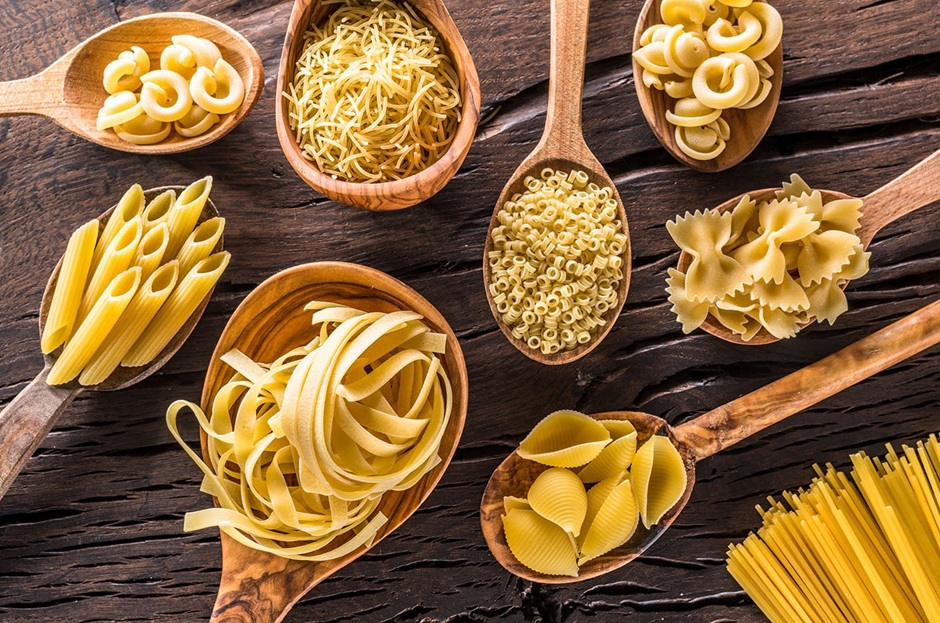
Pasta Shapes
Once you have the dough, you can take it in any number of directions. Ribbons (tagliatelle, fettucine, pappardelle), filled little pockets (ravioli, tortellini, cappelletti), hand-shaped curls (orecchiette, trofie, cavatelli). Each one has a region it comes from and a sauce that grew up alongside it.
Overview
Italy has hundreds of regional pasta shapes. Most cookery books focus on the big-name ribbon and filled pastas because those are what's possible at home with a pasta machine. This page covers the home-doable shapes; the regional hand-shaped pastas (orecchiette, trofie, cavatelli) are simple in concept but take practice.
The shapes split into three categories:
- Ribbons, cut from a thin sheet of pasta dough.
- Filled, sealed pockets of dough around a stuffing.
- Hand-shaped, formed without a roller (orecchiette, trofie, gnocchi).
Before You Start
You need fresh pasta dough, rested at least 30 minutes. The dough should be rolled to about 1-2 mm thick (the thinnest settings on a manual pasta machine; #7 or #8 of 9).
Work in batches: cut one sheet, transfer to a tray dusted with semolina (not flour; semolina stays drier and prevents the pasta from sticking), continue with the next sheet.
Ribbon Pastas
The home pasta-maker's standard. A sheet of pasta dough cut into long strips of varying widths.
Tagliatelle (5-8 mm wide)
The northern Italian standard. Hand-cut: roll the pasta sheet into a flat tube (like a swiss roll), use a sharp knife to slice across at 6 mm intervals, then shake the cut strips loose to reveal the ribbons.
Pair with: ragu (the Bolognese standard), creamy mushroom sauces, butter-and-sage.
Fettucine (3-5 mm wide)
The Roman version, slightly narrower than tagliatelle. Same cut technique but at 4 mm intervals.
Pair with: alfredo (cream-and-parmesan), prawn sauces, simple butter.
Pappardelle (2-3 cm wide)
The widest ribbon. Cut at 25 mm intervals. The ribbons are floppy and substantial.
Pair with: rich game ragu (boar, hare, beef shin), heavy sauces that need a wide canvas.
Tagliolini (1-2 mm wide)
The narrowest ribbon. Cut at 1.5 mm intervals; this needs a very sharp knife or a tagliolini cutter on a pasta machine.
Pair with: delicate seafood sauces, broth-based preparations, truffle butter.
Linguine (3 mm wide, oval cross-section)
Technically dried; pressed through a die into the oval shape. Possible as fresh by cutting tagliatelle thinner and rolling each strand slightly between palms.
How to Cut Ribbon Pastas
- Lightly dust the sheet of pasta with flour or semolina (both sides).
- Roll the sheet loosely into a flat tube. The roll should be loose; tight rolls compress and stick.
- With a sharp knife, slice the tube into ribbons of the chosen width.
- Lift each batch of ribbons; shake gently to unfurl.
- Place on a tray dusted with semolina, in nests, separated.
- Cover with a tea towel until ready to cook.
If you have a pasta machine with cutting attachments, run the sheet through the appropriate cutter; the machine cuts cleanly without rolling.
Filled Pastas
Two main families: stamped (cut from a sheet around a filling) and shaped (tied or folded by hand).
Ravioli (Square or Round)
A square or round of dough enclosing a small mound of filling.
Method:
- Roll out two sheets of pasta dough to 1 mm thick (the thinnest pasta machine setting).
- On one sheet, pipe or spoon walnut-sized mounds of filling at 5 cm intervals, in rows.
- Brush around each mound with beaten egg wash.
- Lay the second sheet on top.
- Press around each mound to seal, pushing out air.
- Cut between the mounds with a sharp knife, fluted pastry wheel, or square ravioli cutter.
Classical fillings: ricotta and spinach, ricotta and pumpkin, mushroom and parmigiano, lobster, crab. See: Crab Ravioli.
Pair with: brown butter and sage; light tomato; a delicate cream sauce. NOT a heavy ragu - the ravioli is the centrepiece, not the canvas.
Tortellini (Folded Rings)
Small filled pastas folded into ring shapes. The shape comes from an emilian legend (it's said to mimic the navel of Venus).
Method:
- Cut small squares (5 cm) from a thin pasta sheet.
- Place a small dab of filling in the centre (pea-sized, not larger).
- Fold corner to corner, making a triangle. Press to seal.
- Bring the two long-edge corners around the filling and pinch them together at the back.
The result is a small ring with a fold across the top.
Classical fillings: prosciutto and mortadella (the bolognese), ricotta and parmigiano, mushroom.
Pair with: broth (tortellini in brodo is the classical), or a simple butter-and-sage.
Cappelletti (Folded Hats)
A larger version of tortellini, with the fold making a "hat" shape (cappello = hat).
Mezzelune (Half-Moons)
Round dough disc folded over filling. Simpler than tortellini; sometimes called "the lazy ravioli."
Cannelloni and Manicotti
Sheets of pasta rolled around a filling and baked in a sauce. Larger, often pre-cooked rather than served boiled. See: Cannelloni.
Lasagne Sheets
Flat sheets used in layered baked pastas. See: Lasagne.
Hand-Shaped Pastas
These don't go through a roller; they're formed by hand.
Orecchiette ("Little Ears")
The signature pasta of Puglia. Small bowl-shaped pastas. Traditionally made with durum-and-water dough (no eggs), pressed and turned over the thumb.
Method:
- Roll the dough into a thin rope, 1 cm diameter.
- Cut into 1 cm sections.
- Place each section on a floured bench. With your thumb (or the rounded end of a butter knife), press and drag the dough across the bench, then flip it inside-out over the thumb to form a bowl shape.
The bowls catch sauce. Pair with: pasta-with-sprouting-broccoli, peas-and-pecorino, sausage ragu.
Trofie
Genoese pasta. Hand-rolled into small spiralled twists.
Method: roll the dough into a 1 cm rope; cut into 2 cm sections; with the side of the hand, roll each section against the bench at an angle, creating a slight twist.
Pair with: pesto. The classical Genoese pairing.
Cavatelli
Calabrian. Small ridged shells, made by pressing a thumb across a small dough section against a ridged board (or the back of a fork).
Gnocchi (Potato Pasta)
Strictly potato-and-flour, not classical pasta dough, but lives in the same family. See: Gnocchi.
Storing Fresh Pasta
Fresh pasta is best cooked the day it's made. For storage:
- Short term (same day): lay on a semolina-dusted tray, cover with a tea towel. Cook within 4 hours.
- Overnight: lay on a tray, freeze for 1 hour to firm up, then transfer to a freezer bag. Cook from frozen; add 60-90 seconds to the cook time. Lasts 1 month frozen.
- Drying: lay tagliatelle or fettucine over a wooden dowel or chair back to dry for 24-48 hours. Once fully dry, store in an airtight container for 1-2 weeks.
Common Mistakes
The pasta sticks together. Not enough semolina dust, or the strips were laid touching each other. Dust generously; separate immediately after cutting.
The pasta tears when lifted. Dough too thin, or under-rested so it lacks elasticity. Roll to a slightly thicker setting; rest the dough longer next time.
The filled pasta bursts during cooking. Air trapped inside, or the seal wasn't tight. Press out air carefully when sealing; brush the edges with egg wash to help adhesion.
The filling leaked out. Filling too wet, or too much per pocket. Drain the filling well before piping (especially ricotta); use less per pocket.
The orecchiette won't stay bowl-shaped. The dough rope is too thin, or the press wasn't firm enough. Roll thicker (1 cm); use more wrist pressure when pressing-and-flipping.
Where Next
- Fresh Pasta Dough: the master dough technique.
- Matching Sauce to Shape: which sauce for which shape.
- Dried Pasta: the everyday alternative.
- Pasta Course landing: back to the main course.
Recipes mentioned here
Fresh Pasta Dough
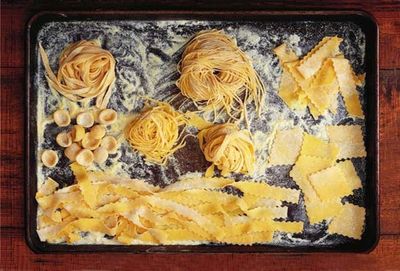
Fresh pasta dough is foundational to Italian cooking. The traditional method, making a well in flour, cracking eggs into it, and gradually drawing in the flour, creates a perfectly textured dough. Resting allows the flour to fully hydrate and gluten to develop. This dough rolls thin for sheets (lasagne, ravioli) or can be cut into shapes (fettuccine, pappardelle, tagliatelle). The texture of fresh pasta is incomparably tender compared to factory-made dried pasta.
Bolognese
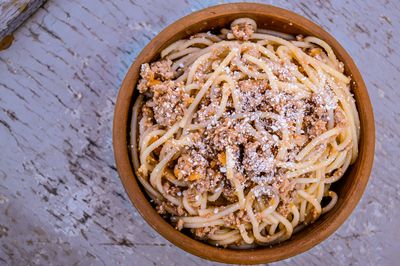
Bolognese is Italy's classic meat sauce, built on a foundation of soffritto, the aromatic trinity of onion, carrot, and celery, combined with quality ground beef, wine, and tomato. The result is a rich, velvety sauce where individual ingredients dissolve into a cohesive whole greater than the sum of its parts. This is soul food, best made with time and attention.
Gnocchi
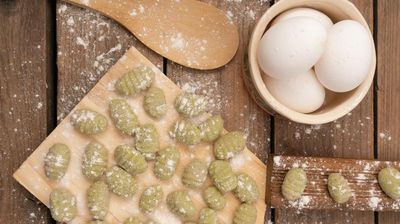
These cloud-like gnocchi begin with whole, unpeeled potatoes baked until fluffy. When hot, they're passed through a ricer and built into a delicate dough with just flour and an egg yolk. The technique is straightforward but demands attention to detail: over-mixing creates dense, gluey gnocchi, while proper lightness produces tender pillows that absorb sauce beautifully.
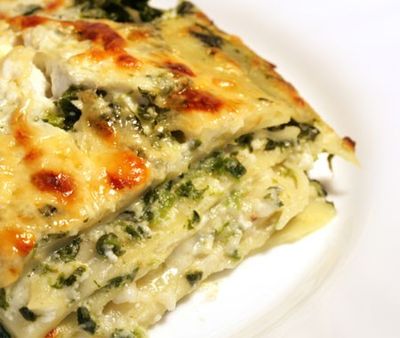
Lasagne
A rich, layered Italian baked pasta combining slow-cooked meat ragù with silky béchamel enriched with basil pesto. Homemade fresh pasta sheets are essential for the melt-in-the-mouth texture that sets this lasagne apart. The pesto adds a distinctive herbaceous note that complements the béchamel beautifully.
More like this
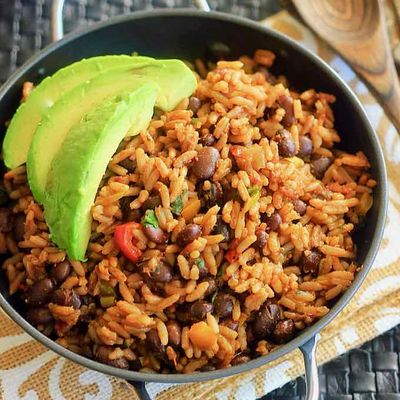
Moros Y Cristianos
Black beans simmer with bay and oregano until tender. Sofrito (onion, pepper, garlic, cumin) cooks in olive oil; the cooked beans plus their liquid join in; rice is stirred through and steamed in the bean broth until tender and tinted.
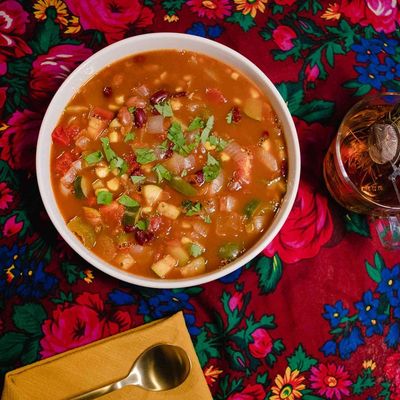
Three Sisters Stew
Diced onion and garlic sweat in sunflower oil. A whole butternut squash, peeled and cubed, browns briefly to caramelise the edges. Dried sage and ground sumac (or a squeeze of lemon) season. Stock and tomatoes go in; everything simmers for 30 minutes until the squash is collapsing. Drained pinto beans and hominy (or sweetcorn) join for the last 15 minutes. A splash of maple syrup at the end balances. Garnished with toasted pumpkin seeds and fresh sage.
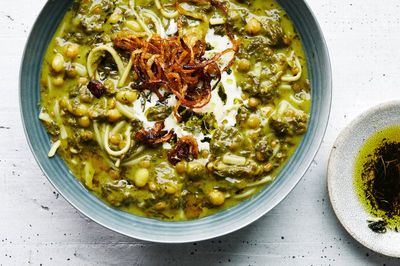
Ash Reshteh
Dried beans (chickpeas + kidney beans + green lentils, OR the popular cheat of mixing all dried into one pot) soak overnight. Onion fries in oil; turmeric, salt and the soaked-and-drained beans go in with stock; simmers for 1 hour 15 minutes until tender. A heaping double handful of finely chopped fresh herbs (parsley, coriander, dill plus blanched spinach) goes in. Reshteh noodles (Persian flat egg noodles, sold at Iranian shops) add for the last 10 minutes. The bowl finishes with a sour-fermented kashk drizzle, dried-mint-and-garlic-in-oil sizzle, deep-fried golden onion, and a swirl of yogurt. Garnishes are not optional.
Authentic Cajun Gumbo
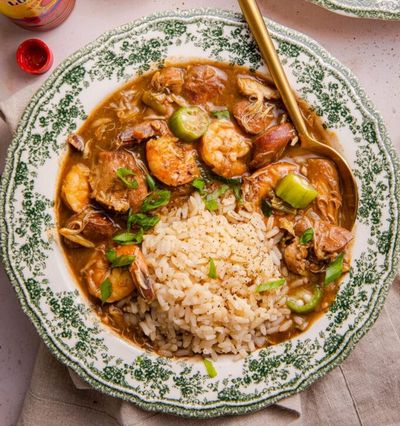
The "everything" Louisiana gumbo, chicken thighs, andouille, lump crab and shrimp all in one pot, and the dish where the technique matters more than the recipe. The roux is the single defining step and the line between Cajun gumbo and every other stew on earth: a full cup of oil and a full cup of flour cooked at medium-low for around 30 minutes, stirred without stopping, until the colour goes from blond to peanut butter to milk chocolate to dark chocolate. That's not flavour theatre; the long-cooked roux produces a deeply nutty, slightly bitter, profoundly savoury base that thickens the gumbo and gives it the distinctive almost-charred note no shortcut can replicate. Around the roux: the Cajun "holy trinity" of onion, bell pepper and celery; filé powder (ground sassafras leaves) added off heat as a second thickener; okra adding a third (and contributing its own slight slip); plus the four proteins, each adding a different layer. Flavour is dark, smoky, herbaceous, and slightly briny from the seafood. Smell is the roux toasting. Not difficult on technique but tremendously demanding on patience and attention; 30 minutes of unbroken stirring is the gateway, and if you walk away or rush it the roux burns and you start over. A dish that runs deep through Cajun and Creole Louisiana, with origins in the French settlers, the Choctaw (who contributed filé), West Africans (who contributed okra), and Spanish colonial traditions of Louisiana from the 1700s onwards.