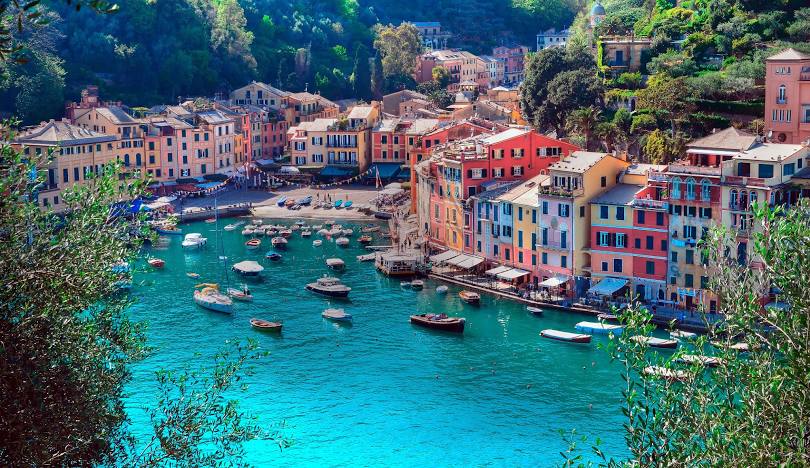
Regional Italian
Italy is really twenty different cooking traditions in a trenchcoat. The biggest divide is north-south: the north uses butter, cream and ribbon pastas with slow ragus; the south uses olive oil, tomato and dried pasta with quicker sauces. Once you know which half a recipe came from, the rest of the choices it makes start to make sense.
Overview
Italy was unified as a country only in 1861. Before that, twenty separate regions had developed twenty separate culinary traditions over a thousand years, shaped by their geography, weather, and the foods their land supported. The unification didn't erase those traditions; they remain alive and distinct today.
For pasta cooking, the most important divide is north-south. The northern half (Lombardy, Emilia-Romagna, Piedmont, Veneto, Liguria) uses butter, cream, rich stuffed pastas, slow-cooked ragus. The southern half (Campania, Puglia, Sicily, Calabria) uses olive oil, tomato-led sauces, dried pasta, faster cooking.
The food in your kitchen reflects which half of Italy a recipe came from.
The Northern Tradition
Geography and Climate
The Po Valley and Alpine foothills: rich grazing land, dairy cattle, slow rivers. Wheat grows but rice grows better. Cool climate; olive trees don't thrive.
What This Produces in the Kitchen
- Dairy as a primary fat. Butter, cream, lard, plus the cheese cultures (parmigiano, fontina, taleggio).
- Eggs in everything. Fresh egg pasta (tagliatelle, ravioli, tortellini, lasagne) is northern.
- Rice over pasta in the everyday. Risotto, especially in Lombardy and Piedmont.
- Polenta as a starch alongside or instead of pasta.
- Slow-cooked ragus. The Bolognese ragu cooks for 4-6 hours; the Veneto duck ragu similar.
- Stuffed pastas. Tortellini in brodo (Bologna), ravioli (Liguria, Piedmont), cappelletti.
The Defining Northern Dishes
- Tagliatelle al ragu Bolognese (Bologna): wide egg ribbons with the long-cooked meat ragu.
- Risotto alla Milanese (Milan): saffron risotto with butter.
- Pesto alla Genovese (Liguria): basil pesto, with trofie or linguine.
- Lasagne alla Bolognese: layered sheets with bechamel and ragu.
- Tortellini in brodo (Emilia-Romagna): stuffed pasta in clear broth.
- Saltimbocca (Rome, borderline north): veal with prosciutto and sage in butter.
The Southern Tradition
Geography and Climate
Hot, sun-drenched, hilly to mountainous. Olive trees thrive. Sheep, not cattle, are the grazing animal (hence pecorino, not parmigiano). Tomatoes ripen sweetly; fish are abundant on the long coastline.
What This Produces in the Kitchen
- Olive oil as the primary fat. Cream is rare; butter even rarer.
- Pecorino, not parmigiano. Sheep's-milk cheeses (pecorino romano, pecorino sardo, pecorino siciliano).
- No eggs in everyday pasta. Dried durum-and-water pasta is the standard.
- Tomato everywhere. Sun-dried tomatoes, fresh tomatoes, tinned plum tomatoes.
- Fast cooking. Most southern pasta sauces are 10-15 minutes; not slow-cooked.
- Fish-led. Vongole, anchovies, sardines, prawns, swordfish.
- Chillies. Calabrian chillies particularly. Spicy food.
The Defining Southern Dishes
- Spaghetti alle vongole (Campania): linguine with clams in olive oil, white wine, parsley.
- Pasta alla Norma (Sicily): tomato, fried aubergine, ricotta salata, basil.
- Spaghetti puttanesca (Naples): anchovies, capers, olives, tomato, chilli.
- Penne all'arrabbiata (Rome, borderline): spicy tomato.
- Bucatini all'amatriciana (Lazio, Roman): tomato, guanciale, pecorino.
- Orecchiette con cime di rapa (Puglia): bowl-pasta with broccoli rabe and anchovy.
- Pasta con le sarde (Sicily): with sardines, fennel, raisins, pine nuts.
The Roman Borderland
Rome (Lazio) is technically central, not southern. It picks up southern elements (olive oil, dried pasta) but with its own twists: pecorino but also more black pepper than other regions, guanciale (cured pork jowl) as the signature cured meat.
The four "Roman pillars" of pasta:
- Cacio e pepe: pecorino, black pepper.
- Gricia: guanciale, pecorino, black pepper.
- Carbonara: guanciale, pecorino, egg yolk, black pepper.
- Amatriciana: guanciale, tomato, pecorino, chilli.
Notice the pattern: pecorino, guanciale, black pepper. Add other things (egg, tomato, chilli) and you get the variations.
What Doesn't Travel
Some regional pairings make no sense outside their region. The traditional Italian rule: a regional recipe is best where it was invented. Examples of pairings that don't usually appear elsewhere:
- Pesto with parmigiano: pesto Genovese traditionally uses pecorino sardo, not parmigiano. Parmigiano is northern; pecorino is also northern but Sardinian.
- Long pasta with seafood: only in southern Italy. Northern Italian seafood (lake fish, rare) goes with rice (risotto), not pasta.
- Bechamel in southern pasta: very rare. Bechamel is the northern sauce (with lasagne, with cannelloni); southern lasagne uses ricotta instead.
Why This Matters
Knowing which region a pasta comes from tells you:
- What fat to use (oil in the south, butter in the north).
- What cheese (pecorino in the south, parmigiano in the north).
- How fast to cook the sauce (south: fast; north: slow).
- Whether eggs are involved.
- What chillies, if any.
If a recipe says "fettuccine with tomato sauce", you can guess it's NORTHERN (the ribbon pasta) with a not-quite-right pairing. The traditional northern is fettucine alfredo (cream); the traditional southern tomato is bucatini or spaghetti.
When you adapt a recipe, knowing the region helps. A northern recipe with butter can substitute olive oil if you must (for healthier or simpler eating), but the result is no longer "northern" in style. A southern recipe with butter is just wrong.
A Two-Pasta Test
Cook two pastas to learn the divide:
The Northern Test: Tagliatelle al Ragu Bolognese
Fresh egg tagliatelle + a 4-hour ragu (beef + pork + vegetables + tomato + milk + red wine). Plated with butter and grated parmigiano.
This is the platonic northern pasta. The egg ribbons; the slow-cooked ragu; the butter; the parmigiano. Each is a northern Italian signature.
The Southern Test: Bucatini all'Amatriciana
Dried bucatini + guanciale rendered in olive oil + tinned tomato + chilli + pecorino. 20 minutes from start to plate.
This is the platonic southern pasta. The dried pasta; the olive oil; the tomato; the pecorino; the speed.
You eat both back to back, and the difference is clear.
Where Next
- Matching Sauce to Shape: the principle behind which pasta goes with which sauce.
- Fresh Pasta Dough: the northern egg-pasta tradition.
- Dried Pasta: the southern durum tradition.
- Pasta Course landing: back to the main course.
- Pizza course: the parallel Italian flour tradition.
Recipes mentioned here
Fresh Pasta Dough
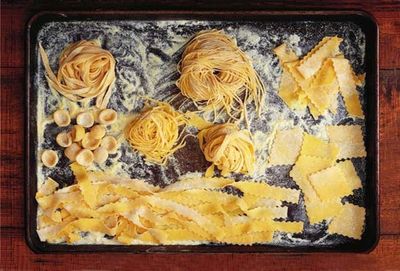
Fresh pasta dough is foundational to Italian cooking. The traditional method, making a well in flour, cracking eggs into it, and gradually drawing in the flour, creates a perfectly textured dough. Resting allows the flour to fully hydrate and gluten to develop. This dough rolls thin for sheets (lasagne, ravioli) or can be cut into shapes (fettuccine, pappardelle, tagliatelle). The texture of fresh pasta is incomparably tender compared to factory-made dried pasta.
Bolognese
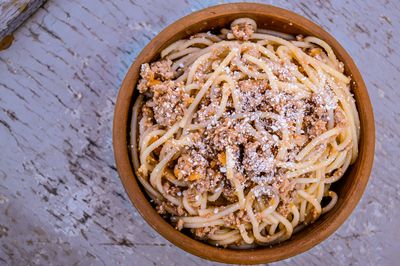
Bolognese is Italy's classic meat sauce, built on a foundation of soffritto, the aromatic trinity of onion, carrot, and celery, combined with quality ground beef, wine, and tomato. The result is a rich, velvety sauce where individual ingredients dissolve into a cohesive whole greater than the sum of its parts. This is soul food, best made with time and attention.
Cacio E Pepe
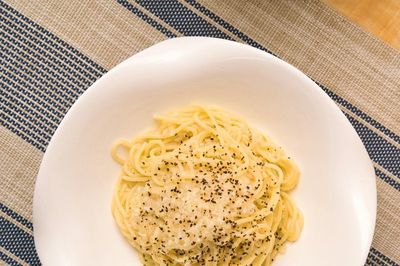
Black pepper toasts in a dry pan; pasta cooks; the starchy pasta water plus finely grated Pecorino emulsify into a sauce off the heat. Heat shock scrambles the cheese; the technique is to take the pan off the heat before adding cheese, and toss energetically.
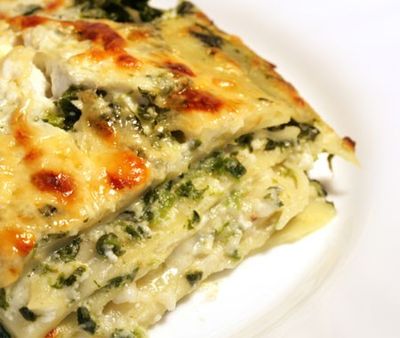
Lasagne
A rich, layered Italian baked pasta combining slow-cooked meat ragù with silky béchamel enriched with basil pesto. Homemade fresh pasta sheets are essential for the melt-in-the-mouth texture that sets this lasagne apart. The pesto adds a distinctive herbaceous note that complements the béchamel beautifully.
More like this
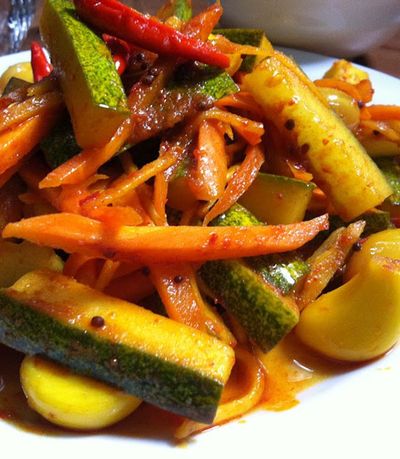
Acar Timun
Cucumber, carrot, shallot, chilli prep into thin slices or matchsticks. Salt rests for 10 minutes to draw moisture, drains. A simple dressing of vinegar, sugar, water and ginger whisks together. Vegetables toss with the dressing; rest for 1 hour at room temperature. Eats cool, never refrigerated cold; the texture suffers.
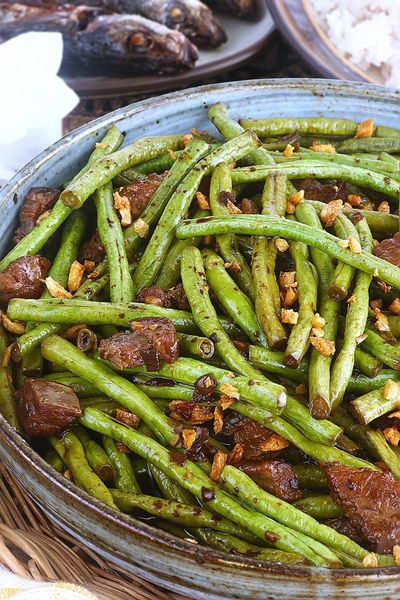
Adobong Sitaw
Garlic browns in oil; long beans toss in to colour briefly. Soy and vinegar pour in with bay and peppercorns; the beans braise covered until tender. Lid off; the liquid reduces to a glaze. Salt at the end, not the start, since soy is salty enough.
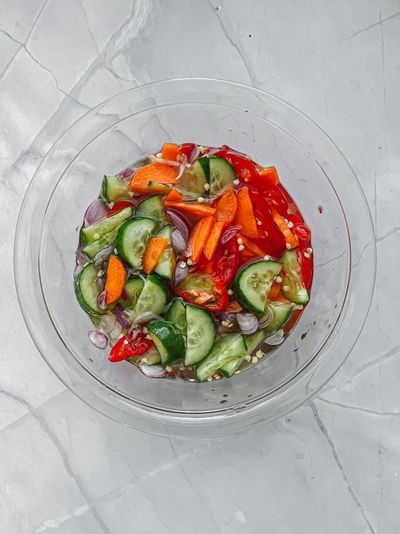
Ajad
A simple syrup of rice vinegar, palm sugar, water and salt is brought to a gentle simmer to dissolve the sugar, then cooled. Cucumber, shallot and chilli are sliced thin and combined in a small bowl. The cooled syrup is poured over. Rested for 10-15 minutes for the vegetables to wilt slightly into the dressing. Served in small individual ramekins as a dip, OR in a larger bowl as a side, with peanuts sprinkled on top.
Akara
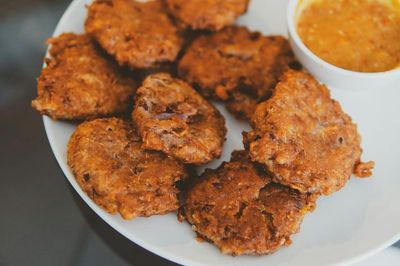
Dried black-eyed beans soak briefly to loosen the skins; the skins rub off (this is the key step, skin-on akara is bitter and grey). The peeled beans go into a blender with onion, Scotch bonnet and just enough water to make a thick batter (not a paste). The batter is whipped by hand or with a wooden spoon for 5 minutes until light and aerated, this is what makes akara fluffy rather than dense. Spoonfuls drop into 175°C oil and fry for 3-4 minutes per side until golden. Drained on paper. Eaten hot.