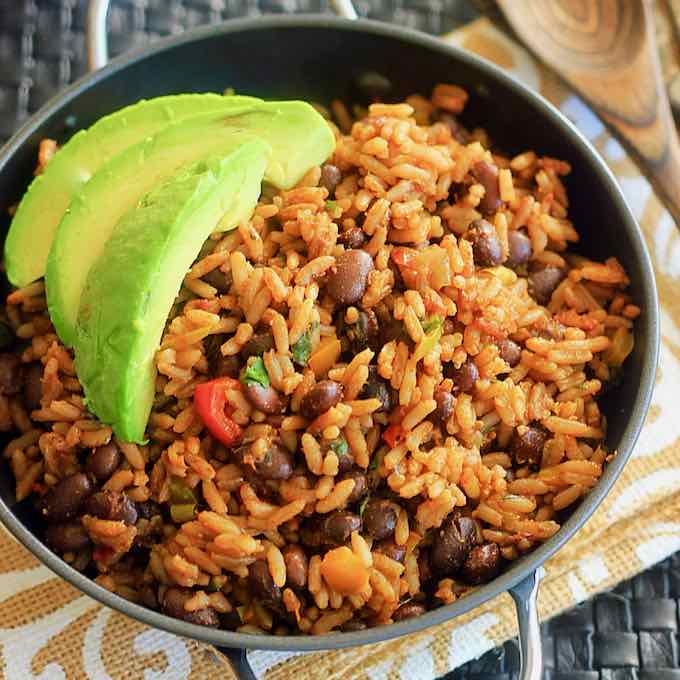
Moros Y Cristianos
Cuba's everyday rice and beans, cooked together in one pot with sofrito so the rice turns dusky purple from the bean liquor. The name ("Moors and Christians") refers to the colour contrast - but cooked properly, the rice is anything but pale.
Overview
Black beans simmer with bay and oregano until tender. Sofrito (onion, pepper, garlic, cumin) cooks in olive oil; the cooked beans plus their liquid join in; rice is stirred through and steamed in the bean broth until tender and tinted.
Ingredients
- 250 g dried black beans (soaked overnight)
- 1 bay leaf
- 1 teaspoon dried oregano
- 4 tablespoons olive oil
- 1 onion (large, finely chopped)
- 1 green pepper (finely chopped)
- 6 garlic cloves (crushed)
- 1 teaspoon ground cumin
- 1 teaspoon smoked paprika
- 250 g long-grain rice (rinsed)
- 600 ml vegetable stock (or bean cooking liquid)
- 2 tablespoons red wine vinegar
- salt
- pepper
- Fresh coriander (to serve)
Method
Stage 1 - Beans
- Drain the soaked beans; cover with fresh water by 5 cm. Add the bay and oregano.
- Bring to the boil; reduce to a simmer and cook 45-60 minutes until tender. Reserve 600 ml of the cooking liquid.
Stage 2 - Sofrito
- Heat 3 tablespoons of the olive oil in a heavy saucepan over medium heat.
- Cook the onion and green pepper 8 minutes until soft.
- Add the garlic, cumin and paprika; cook 1 minute until fragrant.
Stage 3 - Combine and steam
- Stir in the cooked beans (with a slotted spoon, leaving most liquid behind) and the rice; toast 1 minute.
- Pour in the bean cooking liquid (or stock to top up to 600 ml). Add salt to taste.
- Bring to the boil; reduce to lowest heat; cover and cook 18-20 minutes without lifting the lid.
- Off the heat, rest covered 10 minutes.
Stage 4 - Finish
- Stir in the vinegar and remaining olive oil with a fork (don't mash).
- Taste; adjust salt and pepper.
- Top with chopped coriander.
Notes
- Reserve the bean liquid: The smoky-sweet broth is what flavours and colours the rice. Plain stock is a fallback, not equivalent.
- Don't lift the lid: Steam escaping during the rice-cooking stage gives gummy rice. Set a timer; trust the process.
- Soft beans: Tender black beans mean a 45+ minute simmer. Old beans take longer; pressure cooking works too.
Storage
- Keeps 4 days refrigerated; reheat with a splash of water.
- Freezes 3 months.
More like this
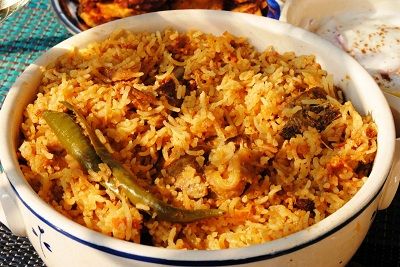
Biryani
Biryani represents the height of Indian culinary technique: multiple components prepared separately with precision, then assembled in layers where flavors permeate through steam cooking. This isn't a one-step rice dish; rather, it's an architectural construction where yogurt-marinated lamb develops tenderization and flavor, then cooks slowly with warm spices and tomato, while basmati rice is independently flavored with saffron infusion and whole spices. Upon assembly, the two elements marry through steam, creating a unified dish where lamb and rice are inseparable in flavor. Traditionally cooked during festivals and royal celebrations, biryani requires patience and multiple steps but rewards with sophistication.
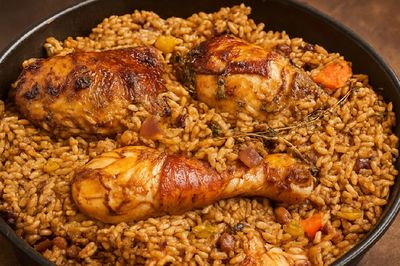
Pelau
Pelau is the Trinidadian one-pot, a meld of West African jollof technique with South Asian pilau influence and a uniquely Caribbean step: caramelising brown sugar in hot oil until it foams and turns dark mahogany, then dropping the seasoned chicken straight in so the meat takes on the colour and the slightly bitter-sweet edge of burnt sugar. This is the signature move of Trinidadian "browning" and it is what makes pelau pelau and not pilaf. Coconut milk, pigeon peas (gungo peas in some other islands), thyme, garlic and a whole Scotch bonnet finish the build. The rice cooks through the whole pot so it absorbs the chicken juices, coconut and burnt sugar, and the finished dish is mid-brown, glossy, mildly sweet, slightly spicy and packed with chicken on the bone. It is not difficult but the burnt-sugar step requires nerve: the sugar needs to go well past caramel into something that smells almost burnt, otherwise the pelau will be too sweet rather than savoury-deep. Cook in a heavy pot with a tight lid and resist stirring once the rice is in. Serve with coleslaw or a sharp green salad, a slick of pepper sauce and a slice of fried plantain.
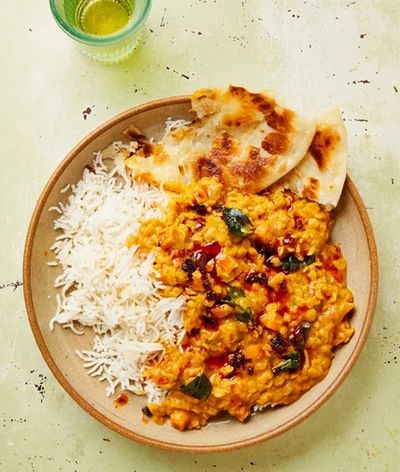
Malaysian Dhal Curry
Yellow split peas (chana dal) simmer with onion, turmeric and tomato until very soft. The lentils break down into a thick soup. Right at the end, a tempering of mustard seeds, curry leaves, dried red chillies, garlic and shallots is poured sizzling-hot over the surface. The aromatic oil seeps through; the dish transforms.
Mojo Pork
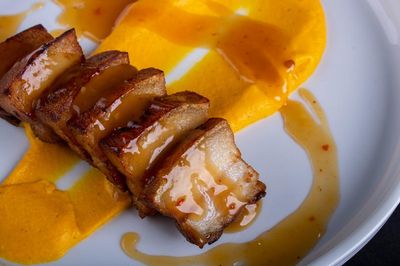
Mojo, pronounced moh-ho, is the foundational citrus and garlic marinade of Cuban cooking, and lechon asado al mojo, a whole pig or shoulder marinated in it and roasted slowly, is the centrepiece of Christmas Eve dinners across Cuba and the Cuban diaspora in Miami, Tampa and beyond. The defining ingredient is naranja agria, the sour or bitter orange, whose juice is sharper and more aromatic than regular orange and which provides the acid backbone of the marinade. If you cannot find sour oranges, the universal substitute is two parts fresh orange juice to one part lime juice, with a splash of grapefruit if you have it. The rest of the mojo is generous: a head of garlic crushed into paste, dried oregano (Cuban oregano if possible, regular Mediterranean otherwise), cumin, salt and good olive oil. The pork shoulder is stabbed all over and the marinade pushed deep into the flesh, then left overnight so the acid begins to break down the muscle fibres. The roast itself is forgiving: low and slow, fat-side up, until the meat pulls apart with a fork and the skin crackles. Leftovers become the heart of a Cuban sandwich, layered with ham, Swiss cheese, mustard and pickles in pressed bread. Difficulty is low. The only thing to plan for is time: the marinade needs overnight, and the roast takes most of an afternoon.