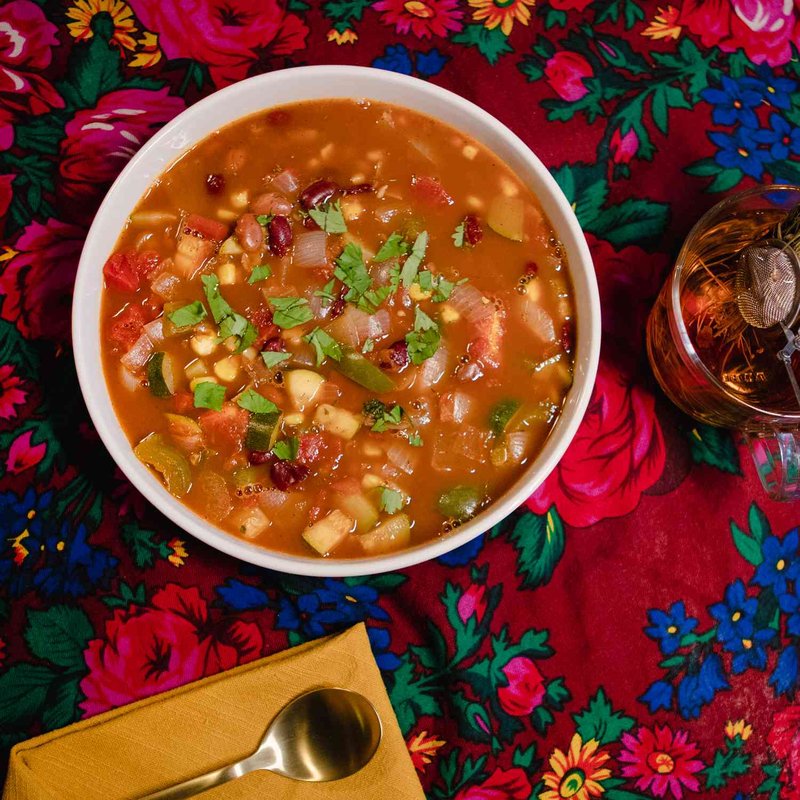
Three Sisters Stew
The Haudenosaunee winter one-pot built on corn, beans and squash: butternut, hominy and pinto beans simmered slow with sage and a touch of maple.
Overview
Diced onion and garlic sweat in sunflower oil. A whole butternut squash, peeled and cubed, browns briefly to caramelise the edges. Dried sage and ground sumac (or a squeeze of lemon) season. Stock and tomatoes go in; everything simmers for 30 minutes until the squash is collapsing. Drained pinto beans and hominy (or sweetcorn) join for the last 15 minutes. A splash of maple syrup at the end balances. Garnished with toasted pumpkin seeds and fresh sage.
Ingredients
- 3 tablespoons sunflower oil
- 1 onion (large, diced)
- 4 garlic cloves (sliced)
- 1 butternut squash (medium, peeled, seeded, cut into 2 ½ cm cubes - about 800 g prepared)
- 1 teaspoon dried sage
- 1 teaspoon ground sumac (or substitute 2 teaspoons lemon juice at the end)
- 1 teaspoon smoked paprika (modern; substitutes for hardwood-cooking smokiness)
- ½ teaspoon black pepper
- 1 (400 g) tin chopped tomatoes
- 800 ml vegetable stock
- 1 (400 g) tin pinto beans (drained and rinsed)
- 1 (400 g) tin hominy (drained, or substitute sweetcorn)
- 1 tablespoon maple syrup
- 1 ½ teaspoons salt (to taste)
Garnish
- 3 tablespoons toasted pumpkin seeds (pepitas)
- 2 tablespoons fresh sage (chopped)
- 1 tablespoon olive oil (drizzle)
Method
Stage 1 - Soften the onion
- Heat 2 tablespoons of oil in a wide heavy pot over medium heat.
- Add onion; cook 8 minutes until soft and gold.
- Add garlic; cook 1 minute.
Stage 2 - Squash
- Push the onion to the side; add the remaining oil.
- Add the squash; brown over medium-high heat 5 minutes, stirring occasionally, to colour the edges.
Stage 3 - Spice
- Stir in dried sage, sumac, smoked paprika and pepper; cook 30 seconds.
Stage 4 - Simmer
- Tip in the chopped tomatoes and stock.
- Bring to a boil; reduce to a simmer; partial lid.
- Cook 30 minutes until the squash is tender and starting to break down.
Stage 5 - Add the beans and corn
- Stir in the pinto beans and hominy.
- Cook 12-15 minutes uncovered to thicken slightly and integrate.
Stage 6 - Finish
- Off heat; stir in the maple syrup.
- Taste; balance with salt.
- If you skipped the sumac, add a squeeze of lemon now.
Stage 7 - Serve
- Ladle into bowls; scatter toasted pumpkin seeds and fresh sage; drizzle with olive oil.
- Cornbread or frybread is the natural side.
Notes
- Three sisters companion planting: Corn provides the stalk for beans to climb; beans fix nitrogen for the corn and squash; squash's broad leaves shade the soil to keep moisture and discourage weeds. The three together feed each other in the field - and on the plate they form a complete protein.
- Hominy vs sweetcorn: Hominy (nixtamalised maize) is the authentic choice and has a fragrance sweetcorn lacks. Tinned hominy is widely available in international shops or online.
- Sage and squash: Sage is the herb of this dish. Don't substitute thyme or rosemary; the flavour shifts entirely.
Storage
- Refrigerate 4 days; reheats beautifully - the stew thickens overnight and the flavour deepens.
- Freezes 2 months.
More like this
Bunjay-Style Curry Chicken
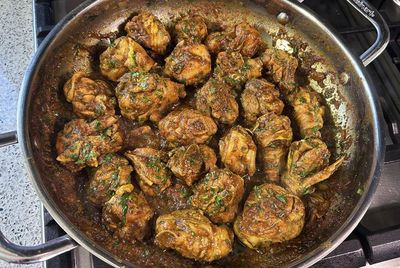
A dry curry rather than a saucy one, "bunjay" is Trinidadian patois for "fry-down", the technique of cooking meat in its own juices until the gravy completely disappears and the spices coat the surface of the meat in a sticky, glaze-like crust. The flavour is concentrated rather than diluted; nothing's been thinned with water or coconut milk, so what you taste is bone-in chicken, rendered chicken fat, and toasted spice. The spice mix is the East Indian Trinidadian signature: turmeric for colour and earth, roasted geera (toasted cumin, ground) for nuttiness, anchar masala for tang, regular curry powder for breadth. The pan oil splits and separates around the chicken at the end, which is the visual cue you're looking for. Smell when the curry powder hits hot oil is deeply aromatic, almost incense-like. Not difficult but it requires attention during the cook-down phase; if you walk away the curry burns onto the bottom of the pan. A Trinidadian household staple, eaten across the country with white rice and dhal, and a clean example of how Indian indentured labourers' descendants in the Caribbean evolved a distinct curry tradition over 150 years.

Falafel Lebnani
Dried chickpeas soak overnight (never cooked, chickpeas must remain raw). Drained, blitzed with onion, garlic, a heaped pile of fresh parsley and coriander, ground cumin, ground coriander, salt, black pepper and Aleppo pepper into a coarse green paste. Rested for 30 minutes. Baking soda mixed in just before frying. Shaped into small (3 cm) patties or balls, a falafel scoop (zalabia) gives the cleanest shape but two spoons work. Optionally rolled in sesame seeds. Deep-fried in oil at 175°C for 2-3 minutes per side until amber-gold and crisp. Stuffed into pita with tahini, salad and pickles.
Falafel Palestinian
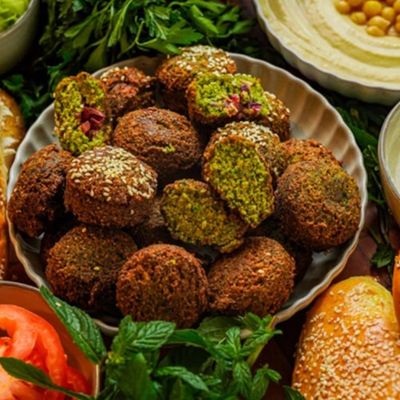
Dried chickpeas (or a chickpea-fava blend) soak overnight. Drained, blitzed with onion, leek, a heaped pile of fresh parsley AND coriander (the Palestinian style is herb-heavy and notably green), garlic, ground cumin, ground coriander, salt and Aleppo pepper. Left to rest. Baking soda mixed in right before frying. Shaped into small patties or balls; pressed into sesame seeds; deep-fried until amber. Stuffed into khobz with tahini sauce, salad and pickled vegetables.

Fasolada
Soaked beans simmer slow with chopped vegetables, tomato and herbs in a generous pour of olive oil. Lemon juice goes in at the end to brighten. Served with a final drizzle of oil, maybe a sprinkle of feta and a heel of bread.