Burmese Samosa

Burmese Samosa

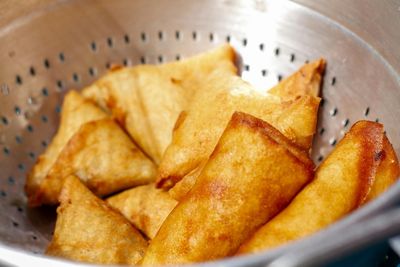
The Burmese take on the South Asian samosa, with a thinner, crisper pastry and a milder filling than its Indian cousin. You make a hot-water dough that rolls out very thin so the fried shell ends up glassy and crisp rather than bready. The filling is mild by Indian standards: turmeric, ginger, fried onion and a whisper of cumin folded into mashed potato and peas, finished with crushed peanuts for the nuttiness that marks the Burmese version. The triangles fry at moderate heat until amber and crackling, the pastry blistering as it goes. Eaten hot dipped in tamarind sauce, or torn into chunks for a samusa-thoke salad later.

Snacks 1 hour 5 minutes Serves4
Chicken Xacuti

Chicken Xacuti

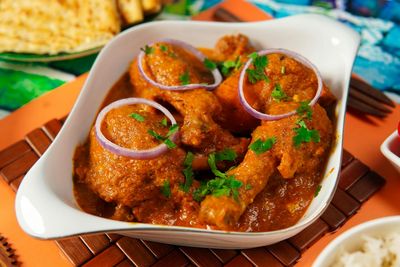
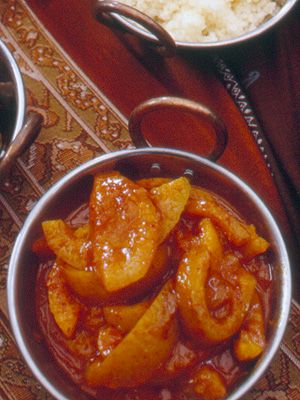
A xacuti masala is built by dry-roasting fresh coconut to a deep mahogany brown alongside a long list of whole spices (Kashmiri and byadgi chillies, coriander, cumin, fennel, peppercorns, cinnamon, cloves, star anise, mace) and grinding them with onion, garlic and ginger into a black-brown paste. The chicken is browned briefly, the paste added, water poured in to cook the chicken through, and tamarind stirred in to finish. The trick is in the roast: the coconut should be almost-burnt, with the bitterness offset by the tamarind.

Goan 1 hour 20 minutes Serves4-6
Chilli oil

Chilli oil

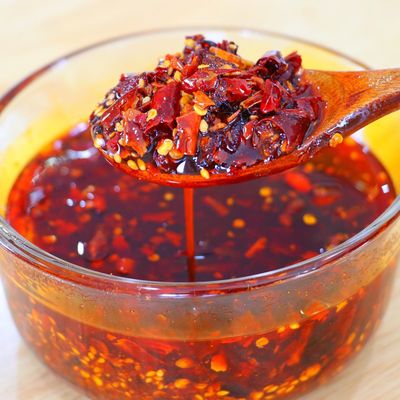
Two-stage flavour build: first a spice infusion (whole spices soaked briefly in water, then simmered slowly in vegetable oil with spring onion and ginger), then a sizzle (the hot strained oil poured over a heat-proof bowl of chilli flakes, smoked paprika, soy and Chinese vinegar). Cooling. Mixing in the textural elements: caster sugar, salt, chicken stock powder, crispy fried shallots and crispy fried garlic. Jarred, rested 24 hours so the flavours marry, stirred vigorously before each use because the oil and solids separate.

Snacks 25 hours 20 minutes Serves1
Kayan Thee Hnut

Kayan Thee Hnut

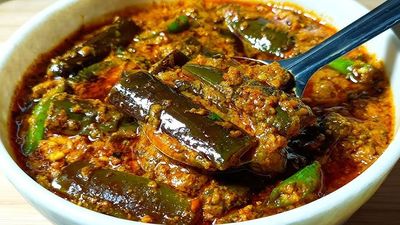
A Burmese aubergine dish, the kind of thing that turns up on a weekday table next to a simple curry and rice. You cube the aubergine and salt it for twenty minutes to draw out the bitter water, then squeeze it dry. Onion fries dark-gold in oil; garlic, ginger and turmeric go in briefly; then the aubergine joins them and fries for eight minutes until silky-soft and just collapsing. Fish sauce, chilli powder and a touch of palm sugar season the pan, and toasted crushed peanuts scatter over at the end for crunch. Eaten warm with rice and a small piece of fish.

Sides 55 minutes Serves4
Kung Pao Shrimp

Kung Pao Shrimp

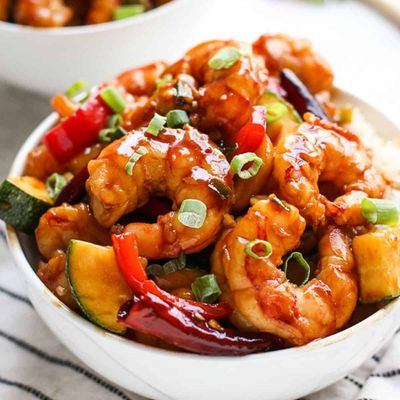
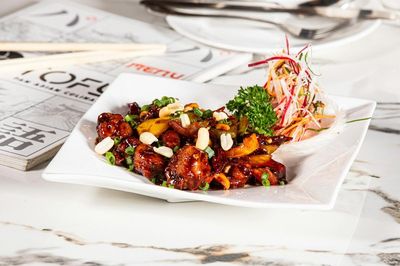
Kung pao (gongbao) shrimp is the seafood cousin of the classic Sichuan gongbao jiding, named for the 19th-century governor-general Ding Baozhen whose title was Gong Bao. Where the chicken version uses diced meat, the shrimp version keeps the prawns whole or halved so they curl into bright pink commas around the chillies and peanuts. The flavour profile is the signature Sichuan "lychee" balance: a touch of sweetness from sugar, sourness from black vinegar, salt and umami from soy, and the warm tingle (ma la) of toasted Sichuan peppercorn paired with the smoky bite of dried er jing tiao chillies. This is a fast dish, fundamentally a wok exercise: every ingredient must be prepped and lined up before the heat goes on, because once the chillies hit the oil you have maybe ninety seconds before everything is overcooked. Difficulty is moderate for a home cook with a working wok and high burner; the trick is keeping the chillies dark red and fragrant without scorching them black, and pulling the shrimp out the moment they curl. Served over plain rice it is one of the most rewarding ten-minute meals in the repertoire.

Chinese 28 minutes Serves3-4
Lamb Tagine with Prunes

Lamb Tagine with Prunes

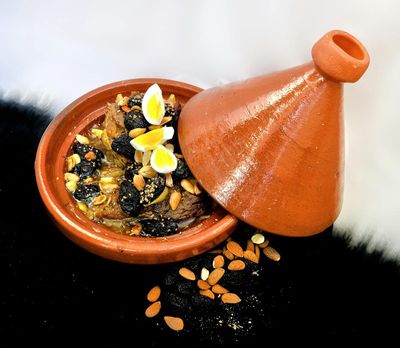
Lamb shoulder is cut into large chunks. A spice paste of garlic, ginger, saffron, paprika, cumin, cinnamon, salt and olive oil rubs in; rests briefly. Onion sweats slowly in olive oil; the lamb goes in skin/fat-side down to brown lightly; water (or stock) covers halfway. Lid on; slow simmer for 1 hour 45 minutes until very tender. Soft pitted prunes go in for the last 20 minutes with a tablespoon of honey. Garnished with toasted whole almonds and sesame seeds. Eaten with bread or couscous.

North African 2 hours 35 minutes Serves4
Mathloutha

Mathloutha

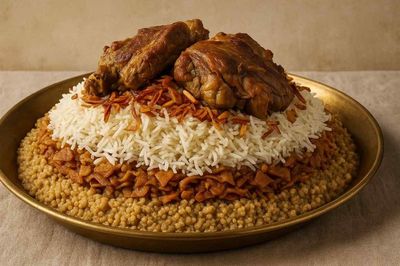
The Saudi gathering platter built for the night when one cut of meat isn't enough. Three proteins share the same pot: lamb shoulder and beef chunks go in first with a kabsa-spiced tomato base for ninety minutes of slow simmer until they're meltingly tender, then chicken pieces drop in for the last thirty-five minutes (their cook time is shorter, so they go in later). The strained meat broth, deeply spiced from everything that has braised in it, becomes the cooking liquid for basmati scented with saffron and dried lime. At the end you arrange all three meats on top of the rice in the same platter and bring the whole thing to the centre of the table. The kind of dish you make for a wedding lunch, an Eid gathering, or the night the extended family arrives unannounced.

Arabian 3 hours Serves8
Miang Kham

Miang Kham

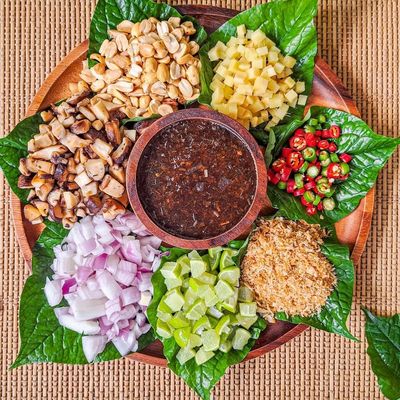
The sauce (the technical heart of the dish) reduces palm sugar, fish sauce, tamarind paste, water, ginger and dried shrimp to a thick, glossy, dark amber syrup. The fillings, diced lime (skin and all), diced ginger, sliced shallot, chopped roasted peanuts, dried shrimp, small chilli, and toasted shredded coconut, are arrayed in small mounds on a serving platter. Fresh young betel leaves go alongside. Each diner takes a leaf, layers a tiny pinch of each filling, drops a quarter-teaspoon of the sauce on top, folds and pops the whole thing in one bite.

Snacks 40 minutes Serves4
Mouthwatering Chicken (Kou Shui Ji)

Mouthwatering Chicken (Kou Shui Ji)

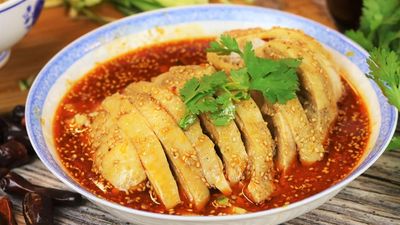
Kou shui ji is one of the great cold appetisers of Sichuan cuisine, a benchmark by which any aspiring Sichuanese cook is judged. It belongs to the broader family of cold chicken dishes (liang ban ji) that also includes bobo ji and bang bang ji, but kou shui ji is set apart by its sauce: not just spicy, but a complex layering of mala (numbing-hot) Sichuan pepper oil, fragrant chilli oil with its crisp sediment, deep aged black vinegar, sweet stone-ground sesame paste, and the concentrated chicken essence captured from steaming. The dish is uncooked at the assembly stage, which makes ingredient quality non-negotiable: cheap supermarket chilli oil and tahini will produce a sad, muddy version. Difficulty for a home cook is low if you have the right pantry; the only technical step is the gentle steaming, which yields more flavourful meat and crucial savoury juices than poaching does. The visual is striking, pale chicken slices half-submerged in a pool of red oil, scattered with chopped peanuts, sesame seeds and bright green scallion tops. Serve as a starter, on rice, or over cold noodles; the leftover sauce is too good to waste.

Chinese 40 minutes Serves2-4
Suya

Suya

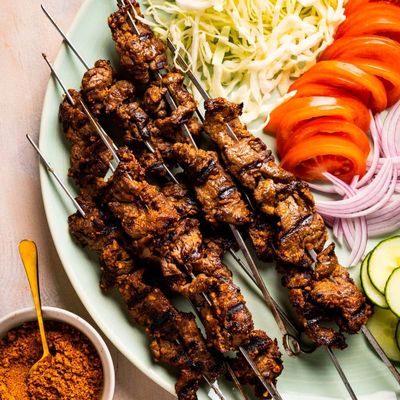
Beef sirloin or rump is sliced very thin across the grain. A suya spice (yaji) is made by grinding dry-roasted unsalted peanuts with ground ginger, cayenne, paprika, garlic powder, onion powder, ground cloves and salt, the peanut acts as the carrier and gives suya its unique nutty edge. Half the spice rubs into the beef; the strips marinate for 1 hour. They're threaded onto pre-soaked bamboo skewers in an accordion fold, brushed with oil, and grilled over high heat 4-5 minutes per side until charred at the edges. Fresh out of the fire, the skewers are dipped/rolled in the reserved dry spice, served with sliced raw red onion, tomato and shredded cabbage. Maggi and a wedge of lime alongside.

Nigerian 1 hour 37 minutes Serves4