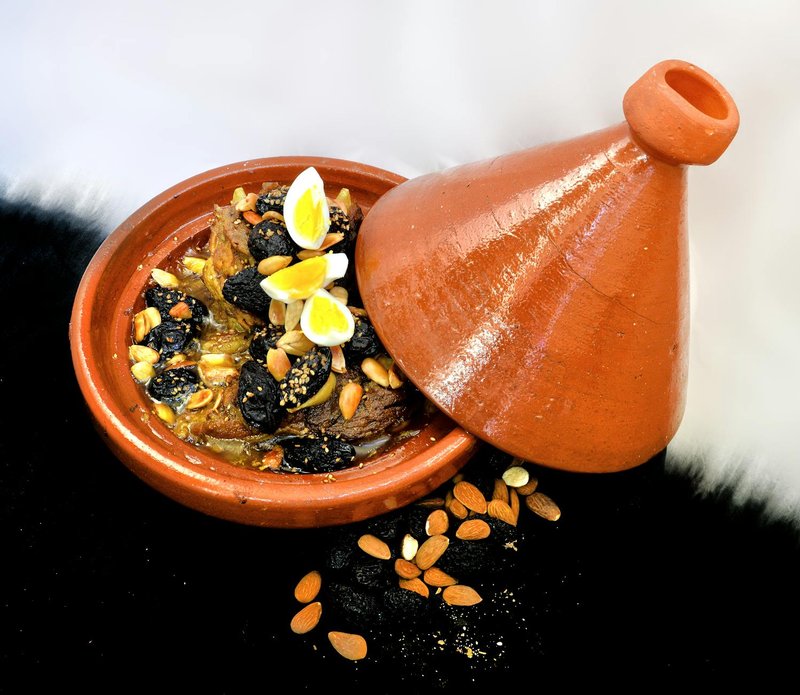
Lamb Tagine with Prunes
Morocco's Friday lamb: shoulder slow-cooked in a tagine with saffron, ginger and cinnamon, finished with soft brandy-soaked prunes and toasted almonds.
Overview
Lamb shoulder is cut into large chunks. A spice paste of garlic, ginger, saffron, paprika, cumin, cinnamon, salt and olive oil rubs in; rests briefly. Onion sweats slowly in olive oil; the lamb goes in skin/fat-side down to brown lightly; water (or stock) covers halfway. Lid on; slow simmer for 1 hour 45 minutes until very tender. Soft pitted prunes go in for the last 20 minutes with a tablespoon of honey. Garnished with toasted whole almonds and sesame seeds. Eaten with bread or couscous.
Ingredients
Lamb
- 1 kg lamb shoulder (cut into 5 cm chunks)
Spice paste
- 4 garlic cloves (crushed)
- 3 cm fresh ginger (grated)
- 1 large pinch saffron threads (soaked in 2 tablespoons hot water)
- 1 teaspoon sweet paprika
- 1 teaspoon ground ginger
- 1 teaspoon ground cumin
- 1 teaspoon ground cinnamon
- 1 ½ teaspoons salt
- ½ teaspoon black pepper
- 3 tablespoons olive oil
Tagine
- 3 tablespoons olive oil (additional)
- 2 onions (large, sliced thin)
- 1 cinnamon stick
- 500 ml water (or light lamb stock)
Prunes
- 300 g soft pitted prunes (the moist Agen-style, NOT dried)
- 3 tablespoons brandy (or warm water, to plump)
- 1 tablespoon clear honey
- ½ teaspoon ground cinnamon
Garnish
- 60 g whole blanched almonds (toasted in a dry pan 4 minutes until gold)
- 2 tablespoons toasted sesame seeds
- 2 tablespoons fresh coriander (chopped)
To serve
- Khobz (or couscous)
Method
Stage 1 - Spice paste
- Whisk all spice-paste ingredients in a wide bowl to a thick paste.
- Add the lamb chunks; rub all over.
- Rest 30 minutes.
Stage 2 - Soak the prunes
- Place the prunes in a small bowl with the brandy (or warm water); leave to plump for 30 minutes.
Stage 3 - Onion base
- Heat the 3 tablespoons olive oil in a tagine or wide heavy casserole over medium-low.
- Add onion; cook 12 minutes until soft and gold.
Stage 4 - Brown the lamb
- Push onion to one side; turn heat to medium-high.
- Add the lamb pieces fat-side down; brown 4 minutes (don't worry about all sides - Moroccan tagines don't sear hard).
- Stir together with the onion.
Stage 5 - Simmer
- Drop in the cinnamon stick.
- Pour in the water (or stock).
- Bring to a gentle simmer; cover with the tagine lid (or casserole lid).
- Cook 1 hour 30 minutes on the lowest simmer. The lamb should be very tender.
Stage 6 - Prunes and honey
- Add the soaked prunes (and their soaking liquid) to the tagine.
- Stir in the honey and additional cinnamon.
- Cook uncovered 15-20 minutes - the sauce reduces; the prunes plump further and soften into the sauce.
Stage 7 - Garnish and serve
- Taste; adjust salt or add a small extra drizzle of honey if the dish needs balance.
- Scatter the toasted almonds, sesame seeds and fresh coriander.
- Serve with bread or fluffy couscous.
Notes
- Lamb shoulder, not leg: Shoulder has fat and connective tissue that melt over 2 hours into a silky sauce. Leg goes dry. Don't substitute.
- Honey at the end, not the start: Honey added early scorches. Add at the prune stage when the sauce is wet enough to dilute it.
- Soft prunes, not dried: Agen-style soft prunes still in the bag - moist, plump, dark. Hard dried prunes need a much longer soak and never quite catch up.
Storage
- Refrigerate 4 days; even better on day 2 when the fruit has fully integrated.
- Freezes 3 months.
More like this
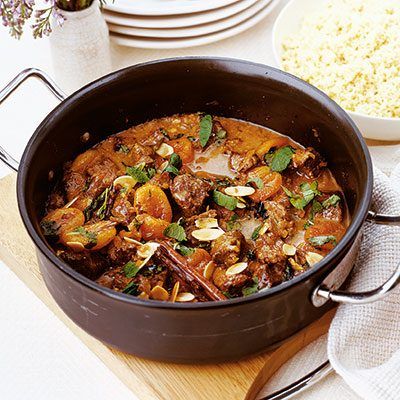
Lamb Tagine with Apricots and Almonds
Lamb shoulder cubes brown deeply, then simmer slow with onion, garlic and a Moroccan spice blend (ras el hanout, ginger, cinnamon). Stock and a splash of honey go in; dried apricots join in the second half so they soften without dissolving. Toasted almonds and coriander on top.
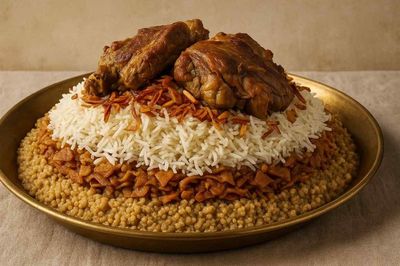
Mathloutha
The Saudi gathering platter built for the night when one cut of meat isn't enough. Three proteins share the same pot: lamb shoulder and beef chunks go in first with a kabsa-spiced tomato base for ninety minutes of slow simmer until they're meltingly tender, then chicken pieces drop in for the last thirty-five minutes (their cook time is shorter, so they go in later). The strained meat broth, deeply spiced from everything that has braised in it, becomes the cooking liquid for basmati scented with saffron and dried lime. At the end you arrange all three meats on top of the rice in the same platter and bring the whole thing to the centre of the table. The kind of dish you make for a wedding lunch, an Eid gathering, or the night the extended family arrives unannounced.
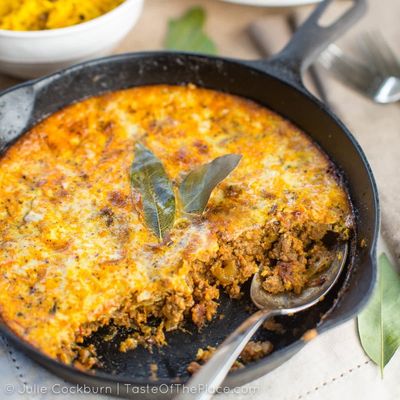
Bobotie
Bread is soaked in milk; mince is browned with onions; curry powder, turmeric and Cape Malay spices bloom. Apricot jam, mango chutney, vinegar and lemon balance the spice with sweet-sour notes. Raisins, toasted almonds and the soaked bread are folded through. The mixture is pressed into a baking dish; eggs are whisked with the leftover milk and poured over; bay leaves are stuck into the surface; the lot is baked until the topping is just-set with a faint wobble.
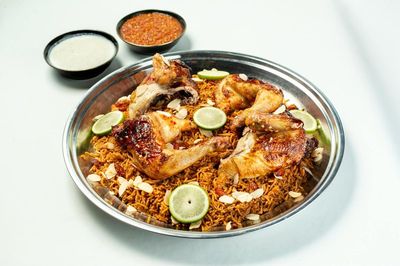
Kabsa
Saudi Arabia's national dish, the one platter you'll meet at almost every gathering from family lunch through wedding banquet. You brown chicken pieces or lamb shoulder hard in a heavy pot, then build a base of onion, garlic and ginger softened in the same fat, with tomato and a spoonful of baharat (or a dedicated kabsa spice mix) blooming until the kitchen fills with cardamom and cinnamon. The protein simmers in tomato and stock until it's tender and pulling away from the bone, then long-grain rice goes in to cook absorption-style in the same liquid, drinking up every layer of flavour the broth carries. You finish with almonds toasted in butter, raisins plumped briefly, and a fresh salsa of tomato, onion, chilli and parsley spooned on the side to cut the richness. Eaten communally from the centre platter, with hands or a long spoon.