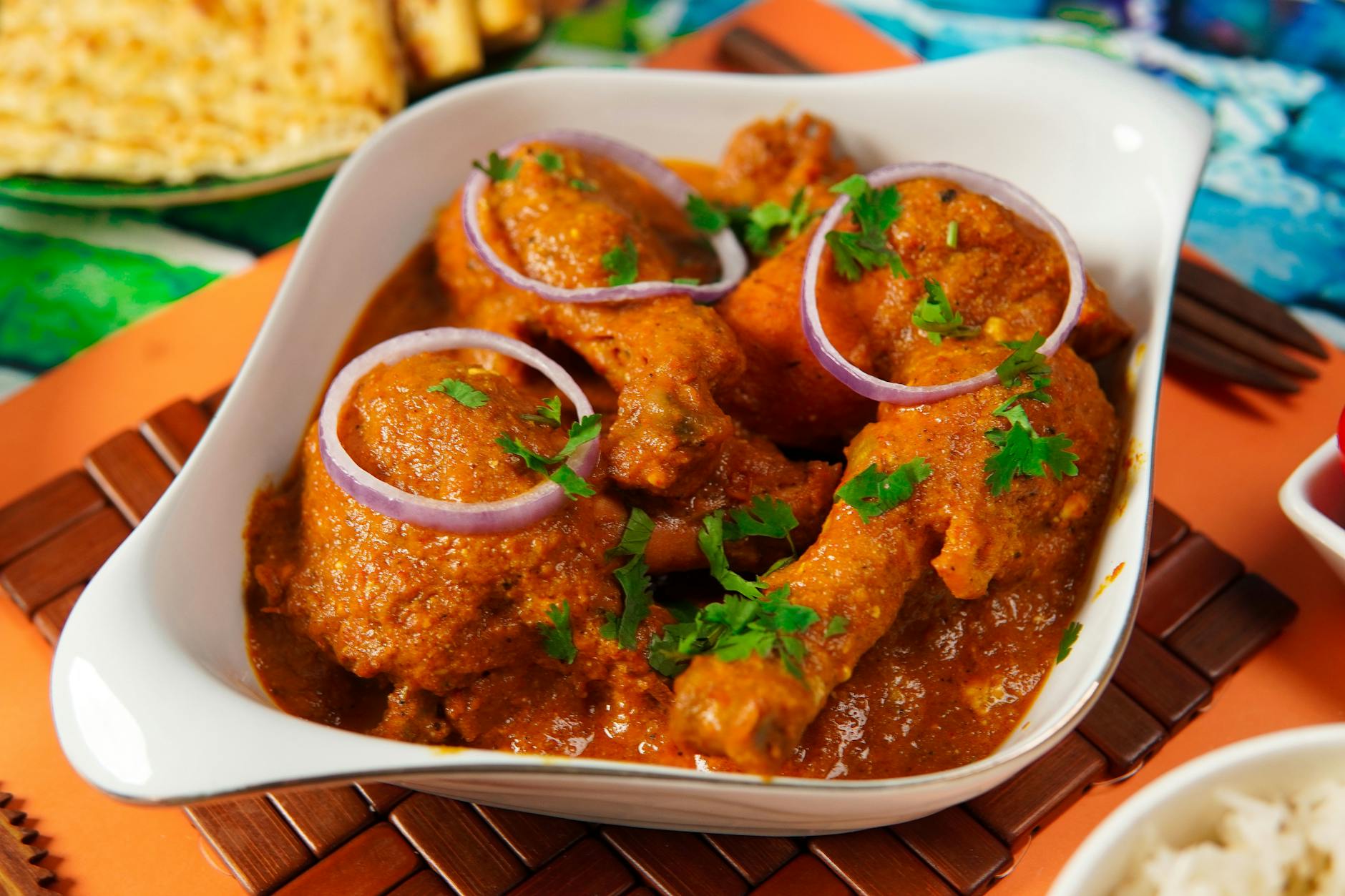
Chicken Xacuti
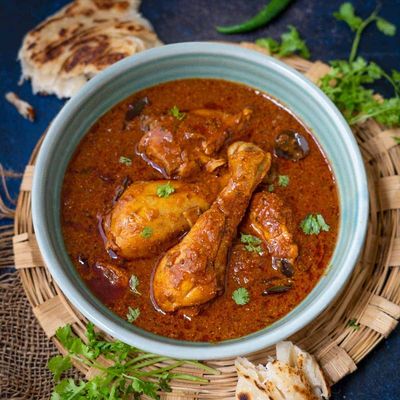
Goan chicken xacuti: a deeply roasted spice and coconut masala, dark as black coffee, fragrant with star anise and kashmiri chilli. The Sunday lunch curry of Catholic Goa.
Overview
A xacuti masala is built by dry-roasting fresh coconut to a deep mahogany brown alongside a long list of whole spices (Kashmiri and byadgi chillies, coriander, cumin, fennel, peppercorns, cinnamon, cloves, star anise, mace) and grinding them with onion, garlic and ginger into a black-brown paste. The chicken is browned briefly, the paste added, water poured in to cook the chicken through, and tamarind stirred in to finish. The trick is in the roast: the coconut should be almost-burnt, with the bitterness offset by the tamarind.
Ingredients
Xacuti masala
- 100 g fresh grated coconut (or 80 g desiccated, rehydrated in 4 tablespoons of warm water)
- 8 dried Kashmiri chillies
- 4 dried byadgi chillies (or other hotter dried chillies)
- 1 tablespoon coriander seeds
- 1 teaspoon cumin seeds
- 1 teaspoon fennel seeds
- 1 teaspoon black peppercorns
- 1 cinnamon stick (small, broken)
- 4 cloves
- 1 whole star anise
- 1 blade of mace (or ¼ teaspoon ground nutmeg)
- ½ teaspoon turmeric
- 25 g fresh ginger
- 6 garlic cloves
- 1 onion (roughly chopped)
- 1 tablespoon tamarind paste (or a walnut-sized lump soaked in 60 ml hot water and strained)
Chicken
- 1 kg chicken thighs (skin off, bone in if possible; cut into 6-8 pieces)
- 3 tablespoons coconut oil (or vegetable oil)
- 1 onion (finely sliced)
- 1 teaspoon salt
- 500 ml water
To finish
- 1 teaspoon palm vinegar (or cider vinegar)
- A handful of coriander (chopped)
Method
Stage 1 - Roast the masala
- Heat a dry heavy pan over medium-low heat.
- Toast the fresh coconut for 5-6 minutes, stirring constantly, until it turns from white to deep mahogany brown (this is the moment xacuti is built; pale coconut gives pale xacuti).
- Tip the coconut into a bowl.
- In the same pan, toast the chillies, coriander, cumin, fennel, peppercorns, cinnamon, cloves, star anise and mace for 1-2 minutes until fragrant; tip into the coconut bowl.
Stage 2 - Grind
- Combine the toasted spices and coconut with the turmeric, ginger, garlic, chopped onion and tamarind in a blender.
- Add 100 ml of water.
- Grind to a smooth dark paste; add more water if needed to keep the blade turning.
Stage 3 - Brown the chicken
- Heat the coconut oil in a wide pan over medium-high heat.
- Add the sliced onion and a pinch of salt; cook for 5 minutes until soft.
- Push the onion to one side; add the chicken pieces and brown for 3-4 minutes a side.
Stage 4 - The masala
- Pour in the xacuti paste.
- Stir to coat the chicken.
- Cook for 5-6 minutes, stirring, until the oil starts to separate from the masala.
Stage 5 - Simmer
- Pour in the water and the salt.
- Bring to a gentle simmer.
- Cover partially and cook for 30-35 minutes, stirring occasionally, until the chicken is tender and the sauce has darkened and thickened to a velvety consistency.
Stage 6 - Finish
- Stir in the palm vinegar.
- Taste and adjust salt.
- Scatter the coriander.
- Rest off the heat for 10 minutes before serving.
Stage 7 - Serve
- Serve with sannas, pao (Goan bread rolls) or steamed rice.
Notes
- Roast the coconut hard: The dish lives or dies on this step. Pull it from the heat one shade before burnt; the dark roast gives xacuti its colour, its slight bitterness and its name.
- Star anise is non-negotiable: It's the back-note that makes xacuti distinct from a regular Goan masala. Skip it and the dish loses its identity.
- Bone-in chicken adds depth: The bones thicken the gravy and add flavour. Skinless is essential (skin in xacuti goes flabby).
Storage
- Refrigerate up to 4 days; the flavour improves over 24 hours.
- Freezes well for 2 months.
More like this
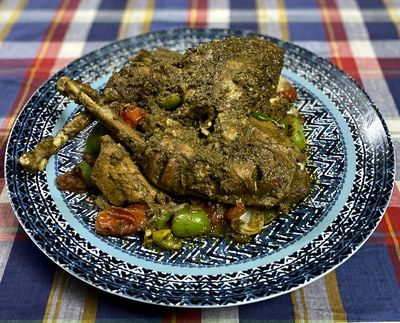
Chicken Cafreal
A vivid green masala is ground from coriander leaves, mint, green chilli, garlic, ginger, cumin, peppercorns and clove with palm vinegar. Chicken pieces are slashed and marinated for at least 4 hours (ideally overnight). The pieces are pan-fried in the marinade-paste over high heat until the herb crust dries out and chars at the edges, with a small splash of water added halfway through to keep the chicken juicy. Served with a wedge of lime and a salad of onion and tomato.
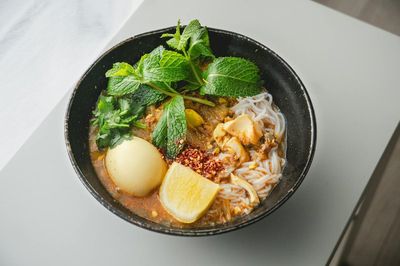
Malaysian Curry Laksa (Laksa Lemak)
A two-part dish: a deeply concentrated prawn-and-chicken stock built from roasted prawn shells, layered with a freshly pounded laksa paste of dried chilli, galangal, lemongrass and candlenuts. The two are joined with coconut cream to create a glossy, fragrant broth that bathes rice vermicelli, tofu puffs and prawns. Finished at the table with sambal, lime, fresh coriander and bean sprouts.
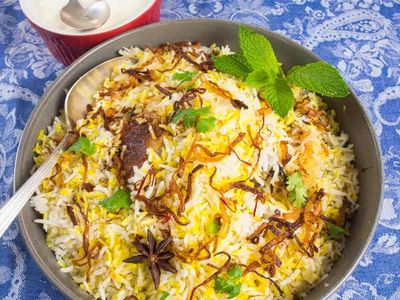
Goan Chicken Biryani
Chicken thighs are marinated overnight in a yogurt-and-vinegar paste with a freshly-ground Goan masala (Kashmiri chillies, peppercorns, cinnamon, cloves, coriander, cumin and fennel) plus a touch of toasted coconut and ginger-garlic paste. Basmati is parboiled in salted water with whole spices. Fried onions are crisped and reserved. The biryani is built in layers: marinated chicken, rice, fried onions, saffron milk, mint, coriander, repeated; sealed under a tight lid and cooked under dum for 45 minutes. Distinctively Goan: palm vinegar in the marinade and a small splash of coconut milk in the layering.
Andhra Chicken Curry
Chicken thighs are marinated briefly with turmeric, ginger-garlic paste, yogurt and a pinch of red chilli. A dry-roast of poppy seeds, sesame seeds, coconut, fennel, coriander and dried red chillies is ground with a splash of water into a coarse paste. The base is built with shallots, curry leaves and tomato; the chicken is browned in stages; and the masala paste is folded in for the long, gentle simmer. Tamarind and a curry-leaf temper finish.