Miang Kham
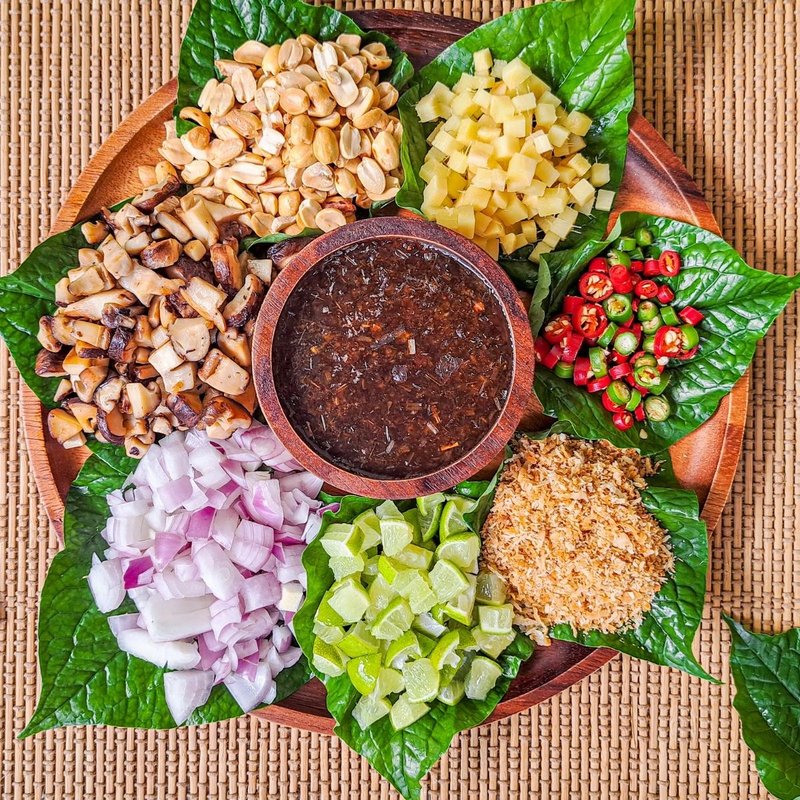
Thailand's one-bite parcel: diced lime, ginger, shallot, dried shrimp, peanuts and coconut wrapped in a betel leaf with palm-sugar sauce.
Overview
The sauce (the technical heart of the dish) reduces palm sugar, fish sauce, tamarind paste, water, ginger and dried shrimp to a thick, glossy, dark amber syrup. The fillings, diced lime (skin and all), diced ginger, sliced shallot, chopped roasted peanuts, dried shrimp, small chilli, and toasted shredded coconut, are arrayed in small mounds on a serving platter. Fresh young betel leaves go alongside. Each diner takes a leaf, layers a tiny pinch of each filling, drops a quarter-teaspoon of the sauce on top, folds and pops the whole thing in one bite.
Ingredients
Sauce
- 100 g palm sugar (chopped fine; or 80 g brown sugar)
- 60 ml water
- 50 g dried shrimp (rinsed and chopped fine)
- 3 tablespoons fish sauce
- 2 tablespoons tamarind paste
- 3 cm fresh ginger (grated)
- 2 shallots (small, very finely chopped)
- 1 red chilli (small, chopped, optional)
Fillings (arrayed in small piles)
- 1 lime (whole - diced into tiny 3 mm cubes, skin and all)
- 3 cm fresh ginger (finely diced)
- 1 shallot (medium, finely diced)
- 80 g unsalted roasted peanuts (lightly crushed)
- 40 g dried shrimp (rinsed; can be left whole or coarsely chopped)
- 80 g shredded coconut (toasted in a dry pan 4 minutes until golden)
- 2-3 Thai bird's-eye chillies (small, sliced thin)
- A handful of young betel leaves
Method
Stage 1 - Toast the coconut
- Place shredded coconut in a dry frying pan over medium heat.
- Stir constantly for 3-4 minutes until evenly golden brown and fragrant - coconut goes from gold to burnt in 30 seconds, so don't walk away.
- Tip onto a plate to cool.
Stage 2 - Make the sauce
- In a small saucepan, combine palm sugar and water.
- Heat gently until the sugar dissolves.
- Add the chopped dried shrimp, fish sauce, tamarind paste, grated ginger and finely chopped shallots.
- Simmer 8-10 minutes, stirring, until reduced to a thick glossy dark amber syrup that coats the back of a spoon.
- Add the chopped chilli (if using).
- Cool - the sauce thickens further as it cools.
- Taste; balance with extra fish sauce (saltiness), tamarind (sourness) or palm sugar (sweetness).
Stage 3 - Prep the fillings
- Lime: cut the whole lime into tiny dice - keep the peel ON; this is the bitter element. Aim for 3 mm cubes.
- Ginger: dice 3 mm.
- Shallot: dice 3 mm.
- Peanuts: crush lightly in a mortar or with the side of a knife.
- Dried shrimp: rinse briefly; leave whole or chop coarsely.
- Chillies: slice into thin rounds.
Stage 4 - Arrange
- Place the betel leaves in the centre of a wide platter, slightly overlapping.
- Around them, arrange small piles of each filling: lime cubes, ginger, shallot, peanuts, dried shrimp, coconut, chilli.
- Place the sauce in a small bowl with a tiny spoon.
Stage 5 - Eat
- Each diner takes a betel leaf.
- Layer a tiny pinch of each filling onto the leaf (4-5 mm pile total).
- Drop a quarter-teaspoon of sauce on top.
- Fold the leaf around the filling.
- Eat in one bite - chew slowly to get all the flavours at once.
Notes
- Eat in one bite: Miang kham is designed for a single explosive mouthful. Splitting into multiple bites defeats the dish; eat all the layered flavours simultaneously.
- Lime PEEL is the bitter: The peel of a fresh lime, diced fine, is what gives miang kham its faint pleasant bitterness. Don't peel the lime first - it's the whole fruit going in.
- Betel leaf substitutes: Real cha plu betel leaves give the most authentic taste (faintly aniseed-peppery), but they're hard to find outside Asian shops. Cos lettuce or perilla leaves work; spinach leaves are the closest non-leafy substitute.
Storage
- The sauce keeps refrigerated 2 weeks in a sealed jar - and is excellent over grilled meats or vegetables.
- Toasted coconut keeps 1 week airtight at room temperature.
- All fillings best on the day; lime and shallot oxidise overnight.
More like this
Malaysian Curry Laksa (Laksa Lemak)
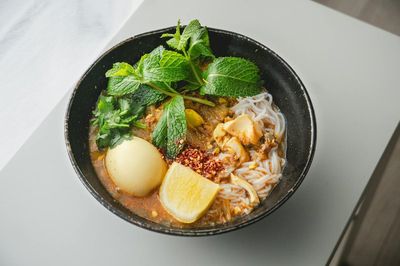
A two-part dish: a deeply concentrated prawn-and-chicken stock built from roasted prawn shells, layered with a freshly pounded laksa paste of dried chilli, galangal, lemongrass and candlenuts. The two are joined with coconut cream to create a glossy, fragrant broth that bathes rice vermicelli, tofu puffs and prawns. Finished at the table with sambal, lime, fresh coriander and bean sprouts.
Kerala Fish Curry
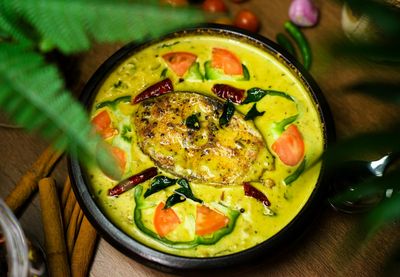
A masala paste of shallot, ginger, garlic and red chilli is bloomed in coconut oil with mustard seeds, fenugreek and curry leaves. Coconut milk is poured in and the curry brought to a simmer, then tamarind water and a tomato are added. The fish goes in last and poaches in the gravy for just long enough to set; over-stirring breaks the pieces.
Gỏi Cuốn
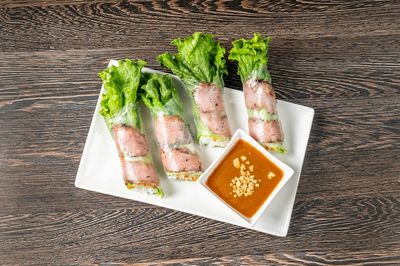
Pork belly is simmered until tender, prawns are poached briefly, and vermicelli is cooked just al dente. Everything cools to room temperature, then rice paper rounds are dipped briefly in warm water and rolled around lettuce, herbs and the protein with the pink of the prawns showing through the wrapper. The peanut-hoisin sauce is the make-or-break: it should be thick, sweet and lightly garlicky.
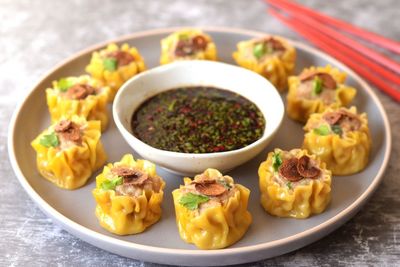
Kanom Jeeb
A filling of minced pork and chopped prawn binds with coriander root (pounded with garlic and white pepper into the traditional Thai "rak pak chee" paste), oyster sauce, soy sauce, sugar, sesame oil, and a beaten egg. The mixture chills for 20 minutes to firm. Square wonton wrappers go around the filling cupcake-style: filling in the centre, edges pulled up and pleated open around the meat, top brushed with a tiny smear of beaten egg and topped with a thin slice of carrot. Steamed in a bamboo basket over boiling water for 8 minutes. Dip is black soy sauce with sliced chilli and rice vinegar.