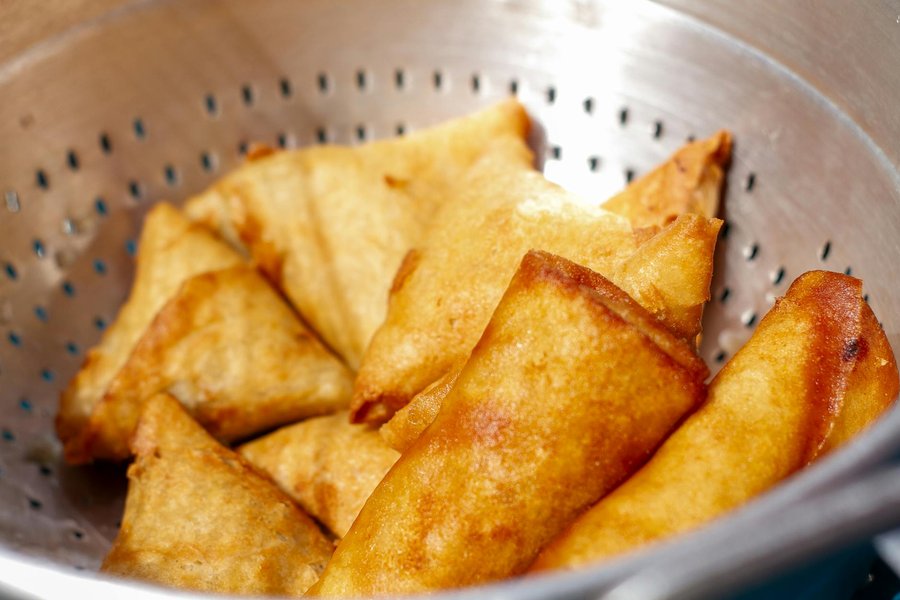
Burmese Samosa
Burma's lighter samosa: paper-thin pastry around a gently spiced potato-and-pea filling. Eaten at teashops with raw onion and a green chilli on the side.
Overview
The Burmese take on the South Asian samosa, with a thinner, crisper pastry and a milder filling than its Indian cousin. You make a hot-water dough that rolls out very thin so the fried shell ends up glassy and crisp rather than bready. The filling is mild by Indian standards: turmeric, ginger, fried onion and a whisper of cumin folded into mashed potato and peas, finished with crushed peanuts for the nuttiness that marks the Burmese version. The triangles fry at moderate heat until amber and crackling, the pastry blistering as it goes. Eaten hot dipped in tamarind sauce, or torn into chunks for a samusa-thoke salad later.
Ingredients
Pastry
- 250 g plain flour
- ½ teaspoon salt
- 2 tablespoons vegetable oil
- 130 ml hot water (just off the boil)
- 1 tablespoon plain flour mixed with 1 tablespoon water (for sealing)
Filling
- 400 g floury potatoes (Maris Piper or King Edward)
- 2 tablespoons vegetable oil
- 1 onion (small, finely diced)
- 2 garlic cloves (grated)
- 2 cm ginger (grated)
- 1 long green chilli (finely chopped)
- ½ teaspoon ground turmeric
- ½ teaspoon ground cumin
- ¼ teaspoon ground white pepper
- 80 g frozen peas
- 1 teaspoon salt (or to taste)
- 2 tablespoons roasted peanuts (roughly crushed)
- 2 tablespoons coriander leaves (chopped)
- ½ lime (juice)
For frying
- 750 ml neutral oil
To serve
- 1 red onion (small, very thinly sliced)
- 2 long green chillies (whole)
- Lime wedges
Method
Stage 1 - Dough
- Combine the flour and salt in a bowl. Stir in the oil with a fork until the flour looks like damp sand.
- Pour in the hot water in a slow stream, stirring; bring together into a shaggy mass.
- Tip onto a clean surface; knead 5 minutes until smooth and pliable. The dough should be firm but not stiff.
- Wrap in clingfilm; rest 30 minutes at room temperature.
Stage 2 - Filling
- Peel and chop the potatoes into 1 cm dice. Boil in salted water 10-12 minutes until just tender; drain and let steam dry.
- Heat the oil in a frying pan over medium heat. Add the onion; cook 5 minutes until soft.
- Stir in the garlic, ginger and chilli; cook 1 minute.
- Add the turmeric, cumin and white pepper; toast 30 seconds.
- Add the potatoes, peas and salt. Cook 3-4 minutes, breaking the potato slightly with the back of a spoon. You want a chunky, dryish mix, not a puree.
- Off the heat, stir in the peanuts, coriander and lime juice. Spread out on a plate to cool to room temperature.
Stage 3 - Shape
- Divide the dough into 6 equal balls; cover with a damp cloth.
- Roll one ball into a thin oval about 18 cm long, 12 cm wide and 1 mm thick. Burmese samosa pastry is thinner than Indian.
- Cut the oval in half across the short axis to give two semicircles.
- Take one semicircle. Brush the straight edge with the flour paste. Fold it into a cone, overlapping the straight edge by 1 cm. Press to seal.
- Hold the cone open; spoon in 1 ½ tablespoons of filling. Don't overfill.
- Brush the top edge with flour paste. Press the opening shut, folding one corner over the other to make a tidy triangle. Crimp the seal with a fork.
- Repeat with the rest. Keep finished samosas under a dry cloth.
Stage 4 - Fry
- Heat the oil in a wok or deep pan to 160°C. A scrap of dough should rise slowly and bubble gently.
- Fry 4 samosas at a time, 6-7 minutes, turning once, until evenly amber and crisp. Slow frying gives the thin shell time to cook through.
- Lift onto kitchen paper.
Stage 5 - Serve
- Pile onto a plate; scatter the sliced red onion alongside, lay the whole chillies and lime wedges on the side.
- Eat hot, biting a corner off and squeezing in a little lime.
Notes
- Hot-water dough: The boiling water partly gelatinises the starch, which is why the fried pastry stays crisp and translucent rather than bready. Don't substitute cold water.
- Roll thin, fry slow: The defining difference from Indian samosa is the wafer pastry. Too thick and you lose the character; too hot an oil and the outside colours before the layers cook.
- Filling must be cold: Hot filling steams inside the pastry and makes it soggy. Let it cool fully.
- Vegetarian by default: Burmese samosas are usually meat-free at teashops. A minced-chicken version exists but is less common.
Variations
Split pea filling: Replace the potato with 250 g cooked yellow split peas, lightly mashed and seasoned the same way. Drier, nuttier, traditional in upper Burma. Samosa soup (samusa thoke): A famous Burmese street dish where leftover or fresh samosas are broken into a chickpea-flour broth with cabbage, onion and tamarind. Worth seeking out.
Serving
Serve with: a saucer of sliced raw onion and whole green chillies (the classic teashop accompaniment), or a small bowl of tamarind chutney. Garnish with: lime wedges.
Storage
- Best eaten within 30 minutes of frying.
- Re-crisp in a 190°C oven for 6-7 minutes.
- Uncooked, shaped samosas freeze well for 2 months; fry from frozen, adding 2 minutes to the cook time.
Recipes mentioned here
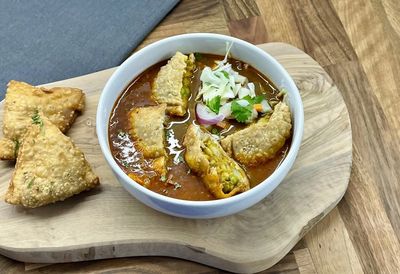
Samusa Thoke
A Yangon street-stall snack and the lunch office workers queue for at midday: broken samosas tossed in a hot yellow-pea soup at the bowl with raw onion, lime and crispy bits. You cook yellow split peas with turmeric and salt into a thick soup, season it with fried sliced onion, garlic, paprika and fish sauce. Small Burmese samosas (filo or thin pastry triangles with a lamb mince filling) are pre-fried or warmed. The construction in the bowl is fast: a heap of broken samosa, a ladle of hot pea soup, a tangle of raw red onion, a small mound of crispy gram-flour bits, chopped cilantro, a wedge of lime, chilli to taste. Toss at the table and eat while everything is hot.
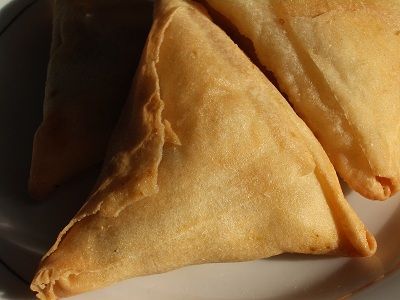
Samosas
Samosas are the ultimate Indian snack: crispy, angular parcels of golden filo pastry enclosing spiced, fragrant filling. The technique is simple yet satisfying, triangular folding, egg wash sealing, and oven-baking creates a light, shattering crust. Unlike deep-fried versions, these are baked for a lighter result while maintaining crispness. Serve warm with chutney, raita, or lemon juice. These are elegant enough for entertaining, casual enough for snacking.
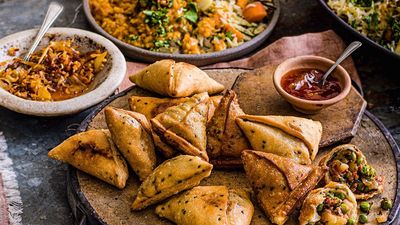
Samosa
A stiff oil-rich plain-flour dough (maida) rolls thin and crisps in the fryer with the characteristic blistered surface. The filling is dry: boiled potato, peas, ginger, green chilli, cumin, coriander seed, garam masala and amchur (dried mango powder) for sourness. The pastry is rolled into ovals, halved into semicircles, formed into cones, stuffed, sealed and fried in two stages: low-temperature first to set the pastry without browning, then a hot finish to blister and crisp.
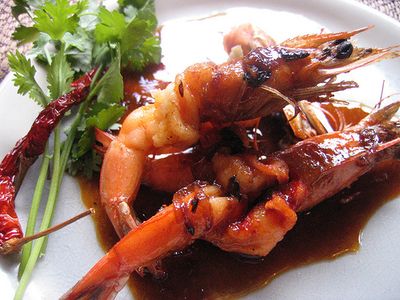
Tamarind Sauce
A Thai-inspired sauce balancing tart tamarind with umami-rich fish sauce and aromatic ginger. This complex, gloss-coated accompaniment brings bright acidity and subtle heat to steamed fish and prawns.
More like this
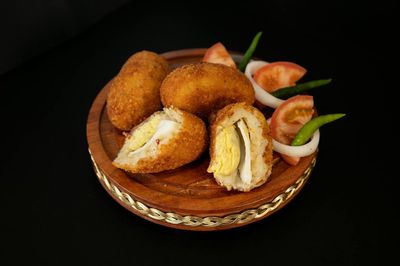
Alur Chop
Alur chop (alu meaning potato, chop being a Bengali loan-word for a fried cutlet, inherited from the British "chop") is the workhorse of Bengali street snacks: every tea stall, every train platform, every late-afternoon adda has a stack of these warming under a glass cover. The construction is two layers. The inner mash is heavily seasoned: boiled potato folded through fried onion, ginger, green chilli, roasted cumin and a measured punch of Bengali bhaja moshla (a dry-roasted spice blend of cumin, coriander and dried chilli). Some versions add a few peanuts or roasted chana dal for crunch; in Kolkata the mash often includes a slick of mustard oil for fragrance. The outer shell is a thin chickpea-flour batter, the same family as beguni and piyaju, fried hot so it sets into a thin crisp casing rather than a heavy crust. The trick is contrast: a shell crisp enough to crackle, a centre soft and yielding and a touch wet from the onion. They are sold individually wrapped in newspaper for a few rupees and eaten standing up, often with muri puffed rice and a small dollop of kasundi (Bengali fermented mustard sauce) on the side. A monsoon and winter snack above all, when the cold air makes the hot oil and the inside-warm chop feel particularly right.
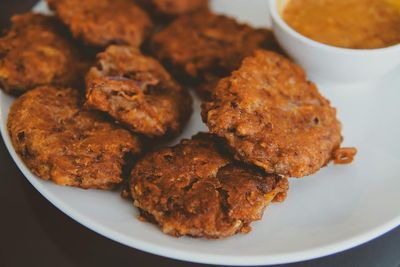
Bean Akyaw
The Burmese yellow split-pea fritter, sold by street vendors in hot oil-spattered cones of newspaper across Yangon's evening markets. You soak yellow split peas overnight until they're softened but not mushy, then blitz to a coarse sandy paste with shallot, garlic, ginger, turmeric and coriander. No flour, no binder; the natural starch in the peas holds the fritters together as they fry. Tablespoonfuls drop into hot oil and fry until they're deep gold and craggy at the edges. Eaten hot from the cone with a sour-sweet tamarind dipping sauce, a wedge of lime, and whatever you can carry while you walk on through the evening crowds.
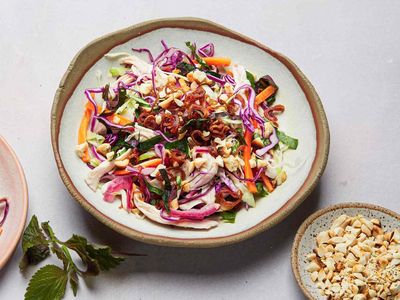
Gỏi Bắp Cải
Poached chicken is shredded and tossed with finely shredded cabbage, carrot and onion that has been softened in a light vinegar bath. A bright nước chấm style dressing brings everything together and toasted peanuts and fried shallots finish the top. The trick is balance: the salad should be crunchy, not waterlogged, and the dressing should taste sharp on its own before it hits the salad.
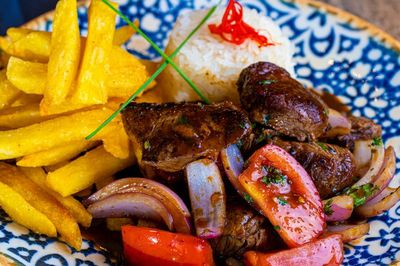
Lomo Saltado
Beef strips are marinated briefly in soy and aji amarillo paste. Fries are cooked separately, pre-fried, set aside. The wok hits high heat; beef is seared in batches; red onion and tomato are added briefly so they keep their bite; soy, vinegar, lime and stock are poured in to sauce. The fries go in last, just before serving, a 30-second toss so they pick up flavour without going soggy.