Aromatic Salt (Two Versions)

Aromatic Salt (Two Versions)

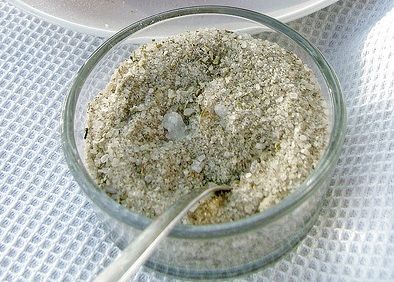
Aromatic salt is specifically designed for British-Indian Balti cooking, a finishing salt that brings subtle spice notes rather than aggressive heat. This is about using salt as a vehicle for flavor rather than just seasoning. The two versions allow choice between delicate (light version) and more assertive (spicy version). Both blend sea salt with warm spices, creating finishing touches that elevate a dish without overwhelming it.

Spices 10 minutes Serves120-130
Burmese Samosa

Burmese Samosa

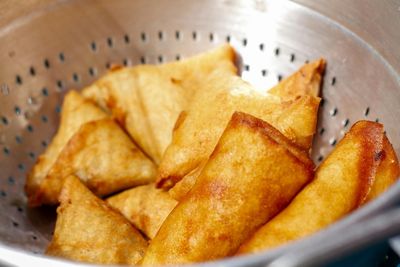
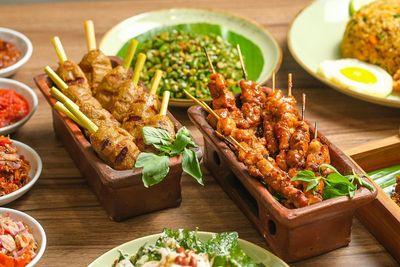
The Burmese take on the South Asian samosa, with a thinner, crisper pastry and a milder filling than its Indian cousin. You make a hot-water dough that rolls out very thin so the fried shell ends up glassy and crisp rather than bready. The filling is mild by Indian standards: turmeric, ginger, fried onion and a whisper of cumin folded into mashed potato and peas, finished with crushed peanuts for the nuttiness that marks the Burmese version. The triangles fry at moderate heat until amber and crackling, the pastry blistering as it goes. Eaten hot dipped in tamarind sauce, or torn into chunks for a samusa-thoke salad later.

Snacks 1 hour 5 minutes Serves4
Burmese Tea-Leaf Snack Mix

Burmese Tea-Leaf Snack Mix

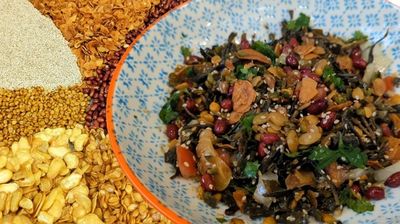
The older, more ceremonial form of lahpet, the version that predates the salad. Unlike lahpet thoke (the salad), there's no cabbage, no tomato, no fresh dressing - the fermented tea leaves stay pungent and concentrated, and the fried elements supply texture and salt. You keep all the components separate on a divided plate until they reach the table, so the crispy bits don't soften, and each guest builds their own bite from the spread. Eaten as an afternoon teashop snack with a small cup of green tea, or traditionally at the close of formal meals as a sign of welcome and reconciliation - a Burmese custom that dates back centuries and still turns up at weddings.

Snacks 25 minutes Serves6
Caponata

Caponata

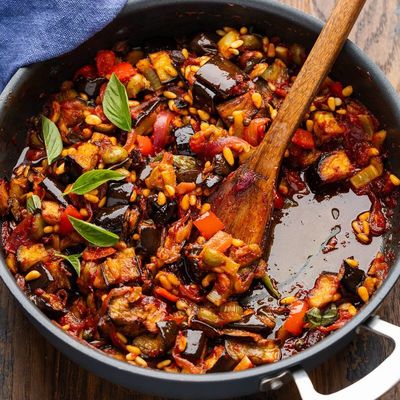
Aubergine cubes are salted to weep, fried hard in olive oil to deep gold, and reserved. A separate pan is used to soften diced onion and sliced celery in olive oil; garlic joins briefly; chopped tomatoes simmer with red wine vinegar and sugar to make the agrodolce base. Green olives, capers, sultanas (optional) and toasted pine nuts are stirred in. The fried aubergine is returned and simmers for 10 minutes to meld. Off heat, fresh basil is scattered. Rested at least 2 hours (ideally overnight) before serving at room temperature.

Sides 1 hour 40 minutes Serves6
Charoset

Charoset

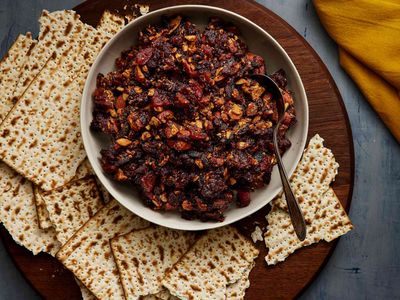
The Ashkenazi version, simplest and most common in northern Europe and the United States: tart apples chopped fine, walnuts crushed coarse, cinnamon, a little brown sugar, and sweet kosher red wine to bind. Stirred together and left for the flavours to meld. Some households add a pinch of ground ginger or a squeeze of lemon. There are dozens of regional variants (Sephardi versions use dates and figs); this one is the most familiar at a North American seder.

Sides 15 minutes Serves8
Chicken with Cashews

Chicken with Cashews

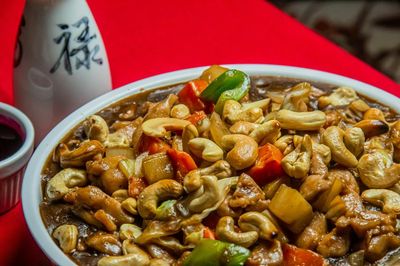
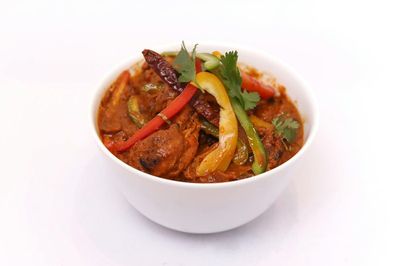
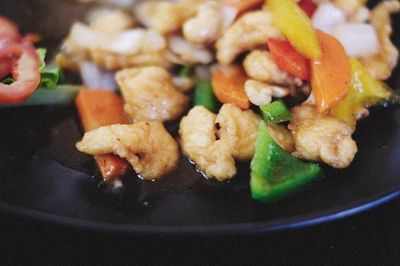
This is a hugely popular dish at Thai restaurants and takeaways, and my family love it. It is important to cut the chicken pieces so that they are about the same size as the cashews (although this is more for presentation as large chunks also work fine). You can mix the sauce and fry the cashews, chillies and chicken a day or so in advance, making this a dish you can cook up very quickly after work with little mess. The first time I tried making this recipe, I burnt the cashews and chillies. Don’t make the same mistake or you’ll have to start all over again. They don’t take long to colour in the oil and cashews aren’t cheap, so keep an eye on them. Although there’s nothing stopping you from doing so, the dried and fried chillies are not meant to be eaten. I like to serve this curry with jasmine rice.

Thai 30 minutes Serves4
Chicken Xacuti

Chicken Xacuti

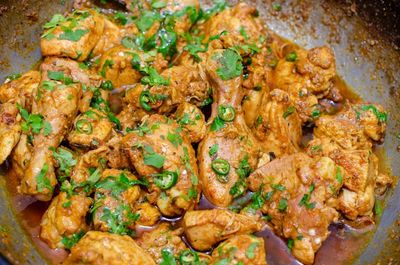
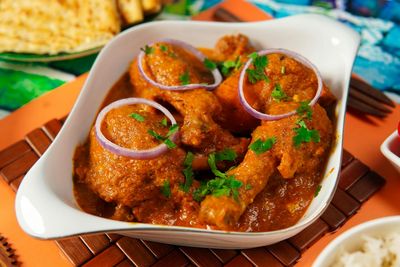
A xacuti masala is built by dry-roasting fresh coconut to a deep mahogany brown alongside a long list of whole spices (Kashmiri and byadgi chillies, coriander, cumin, fennel, peppercorns, cinnamon, cloves, star anise, mace) and grinding them with onion, garlic and ginger into a black-brown paste. The chicken is browned briefly, the paste added, water poured in to cook the chicken through, and tamarind stirred in to finish. The trick is in the roast: the coconut should be almost-burnt, with the bitterness offset by the tamarind.

Goan 1 hour 20 minutes Serves4-6
Chilli oil

Chilli oil

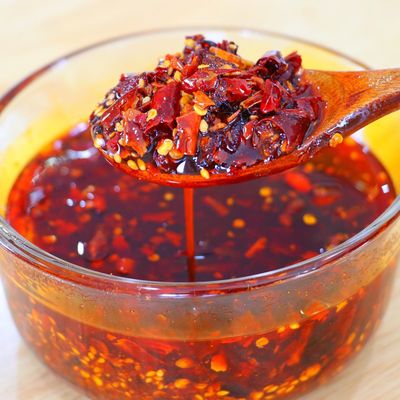
Two-stage flavour build: first a spice infusion (whole spices soaked briefly in water, then simmered slowly in vegetable oil with spring onion and ginger), then a sizzle (the hot strained oil poured over a heat-proof bowl of chilli flakes, smoked paprika, soy and Chinese vinegar). Cooling. Mixing in the textural elements: caster sugar, salt, chicken stock powder, crispy fried shallots and crispy fried garlic. Jarred, rested 24 hours so the flavours marry, stirred vigorously before each use because the oil and solids separate.

Snacks 25 hours 20 minutes Serves1
Fatayer Sabanikh

Fatayer Sabanikh

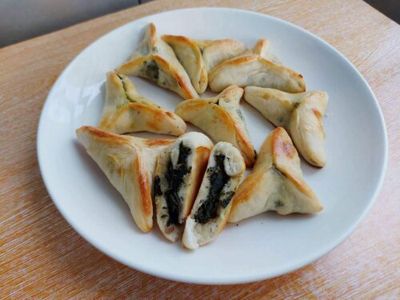
A soft yeasted olive-oil dough rises for 45 minutes. The filling: spinach wilts briefly in salted water and is squeezed bone-dry; chopped onion massages with salt to soften and weep; the two combine with sumac, lemon juice, pomegranate molasses, olive oil and toasted pine nuts. The dough divides into 12 balls; each rolls into a 12 cm disc; a spoon of filling sits in the centre; the disc folds into a tricorn (three corners pinched up to meet at the top). Baked at 220°C 15-18 minutes until deep gold.

Palestinian 1 hour 38 minutes Serves4
← Prev Page 1 of 4 Next →