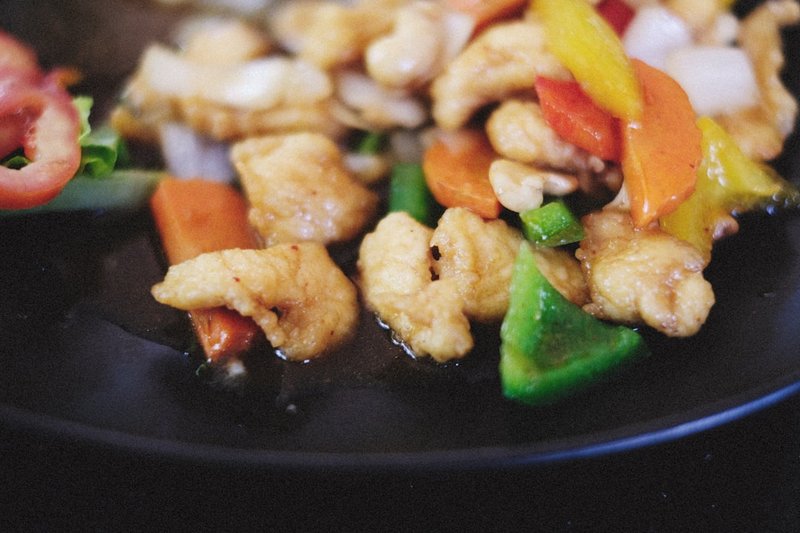
Chicken with Cashews
Thailand's chicken with cashews: chicken stir-fried hot with dried chillies, roasted cashews, spring onion and a glossy oyster-soy-sauce.
Overview
This is a hugely popular dish at Thai restaurants and takeaways, and my family love it. It is important to cut the chicken pieces so that they are about the same size as the cashews (although this is more for presentation as large chunks also work fine). You can mix the sauce and fry the cashews, chillies and chicken a day or so in advance, making this a dish you can cook up very quickly after work with little mess. The first time I tried making this recipe, I burnt the cashews and chillies. Don’t make the same mistake or you’ll have to start all over again. They don’t take long to colour in the oil and cashews aren’t cheap, so keep an eye on them. Although there’s nothing stopping you from doing so, the dried and fried chillies are not meant to be eaten. I like to serve this curry with jasmine rice.
Ingredients
Protein
- 450g (1lb) skinless chicken thigh fillets, cut into small cashew-size pieces
Sauce
- 2 tbsp light soy sauce
- 1 tbsp dark soy sauce
- 1 tbsp oyster sauce
- 1 tsp Thai seasoning sauce (optional)
- 70ml (¼ cup) water or chicken stock
- 1 tsp palm sugar, grated and finely chopped
Aromatics
- 6 garlic cloves, roughly chopped
- 4 spring onions (scallions), sliced
Vegetables
- 1 onion (large), thinly sliced
- 3 red spur chillies, thinly sliced
- 2 green bird’s eye chillies, cut into thin rings
Other
- 20-30 cashews
- 20 dried red bird’s eye chillies
- 3 tbsp cornflour (cornstarch)
Fat
- 250ml (1 cup) rapeseed (canola) oil, plus an extra 3 tbsp
Method
Stage 1 - Prepare Sauce
- Whisk all of the sauce ingredients together and taste it.
- Add more sugar if you like a sweeter flavour and then set aside.
Stage 2 - Fry Cashews and Chillies
- Heat 250ml (1 cup) of rapeseed (canola) oil in a wok or saucepan until shimmering hot.
- Add one cashew. It should sizzle on contact but not brown too quickly.
- If that cashew looks like it is happy in the oil, add the rest and cook for about a minute until light golden brown in colour.
- Transfer to a paper towel to soak up any excess oil.
- Do the same with the chillies, checking the oil temperature first.
- You want them to still be a nice deep red colour. If the oil is too hot, they will quickly burn and turn brown.
Stage 3 - Fry Chicken
- Dust the chicken pieces with the cornflour (cornstarch) and add it in small batches to the hot oil.
- Fry for 3-5 minutes until golden brown and crispy.
- Transfer to a paper towel to soak up the excess oil.
Stage 4 - Combine
- Now heat a wok or large frying pan over a medium heat.
- Add 3 tablespoons of oil to the wok and stir in the garlic, onion, spur chillies and green bird’s eye chillies.
- Fry until the garlic is turning soft and a very light brown colour but be very careful not to burn it.
- Stir in the sauce mixture and simmer for about 30-60 seconds to thicken and then add the chicken, cashews and dried and fried chillies, stirring well to combine.
- Continue cooking for a minute or two until the sauce is sticking to the meat and cashews and then taste it, adjusting the seasoning if necessary.
- Serve immediately sprinkled with the chopped spring onions (scallions) to garnish.
Notes
- Don't burn the cashews and chillies.
- Dried chillies are not meant to be eaten.
Serving
Serve with jasmine rice.
Storage
- Best served immediately; can be refrigerated for 1 day.
More like this
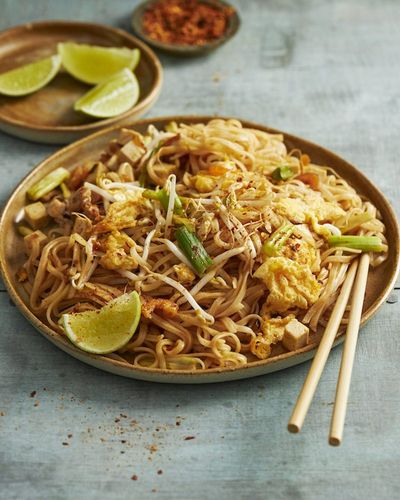
Prawn and Pork Pad Thai
This classic Thai dish of noodles is both aromatic and lightly spicy, serving well as either a main course or a starter. Pad Thai combines stir-fried rice noodles with tender chicken, pork, and prawns in a balanced sauce of curry paste, oyster sauce, and fish sauce. Fresh herbs, crushed peanuts, and a squeeze of lime complete this iconic Thai street food favourite.
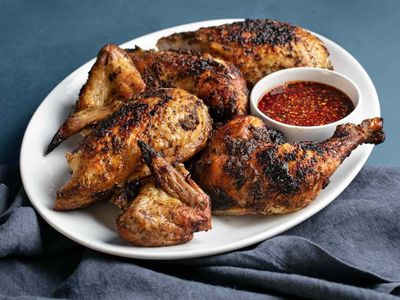
Gai Yang
Gai yang ("grilled chicken") is one of the cornerstones of Isaan cooking, the cuisine of north-eastern Thailand that has spread across the whole country and into Thai restaurants worldwide. The defining flavour is coriander root, an ingredient barely used in Western cooking but central to Thai marinades. Pounded in a granite mortar with garlic, white peppercorns and a pinch of salt, it forms an aromatic paste that's then mixed with fish sauce, oyster sauce and a touch of sugar. The chicken is butterflied (spatchcocked) so it lies flat on the grill, marinated for at least 4 hours, then cooked slowly over moderate charcoal. The proper Isaan technique is patient: 30 minutes or more, turning often, sometimes pressed flat between two bamboo splints, so the skin slowly crisps and the meat takes on smoke without burning. The flavour is savoury-funky from fish sauce, peppery-warm from white pepper, deeply garlic-and-herb from the paste, with no chilli in the marinade itself; heat comes from the dipping sauce. Difficulty is low for the home cook: a good mortar or a small food processor makes the paste in 2 minutes, butterflying a chicken is a single cut down the backbone, and any covered grill or kettle does the cooking. Eaten by hand with balls of sticky rice and dipped into nam jim jaew, the toasted-rice-and-tamarind dipping sauce.
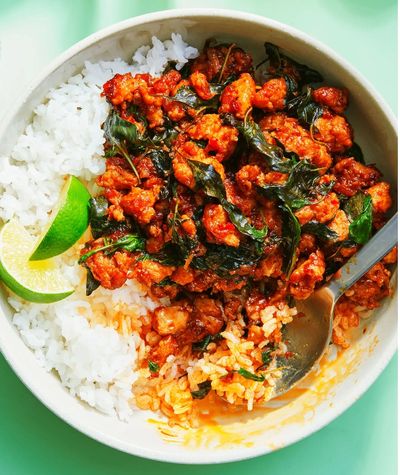
Thai Holy Basil and Chilli Chicken Stir Fry
Although there is no rule about how to cut your chicken for this popular Thai stir fry, I like to cut the meat quite small, slightly smaller than bite-size. This is a delicious and easy recipe that can be whipped up in minutes. Serve it with white, steamed jasmine rice.
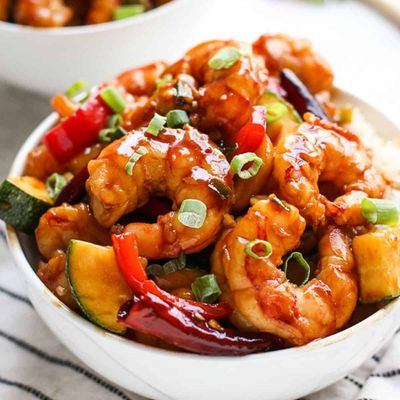
Kung Pao Shrimp
Kung pao (gongbao) shrimp is the seafood cousin of the classic Sichuan gongbao jiding, named for the 19th-century governor-general Ding Baozhen whose title was Gong Bao. Where the chicken version uses diced meat, the shrimp version keeps the prawns whole or halved so they curl into bright pink commas around the chillies and peanuts. The flavour profile is the signature Sichuan "lychee" balance: a touch of sweetness from sugar, sourness from black vinegar, salt and umami from soy, and the warm tingle (ma la) of toasted Sichuan peppercorn paired with the smoky bite of dried er jing tiao chillies. This is a fast dish, fundamentally a wok exercise: every ingredient must be prepped and lined up before the heat goes on, because once the chillies hit the oil you have maybe ninety seconds before everything is overcooked. Difficulty is moderate for a home cook with a working wok and high burner; the trick is keeping the chillies dark red and fragrant without scorching them black, and pulling the shrimp out the moment they curl. Served over plain rice it is one of the most rewarding ten-minute meals in the repertoire.