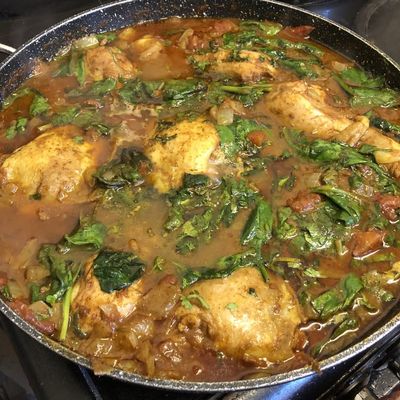
Agra Ginger Chicken
A light, cleansing chicken curry from Agra with fresh ginger, warm spices and bright tomato notes. This vibrant dish is designed to be accessible and fresh, with spinach and lime lifting the finished curry.
Indian
Tap a chip to add another filter, or use Clear all below.
A light, cleansing chicken curry from Agra with fresh ginger, warm spices and bright tomato notes. This vibrant dish is designed to be accessible and fresh, with spinach and lime lifting the finished curry.
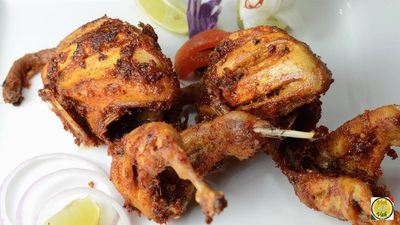
Simple tandoori-style chicken thighs marinated in yogurt and spices for tender, flavorful meat. Thighs or drumsticks work best; use mild paprika for color and flavor, or chilli powder for heat. Yogurt and lemon tenderize the meat, allowing spices to penetrate deeply.
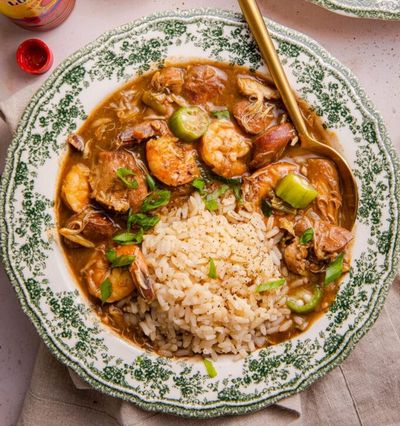
The "everything" Louisiana gumbo, chicken thighs, andouille, lump crab and shrimp all in one pot, and the dish where the technique matters more than the recipe. The roux is the single defining step and the line between Cajun gumbo and every other stew on earth: a full cup of oil and a full cup of flour cooked at medium-low for around 30 minutes, stirred without stopping, until the colour goes from blond to peanut butter to milk chocolate to dark chocolate. That's not flavour theatre; the long-cooked roux produces a deeply nutty, slightly bitter, profoundly savoury base that thickens the gumbo and gives it the distinctive almost-charred note no shortcut can replicate. Around the roux: the Cajun "holy trinity" of onion, bell pepper and celery; filé powder (ground sassafras leaves) added off heat as a second thickener; okra adding a third (and contributing its own slight slip); plus the four proteins, each adding a different layer. Flavour is dark, smoky, herbaceous, and slightly briny from the seafood. Smell is the roux toasting. Not difficult on technique but tremendously demanding on patience and attention; 30 minutes of unbroken stirring is the gateway, and if you walk away or rush it the roux burns and you start over. A dish that runs deep through Cajun and Creole Louisiana, with origins in the French settlers, the Choctaw (who contributed filé), West Africans (who contributed okra), and Spanish colonial traditions of Louisiana from the 1700s onwards.
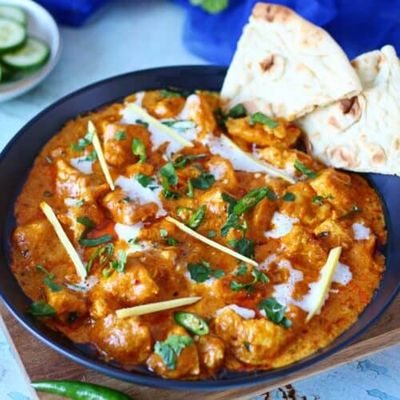
A rich, ghee-laden chicken handi cooked in the traditional style, featuring tender chicken thighs simmered in a spiced tomato-onion base with yoghurt and cream. Named for the handi pot, this dish varies by chef but delivers deep, authentic flavors.
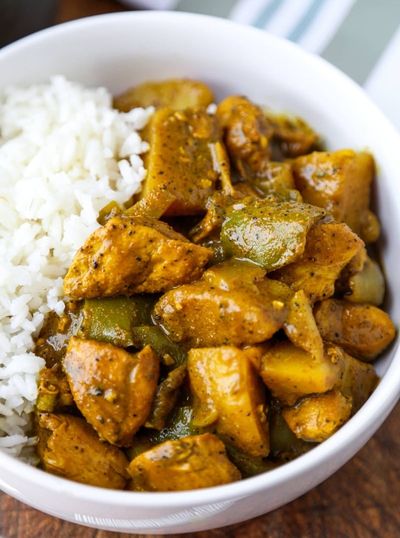
Jamaican curry sits in its own corner of the global curry map: heavier on turmeric and allspice than Indian Madras, lighter on cumin, and built on a technique called "burning the curry" that gives the dish its character. The technique is exactly what it sounds like, dry curry powder hits hot oil and is stirred for 30 seconds until it darkens from yellow to deep gold and smells like toasted spice. That move concentrates the flavours and removes any raw edge. The finished stew is bright yellow stained slightly orange, savoury and aromatic rather than searingly hot, with thyme and a whole pierced Scotch bonnet scenting the gravy without flooring it. Smell: bloomed curry powder, allspice, browned chicken fat. Not difficult, but requires confidence in the 30-second bloom (under-do it and the dish is flat; over-do it and you have to start over). A Sunday-dinner staple across Jamaica and the diaspora, served over white rice with the gravy spooned generously over.
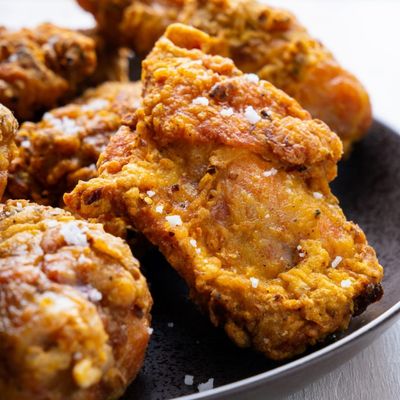
Bone-in chicken pieces are marinated with a freshly pounded spice paste of shallots, garlic, ginger, galangal, lemongrass and turmeric, then dipped in a thin egg and cornflour batter and shallow-fried until golden. The result is a deeply spiced, crackly-crusted fried chicken that picks up colour from the turmeric and depth from the toasted seeds. An overnight marinate is optional but rewards the wait.
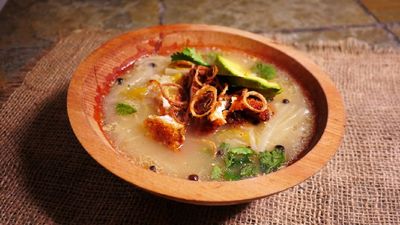
The Bahamas' Saturday-morning hangover cure, the breakfast bowl that arrives steaming in fish shacks and family kitchens across the islands the morning after a wedding or a heavy Friday. You poach bone-in chicken pieces (legs or wings) in lightly salted water with onion, celery, allspice, bay and a whole goat pepper for an hour or so, until the meat falls easily from the bone and the broth has taken on the perfume of the spice. Potatoes go in for the last fifteen minutes so they cook through but hold their shape. Off the heat, you acidify the souse hard with the juice of four or five limes (the souse is meant to taste sharply citric, not gently lemony) and a final tweak of salt. Ladle into deep bowls with the goat pepper floated on top for whoever's brave, and serve with johnnycake or grits on the side to soak.
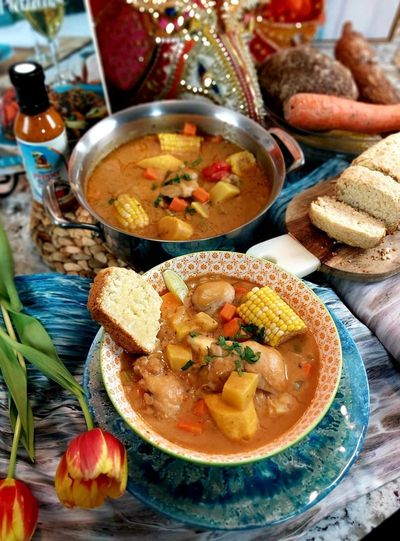
A dark, brown-roux-thickened stew that sits closer to Louisiana gumbo than to Jamaican brown stew chicken, a tell of how strong the Gulf Coast crossover is in Bahamian cooking. The dark roux is the defining step: flour cooked in oil until it goes the colour of cocoa or dark caramel, building toasted-nut depth that the rest of the dish leans on. The flavour profile is layered savoury: thyme as the dominant herb, smoked paprika for smoke, allspice (in the seasoned salt) for Caribbean lift, a single Scotch bonnet for fruity heat, lime juice at the end to wake everything up. The vegetables make it a complete dish, sweet potato, cassava, carrot, corn-on-the-cob pieces and yellow plantain, all hearty and starchy, all picking up the dark sauce. Smell is roasted flour, thyme, and slow-cooked tomato. Not hard but not quick, the roux needs unbroken attention for 5-8 minutes to avoid burning, and the rest is patient stewing. A Sunday-lunch staple across the Bahamas, traditionally served with rice and Johnny Cake (a Bahamian cornbread), and the kind of dish where the leftovers on day two are arguably better than day one.
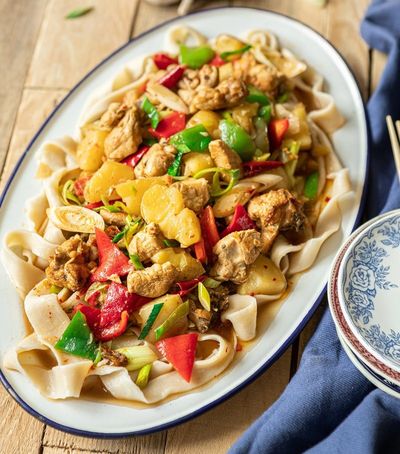
A dish that wears its multi-culture origin on its sleeve: chicken, potato and green pepper in a sweet-savoury soy-based braise (the Han Chinese influence), with star anise, Sichuan pepper, cumin and dried chilli (the Uyghur side), thickened by the starch from chunks of potato, ladled over flat hand-cut belt noodles. The sauce is the centrepiece. Browning sugar in oil before the chicken goes in builds a dark caramel that turns the whole braise a deep brick-red, and the soy underneath gives it weight; the Sichuan peppercorns add a mild numbness rather than dominating. Smell is rich, sweet, slightly spicy, with anise drifting through. Not difficult but not quick, 45 minutes once the prep is done, and the belt noodles are a small project on their own. Born in the 1980s in northern Xinjiang where a generation of Han Chinese migrants opened restaurants alongside the existing Uyghur food economy; the dish is the synthesis of those two traditions and is now the signature dish of Xinjiang cuisine, eaten across China and beyond.
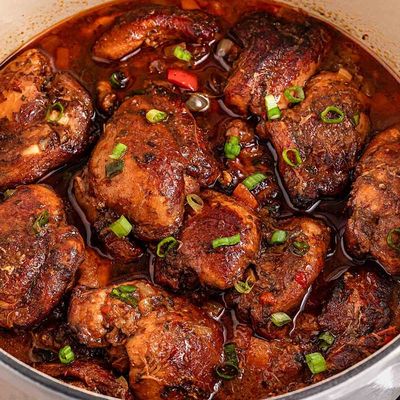
The Sunday-lunch counterpart to goat curry across Jamaica; not curry-driven but built on a deep mahogany gravy that gets its colour from caramelised brown sugar and a few teaspoons of bottled "browning sauce" (Grace is the canonical brand, a concentrated burnt-sugar syrup that's a kitchen staple in every Jamaican household). The chicken is bone-in, marinated overnight in a wet rub of onion, bell pepper, scallions, allspice, ginger and thyme, then browned hard and slow-braised until the meat slips off the bone. Flavour is savoury and slightly sweet with a deep thyme back-note and a whisper of Scotch bonnet heat from the whole pierced fruit in the pot. The gravy is what you actually want; thick, dark, sweet-savoury, glossy with rendered chicken fat, the kind of gravy you'd happily eat over plain rice as its own meal. Smell is browning sugar, thyme, and the unmistakable allspice signature. Patient cooking but easy: marinate the day before, then 30 minutes of active prep and 2 hours of unattended braise. The pairing with [[rice-and-peas]] is non-negotiable across Jamaican households.
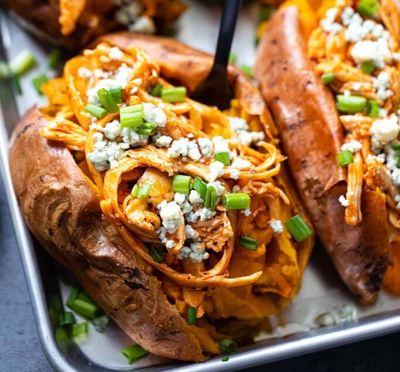
A lighter remix of the classic Buffalo wings format: the same flavour trio (Frank's RedHot, chicken, blue cheese) without the deep-fryer and without the celery sticks. The sweet potato is the smart move, the natural sugar in a roasted sweet potato is exactly the right counter to Frank's sharp vinegar heat, where a plain baked Russet would just be neutral background. The blue cheese plays its usual cooling-funky role, providing salt and creaminess to bridge the sweet potato underneath and the fiery chicken on top. Three textures stacked: soft caramelised sweet potato flesh, juicy shredded chicken in sauce, cool crumbled blue cheese. Smell is roasted sweet potato hitting Frank's. Genuinely easy weeknight cooking, and even easier with the rotisserie-chicken shortcut: 10 minutes of active work, an hour of mostly-passive oven time. A modern American casual-dinner dish (no traditional roots; it emerged from food blogs and meal-prep culture in the 2010s), and one of the cleaner examples of remixing a bar food into a weeknight meal without losing the flavour identity.
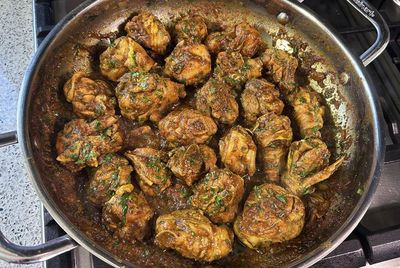
A dry curry rather than a saucy one, "bunjay" is Trinidadian patois for "fry-down", the technique of cooking meat in its own juices until the gravy completely disappears and the spices coat the surface of the meat in a sticky, glaze-like crust. The flavour is concentrated rather than diluted; nothing's been thinned with water or coconut milk, so what you taste is bone-in chicken, rendered chicken fat, and toasted spice. The spice mix is the East Indian Trinidadian signature: turmeric for colour and earth, roasted geera (toasted cumin, ground) for nuttiness, anchar masala for tang, regular curry powder for breadth. The pan oil splits and separates around the chicken at the end, which is the visual cue you're looking for. Smell when the curry powder hits hot oil is deeply aromatic, almost incense-like. Not difficult but it requires attention during the cook-down phase; if you walk away the curry burns onto the bottom of the pan. A Trinidadian household staple, eaten across the country with white rice and dhal, and a clean example of how Indian indentured labourers' descendants in the Caribbean evolved a distinct curry tradition over 150 years.
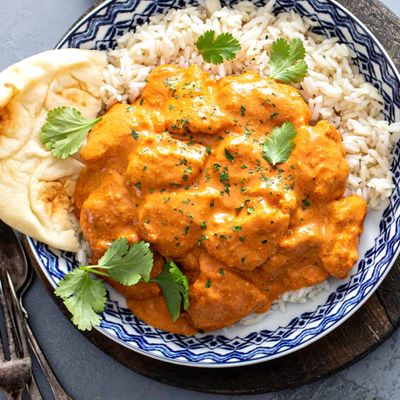
A rich, creamy tomato-based curry with mild spice and buttery finish. A BIR-style adaptation of murgh makhani.
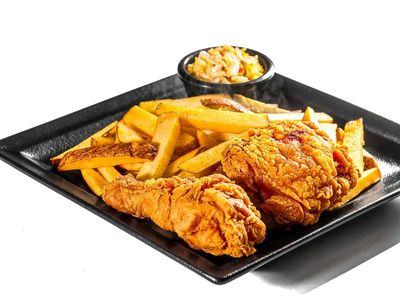
The Southern Sunday dinner that defined a region. You start the night before, sinking bone-in chicken pieces into a buttermilk brine spiked with hot sauce and garlic so the acid tenderises the meat and the seasoning works its way deep. The next day comes the double-dredge: a roll through heavily-seasoned flour, a brief dip back in the buttermilk, then another roll through the flour, which is what gives the finished bird its craggy, almost lacy crust. Into 175°C oil for twelve to fifteen minutes per piece, turned every few minutes so the crust browns evenly. You're done when the coating is deep mahogany and a thermometer in the thigh reads 75°C. Drain on a wire rack rather than paper so the steam escapes and the crust stays shattering. Eat hot with a stack of pickles, a soft biscuit and a bottle of hot sauce on the table; cold the next day at the kitchen counter is its own justified American ritual.
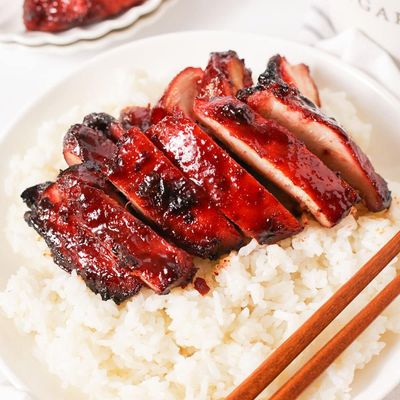
This is summer-BBQ adaptation of the lacquered red roast meats that hang in the windows of Cantonese siu mei shops. The marinade borrows from char siu (hoisin, soy, Shaoxing wine, five-spice, fermented bean curd, garlic, ginger) but pulls back on the sugar slightly because chicken does not need as much sweetness as pork shoulder. Bone-in skin-on thighs are the right cut: they stay juicy on the grill, the skin renders down and crisps, and the bones give the meat shape. A two-stage glaze does the rest. The thighs cook over indirect heat first to render the fat and set the meat, then move directly over the coals for the last few minutes while a honey-maltose mixture is brushed on repeatedly. Every brush of glaze caramelises, blackens slightly at the edges, then gets brushed again. The result is sticky-shiny with a smell that is half five-spice, half woodsmoke. Difficulty is low if you control your heat. A two-zone fire (one side coals piled high, the other side empty) is the only real requirement; on a gas grill, two burners on full and one off does the same job. Serve sliced over plain rice with sliced cucumber and a spoon of chilli oil, or stuffed into bao with hoisin and spring onion.
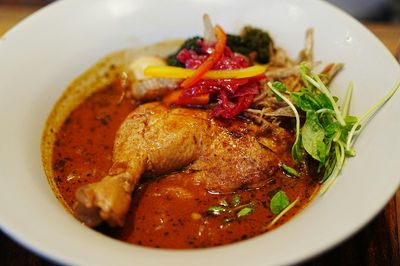
In many Caribbean stew dishes there is an initial step of burning sugar in oil which is used to brown the meat in. This adds a very unique sweetness to the stews from this region and this sweetness paired with the unmistakable flavour (and heat) from the wonderful scotch bonnet chilli is simply astounding. This curry uses curry powder for a fragrant and delicious result that captures the essence of Caribbean cooking.
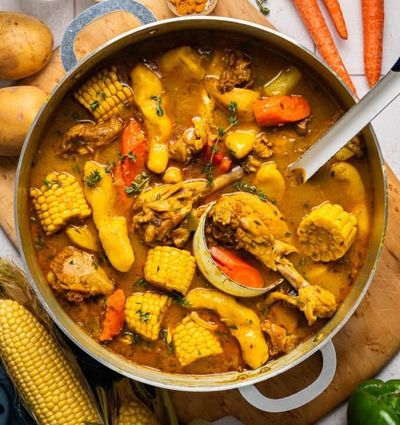
Saturday-soup in Trinidad, Guyana and Jamaica is a category rather than a single recipe; the structure is always the same (curry-and-allspice-seasoned chicken, root vegetables, hand-rolled dumplings, a thickened broth), and the specifics vary household by household. This is the Jamaican lean: pumpkin in the broth as the thickening agent (Grace pumpkin soup mix is the household shortcut), coconut milk for richness, allspice and thyme for the Caribbean signature, and a single pot that's a complete meal. The dumplings are the soul, small hand-rolled cornmeal-and-flour batons that go in last and cook in the broth, slightly bouncy, slightly chewy, picking up the surrounding flavour. The broth is golden-orange from pumpkin and curry, rich without being heavy, with corn-on-the-cob rounds and chunks of Yukon Gold potato giving substance. Smell when you lift the lid is curry, allspice and sweet pumpkin. Easy if you've made stews before, with two hours of mostly-passive simmering. Eaten year-round in Caribbean households as the dependable one-pot meal; nominally a Saturday dish but no Caribbean grandmother would refuse you a bowl on a Tuesday.
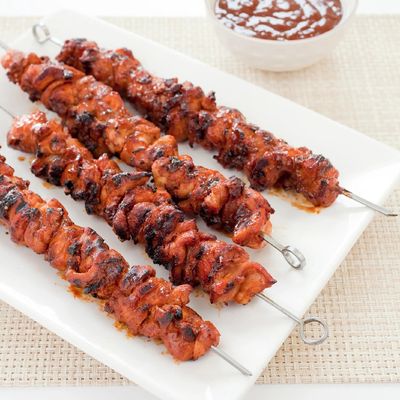
The flavour you'd get at a Melbourne charcoal-chicken takeaway, distilled into something you can run at home with a heavy pan instead of a rotisserie. You build a mostly-dry rub from the pantry: garlic powder, onion powder, sweet paprika, mustard powder, dried oregano, and a small amount of curry powder for the warmth that defines suburban-Australian charcoal-chicken shops. The rub wets out with olive oil and a generous squeeze of lemon, and the chicken thighs go in to marinate for twelve to twenty-four hours so the salt and spices penetrate properly. Thread onto skewers, sear hot in batches, rest briefly under foil so the juices settle. The lemon at the table is non-negotiable. Serve with warm flatbread, a chopped salad and a garlic-yogurt or hummus on the side, the kind of plate that arrives wrapped in butcher's paper at the takeaway.
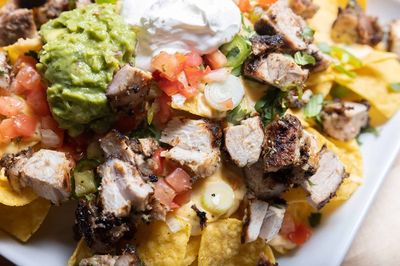
A Caribbean-American fusion that works because both food cultures speak the language of "everything on one tray". The base is American nachos: tortilla chips, melted cheese, black beans. On top sits jerk-marinated chicken thigh, which carries the dish's flavour, allspice, Scotch bonnet, nutmeg, cinnamon, thyme, soy and brown sugar blended into a wet jerk paste, marinated into the meat overnight, then oven-baked and sliced. The fresh element on top is a Trinidadian-style fruit chow: diced mango, pineapple, red bell pepper and red onion dressed with lime juice and cilantro. The chow is what makes this work; without it the nachos are just spicy meat-and-cheese, with it the dish has acid, crunch and sweetness to cut through the richness. Smell is melted cheese hitting jerk seasoning, with a citrus-tropical lift from the chow on top. Not difficult but it's three components running on different timelines, so plan ahead. A modern party-and-Super-Bowl-tray dish rather than something a Kingston grandmother makes, popularised by Caribbean-American food bloggers in the 2010s.
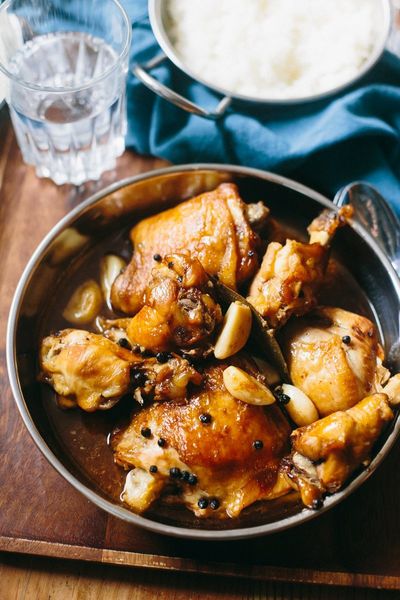
Chicken thighs and drumsticks simmer in a 1:1:1 mix of soy sauce, vinegar and water with garlic, peppercorns and bay. The chicken cooks through; the sauce reduces; the meat browns at the edges. That's the entire dish. Served over rice with a few extra spoonfuls of sauce.