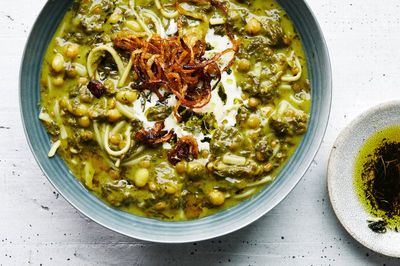
Ash Reshteh

Ash Reshteh

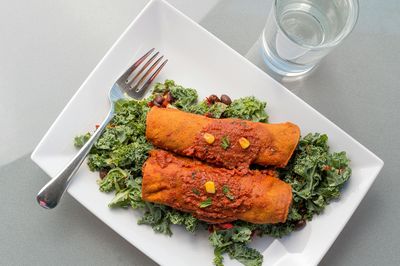
Dried beans (chickpeas + kidney beans + green lentils, OR the popular cheat of mixing all dried into one pot) soak overnight. Onion fries in oil; turmeric, salt and the soaked-and-drained beans go in with stock; simmers for 1 hour 15 minutes until tender. A heaping double handful of finely chopped fresh herbs (parsley, coriander, dill plus blanched spinach) goes in. Reshteh noodles (Persian flat egg noodles, sold at Iranian shops) add for the last 10 minutes. The bowl finishes with a sour-fermented kashk drizzle, dried-mint-and-garlic-in-oil sizzle, deep-fried golden onion, and a swirl of yogurt. Garnishes are not optional.

Persian 2 hours 10 minutes Serves6
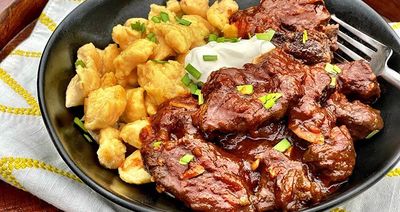
Austrian Goulash

Austrian Goulash

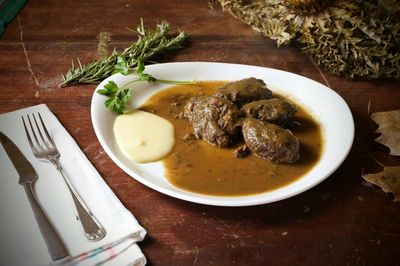
The Viennese answer to its Hungarian cousin: slower, deeper, almost spoonable, the gravy as dark as treacle from hours of careful reduction rather than from any thickener. The defining technique is a one-to-one ratio of onion to beef by weight, which sounds wrong until you taste what it does. The onions cook down to a sweet, brown, almost-marmalade paste before the paprika and meat ever join them, and that paste is the body of the sauce. You use beef shin or chuck and simmer it very slowly in this paprika-onion base with stock, garlic, marjoram, caraway, vinegar and tomato until the gravy clings to every cube. Lard is the right fat. No flour. No quick fixes. Serve with bread dumplings (Semmelknödel), spätzle or thick slices of dark rye, and pickled cucumbers on the side to cut the richness. A bowl that warms you from the centre out on a winter night.

Austrian 2 hours 50 minutes Serves4-6
Authentic Cajun Gumbo

Authentic Cajun Gumbo

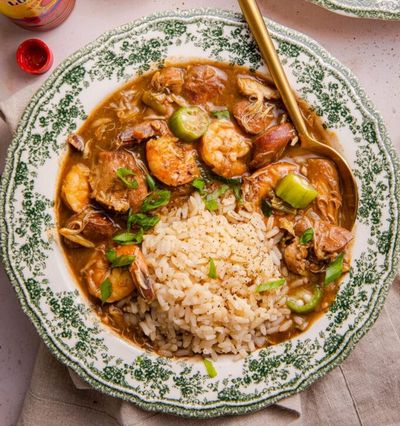
The "everything" Louisiana gumbo, chicken thighs, andouille, lump crab and shrimp all in one pot, and the dish where the technique matters more than the recipe. The roux is the single defining step and the line between Cajun gumbo and every other stew on earth: a full cup of oil and a full cup of flour cooked at medium-low for around 30 minutes, stirred without stopping, until the colour goes from blond to peanut butter to milk chocolate to dark chocolate. That's not flavour theatre; the long-cooked roux produces a deeply nutty, slightly bitter, profoundly savoury base that thickens the gumbo and gives it the distinctive almost-charred note no shortcut can replicate. Around the roux: the Cajun "holy trinity" of onion, bell pepper and celery; filé powder (ground sassafras leaves) added off heat as a second thickener; okra adding a third (and contributing its own slight slip); plus the four proteins, each adding a different layer. Flavour is dark, smoky, herbaceous, and slightly briny from the seafood. Smell is the roux toasting. Not difficult on technique but tremendously demanding on patience and attention; 30 minutes of unbroken stirring is the gateway, and if you walk away or rush it the roux burns and you start over. A dish that runs deep through Cajun and Creole Louisiana, with origins in the French settlers, the Choctaw (who contributed filé), West Africans (who contributed okra), and Spanish colonial traditions of Louisiana from the 1700s onwards.

Cajun 1 hour 45 minutes Serves8-10
Authentic Jamaican Curry Chicken

Authentic Jamaican Curry Chicken

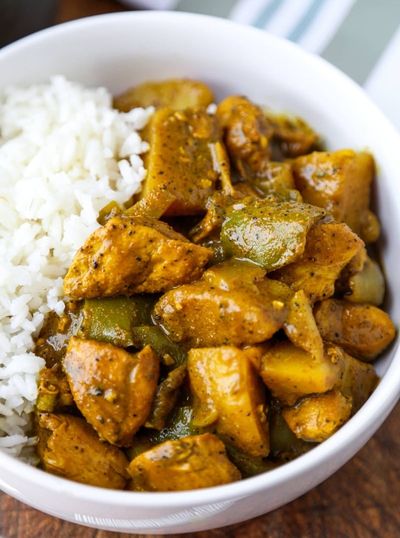
Jamaican curry sits in its own corner of the global curry map: heavier on turmeric and allspice than Indian Madras, lighter on cumin, and built on a technique called "burning the curry" that gives the dish its character. The technique is exactly what it sounds like, dry curry powder hits hot oil and is stirred for 30 seconds until it darkens from yellow to deep gold and smells like toasted spice. That move concentrates the flavours and removes any raw edge. The finished stew is bright yellow stained slightly orange, savoury and aromatic rather than searingly hot, with thyme and a whole pierced Scotch bonnet scenting the gravy without flooring it. Smell: bloomed curry powder, allspice, browned chicken fat. Not difficult, but requires confidence in the 30-second bloom (under-do it and the dish is flat; over-do it and you have to start over). A Sunday-dinner staple across Jamaica and the diaspora, served over white rice with the gravy spooned generously over.

Jamaican 2 hours 30 minutes Serves4
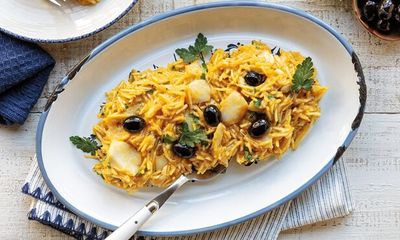
Bacalhau à Brás

Bacalhau à Brás

Bacalhau à Brás is the dish Portugal turns to when the salt cod, the onions and the eggs all need to find their place in one pan: scrambled together with a tangle of fine matchstick chips so the whole thing reads as somewhere between a hash and a loose carbonara. The salt cod needs the usual day or two of cold soaks to draw the salt down, then a brief simmer to soften it; the onions take their time in olive oil with a few smashed garlic cloves until almost jam-like; the matchstick chips (palha) are fried separately so they stay crisp. Everything comes together in a wide pan, the eggs are whisked in over a low heat, and you stop the moment the eggs coat the cod and potato like a sauce. Never let them set firm. Olives, parsley and a wedge of lemon at the table.

Portuguese 45 minutes Serves4
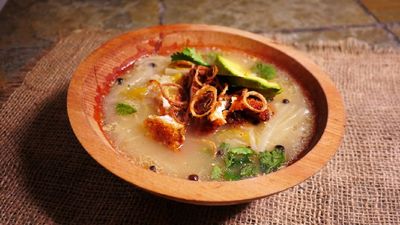
Bahamian Souse

Bahamian Souse

The Bahamas' Saturday-morning hangover cure, the breakfast bowl that arrives steaming in fish shacks and family kitchens across the islands the morning after a wedding or a heavy Friday. You poach bone-in chicken pieces (legs or wings) in lightly salted water with onion, celery, allspice, bay and a whole goat pepper for an hour or so, until the meat falls easily from the bone and the broth has taken on the perfume of the spice. Potatoes go in for the last fifteen minutes so they cook through but hold their shape. Off the heat, you acidify the souse hard with the juice of four or five limes (the souse is meant to taste sharply citric, not gently lemony) and a final tweak of salt. Ladle into deep bowls with the goat pepper floated on top for whoever's brave, and serve with johnnycake or grits on the side to soak.

Bahamian 1 hour 30 minutes Serves4-6
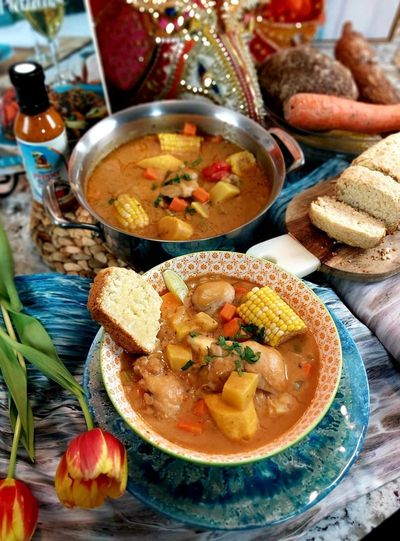
Bahamian Stew Chicken

Bahamian Stew Chicken

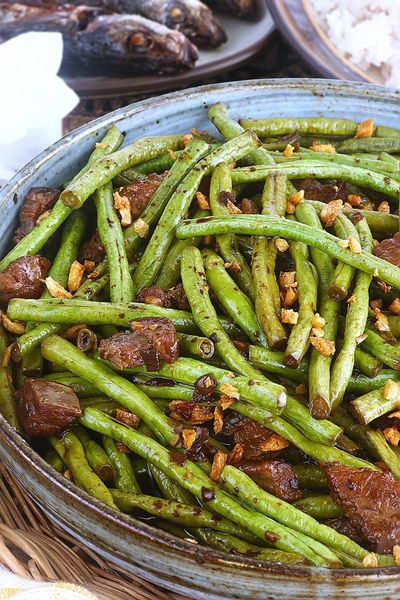
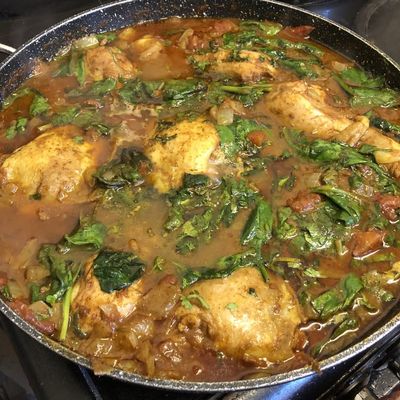
A dark, brown-roux-thickened stew that sits closer to Louisiana gumbo than to Jamaican brown stew chicken, a tell of how strong the Gulf Coast crossover is in Bahamian cooking. The dark roux is the defining step: flour cooked in oil until it goes the colour of cocoa or dark caramel, building toasted-nut depth that the rest of the dish leans on. The flavour profile is layered savoury: thyme as the dominant herb, smoked paprika for smoke, allspice (in the seasoned salt) for Caribbean lift, a single Scotch bonnet for fruity heat, lime juice at the end to wake everything up. The vegetables make it a complete dish, sweet potato, cassava, carrot, corn-on-the-cob pieces and yellow plantain, all hearty and starchy, all picking up the dark sauce. Smell is roasted flour, thyme, and slow-cooked tomato. Not hard but not quick, the roux needs unbroken attention for 5-8 minutes to avoid burning, and the rest is patient stewing. A Sunday-lunch staple across the Bahamas, traditionally served with rice and Johnny Cake (a Bahamian cornbread), and the kind of dish where the leftovers on day two are arguably better than day one.
Bahamian 1 hour 15 minutes Serves4
Beef and Guinness Stew

Beef and Guinness Stew

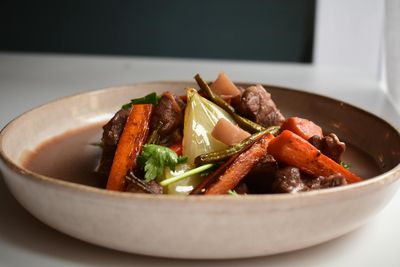
Chuck steak in big chunks, dredged in seasoned flour and browned in batches in a heavy pot until properly dark. Onions cooked low and slow in the same pot to draw out their sugar. The beef returned, a bottle of Guinness poured over with stock and a spoon of treacle, brought to a simmer and tucked into a low oven for two hours. The last half-hour gets carrots, potatoes and a handful of pearl barley to thicken the broth. Finished with parsley and a chunk of soda bread for mopping.

Irish 2 hours 50 minutes Serves6
Beef Chili

Beef Chili

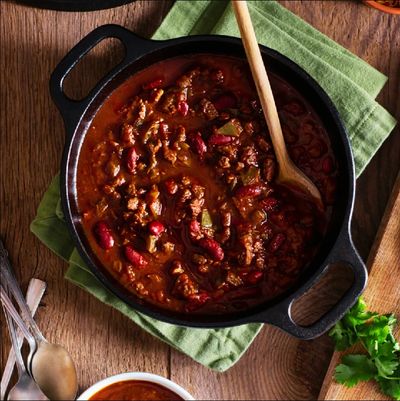
The American household chili, sitting somewhere between Texas-style "no beans" purism and Cincinnati-style "chili over spaghetti" eccentricity, this one has beans, isn't sweetened with cinnamon, and lands solidly in the middle of the bell curve. The flavour is a Tex-Mex spice rack working in concert: chili powder (the broad warmth), cumin (the earthy backbone), smoked paprika (the deep smoke), chipotle powder (the slow-burn heat), brown sugar (a quiet balance), garlic powder (the savoury underline). Fire-roasted tomatoes are the technical detail that lifts this above a generic chili, charring the tomatoes before canning adds a roasted note that ordinary diced tomatoes can't supply. Texture is chunky and brothy rather than thick-and-pasty (this isn't a chili-mac chili), with kidney beans giving substance and pieces of bell pepper still holding their bite. Smell is cumin and smoked paprika on browned beef. Genuinely easy and incredibly forgiving, chili is one of the few dishes that's better the day after it's made, so it tolerates a longer simmer if you have it. American cold-weather bowl food, eaten across every state from Texas to New York, with regional toppings (sour cream, cheese, raw onion, cornbread, oyster crackers) that say more about the cook than the dish.

American 45 minutes Serves8-10
Beef Meat Pie

Beef Meat Pie

Australia's hand-held lunch and the unofficial national snack: hot beef gravy in a shortcrust base under a flaky puff lid, eaten standing up at the footy with tomato sauce running down your wrist. You build the filling like a thick gravy: minced beef cooked down with onion, beef stock, Worcestershire, tomato and a dark roux until it's sliceable when cool. The cold-filling trick is the one rule a pie shop never breaks: never fill a pie case with hot, loose gravy, because the bottom will go soggy in the oven and your pie will leak the moment you bite it. The chilled filling goes into shortcrust bases, gets a puff pastry lid crimped sharp at the edge, and bakes hot until the top is bronzed and shattering. Eat hot from the bag with a squeezy bottle of tomato sauce, or build a proper plate around it with mushy peas and gravy.

Australian 2 hours 40 minutes Serves6
← Prev Page 1 of 14 Next →