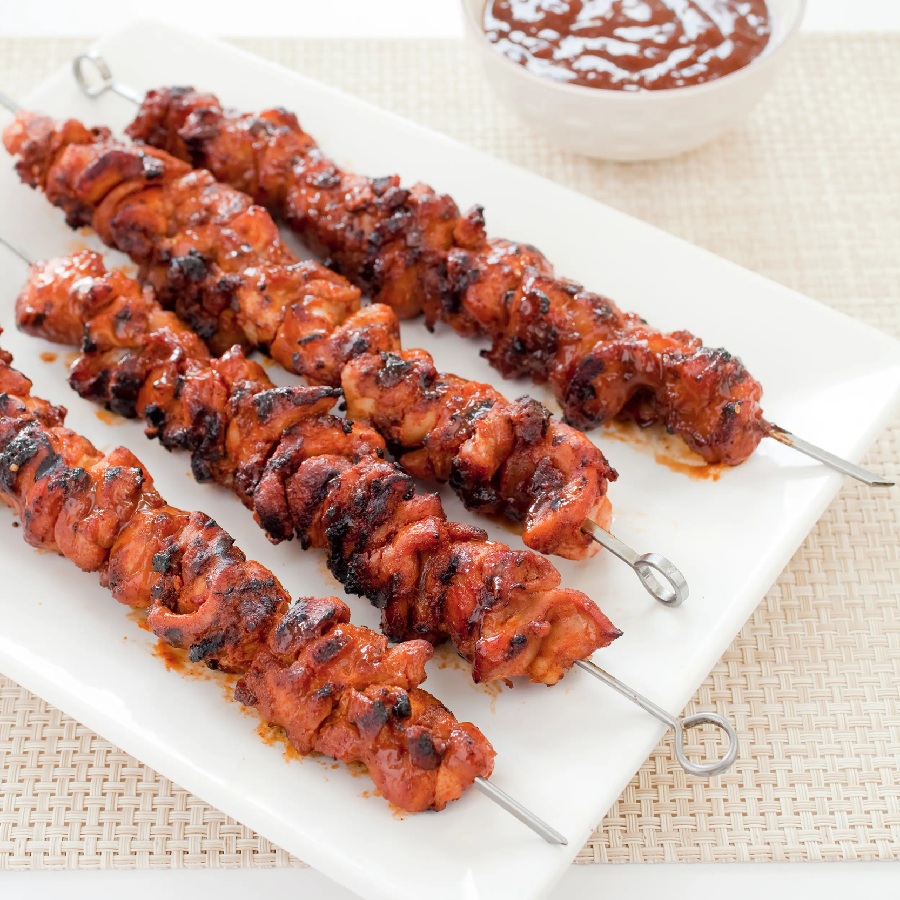
Charcoal Chicken Shop Chicken Skewers
The flavour you get at a Melbourne charcoal-chicken takeaway, made at home. Chicken thigh in a dry-rub-meets-marinade of garlic powder, onion powder, paprika and a quiet hit of curry, soaked overnight, threaded onto skewers, pan-seared hot. The lemon at the table is non-negotiable.
Overview
The flavour you'd get at a Melbourne charcoal-chicken takeaway, distilled into something you can run at home with a heavy pan instead of a rotisserie. You build a mostly-dry rub from the pantry: garlic powder, onion powder, sweet paprika, mustard powder, dried oregano, and a small amount of curry powder for the warmth that defines suburban-Australian charcoal-chicken shops. The rub wets out with olive oil and a generous squeeze of lemon, and the chicken thighs go in to marinate for twelve to twenty-four hours so the salt and spices penetrate properly. Thread onto skewers, sear hot in batches, rest briefly under foil so the juices settle. The lemon at the table is non-negotiable. Serve with warm flatbread, a chopped salad and a garlic-yogurt or hummus on the side, the kind of plate that arrives wrapped in butcher's paper at the takeaway.
Ingredients
The chicken
- 800 g boneless skinless chicken thighs (cut into 2.5 cm cubes)
- 3-4 tablespoons olive oil (for cooking)
The marinade
- 1 ½ tablespoons garlic powder
- 1 tablespoon onion powder
- 1 tablespoon sweet paprika
- 1 teaspoon mustard powder
- 1 teaspoon dried oregano
- ½ teaspoon curry powder (mild, not vindaloo-strength)
- 1 ¼ teaspoons fine sea salt (or kosher salt)
- ½ teaspoon black pepper
- 3 tablespoons extra-virgin olive oil
- 2 tablespoons lemon juice (or white wine vinegar)
To serve
- Warm flatbreads or pita
- A simple chopped salad (tomato, cucumber, red onion, parsley)
- Lemon wedges
- A sauce: garlic toum or lemon yogurt sauce
Method
Stage 1 - Make the marinade
- In a wide bowl, combine the garlic powder, onion powder, paprika, mustard powder, oregano, curry powder, salt and pepper. Whisk briefly.
- Add the olive oil and lemon juice. Stir to a thick paste - like wet sand.
Stage 2 - Marinate
- Add the chicken cubes to the bowl. Toss with your hands until every piece is fully coated. The paste should cling to each cube.
- Cover and refrigerate for 12-24 hours. A minimum of 3 hours works; overnight is what gives the deep flavour.
Stage 3 - Skewer
- If using bamboo skewers, soak them in water for 30 minutes first to prevent burning.
- Thread the chicken onto the skewers - about 3-4 pieces per skewer. Don't squash them tight; small gaps let the heat get into the sides.
Stage 4 - Cook
- Heat a large heavy frying pan or grill pan over medium-high. Add the olive oil - enough to cover the base in a thin film.
- Cook the skewers in batches (don't crowd the pan or they steam). 3 minutes on the first side, until deep golden with crisp edges.
- Turn and cook 3 more minutes on the second side. The chicken should be just cooked through (internal temp 75°C / 165°F) with a deeply caramelised crust.
- If the spices start to burn at the edges before the chicken's done, drop the heat - the marinade has sugar in the onion and garlic powders and will catch.
- Lift onto a plate and cover loosely with foil while you cook the rest.
Stage 5 - Rest and serve
- Rest for 3-5 minutes - the juices settle back into the meat.
- Serve on a wide platter with the flatbreads, salads and sauce alongside. Squeeze a lemon wedge over the skewers just before eating.
Notes
- Chicken thigh, not breast: breast goes dry under the long marinade-and-sear. Thigh stays juicy and stands up to the bold spice rub.
- No charcoal needed: the dry rub does the work that charcoal smoke would in a takeaway shop. For an even closer match, grill on charcoal or under a hot oven grill at 230°C, 4 minutes per side.
- Curry powder is the secret: half a teaspoon - just enough to add warmth without tasting curry-flavoured. Skipping it gives a fine but less rounded result.
Serving
Pull the chicken off the skewers onto warm flatbread. Pile salad and sauce on top, fold, eat with your hands. Or serve skewers whole alongside roasted potatoes and the salad as a proper Sunday dinner.
Storage
- Cooked chicken keeps in the fridge for 3 days. Reheat in a hot pan for 90 seconds per side.
- Marinated raw chicken can be frozen for 2 months in a sealed bag (the marinade continues to work during the thaw). Defrost overnight in the fridge.
Recipes mentioned here
Vindaloo
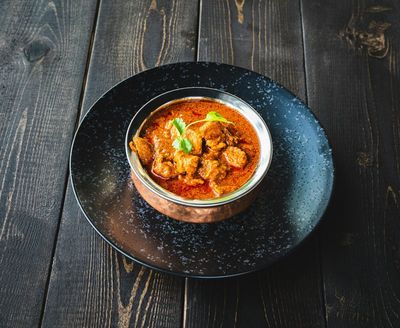
The fiery Goan original: a vinegar-and-garlic-marinated meat (traditionally pork, adapted in BIR menus to chicken or lamb) simmered in a dark masala loaded with red chillies, cumin and mustard seeds. The sharp acidity from vinegar plus aggressive chilli is the signature; potatoes are a BIR addition (the "aloo" suggestion) but not part of the Portuguese-origin dish.
Lemon Yogurt Sauce
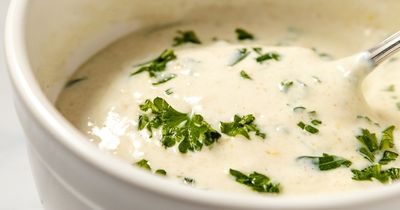
A no-cook stir-together yogurt sauce, in the Tzatziki / Mediterranean labneh / Greek tarama family but pared down to the essentials. The garlic needs the rest to lose its raw bite - twenty minutes is the minimum, an hour is ideal. The oil floats on top initially; it folds back in with stirring.
More like this
Bunjay-Style Curry Chicken
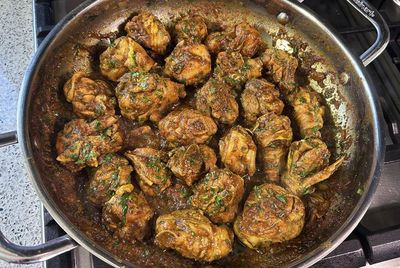
A dry curry rather than a saucy one, "bunjay" is Trinidadian patois for "fry-down", the technique of cooking meat in its own juices until the gravy completely disappears and the spices coat the surface of the meat in a sticky, glaze-like crust. The flavour is concentrated rather than diluted; nothing's been thinned with water or coconut milk, so what you taste is bone-in chicken, rendered chicken fat, and toasted spice. The spice mix is the East Indian Trinidadian signature: turmeric for colour and earth, roasted geera (toasted cumin, ground) for nuttiness, anchar masala for tang, regular curry powder for breadth. The pan oil splits and separates around the chicken at the end, which is the visual cue you're looking for. Smell when the curry powder hits hot oil is deeply aromatic, almost incense-like. Not difficult but it requires attention during the cook-down phase; if you walk away the curry burns onto the bottom of the pan. A Trinidadian household staple, eaten across the country with white rice and dhal, and a clean example of how Indian indentured labourers' descendants in the Caribbean evolved a distinct curry tradition over 150 years.
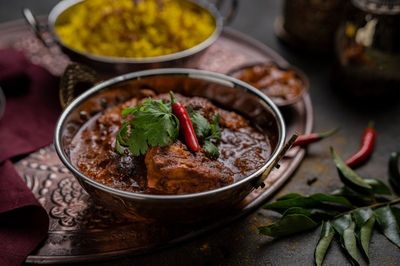
Chicken Methi Curry
Fenugreek-forward chicken methi curry with a rich base sauce and a tangy cream finish. Fresh fenugreek leaves are ideal, but dried kasoori methi can provide the signature aroma, especially in supermarkets where fresh leaves are scarce. This curry is aromatic with anise notes and a subtle bitterness balanced by yoghurt.
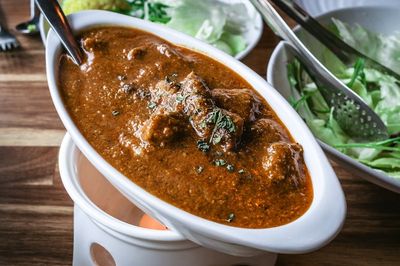
Lamb Achari
A Punjabi-inspired achari curry featuring pickle spices like panch poran and dried chillies, balanced with sweet mango chutney and tangy lime pickle. This dish captures the essence of Indian pickles in a rich, flavorful lamb curry.
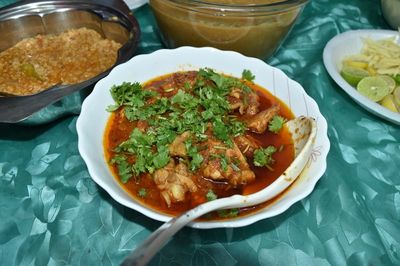
Simple Lahori Chicken Curry
A traditional Lahori-style chicken curry built on a base of caramelised onions, tomatoes, and whole spices bloomed in oil. Yoghurt is added gradually to prevent splitting, creating a rich, silky sauce. Finished with fresh coriander and lemon juice, this is a deeply flavourful North Indian classic.