In season

May produce

Tap any item to find recipes that use it.

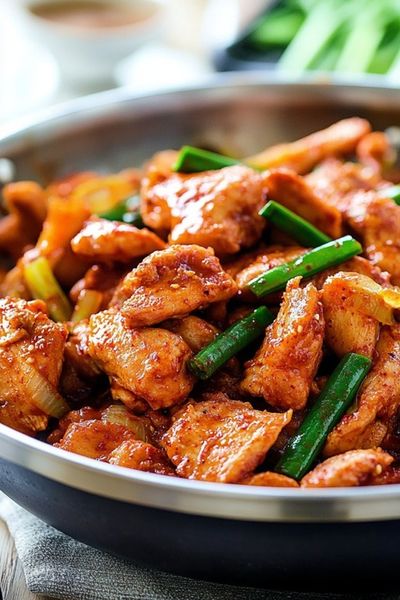
Big Plate Chicken

Big Plate Chicken

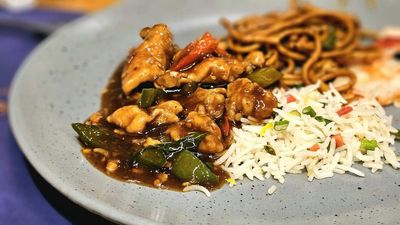
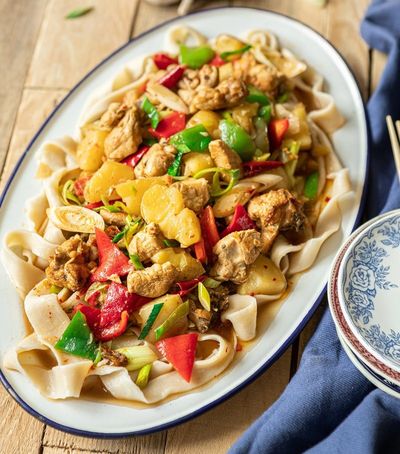
A dish that wears its multi-culture origin on its sleeve: chicken, potato and green pepper in a sweet-savoury soy-based braise (the Han Chinese influence), with star anise, Sichuan pepper, cumin and dried chilli (the Uyghur side), thickened by the starch from chunks of potato, ladled over flat hand-cut belt noodles. The sauce is the centrepiece. Browning sugar in oil before the chicken goes in builds a dark caramel that turns the whole braise a deep brick-red, and the soy underneath gives it weight; the Sichuan peppercorns add a mild numbness rather than dominating. Smell is rich, sweet, slightly spicy, with anise drifting through. Not difficult but not quick, 45 minutes once the prep is done, and the belt noodles are a small project on their own. Born in the 1980s in northern Xinjiang where a generation of Han Chinese migrants opened restaurants alongside the existing Uyghur food economy; the dish is the synthesis of those two traditions and is now the signature dish of Xinjiang cuisine, eaten across China and beyond.
Uyghur 1 hour 10 minutes Serves3-4
Cantonese BBQ Chicken

Cantonese BBQ Chicken

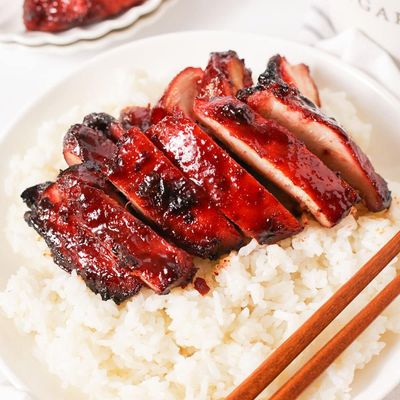
This is summer-BBQ adaptation of the lacquered red roast meats that hang in the windows of Cantonese siu mei shops. The marinade borrows from char siu (hoisin, soy, Shaoxing wine, five-spice, fermented bean curd, garlic, ginger) but pulls back on the sugar slightly because chicken does not need as much sweetness as pork shoulder. Bone-in skin-on thighs are the right cut: they stay juicy on the grill, the skin renders down and crisps, and the bones give the meat shape. A two-stage glaze does the rest. The thighs cook over indirect heat first to render the fat and set the meat, then move directly over the coals for the last few minutes while a honey-maltose mixture is brushed on repeatedly. Every brush of glaze caramelises, blackens slightly at the edges, then gets brushed again. The result is sticky-shiny with a smell that is half five-spice, half woodsmoke. Difficulty is low if you control your heat. A two-zone fire (one side coals piled high, the other side empty) is the only real requirement; on a gas grill, two burners on full and one off does the same job. Serve sliced over plain rice with sliced cucumber and a spoon of chilli oil, or stuffed into bao with hoisin and spring onion.

Chinese 4 hours 40 minutes Serves4
Cheesy Jerk Chicken Nachos

Cheesy Jerk Chicken Nachos

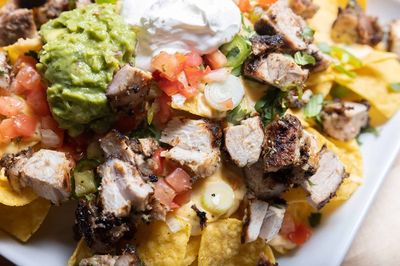
A Caribbean-American fusion that works because both food cultures speak the language of "everything on one tray". The base is American nachos: tortilla chips, melted cheese, black beans. On top sits jerk-marinated chicken thigh, which carries the dish's flavour, allspice, Scotch bonnet, nutmeg, cinnamon, thyme, soy and brown sugar blended into a wet jerk paste, marinated into the meat overnight, then oven-baked and sliced. The fresh element on top is a Trinidadian-style fruit chow: diced mango, pineapple, red bell pepper and red onion dressed with lime juice and cilantro. The chow is what makes this work; without it the nachos are just spicy meat-and-cheese, with it the dish has acid, crunch and sweetness to cut through the richness. Smell is melted cheese hitting jerk seasoning, with a citrus-tropical lift from the chow on top. Not difficult but it's three components running on different timelines, so plan ahead. A modern party-and-Super-Bowl-tray dish rather than something a Kingston grandmother makes, popularised by Caribbean-American food bloggers in the 2010s.

Jamaican 5 hours 30 minutes Serves4
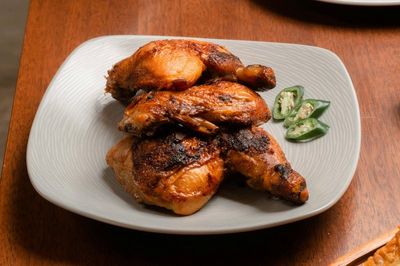
Chicken Inasal

Chicken Inasal

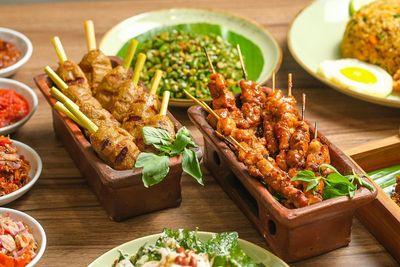
Chicken inasal is the pride of Bacolod City on Negros Occidental, where streetside grill houses serve nothing else: trays of chicken parts skewered on bamboo, smoking over long coal pits, with the cook brushing on bright orange annatto oil every few turns. The marinade is what marks it as Filipino: calamansi (a small, sour citrus halfway between lime and tangerine), cane vinegar, ginger, lemongrass, garlic and a generous slug of black pepper. The annatto oil (atsuete) is just neutral oil warmed gently with annatto seeds until it stains a vivid orange-red; this is the dish's signature look and a mild peppery flavour. Basting starts halfway through cooking so the colour goes onto skin that's already partly cooked, and continues right up to the moment the chicken leaves the grill. Difficulty for a home cook is low; the only special ingredients are calamansi (lime juice plus a touch of orange juice substitutes well) and annatto seeds (sometimes sold as achiote, found in any Filipino or Latin American shop). The flavour profile is sharp, herbal, slightly smoky, with a peppery edge from black pepper rather than chilli, and ribbon-thin lemongrass perfume running through everything. Service is non-negotiable: a heap of garlic rice (sinangag), a saucer of toyomansi (soy-calamansi-vinegar dipping sauce with sliced chillies), and the cook's pot of warm annatto oil for the table.

Filipino 4 hours 50 minutes Serves4
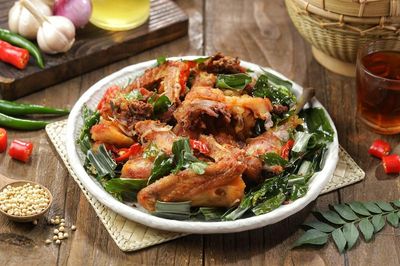
Guizhou Chili Chicken (Guizhou Lazi Ji)

Guizhou Chili Chicken (Guizhou Lazi Ji)

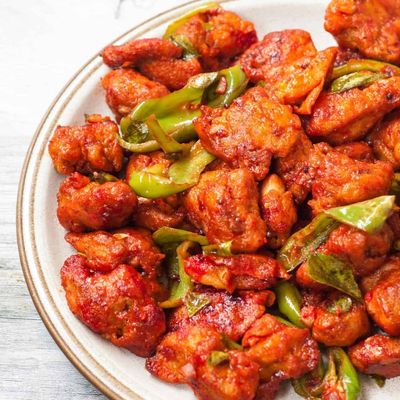
Guizhou lazi ji is the southwest's answer to the Sichuan chongqing lazi ji, but with a fundamentally different character. Where Chongqing's version is a dry, fried, chilli-buried dish, Guizhou's is a wet braise built on ciba lajiao: rehydrated mild dried chillies pounded into a thick red paste with ginger and garlic, then slow-fried in oil until it deepens to a rich, almost jam-like base. The paste is the soul of the dish and the soul of Guizhou cooking more broadly: the province is the first in China where chilli was used as a condiment after its arrival from the Americas, and produces roughly a third of the country's chillies today. Difficulty for a home cook is moderate, the only finicky steps being the chilli soak and the slow-frying of the paste, rush it and the sauce stays harsh; do it right and the flavours bloom into something layered and fragrant. The result is best after an overnight rest, and even better the day after, served over plain rice with the orange chilli oil pooling around the edge. Regional variations across Guizhou tweak the proportions, sometimes adding fermented rice or douchi for extra savoury depth.

Chinese 1 hour 15 minutes Serves4
Honey Soy Glazed Chicken

Honey Soy Glazed Chicken

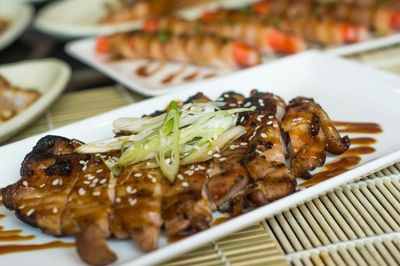
Roast chicken at its most rewarding: bone-in, skin-on thighs that braise gently in their own marinade then crisp up under a sticky honey-and-soy lacquer, basted twice during cooking so the surface builds up in glossy layers. You let the chicken sit in the marinade overnight so the salt in the soy seasons deep into the meat, and the same marinade doubles as the glaze when you roast - raw honey and dark brown sugar caramelising into the skin while the ginger, garlic and a hit of sambal oelek keep things from being one-note sweet. A wire rack matters; it lifts the chicken so the underside also crisps and the marinade can't pool and boil. The kitchen fills with the smell of caramelising honey, garlic and toasted soy for the last fifteen minutes. The result sits somewhere between Cantonese roast meats and a Korean glazed thigh, with the gentle chilli warmth threading through every bite. Steamed rice and a quick green vegetable on the side, with the basting sauce poured generously over.

Asian Fusion 3 hours 15 minutes Serves4
Jerk Chicken

Jerk Chicken

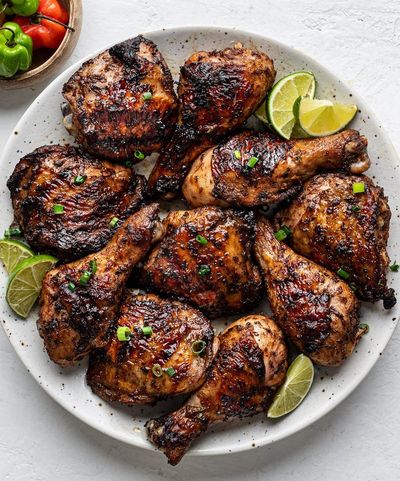
A wet jerk paste: scotch bonnet chillies, garlic, ginger, spring onions, thyme, allspice (whole or ground), brown sugar, soy sauce, lime, oil, salt and pepper, pureed in a blender. The chicken (bone-in skin-on thighs and drumsticks, or spatchcocked whole bird) marinates for 12 hours minimum. Slow-grilled over indirect heat with a pile of pimento wood chips or allspice berries on the coals for the signature smoke; alternatively, an oven-bake at 180°C with a final blast under the grill, supplemented with allspice in the marinade.

Jamaican 13 hours 5 minutes Serves4
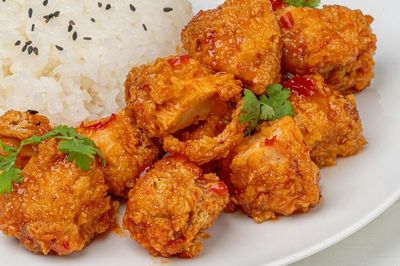
Karaage

Karaage

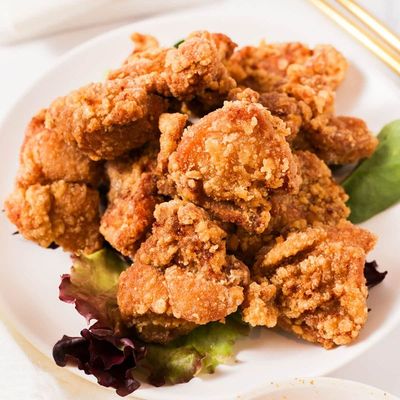
Chicken thighs (boneless, skin-on for the best result) are cut into 4 cm pieces and marinated for 30 minutes in a mixture of soy sauce, sake, grated ginger, garlic, mirin and a touch of sesame oil. The marinated chicken pieces are then thoroughly dredged in potato starch (also called katakuriko in Japanese; cornstarch is a workable substitute but not as good). Oil heats to 160°C for the first fry, chicken pieces fry for 4 minutes until just cooked but not deeply coloured. Removed; rested for 5 minutes. Oil temperature increases to 190°C for the second fry, chicken returns for 60-90 seconds until amber-golden, crisp, and the outside shatters when bitten. Seasoned and served immediately.

Snacks 57 minutes Serves4
← Prev Page 1 of 2 Next →