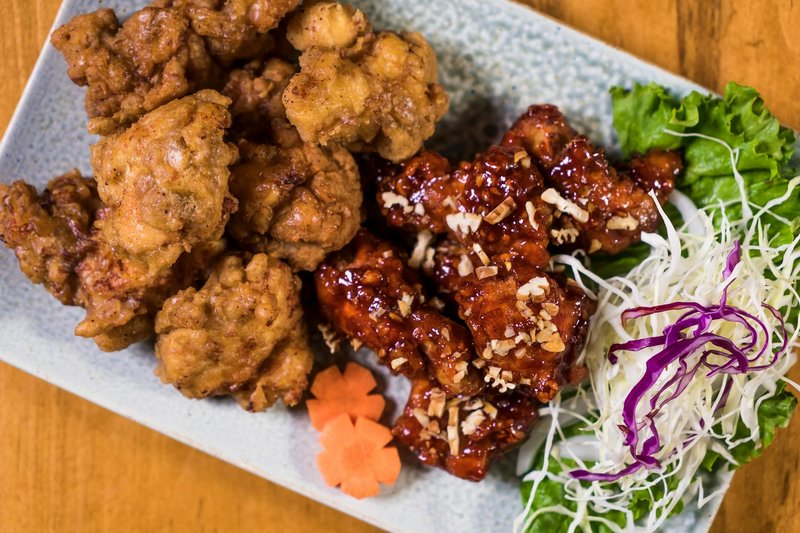
Korean Fried Chicken
Twice-fried chicken with a thin shatter-crisp coating and a sticky-spicy gochujang glaze. The Korean version is lighter and crisper than American fried chicken; the second fry is what does it. Sweet, garlicky, hot, addictive.
Overview
Chicken wings (or boneless thighs) get a light cornflour-and-flour coating and fry low and slow first to cook through. They cool, then fry hot and fast for the crisp. The sauce is a quick reduction of gochujang, gochugaru, soy, garlic, ginger, honey and rice vinegar; the just-fried chicken tosses in the sauce and gets eaten immediately.
Ingredients
Chicken
- 1 kg chicken wings (separated into drumettes and flats) or boneless thighs (cut into chunks)
- 1 teaspoon salt
- 1 teaspoon ground white pepper
- 100 g cornflour
- 50 g plain flour
- Vegetable oil for deep-frying
Sauce
- 3 tablespoons gochujang
- 1 tablespoon gochugaru (Korean chilli flakes)
- 3 tablespoons soy sauce
- 4 tablespoons honey
- 2 tablespoons rice vinegar
- 4 garlic cloves (crushed)
- 1 tablespoon grated ginger
- 1 tablespoon toasted sesame oil
- 2 tablespoons water
Garnish
- 1 tablespoon toasted sesame seeds
- 2 spring onions (sliced)
Method
Stage 1 - Prep the chicken
- Pat the wings very dry. Season with salt and white pepper.
- Mix the cornflour and plain flour in a bowl.
- Toss the wings in the flour; shake off excess. Let sit 10 minutes (the surface absorbs the flour).
Stage 2 - First fry
- Heat the oil to 160°C in a deep pan.
- Fry the wings in batches for 8-10 minutes until cooked through but pale.
- Drain on a wire rack; let rest at least 5 minutes.
Stage 3 - Sauce
- Combine all sauce ingredients in a small saucepan.
- Bring to a simmer over medium heat; cook 2-3 minutes until glossy and slightly thickened. Set aside.
Stage 4 - Second fry
- Increase the oil to 180°C.
- Fry the wings again in batches for 4-5 minutes until deep golden and shatteringly crisp.
- Drain briefly.
Stage 5 - Toss and serve
- Place the hot wings in a large bowl; pour the sauce over.
- Toss to coat completely.
- Pile onto a plate; scatter sesame seeds and spring onions.
- Eat immediately.
Notes
- Twice-fried, no shortcut: Single-fry gives soggy or burnt. The first fry cooks through; the second crisps. The rest between fries lets steam escape.
- Cornflour-heavy coating: This is what gives the thin, shatter-crisp shell. Too much plain flour gives a heavier, breadier crust.
- Sauce after the toss: Coat just before serving; sauce on chicken sitting around goes soggy fast.
Storage
- Eat immediately. Doesn't reheat well.
More like this
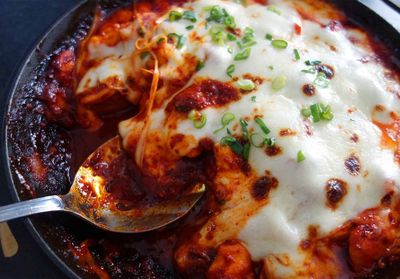
Buldak
Boneless chicken thighs cube small; marinate for 1 hour in gochujang, gochugaru, soy, garlic, ginger, sugar and sesame oil. Pan-grill in a wide cast-iron skillet over medium-high until the sauce caramelises and the chicken is just cooked. Off heat, generous mozzarella scatters across the top; cover briefly or finish under a grill to melt. Top with sesame seeds and spring onions.
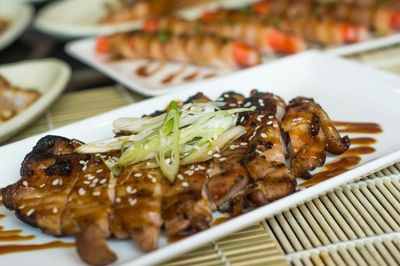
Honey Soy Glazed Chicken
Roast chicken at its most rewarding: bone-in, skin-on thighs that braise gently in their own marinade then crisp up under a sticky honey-and-soy lacquer, basted twice during cooking so the surface builds up in glossy layers. You let the chicken sit in the marinade overnight so the salt in the soy seasons deep into the meat, and the same marinade doubles as the glaze when you roast - raw honey and dark brown sugar caramelising into the skin while the ginger, garlic and a hit of sambal oelek keep things from being one-note sweet. A wire rack matters; it lifts the chicken so the underside also crisps and the marinade can't pool and boil. The kitchen fills with the smell of caramelising honey, garlic and toasted soy for the last fifteen minutes. The result sits somewhere between Cantonese roast meats and a Korean glazed thigh, with the gentle chilli warmth threading through every bite. Steamed rice and a quick green vegetable on the side, with the basting sauce poured generously over.
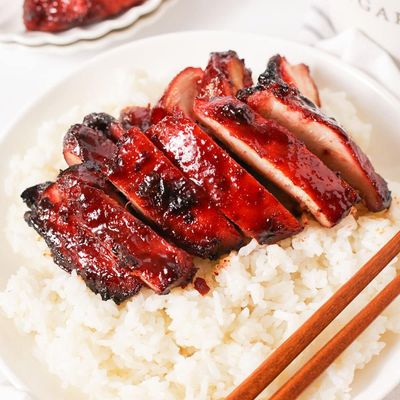
Cantonese BBQ Chicken
This is summer-BBQ adaptation of the lacquered red roast meats that hang in the windows of Cantonese siu mei shops. The marinade borrows from char siu (hoisin, soy, Shaoxing wine, five-spice, fermented bean curd, garlic, ginger) but pulls back on the sugar slightly because chicken does not need as much sweetness as pork shoulder. Bone-in skin-on thighs are the right cut: they stay juicy on the grill, the skin renders down and crisps, and the bones give the meat shape. A two-stage glaze does the rest. The thighs cook over indirect heat first to render the fat and set the meat, then move directly over the coals for the last few minutes while a honey-maltose mixture is brushed on repeatedly. Every brush of glaze caramelises, blackens slightly at the edges, then gets brushed again. The result is sticky-shiny with a smell that is half five-spice, half woodsmoke. Difficulty is low if you control your heat. A two-zone fire (one side coals piled high, the other side empty) is the only real requirement; on a gas grill, two burners on full and one off does the same job. Serve sliced over plain rice with sliced cucumber and a spoon of chilli oil, or stuffed into bao with hoisin and spring onion.
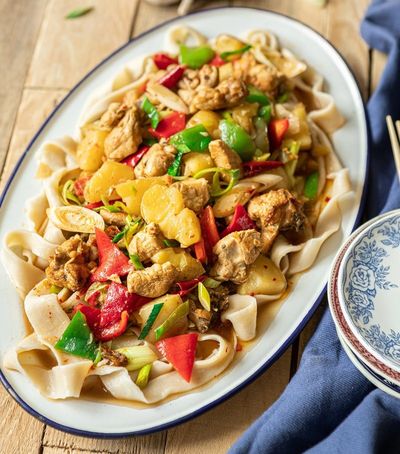
Big Plate Chicken
A dish that wears its multi-culture origin on its sleeve: chicken, potato and green pepper in a sweet-savoury soy-based braise (the Han Chinese influence), with star anise, Sichuan pepper, cumin and dried chilli (the Uyghur side), thickened by the starch from chunks of potato, ladled over flat hand-cut belt noodles. The sauce is the centrepiece. Browning sugar in oil before the chicken goes in builds a dark caramel that turns the whole braise a deep brick-red, and the soy underneath gives it weight; the Sichuan peppercorns add a mild numbness rather than dominating. Smell is rich, sweet, slightly spicy, with anise drifting through. Not difficult but not quick, 45 minutes once the prep is done, and the belt noodles are a small project on their own. Born in the 1980s in northern Xinjiang where a generation of Han Chinese migrants opened restaurants alongside the existing Uyghur food economy; the dish is the synthesis of those two traditions and is now the signature dish of Xinjiang cuisine, eaten across China and beyond.