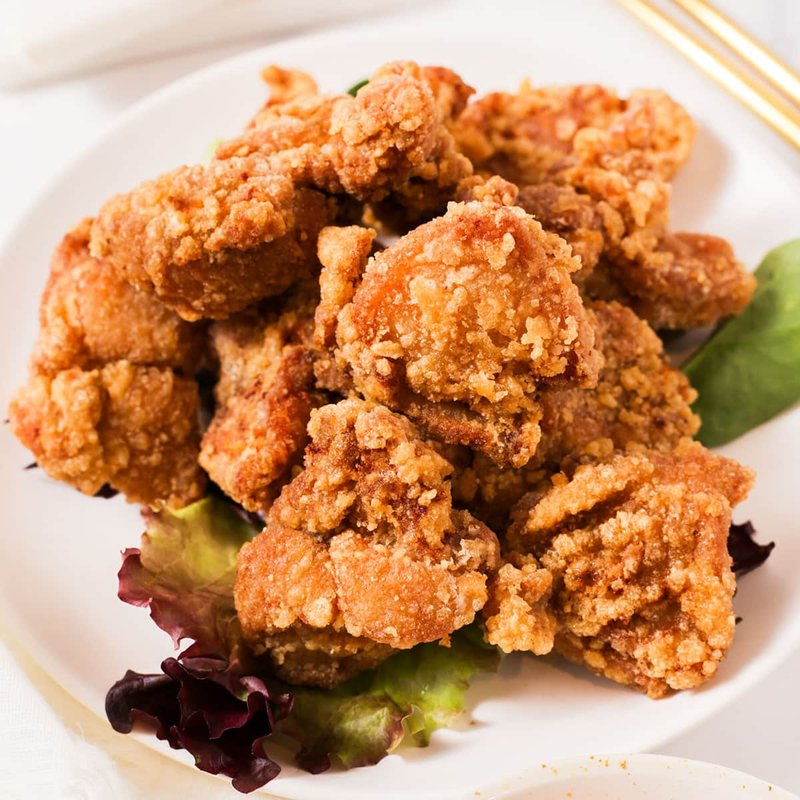
Karaage
Japan's izakaya fried chicken: marinated thigh dredged in potato starch and twice-fried for an impossibly crisp shatter-crunchy crust.
Overview
Chicken thighs (boneless, skin-on for the best result) are cut into 4 cm pieces and marinated for 30 minutes in a mixture of soy sauce, sake, grated ginger, garlic, mirin and a touch of sesame oil. The marinated chicken pieces are then thoroughly dredged in potato starch (also called katakuriko in Japanese; cornstarch is a workable substitute but not as good). Oil heats to 160°C for the first fry, chicken pieces fry for 4 minutes until just cooked but not deeply coloured. Removed; rested for 5 minutes. Oil temperature increases to 190°C for the second fry, chicken returns for 60-90 seconds until amber-golden, crisp, and the outside shatters when bitten. Seasoned and served immediately.
Ingredients
Chicken
- 700 g boneless skin-on chicken thighs (or boneless skinless if preferred)
Marinade
- 3 tablespoons light soy sauce (Japanese / shoyu)
- 2 tablespoons sake (or substitute dry sherry / vermouth + 1 teaspoon sugar)
- 1 tablespoon mirin
- 1 tablespoon sesame oil
- 3 cm fresh ginger (grated, about 1 tablespoon)
- 3 garlic cloves (grated)
- 1 teaspoon caster sugar
- ½ teaspoon black pepper
Coating
- 150 g potato starch (katakuriko - sold at Asian shops; or substitute cornstarch)
- A pinch of salt
For frying
- 1 litre vegetable oil (or sunflower)
To serve
- 1 lemon (cut into wedges)
- Japanese mayonnaise (Kewpie - the squeezy bottle, sold at Asian shops)
- Shichimi togarashi (Japanese seven-spice - chilli, sesame, orange peel etc.)
- A small bowl of soy sauce
- grated daikon (optional, for dipping)
Method
Stage 1 - Prep the chicken
- Cut the chicken thighs into 4 cm chunks.
- If the skin is loose, leave it on each piece - it crisps spectacularly in the frying.
- Pat the chunks dry with kitchen paper.
Stage 2 - Marinate
- In a wide bowl, whisk soy sauce, sake, mirin, sesame oil, ginger, garlic, sugar and pepper.
- Add the chicken; massage to coat.
- Cover; refrigerate 30 minutes (no longer - over-marinating makes the surface mushy).
Stage 3 - Coat
- Place potato starch in a wide shallow bowl with a pinch of salt.
- Lift each piece of chicken out of the marinade, letting excess drip off, and roll thoroughly in potato starch.
- Press the starch onto the chicken so it forms a thick uneven crust - the visible bumps and craters in the coating are what give karaage its signature texture after frying.
- Place coated pieces on a wire rack or tray; let rest 5 minutes (the starch absorbs surface moisture).
Stage 4 - First fry (low temp)
- Heat oil in a deep heavy pan to 160°C.
- Fry the chicken in 2-3 batches (don't crowd), 3-4 minutes per batch.
- The chicken should be pale gold and cooked through (internal temp 70°C); don't aim for deep colour at this stage.
- Lift onto a wire rack; let rest 5 minutes.
Stage 5 - Second fry (high temp)
- Increase oil temperature to 190°C.
- Return all the chicken pieces to the oil; fry 60-90 seconds.
- The chicken turns deep amber gold; the crust becomes shatter-crisp.
- Lift onto a wire rack (NOT kitchen paper - paper traps steam and softens the crust).
- Sprinkle with a pinch of salt while still hot.
Stage 6 - Serve
- Pile onto a warm plate.
- Plate lemon wedges, a small dish of Kewpie mayo, and shichimi togarashi.
- Eat immediately, with the fingers or chopsticks.
- Squeeze lemon over before eating; dip into mayo and shichimi to taste.
Notes
- Potato starch is the secret: Cornstarch works; rice flour works; plain flour gives a different (heavier, more like American-style fried chicken) result. Potato starch (katakuriko) gives the lightest, crispest, most shatteringly Japanese karaage. Worth seeking out at any Asian shop.
- Two fries, two temperatures: The first fry at 160°C cooks the chicken through; the second fry at 190°C crisps the crust. Single-frying at high temp gives a dark crust with raw centre; single-frying at low temp gives cooked-but-pale chicken. Two-fry is non-negotiable for proper karaage.
- Don't crowd the oil: Adding too much chicken at once drops the oil temperature dramatically and the chicken steams instead of fries. Fry in batches; let the oil come back to temperature between.
Storage
- Best within 30 minutes of frying.
- Cooked karaage: refrigerate 2 days; reheat at 200°C oven 6 minutes (microwave makes the crust soggy).
- Coated but unfried chicken: freeze on a tray 2 months. Fry from frozen - first fry at 150°C 6 min, then 190°C 90 sec.
More like this
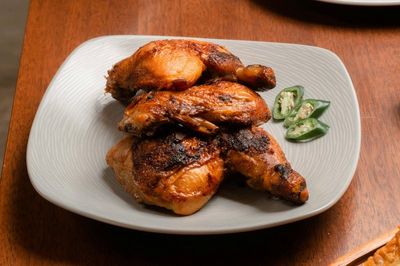
Chicken Inasal
Chicken inasal is the pride of Bacolod City on Negros Occidental, where streetside grill houses serve nothing else: trays of chicken parts skewered on bamboo, smoking over long coal pits, with the cook brushing on bright orange annatto oil every few turns. The marinade is what marks it as Filipino: calamansi (a small, sour citrus halfway between lime and tangerine), cane vinegar, ginger, lemongrass, garlic and a generous slug of black pepper. The annatto oil (atsuete) is just neutral oil warmed gently with annatto seeds until it stains a vivid orange-red; this is the dish's signature look and a mild peppery flavour. Basting starts halfway through cooking so the colour goes onto skin that's already partly cooked, and continues right up to the moment the chicken leaves the grill. Difficulty for a home cook is low; the only special ingredients are calamansi (lime juice plus a touch of orange juice substitutes well) and annatto seeds (sometimes sold as achiote, found in any Filipino or Latin American shop). The flavour profile is sharp, herbal, slightly smoky, with a peppery edge from black pepper rather than chilli, and ribbon-thin lemongrass perfume running through everything. Service is non-negotiable: a heap of garlic rice (sinangag), a saucer of toyomansi (soy-calamansi-vinegar dipping sauce with sliced chillies), and the cook's pot of warm annatto oil for the table.
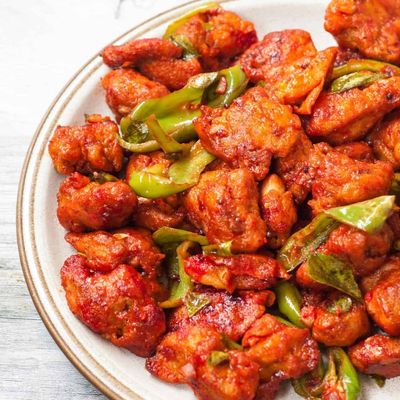
Chicken 65
Chicken thighs cube small; marinate for 1 hour in yogurt, ginger-garlic paste, Kashmiri chilli, garam masala and cornflour. Deep-fried in two stages, first to cook through, second to crisp. While the chicken rests, a hot tempering of curry leaves, garlic, dried chillies, soy and vinegar sputters in a wok. The fried chicken tosses through the tempering for 30 seconds and goes straight to the plate.
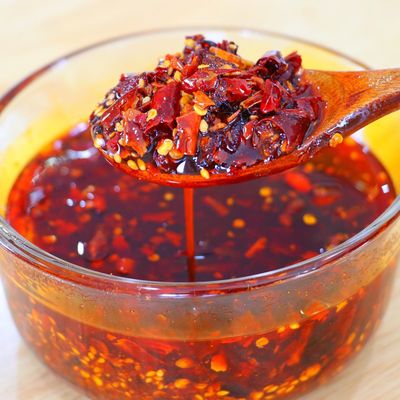
Chilli oil
Two-stage flavour build: first a spice infusion (whole spices soaked briefly in water, then simmered slowly in vegetable oil with spring onion and ginger), then a sizzle (the hot strained oil poured over a heat-proof bowl of chilli flakes, smoked paprika, soy and Chinese vinegar). Cooling. Mixing in the textural elements: caster sugar, salt, chicken stock powder, crispy fried shallots and crispy fried garlic. Jarred, rested 24 hours so the flavours marry, stirred vigorously before each use because the oil and solids separate.
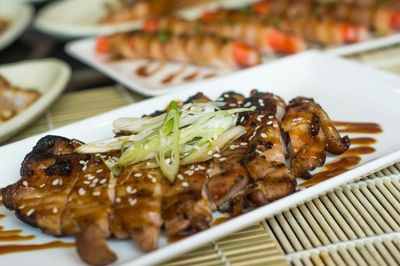
Honey Soy Glazed Chicken
Roast chicken at its most rewarding: bone-in, skin-on thighs that braise gently in their own marinade then crisp up under a sticky honey-and-soy lacquer, basted twice during cooking so the surface builds up in glossy layers. You let the chicken sit in the marinade overnight so the salt in the soy seasons deep into the meat, and the same marinade doubles as the glaze when you roast - raw honey and dark brown sugar caramelising into the skin while the ginger, garlic and a hit of sambal oelek keep things from being one-note sweet. A wire rack matters; it lifts the chicken so the underside also crisps and the marinade can't pool and boil. The kitchen fills with the smell of caramelising honey, garlic and toasted soy for the last fifteen minutes. The result sits somewhere between Cantonese roast meats and a Korean glazed thigh, with the gentle chilli warmth threading through every bite. Steamed rice and a quick green vegetable on the side, with the basting sauce poured generously over.