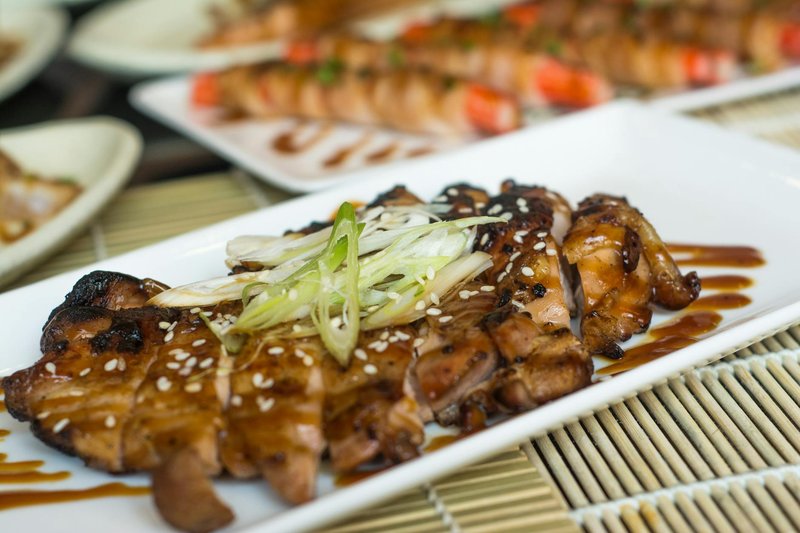
Honey Soy Glazed Chicken
Bone-in chicken thighs roasted under a sticky honey, soy and ginger lacquer until the skin turns deep mahogany and the meat slides off the bone. The kitchen fills with the smell of caramelising honey, garlic and toasted soy. A weeknight roasting tray that feels far more deliberate than the effort it takes.
Overview
Roast chicken at its most rewarding: bone-in, skin-on thighs that braise gently in their own marinade then crisp up under a sticky honey-and-soy lacquer, basted twice during cooking so the surface builds up in glossy layers. You let the chicken sit in the marinade overnight so the salt in the soy seasons deep into the meat, and the same marinade doubles as the glaze when you roast - raw honey and dark brown sugar caramelising into the skin while the ginger, garlic and a hit of sambal oelek keep things from being one-note sweet. A wire rack matters; it lifts the chicken so the underside also crisps and the marinade can't pool and boil. The kitchen fills with the smell of caramelising honey, garlic and toasted soy for the last fifteen minutes. The result sits somewhere between Cantonese roast meats and a Korean glazed thigh, with the gentle chilli warmth threading through every bite. Steamed rice and a quick green vegetable on the side, with the basting sauce poured generously over.
Ingredients
Chicken
- 6 bone-in, skin-on chicken thighs (excess skin trimmed)
- Kosher salt and freshly ground black pepper
Marinade and glaze
- 80 ml low-sodium soy sauce
- 60 ml raw honey
- 40 g packed dark brown sugar
- 30 ml rice vinegar
- 15 g ginger paste
- 15 g garlic paste (or finely minced garlic)
- 10 g Sambal Oelek (red chilli paste)
- 2 g onion powder
To garnish
- Sesame seeds
- Sliced spring onions
Method
Stage 1 - Marinate
- Pat the chicken thighs dry and season lightly with salt and pepper.
- In a large bowl or resealable bag, whisk together the soy sauce, honey, brown sugar, rice vinegar, ginger, garlic, sambal oelek and onion powder.
- Add the chicken; massage the marinade into the skin and underneath it.
- Cover and refrigerate at least 2 hours, ideally overnight.
Stage 2 - First roast
- Preheat the oven to 190C.
- Line a rimmed baking tray with foil and set a wire rack on top.
- Lift the chicken out of the marinade, letting excess drip back into the bowl, and reserve the marinade.
- Arrange the thighs skin-side up on the rack, well spaced.
- Roast 30 minutes.
Stage 3 - Reduce the glaze
- While the chicken roasts, pour the reserved marinade into a small saucepan.
- Bring to a gentle simmer over medium-low heat, then drop to the lowest setting to keep warm.
Stage 4 - Baste and finish
- Brush the warm glaze generously over the chicken, flip the thighs, and brush the other side.
- Roast another 30 minutes.
- Flip skin-side up, brush a final time, and roast 5-10 more minutes until the skin is glossy and dark mahogany and the meat reads 74C internally.
- Rest 5 minutes; scatter with sesame seeds and spring onions before serving.
Notes
- Bring the marinade to a real boil: the saucepan glaze has been in contact with raw chicken, so it must simmer properly before brushing back on.
- Tame the spice: halve the sambal oelek if you want a gentler heat; the dish still has warmth from the ginger.
- Other cuts: drumsticks or split chicken legs work with the same timing; whole bone-in breasts need closer to 35-40 minutes total.
- Sticky tray: the marinade caramelises hard on the foil, which is why a wire rack and lined tray make cleanup tolerable.
Storage
- Keeps 3 days refrigerated in an airtight container.
- Reheat covered at 160C for 10-12 minutes; the microwave will soften the skin.
- Freeze whole portions for up to 2 months; thaw overnight in the fridge.
More like this
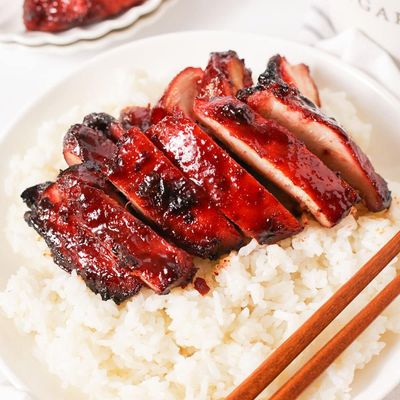
Cantonese BBQ Chicken
This is summer-BBQ adaptation of the lacquered red roast meats that hang in the windows of Cantonese siu mei shops. The marinade borrows from char siu (hoisin, soy, Shaoxing wine, five-spice, fermented bean curd, garlic, ginger) but pulls back on the sugar slightly because chicken does not need as much sweetness as pork shoulder. Bone-in skin-on thighs are the right cut: they stay juicy on the grill, the skin renders down and crisps, and the bones give the meat shape. A two-stage glaze does the rest. The thighs cook over indirect heat first to render the fat and set the meat, then move directly over the coals for the last few minutes while a honey-maltose mixture is brushed on repeatedly. Every brush of glaze caramelises, blackens slightly at the edges, then gets brushed again. The result is sticky-shiny with a smell that is half five-spice, half woodsmoke. Difficulty is low if you control your heat. A two-zone fire (one side coals piled high, the other side empty) is the only real requirement; on a gas grill, two burners on full and one off does the same job. Serve sliced over plain rice with sliced cucumber and a spoon of chilli oil, or stuffed into bao with hoisin and spring onion.
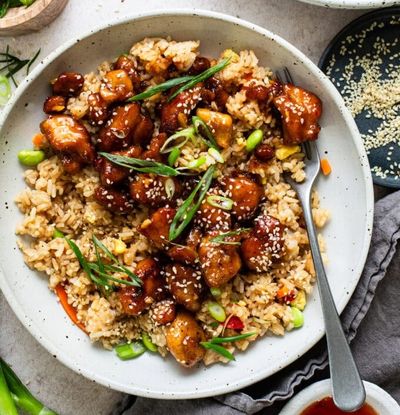
Crispy Honey Garlic Chicken
An Asian-American takeout standard reimagined for the home kitchen, with one specific upgrade: 10 cloves of garlic, chopped rather than minced, so the pieces stay visible and bite back. The flavour is the canonical sweet-salty-spicy balance of American Chinese cookery, honey for sweetness, soy for salt and umami, sweet chilli sauce (Mae Ploy or similar Thai bottled brand) for vinegared chilli warmth, garlic for sharpness across the back. Crisp comes from a cornstarch dust on the chicken, which gives a more even, lacier crust than flour does and stays crisp longer once the sauce hits it. The chicken thighs themselves stay juicy because they're cubed, not pounded; the small pieces cook fast and the seasoning penetrates. Smell when the chicken hits the sauce is honey-and-soy hitting hot oil, which is one of the more universally appealing kitchen smells. Easy and fast, active cooking under 20 minutes once the marinade has rested. The dish has no claim to traditional Chinese cookery; it's the product of decades of evolution in American Chinese restaurants and the home-cook adaptations that followed.
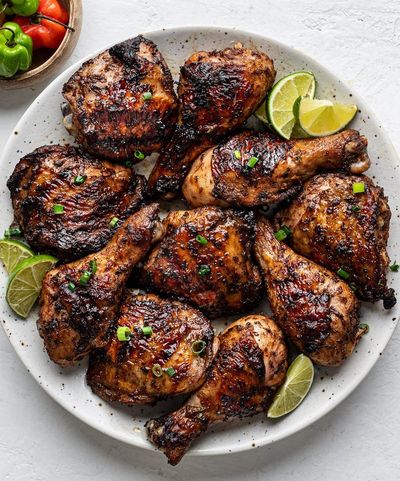
Jerk Chicken
A wet jerk paste: scotch bonnet chillies, garlic, ginger, spring onions, thyme, allspice (whole or ground), brown sugar, soy sauce, lime, oil, salt and pepper, pureed in a blender. The chicken (bone-in skin-on thighs and drumsticks, or spatchcocked whole bird) marinates for 12 hours minimum. Slow-grilled over indirect heat with a pile of pimento wood chips or allspice berries on the coals for the signature smoke; alternatively, an oven-bake at 180°C with a final blast under the grill, supplemented with allspice in the marinade.
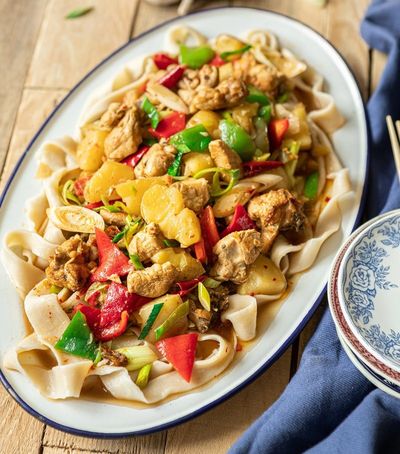
Big Plate Chicken
A dish that wears its multi-culture origin on its sleeve: chicken, potato and green pepper in a sweet-savoury soy-based braise (the Han Chinese influence), with star anise, Sichuan pepper, cumin and dried chilli (the Uyghur side), thickened by the starch from chunks of potato, ladled over flat hand-cut belt noodles. The sauce is the centrepiece. Browning sugar in oil before the chicken goes in builds a dark caramel that turns the whole braise a deep brick-red, and the soy underneath gives it weight; the Sichuan peppercorns add a mild numbness rather than dominating. Smell is rich, sweet, slightly spicy, with anise drifting through. Not difficult but not quick, 45 minutes once the prep is done, and the belt noodles are a small project on their own. Born in the 1980s in northern Xinjiang where a generation of Han Chinese migrants opened restaurants alongside the existing Uyghur food economy; the dish is the synthesis of those two traditions and is now the signature dish of Xinjiang cuisine, eaten across China and beyond.