In season

May produce

Tap any item to find recipes that use it.

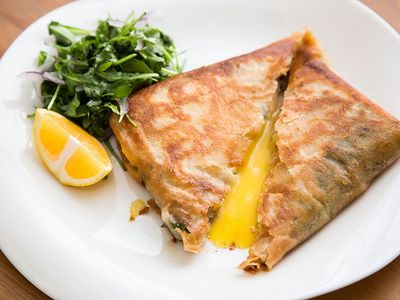
Bacalhau à Brás

Bacalhau à Brás

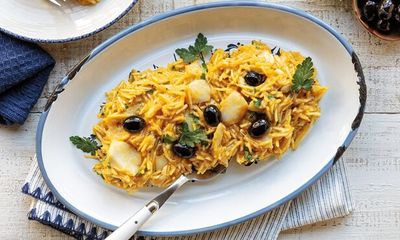
Bacalhau à Brás is the dish Portugal turns to when the salt cod, the onions and the eggs all need to find their place in one pan: scrambled together with a tangle of fine matchstick chips so the whole thing reads as somewhere between a hash and a loose carbonara. The salt cod needs the usual day or two of cold soaks to draw the salt down, then a brief simmer to soften it; the onions take their time in olive oil with a few smashed garlic cloves until almost jam-like; the matchstick chips (palha) are fried separately so they stay crisp. Everything comes together in a wide pan, the eggs are whisked in over a low heat, and you stop the moment the eggs coat the cod and potato like a sauce. Never let them set firm. Olives, parsley and a wedge of lemon at the table.
Portuguese 45 minutes Serves4
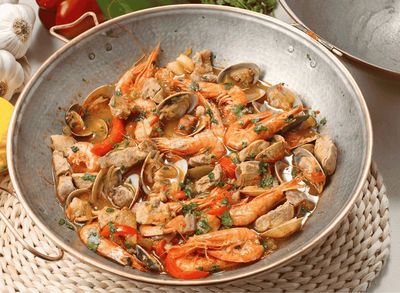
Cataplana de Marisco

Cataplana de Marisco

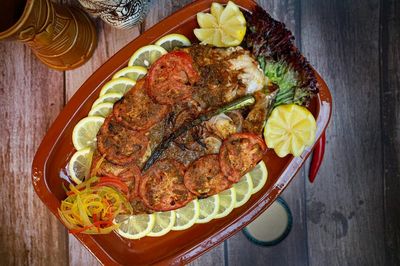
A cataplana is a hinged copper clamshell pan, and the seafood stew named after it is one of those dishes where the cookware does the work. You build a base of onions, peppers, sliced chouriço, smoked paprika, tomato and white wine in the bottom of the cataplana, then layer clams, mussels, prawns and chunks of firm white fish on top, clamp the lid shut, and steam it all for less than ten minutes. The lid lifts at the table to release a cloud of paprika-and-wine-scented steam, which is the entire point of the dish. If you do not have a cataplana, any wide pan with a tight lid does the same job. Coriander and lemon at the end, crusty bread for the broth, and vinho verde for everything else.

Portuguese 55 minutes Serves4
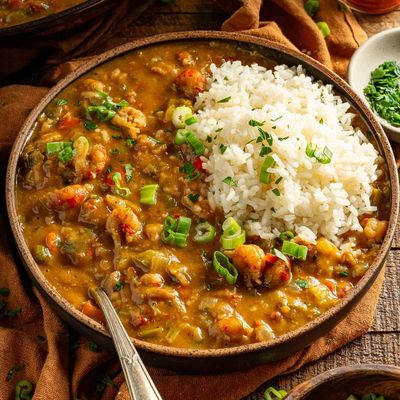
Crawfish Étouffée

Crawfish Étouffée

A Louisiana classic, the dish whose name means "smothered" in French, and that's exactly what's happening at the table: tender crawfish tails smothered in a rich gravy spooned over white rice. You start with a blond roux (butter and flour cooked just to the colour of peanut butter, lighter than gumbo's nearly-burnt mahogany), then soften the Cajun trinity of onion, celery and bell pepper in it until everything goes glossy. Tomato paste, Cajun spice and stock loosen the mixture, and the lot simmers down to a thick velvety gravy. Crawfish tails (or prawns if you can't find them) go in near the end and cook just briefly so they stay tender rather than turning rubbery. Spring onion and parsley scatter over at the finish. Ladled over white rice in a bowl, with crusty bread and a glass of cold beer alongside.

Cajun 1 hour Serves4
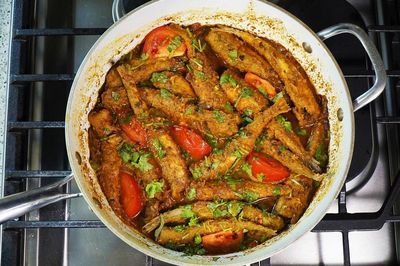
Curry Smelts

Curry Smelts

Trinidadian comfort food that brings together the East Indian and Afro-Caribbean strands of Trini cookery in one pan: small whole fried fish (a West African and Caribbean coastal habit) drowned in a Trinidadian East Indian curry sauce. The fish are smelts, sardines or whitebait, whole, head-on, eaten with a small bite to remove the spine. Once fried they sit crisp; when the curry sauce hits, the outer crust softens slightly and absorbs the gravy while the centre stays meaty. The sauce is the dish's signature: roasted geera (dry-toasted cumin) gives a smoky, nutty depth that pre-ground supermarket cumin can't touch, anchar masala adds a fermented-tangy edge (it's the Trinidadian pickled-mango spice mix), and Caribbean curry powder rounds the warmth. Whole pierced Scotch bonnet scents without flooring. Smell when the spices bloom in hot oil is heavy and pungent in the best possible way. Not difficult but it's a two-pan dance, so timing matters. A daily-cookery dish across Trinidad and Tobago and the Indo-Trinidadian diaspora, eaten with steamed rice or with sada roti torn and used as a scoop.

Trinidadian 50 minutes Serves5
Lahori Fried Fish

Lahori Fried Fish

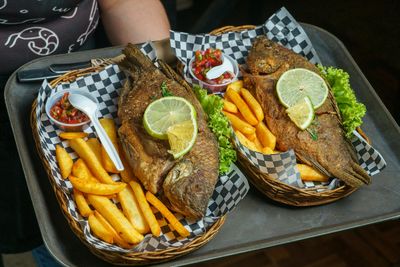
Firm white fish is scored, rubbed with a spice paste of ginger-garlic, Kashmiri chilli, ajwain (carom), turmeric and lemon, and rested for ½ hour. A separate gram-flour batter (besan, rice flour, ajwain and a pinch of bicarb for crispness) is whisked to a thick coating consistency. Each fillet is dipped in the batter and shallow-fried in mustard oil until the crust deep-gold-crackles. Eaten with a heavy dusting of chaat masala and a squeeze of lemon.

Lahori 1 hour Serves4
Miso Shrimp Scampi

Miso Shrimp Scampi

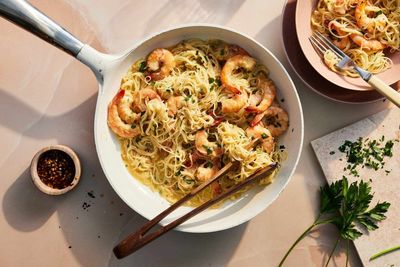
A clever, restrained twist on a familiar pan sauce. You keep the scampi method intact: butter foamed with shallot and a tower of garlic, deglazed with dry white wine and lemon juice, finished with a hit of chilli and parsley. The change is a couple of spoonfuls of white miso stirred into the sauce just before the shrimp return to the pan. The miso melts in without overpowering, lending a salty, umami round-out that intensifies the buttery base and gives the dish a "what is in this?" quality across the back of the palate. The shrimp themselves get Cajun-spiced before they ever touch the pan, which adds a low background warmth across the whole bowl. You cook them fast because shrimp turn rubbery in moments past doneness; pull them when they show an even pink and a tight C-curl. Serve three ways: over hot linguine with a splash of pasta water for gloss, ladled over white rice, or in a shallow bowl with torn crusty bread for mopping the sauce.

Asian Fusion 55 minutes Serves4
Pasteis de Bacalhau

Pasteis de Bacalhau

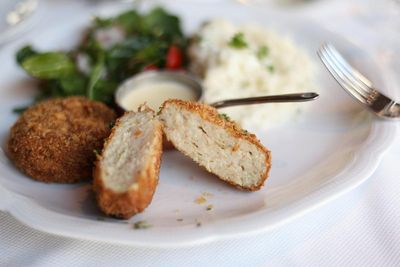
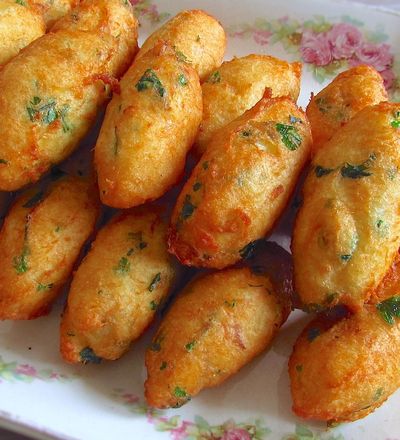
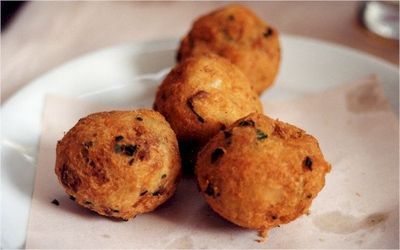
These are the little salt-cod fritters you'd order at a marble counter in Lisbon, sitting with a glass of vinho verde while the bartender slides a plate across with no ceremony. The recipe itself is simple, dry mashed potato through flaked bacalhau with onion, garlic, parsley and egg, then a brief fry, but it does start the day before because the salt cod wants 24 to 36 hours of cold water soaks to draw the salt out. That step is the one thing you cannot shortcut. Once the cod is desalted, everything else is an afternoon's work: simmer the cod, flake it through warm potato, shape into the three-sided football "quenelles" that are the Portuguese signature, and fry until amber. Eat them warm with a wedge of lemon and a dish of piri-piri on the side.

Snacks 36 hours 55 minutes Serves6
Polvo à Lagareiro

Polvo à Lagareiro

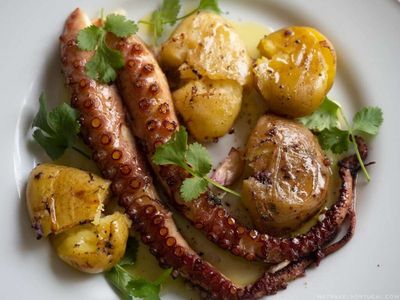
Polvo à Lagareiro is the dish the olive-press workers (the lagareiros) ate at the press during the harvest, and it is still glorious: tender octopus and small smashed potatoes baked together under a generous slick of olive oil. You simmer a whole octopus for an hour with onion and bay until you can pierce a thick part of the tentacle with a knife and feel no resistance. The potatoes parboil, then get punched gently with a wooden spoon so they crack but stay whole. Octopus and potatoes go into a wide oven dish, doused with olive oil, garlic, paprika and bay, and roast hard for 25 minutes so the edges char. The olive oil at the end is not a garnish but the dish itself, and it wants to be the best you have.

Portuguese 2 hours 25 minutes Serves4
← Prev Page 1 of 2 Next →