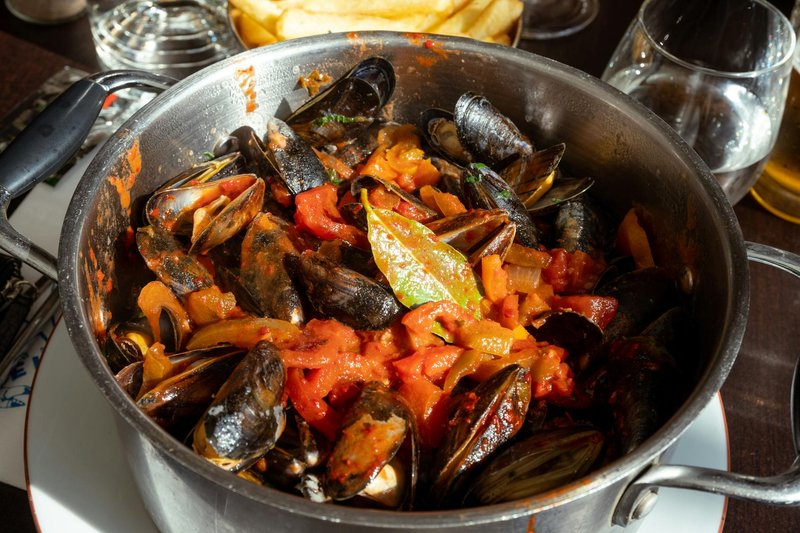
Moules Marinière
Belgian-French steamed mussels in white wine with shallot, garlic, parsley and butter. Twenty minutes from sea to plate; the dish that makes you wonder why you don't eat mussels every week. Crusty bread to mop the broth is half the meal.
Overview
Cleaned mussels go into a hot pot with shallots, garlic, white wine and butter. The lid clamps on; high heat steams everything in 4-5 minutes; the mussels open. A handful of chopped parsley joins; the whole pot lands at the table. Bread on the side.
Ingredients
- 2 kg fresh mussels
- 50 g unsalted butter (split)
- 4 banana shallots (very finely chopped)
- 6 garlic cloves (sliced)
- 300 ml dry white wine (Muscadet or Sauvignon Blanc)
- 200 ml double cream (optional, for moules à la crème)
- A small bunch of flat-leaf parsley (chopped)
- salt
- pepper
- 2 lemons (cut into wedges)
- Crusty bread, to serve
Method
Stage 1 - Clean the mussels
- Tip the mussels into the sink and cover with cold water.
- Scrub the shells one by one with a small brush; pull off any beards (the wiry threads).
- Discard any mussels that don't close when sharply tapped (they're dead - not safe).
- Drain in a colander.
Stage 2 - Build the broth
- Melt half the butter in a large heavy pot over medium heat.
- Cook the shallots for 3-4 minutes until soft.
- Add the garlic; cook 1 minute (don't brown).
- Pour in the wine; bring to the boil.
Stage 3 - Steam the mussels
- Tip in the mussels; immediately clamp on the lid.
- Cook over high heat for 4-5 minutes, shaking the pot occasionally, until all the mussels have opened.
- Discard any that haven't opened (they were already dead).
Stage 4 - Finish
- Lift out most of the mussels into a warmed serving bowl with tongs.
- Add the cream (if using) to the broth in the pot; bring back to a quick simmer.
- Stir in the remaining butter and the parsley.
- Pour the broth back over the mussels.
Stage 5 - Serve
- Bring the bowl straight to the table.
- Lemon wedges and crusty bread alongside.
- Eat with fingers (use an empty shell as a tweezer for the next mussel; that's traditional).
Notes
- Discard closed mussels before AND after cooking: Closed before = dead. Closed after = dead. Both unsafe.
- High heat, lid on: Steaming is fast. Slow cooking turns mussels rubbery.
- The broth is the prize: Don't pour it down the sink. Bread, spoon, drink it.
Storage
- Eat immediately. Mussels don't keep cooked; the texture dies within hours.
More like this
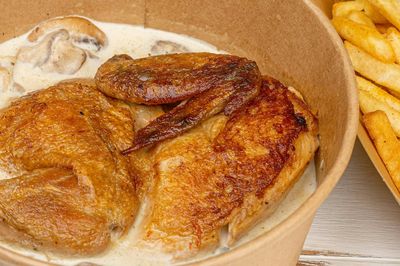
Normandy Chicken
Normandy Chicken showcases the bounty of France's northern apple region, combining succulent chicken legs braised in dry cider with caramelized apples, creamy crème fraîche, and aromatic tarragon. The sauce is silky-smooth without being heavy, balanced between the slight tartness of cider and the sweetness of apples, finished with a hint of Dijon mustard that adds complexity without overpowering.
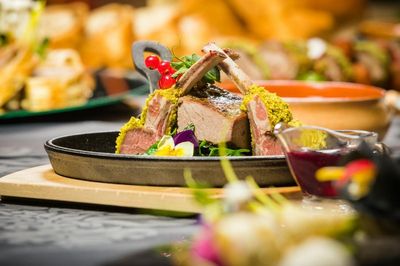
Breast of Lamb with Mustard and Herb Crust
This composed dish showcases lamb breast's rich potential: the trimmed meat is braised until tender in an herb-infused stock, then sliced and topped with a crispy herb and mustard breadcrumb crust. The braising liquid becomes an elegant sauce thickened with cream and sharpened with mustard, providing a sophisticated accompaniment that complements both the meat and crust.
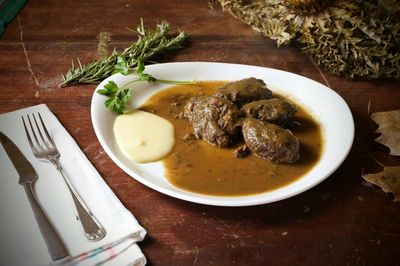
Beef Bourguignon (Boeuf Bourguignon)
Beef Bourguignon is the quintessential French braise, tender beef cubes slow-cooked in a Burgundy wine sauce enriched with pearl onions, mushrooms, and lardons. The combination of wine, beef stock, and a delicate flour thickening creates a deeply savory sauce that clings to the meat. This dish exemplifies classic French technique: patient cooking, careful skimming, and the balance of richness with restraint.
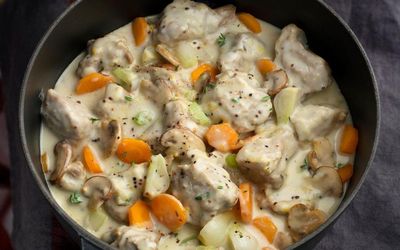
Blanquette de Veau
Veal shoulder or breast simmers in white stock with onion, carrot and bouquet garni until tender. The strained stock is reduced and bound with a cream-yolk liaison; mushrooms and pearl onions cooked separately go in at the end. Served with rice or buttered noodles.