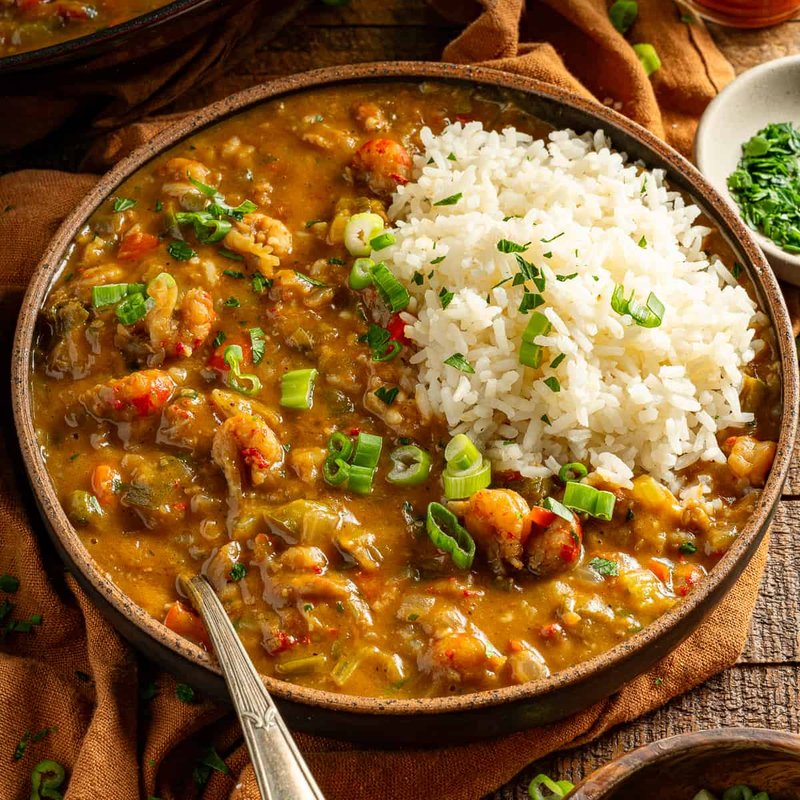
Crawfish Étouffée
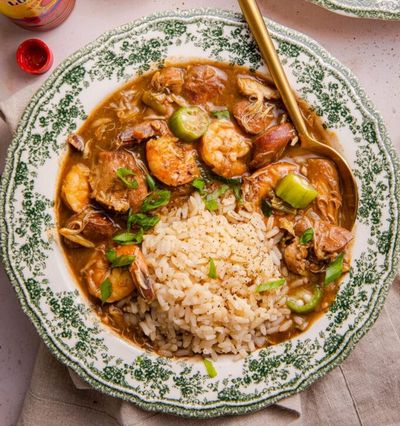
Cajun shellfish smothered in a blond-roux gravy with the trinity (onion, celery, pepper), garlic, Cajun spice and a long simmer. "Étouffée" means "smothered"; the dish is exactly that - crawfish (or shrimp, prawns) buried in a thick, deeply-flavoured sauce, served over white rice. Quintessential Cajun home cooking.
Overview
A Louisiana classic, the dish whose name means "smothered" in French, and that's exactly what's happening at the table: tender crawfish tails smothered in a rich gravy spooned over white rice. You start with a blond roux (butter and flour cooked just to the colour of peanut butter, lighter than gumbo's nearly-burnt mahogany), then soften the Cajun trinity of onion, celery and bell pepper in it until everything goes glossy. Tomato paste, Cajun spice and stock loosen the mixture, and the lot simmers down to a thick velvety gravy. Crawfish tails (or prawns if you can't find them) go in near the end and cook just briefly so they stay tender rather than turning rubbery. Spring onion and parsley scatter over at the finish. Ladled over white rice in a bowl, with crusty bread and a glass of cold beer alongside.
Ingredients
Blond roux and trinity
- 80 g unsalted butter
- 60 g plain flour
- 1 onion (large, chopped)
- 3 celery sticks (chopped)
- 1 green pepper (chopped)
- 6 garlic cloves (crushed)
Sauce
- 2 tablespoons tomato paste
- 1 tablespoon Cajun seasoning (or 1 tsp paprika + ½ tsp each cayenne, garlic powder, oregano, thyme, salt, pepper)
- 700 ml seafood, chicken (or vegetable stock)
- 2 bay leaves
- 1 tablespoon Worcestershire sauce
- 1 tablespoon hot sauce (Crystal or Tabasco)
- ½ teaspoon salt
- ½ teaspoon black pepper
Shellfish
- 500 g crawfish tail meat (cooked, peeled; or 500 g raw shelled prawns)
To finish
- ½ lemon (juice)
- 4 spring onions (sliced)
- A small bunch of flat-leaf parsley (chopped)
To serve
- Cooked white rice
- Hot sauce
Method
Stage 1 - Roux
- Melt the butter in a heavy pot over medium heat.
- Whisk in the flour; cook 8-10 minutes, stirring constantly, until the mixture is the colour of peanut butter.
Stage 2 - Trinity
- Add the onion, celery and green pepper to the roux; stir to coat.
- Cook 8-10 minutes until softened (the heat will drop while the vegetables release water).
- Add the garlic; cook 1 minute.
Stage 3 - Sauce
- Stir in the tomato paste and Cajun seasoning; cook 2 minutes.
- Pour in the stock gradually, stirring to dissolve the roux.
- Add the bay, Worcestershire, hot sauce, salt and pepper.
- Bring to a simmer; reduce to medium-low.
- Cook 25-30 minutes, stirring occasionally, until thickened to a gravy that coats the spoon.
Stage 4 - Shellfish
- Add the crawfish (or prawns); stir gently.
- For pre-cooked crawfish: cook 3-4 minutes until just heated through.
- For raw prawns: cook 4-5 minutes until pink and just-set.
Stage 5 - Finish
- Discard the bay leaves.
- Stir in the lemon juice, half the spring onions and half the parsley.
- Taste; adjust salt and hot sauce.
Stage 6 - Serve
- Spoon over white rice; top with the remaining spring onions and parsley.
- Pass extra hot sauce.
Notes
- Blond roux for étouffée: Lighter than gumbo's dark roux - about the colour of peanut butter, which is lighter than the rich brown roux gumbo wants. The lighter roux thickens better and lets the shellfish flavour shine.
- Don't overcook the crawfish: They go rubbery. Pre-cooked crawfish only need to heat through; raw prawns need 4-5 minutes max.
- Cajun seasoning is variable: Some store-bought blends are very salty; reduce added salt if using.
Storage
- Sauce keeps 4 days refrigerated; better day 2.
- Add fresh shellfish to reheated sauce; don't reheat shellfish multiple times.
More like this
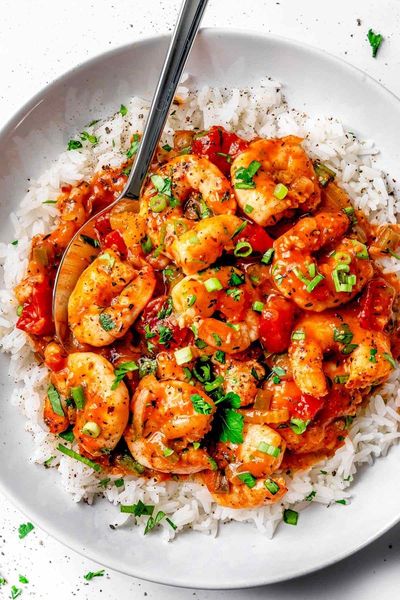
Shrimp Creole
The trinity (onion, celery, green pepper) softens in butter; garlic, Creole seasoning and herbs join. Tomato paste deepens; chopped tomatoes and stock loosen; the lot simmers for 20 minutes into a thick sauce. Prawns drop in at the end and cook for 3 minutes, pink and just-set. Hot sauce, lemon and parsley to finish.
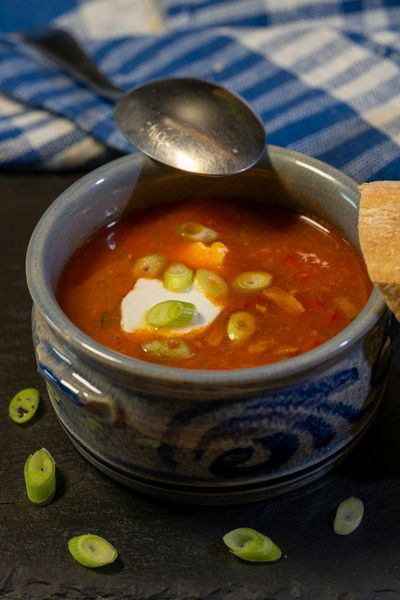
Shellfish Gumbo
A shellfish gumbo, lighter than the full Cajun "everything" version but built on the same foundations - a deep roux, the holy trinity of onion, celery and sweet pepper, and a slow-simmered broth that ties everything together. You cook a roux in oil until it goes to a peanut-butter brown (lighter than the full-Cajun chocolate roux but darker than blond), then soften the trinity in it before stock and herbs go in to build the soup. Mussels, prawns and crab go in towards the end and cook just briefly so they stay tender. A modern touch of fresh chilli lifts the heat across the back. Eaten over white rice in deep bowls, with hot sauce on the table and crusty bread to mop the last of the broth.
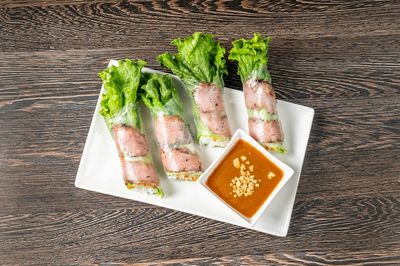
Gỏi Cuốn
Pork belly is simmered until tender, prawns are poached briefly, and vermicelli is cooked just al dente. Everything cools to room temperature, then rice paper rounds are dipped briefly in warm water and rolled around lettuce, herbs and the protein with the pink of the prawns showing through the wrapper. The peanut-hoisin sauce is the make-or-break: it should be thick, sweet and lightly garlicky.
Authentic Cajun Gumbo
The "everything" Louisiana gumbo, chicken thighs, andouille, lump crab and shrimp all in one pot, and the dish where the technique matters more than the recipe. The roux is the single defining step and the line between Cajun gumbo and every other stew on earth: a full cup of oil and a full cup of flour cooked at medium-low for around 30 minutes, stirred without stopping, until the colour goes from blond to peanut butter to milk chocolate to dark chocolate. That's not flavour theatre; the long-cooked roux produces a deeply nutty, slightly bitter, profoundly savoury base that thickens the gumbo and gives it the distinctive almost-charred note no shortcut can replicate. Around the roux: the Cajun "holy trinity" of onion, bell pepper and celery; filé powder (ground sassafras leaves) added off heat as a second thickener; okra adding a third (and contributing its own slight slip); plus the four proteins, each adding a different layer. Flavour is dark, smoky, herbaceous, and slightly briny from the seafood. Smell is the roux toasting. Not difficult on technique but tremendously demanding on patience and attention; 30 minutes of unbroken stirring is the gateway, and if you walk away or rush it the roux burns and you start over. A dish that runs deep through Cajun and Creole Louisiana, with origins in the French settlers, the Choctaw (who contributed filé), West Africans (who contributed okra), and Spanish colonial traditions of Louisiana from the 1700s onwards.