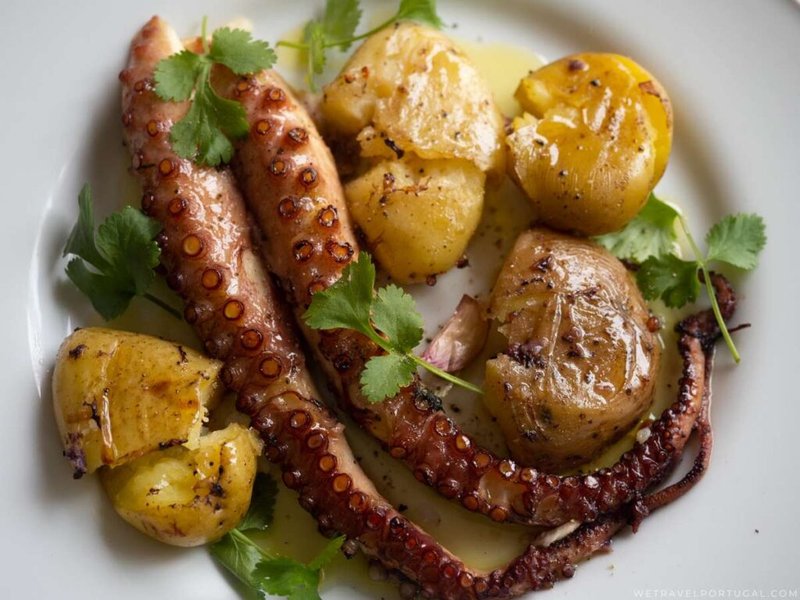
Polvo à Lagareiro
Portugal's olive-press-day plate: tender octopus and punched new potatoes roasted hard under a generous flood of garlicky olive oil.
Overview
Polvo à Lagareiro is the dish the olive-press workers (the lagareiros) ate at the press during the harvest, and it is still glorious: tender octopus and small smashed potatoes baked together under a generous slick of olive oil. You simmer a whole octopus for an hour with onion and bay until you can pierce a thick part of the tentacle with a knife and feel no resistance. The potatoes parboil, then get punched gently with a wooden spoon so they crack but stay whole. Octopus and potatoes go into a wide oven dish, doused with olive oil, garlic, paprika and bay, and roast hard for 25 minutes so the edges char. The olive oil at the end is not a garnish but the dish itself, and it wants to be the best you have.
Ingredients
Octopus
- 1 octopus (about 1 ½-2 kg, frozen then thawed, or pre-tenderised from the fishmonger)
- 1 onion (halved)
- 2 bay leaves
- A strip of lemon peel
- 1 teaspoon salt
- Water (enough to cover)
Potatoes
- 800 g small new potatoes (the smaller, the better - about walnut-sized)
- 2 teaspoons salt (for boiling)
To roast
- 200 ml extra-virgin olive oil (generous - this is "lagareiro" - the olive-oil press style)
- 8 garlic cloves (sliced thin)
- 2 bay leaves
- 1 teaspoon smoked paprika
- 1 teaspoon sweet paprika
- 1 teaspoon coarse salt
- ½ teaspoon black pepper
Garnish
- 3 tablespoons fresh flat-leaf parsley (chopped)
- 1 lemon (cut into wedges)
- 2 tablespoons raw olive oil (drizzle)
Method
Stage 1 - Cook the octopus
- Place octopus in a large pot with onion, bay leaves, lemon peel and salt.
- Cover with water (just to submerge).
- Bring to a boil; reduce to a low simmer; partially cover.
- Cook 50-60 minutes until tender - a knife should slip easily through the thickest part of the tentacle.
- Off heat; let cool 15 minutes in the cooking liquid (continues to tenderise).
Stage 2 - Parboil and punch potatoes
- Bring a pot of well-salted water to a boil.
- Add the new potatoes whole (skins on); boil 10-12 minutes until just tender.
- Drain.
- With the back of a wooden spoon (or your palm), gently press each potato - they should crack open slightly without breaking apart entirely.
Stage 3 - Cut the octopus
- Lift octopus from the cooking liquid.
- Cut each tentacle off the body where it meets the head.
- Cut the head into 4 pieces; discard the eye-and-beak section.
- Pat dry on kitchen paper.
Stage 4 - Roast
- Heat oven to 220°C (200°C fan).
- Drizzle 100 ml olive oil into a wide oven dish.
- Scatter sliced garlic, bay leaves, paprika (both), salt and pepper.
- Arrange the punched potatoes and octopus tentacles in the dish - overlap loosely.
- Drizzle the remaining 100 ml olive oil over the top - yes, that much.
- Toss to coat.
Stage 5 - Bake
- Roast 25-30 minutes - the potatoes crisp at the edges; the octopus tentacles slightly char and curl; the olive oil bubbles.
Stage 6 - Serve
- Tip onto a wide serving platter.
- Scatter chopped parsley.
- Squeeze a wedge of lemon over.
- Drizzle extra olive oil - the "lagareiro" finish.
Notes
- Frozen octopus, thawed: Freezing breaks down the connective tissue and gives a tender octopus without other tricks. If your octopus is fresh, bash it on a rock or against the sink before cooking (or pre-freeze it for 24 hours).
- Generous olive oil: Lagareiro means "the press worker's style" - generous oil is the point. 200 ml across the dish is not too much. Use a good olive oil; this is its showcase.
- Don't pre-salt heavily: Octopus shrinks in salt brine. Light salting only during the simmer; final salt is applied during roasting.
Storage
- Refrigerate 3 days; reheat covered in a 180°C oven 12 minutes.
- Freezes 2 months.
More like this
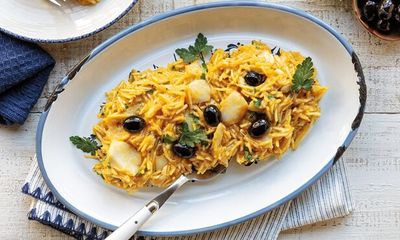
Bacalhau à Brás
Bacalhau à Brás is the dish Portugal turns to when the salt cod, the onions and the eggs all need to find their place in one pan: scrambled together with a tangle of fine matchstick chips so the whole thing reads as somewhere between a hash and a loose carbonara. The salt cod needs the usual day or two of cold soaks to draw the salt down, then a brief simmer to soften it; the onions take their time in olive oil with a few smashed garlic cloves until almost jam-like; the matchstick chips (palha) are fried separately so they stay crisp. Everything comes together in a wide pan, the eggs are whisked in over a low heat, and you stop the moment the eggs coat the cod and potato like a sauce. Never let them set firm. Olives, parsley and a wedge of lemon at the table.

Pasteis de Bacalhau
These are the little salt-cod fritters you'd order at a marble counter in Lisbon, sitting with a glass of vinho verde while the bartender slides a plate across with no ceremony. The recipe itself is simple, dry mashed potato through flaked bacalhau with onion, garlic, parsley and egg, then a brief fry, but it does start the day before because the salt cod wants 24 to 36 hours of cold water soaks to draw the salt out. That step is the one thing you cannot shortcut. Once the cod is desalted, everything else is an afternoon's work: simmer the cod, flake it through warm potato, shape into the three-sided football "quenelles" that are the Portuguese signature, and fry until amber. Eat them warm with a wedge of lemon and a dish of piri-piri on the side.
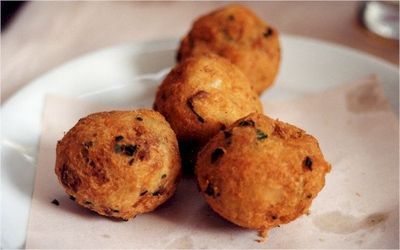
Bolinhos de Bacalhau
Salt cod soaks for 24 hours with several water changes to draw out the salt. Once desalted, it's poached, flaked and folded into hot mashed potato with onion, parsley, egg and a pinch of pepper. The mix is shaped between two tablespoons into the classic oval (two-spoon quenelle shape) and deep-fried.
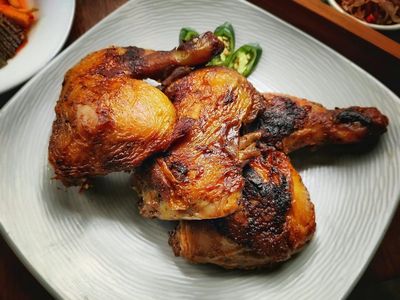
Piri Piri Chicken
Piri-piri chicken is the dish that travelled from Mozambique to Portugal to the high street, and the original is still the best: a whole chicken spatchcocked flat, marinated overnight in a vivid red paste of bird's-eye chillies, garlic, paprika, lemon and olive oil, then grilled hard over charcoal until the skin is darkly blistered and the meat just-cooked through. The marinade itself takes five minutes in a blender. The bird wants a minimum of four hours in it, ideally overnight. A home broiler on max works if you do not have a barbecue, but the smoke from the coals is half the dish. Serve with a second bowl of the same marinade as a sauce, a green salad, and chips.