Akara

Akara

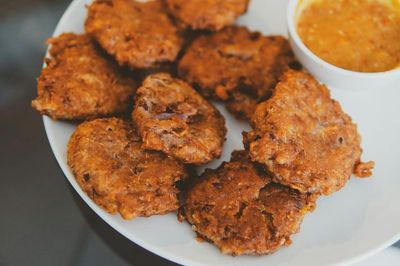
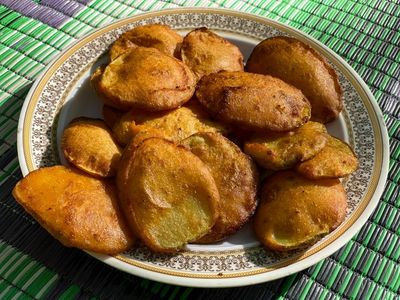
Dried black-eyed beans soak briefly to loosen the skins; the skins rub off (this is the key step, skin-on akara is bitter and grey). The peeled beans go into a blender with onion, Scotch bonnet and just enough water to make a thick batter (not a paste). The batter is whipped by hand or with a wooden spoon for 5 minutes until light and aerated, this is what makes akara fluffy rather than dense. Spoonfuls drop into 175°C oil and fry for 3-4 minutes per side until golden. Drained on paper. Eaten hot.

Snacks 1 hour 10 minutes Serves4
Aloo Posto

Aloo Posto

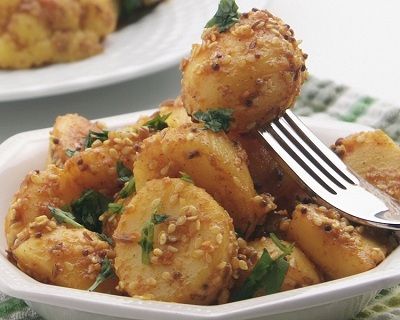
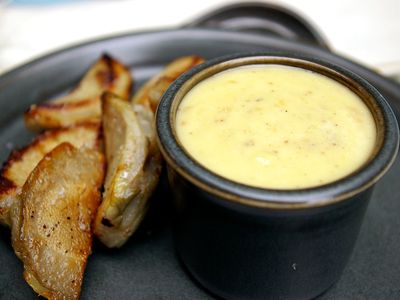
Aloo posto is the dish that Bengalis abroad miss most. Posto, white poppy seed, is so essential to the cuisine of West Bengal that there are entire menus built around it: aloo posto, posto bora (poppyseed fritters), jhinge posto, even ilish posto with hilsa fish. The seeds are soaked, ground to a fine, creamy paste, and cooked just enough to lose their raw note while keeping their pale colour and nutty perfume. This is one of the simplest preparations in the repertoire, and yet a much-debated one: how fine should the paste be (very fine), should onion be added (in West Bengal generally not, in Bangladeshi versions sometimes yes), how much green chilli is right (one or two slit, not pounded), and crucially, what oil (always mustard, always heated to smoke point first). The tempering is austere: just kalo jeere (nigella seeds) and a slit chilli. There is no garam masala, no cumin, no turmeric. The dish is meant to be quiet, almost pale, eaten with a small mound of plain rice and a dollop of ghee on a hot Kolkata afternoon. It is technically a side dish but in a traditional Bengali thali order it is often served as a course on its own, between the leafy greens and the dal, before the fish curry arrives. For a home cook the only real challenge is grinding the posto fine enough; a small spice grinder or wet-dry blender does the job perfectly.
Sides 1 hour 5 minutes Serves4
Alur Chop

Alur Chop

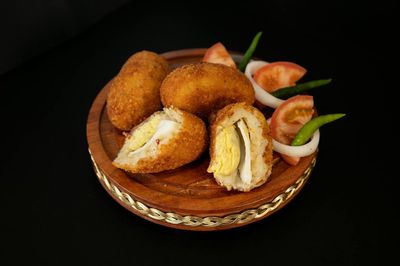
Alur chop (alu meaning potato, chop being a Bengali loan-word for a fried cutlet, inherited from the British "chop") is the workhorse of Bengali street snacks: every tea stall, every train platform, every late-afternoon adda has a stack of these warming under a glass cover. The construction is two layers. The inner mash is heavily seasoned: boiled potato folded through fried onion, ginger, green chilli, roasted cumin and a measured punch of Bengali bhaja moshla (a dry-roasted spice blend of cumin, coriander and dried chilli). Some versions add a few peanuts or roasted chana dal for crunch; in Kolkata the mash often includes a slick of mustard oil for fragrance. The outer shell is a thin chickpea-flour batter, the same family as beguni and piyaju, fried hot so it sets into a thin crisp casing rather than a heavy crust. The trick is contrast: a shell crisp enough to crackle, a centre soft and yielding and a touch wet from the onion. They are sold individually wrapped in newspaper for a few rupees and eaten standing up, often with muri puffed rice and a small dollop of kasundi (Bengali fermented mustard sauce) on the side. A monsoon and winter snack above all, when the cold air makes the hot oil and the inside-warm chop feel particularly right.

Snacks 55 minutes Serves4
Atchara

Atchara

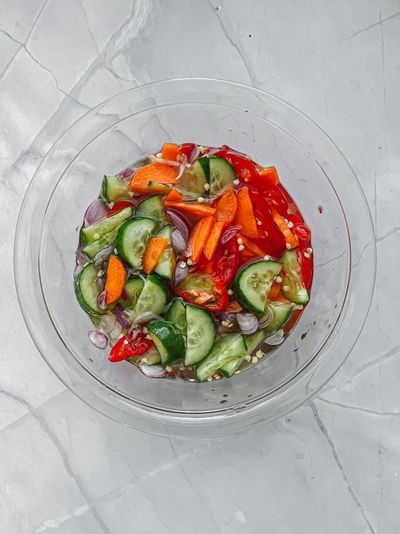
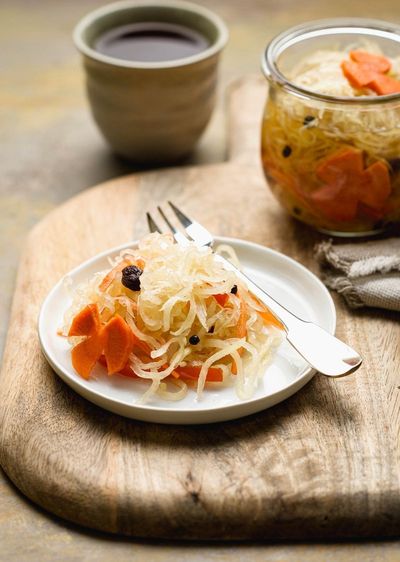
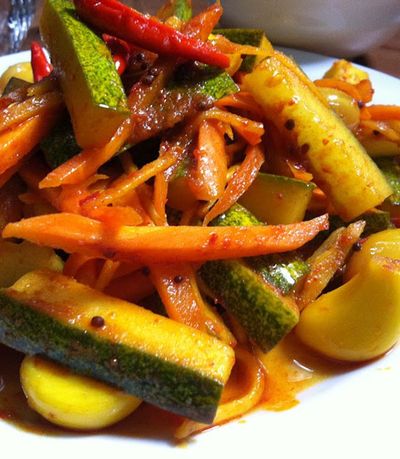
Green papaya is peeled, seeded and shredded on a coarse grater. Carrot, ginger, garlic, red pepper, onion and raisins are all prepared in matching shreds. The vegetables are salted and rested for 1 hour to draw water; rinsed and squeezed dry. A syrup of cane vinegar, sugar and whole peppercorns simmers for 5 minutes. Hot syrup is poured over the vegetables in a sterilised jar. The jar is sealed, cooled and refrigerated overnight before eating. Improves over the following week.

Sides 1 hour 40 minutes Serves1
Beguni

Beguni

Beguni (from begun, the Bengali word for brinjal/eggplant) is the simplest of the great Bengali pakoras: long thin slices of aubergine, dipped in seasoned chickpea-flour batter and deep-fried. Done well, the contrast is everything, a shatteringly crisp shell with the lightly bitter, custard-soft eggplant inside. It is the defining iftar fritter across Bangladesh, where it appears every evening during Ramadan alongside piyaju (onion fritters) and chickpea ghugni; in West Bengal it is the tea-stall companion of muri and a monsoon-day comfort food. The technique is short on ingredients but particular: the eggplant must be salted first to draw out bitter water and prevent the slice from absorbing oil; the batter must be just thick enough to coat the back of a spoon, with the texture of double cream; and the oil must be hot enough (around 180 C) that the batter sets instantly into a crisp shell. The traditional fat is mustard oil heated until just smoking, then cooled briefly to take the raw edge off; this gives beguni its characteristic mustardy back-note. Nigella seeds (kalonji) in the batter are non-negotiable in Bangladesh, they pop slightly in the hot oil and give the fritter its distinctive aroma. Eat immediately, with a few slivers of raw onion, a green chilli and a wedge of lime.

Snacks 1 hour 5 minutes Serves4
Berbere

Berbere

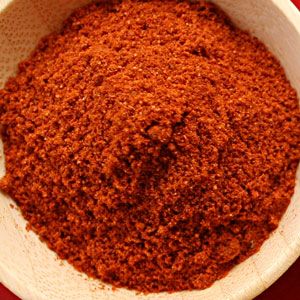
Berbere is the cornerstone of Ethiopian cuisine, a powerfully hot and complex spice blend that's both a condiment and a cooking base. Unlike other chilli-forward blends, Berbere combines dried chillies with cardamom, cloves, and ajowan to create heat with sophistication. The blend is intensely aromatic and demands respect; a little goes a long way. This is a blend for stews and braises that simmer for hours, allowing the spices to develop depth and integrate with other ingredients.

Spices 25 minutes Serves50-60
Burmese Samosa

Burmese Samosa

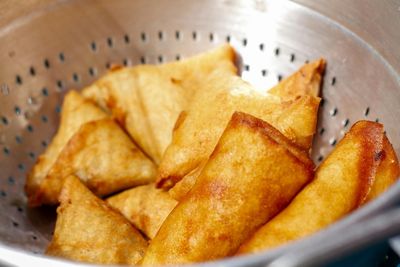
The Burmese take on the South Asian samosa, with a thinner, crisper pastry and a milder filling than its Indian cousin. You make a hot-water dough that rolls out very thin so the fried shell ends up glassy and crisp rather than bready. The filling is mild by Indian standards: turmeric, ginger, fried onion and a whisper of cumin folded into mashed potato and peas, finished with crushed peanuts for the nuttiness that marks the Burmese version. The triangles fry at moderate heat until amber and crackling, the pastry blistering as it goes. Eaten hot dipped in tamarind sauce, or torn into chunks for a samusa-thoke salad later.

Snacks 1 hour 5 minutes Serves4
Buss-Up-Shut Roti with Curry

Buss-Up-Shut Roti with Curry

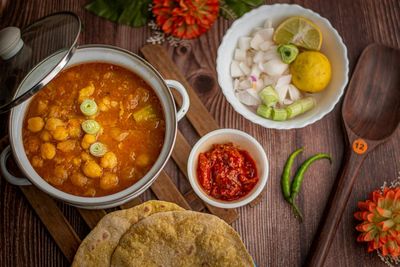
Buss-up-shut, also called paratha roti, is the flaky-layered Trinidadian roti that takes its English name from "burst-up shirt", a buss-up-shut roti is one that has been beaten the moment it comes off the tawa until it explodes into soft, irregular shreds. It is descended from the South Asian paratha, brought by indentured Indian labourers in the 19th century and rebuilt in Trinidad with a softer, more elastic dough and a finishing technique that is uniquely local. The recipe here covers the roti itself, which is the demanding part, with a short Trini channa-aloo curry on the side so you have a proper plate to scoop with. The layering technique (rolling, brushing with oil, coiling, resting, rolling out) is what creates the laminated, flaky structure. The beating step uses two wooden spatulas (called "klappers" in some roti shops) and looks dramatic but is straightforward. Difficulty is moderate; the dough is forgiving but the rolling-and-coiling step needs a little practice. Once you have a feel for it, you will make this every fortnight.

Trinidadian 2 hours 15 minutes Serves4
← Prev Page 1 of 7 Next →