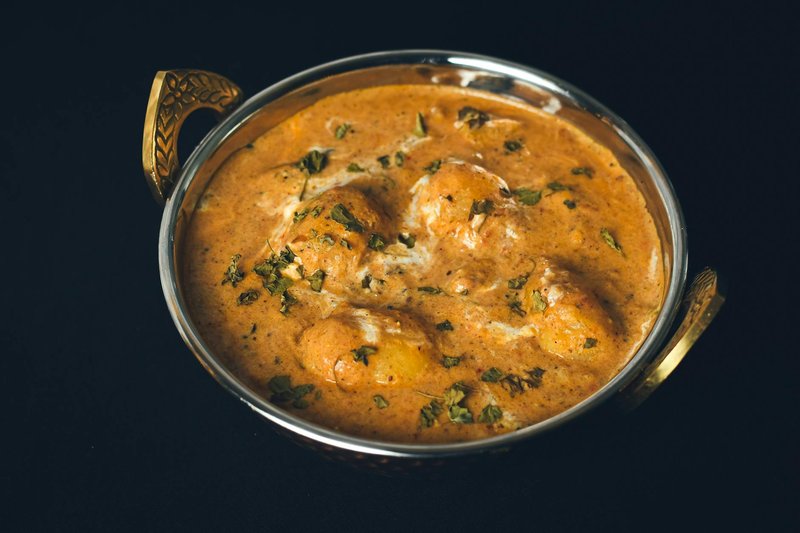
Aloo Posto
Soft, sand-coloured potato cubes coated in a creamy white poppyseed paste, the whole dish gleaming with mustard oil and tempered with nigella seeds and a single slit green chilli. The aroma is gentle, nutty and faintly sweet; the taste is pure home.
Overview
Aloo posto is the dish that Bengalis abroad miss most. Posto, white poppy seed, is so essential to the cuisine of West Bengal that there are entire menus built around it: aloo posto, posto bora (poppyseed fritters), jhinge posto, even ilish posto with hilsa fish. The seeds are soaked, ground to a fine, creamy paste, and cooked just enough to lose their raw note while keeping their pale colour and nutty perfume. This is one of the simplest preparations in the repertoire, and yet a much-debated one: how fine should the paste be (very fine), should onion be added (in West Bengal generally not, in Bangladeshi versions sometimes yes), how much green chilli is right (one or two slit, not pounded), and crucially, what oil (always mustard, always heated to smoke point first). The tempering is austere: just kalo jeere (nigella seeds) and a slit chilli. There is no garam masala, no cumin, no turmeric. The dish is meant to be quiet, almost pale, eaten with a small mound of plain rice and a dollop of ghee on a hot Kolkata afternoon. It is technically a side dish but in a traditional Bengali thali order it is often served as a course on its own, between the leafy greens and the dal, before the fish curry arrives. For a home cook the only real challenge is grinding the posto fine enough; a small spice grinder or wet-dry blender does the job perfectly.
Ingredients
Poppyseed paste
- 60 g white poppy seeds (posto)
- 2 green chillies (1 for the paste, 1 to slit)
- 3 tbsp warm water
Potatoes and tempering
- 4 potatoes (medium, about 500 g), peeled and cut into 1 ½ cm cubes
- 4 tbsp mustard oil
- ½ tsp nigella seeds (kalo jeere)
- 1 green chilli, slit lengthways
- ½ tsp turmeric (optional, very faint)
- 1 tsp salt, or to taste
- 1 tsp sugar
- 150 ml warm water
- 1 tsp raw mustard oil, to finish (optional but traditional)
Method
Stage 1 - Prepare the posto paste
- Rinse the poppy seeds and soak in just-boiled water for 30 minutes.
- Drain and tip into a small grinder with 1 green chilli and 3 tbsp warm water.
- Grind to a very fine, creamy paste. Scrape down and grind again if needed; the texture should be like thick cream with no grit.
Stage 2 - Fry the potatoes
- Heat the mustard oil in a kadai until smoking, then lower the heat.
- Drop in the nigella seeds and slit green chilli; let them sizzle for 10 seconds.
- Add the potato cubes with the turmeric (if using), salt and sugar.
- Fry over medium heat, stirring often, for 6 to 8 minutes until the edges are pale gold.
Stage 3 - Add the posto
- Lower the heat and pour in the posto paste. Stir constantly for 2 minutes; the paste must not brown.
- Add the warm water, cover and simmer for 8 to 10 minutes, stirring once or twice, until the potatoes are tender and the gravy has thickened to a creamy coating.
- Uncover and cook for 1 minute more if the dish is too wet; it should be just a touch saucy, not dry.
- Taste and adjust salt. Drizzle with raw mustard oil if using, rest for 2 minutes and serve with hot rice.
Notes
- Grinding posto: A wet-dry coffee grinder is ideal. A traditional shil-nora (Bengali grinding stone) gives the finest result but few home kitchens have one. A small blender will work if you scrape down repeatedly.
- Raw mustard oil finish: A teaspoon of unheated mustard oil stirred in just before serving is the signature Bengali touch and adds a sharp peppery note.
- Variations: Add a handful of par-boiled jhinge (ridge gourd) cubes with the potatoes for jhinge aloo posto, or replace half the potatoes with onion wedges for a Bangladeshi-style version.
- Poppy seed note: Use white poppy seeds (khus khus / posto), not the dark blue European poppy seeds, which are too bitter and will turn the dish grey.
Storage
- Best eaten fresh. Refrigerate in a sealed container for up to 2 days.
- Reheat gently with a splash of water; the paste thickens considerably as it cools.
- Not suitable for freezing.
More like this
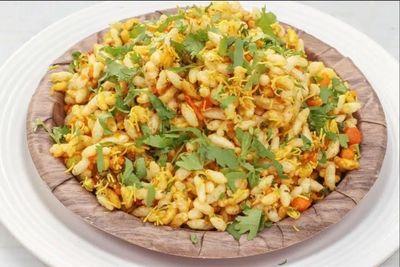
Jhal Muri
Jhal muri (literally "spicy puffed rice") is the most democratic snack in Bengal: assembled in seconds from a tin trunk by a muriwala, tipped into a rolled-newspaper cone, and eaten standing on a pavement for the price of a few rupees. The base is muri (puffed rice), and everything else is built around the principle of contrast. Raw mustard oil is the soul of the dish, sharp and nasal and slightly bitter; without it you have a salad, not jhal muri. The vegetables stay raw and crunchy, onion, green chilli, cucumber, tomato, chopped into tiny dice so each spoonful gets one of each. Peanuts and chana chur (or sev) add fat and crunch; black salt and chaat masala add the funky-tangy depth that makes Indian street snacks addictive. The lime goes in last so the puffs don't soften. This is a dish where technique matters less than ingredient quality: muri must be crisp (refresh in a dry pan if it's gone soft), mustard oil must be the proper pungent kind, and the lime must be fresh. It is everywhere in Bengal, tea-time at home, train platforms, the Maidan on a winter afternoon, and there is no recipe in any cookbook that quite captures the feel of it being mixed in front of you in a paper cone.
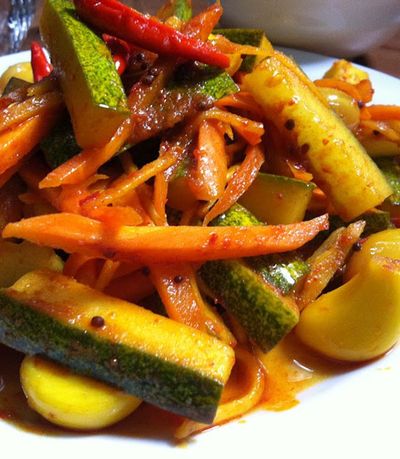
Acar Timun
Cucumber, carrot, shallot, chilli prep into thin slices or matchsticks. Salt rests for 10 minutes to draw moisture, drains. A simple dressing of vinegar, sugar, water and ginger whisks together. Vegetables toss with the dressing; rest for 1 hour at room temperature. Eats cool, never refrigerated cold; the texture suffers.
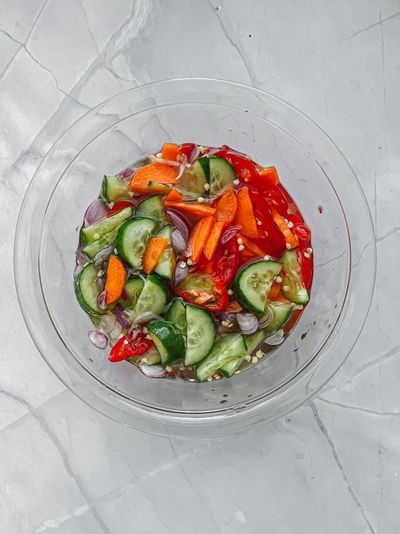
Ajad
A simple syrup of rice vinegar, palm sugar, water and salt is brought to a gentle simmer to dissolve the sugar, then cooled. Cucumber, shallot and chilli are sliced thin and combined in a small bowl. The cooled syrup is poured over. Rested for 10-15 minutes for the vegetables to wilt slightly into the dressing. Served in small individual ramekins as a dip, OR in a larger bowl as a side, with peanuts sprinkled on top.

Alur Chop
Alur chop (alu meaning potato, chop being a Bengali loan-word for a fried cutlet, inherited from the British "chop") is the workhorse of Bengali street snacks: every tea stall, every train platform, every late-afternoon adda has a stack of these warming under a glass cover. The construction is two layers. The inner mash is heavily seasoned: boiled potato folded through fried onion, ginger, green chilli, roasted cumin and a measured punch of Bengali bhaja moshla (a dry-roasted spice blend of cumin, coriander and dried chilli). Some versions add a few peanuts or roasted chana dal for crunch; in Kolkata the mash often includes a slick of mustard oil for fragrance. The outer shell is a thin chickpea-flour batter, the same family as beguni and piyaju, fried hot so it sets into a thin crisp casing rather than a heavy crust. The trick is contrast: a shell crisp enough to crackle, a centre soft and yielding and a touch wet from the onion. They are sold individually wrapped in newspaper for a few rupees and eaten standing up, often with muri puffed rice and a small dollop of kasundi (Bengali fermented mustard sauce) on the side. A monsoon and winter snack above all, when the cold air makes the hot oil and the inside-warm chop feel particularly right.