Atchara

Atchara

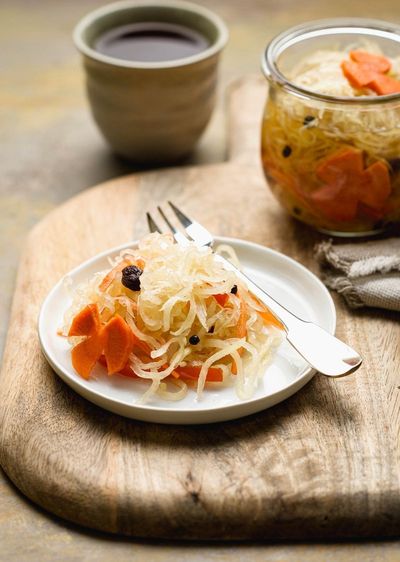
Green papaya is peeled, seeded and shredded on a coarse grater. Carrot, ginger, garlic, red pepper, onion and raisins are all prepared in matching shreds. The vegetables are salted and rested for 1 hour to draw water; rinsed and squeezed dry. A syrup of cane vinegar, sugar and whole peppercorns simmers for 5 minutes. Hot syrup is poured over the vegetables in a sterilised jar. The jar is sealed, cooled and refrigerated overnight before eating. Improves over the following week.

Sides 1 hour 40 minutes Serves1
Austrian Goulash

Austrian Goulash

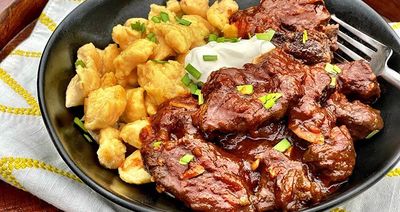
The Viennese answer to its Hungarian cousin: slower, deeper, almost spoonable, the gravy as dark as treacle from hours of careful reduction rather than from any thickener. The defining technique is a one-to-one ratio of onion to beef by weight, which sounds wrong until you taste what it does. The onions cook down to a sweet, brown, almost-marmalade paste before the paprika and meat ever join them, and that paste is the body of the sauce. You use beef shin or chuck and simmer it very slowly in this paprika-onion base with stock, garlic, marjoram, caraway, vinegar and tomato until the gravy clings to every cube. Lard is the right fat. No flour. No quick fixes. Serve with bread dumplings (Semmelknödel), spätzle or thick slices of dark rye, and pickled cucumbers on the side to cut the richness. A bowl that warms you from the centre out on a winter night.

Austrian 2 hours 50 minutes Serves4-6
Authentic Cajun Gumbo

Authentic Cajun Gumbo

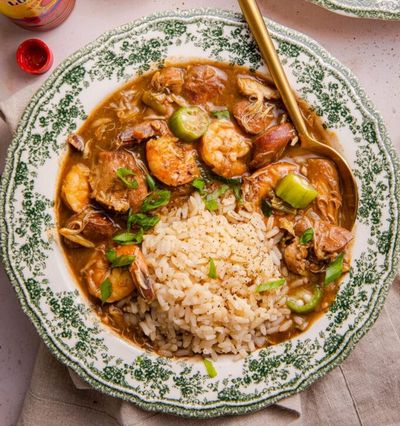
The "everything" Louisiana gumbo, chicken thighs, andouille, lump crab and shrimp all in one pot, and the dish where the technique matters more than the recipe. The roux is the single defining step and the line between Cajun gumbo and every other stew on earth: a full cup of oil and a full cup of flour cooked at medium-low for around 30 minutes, stirred without stopping, until the colour goes from blond to peanut butter to milk chocolate to dark chocolate. That's not flavour theatre; the long-cooked roux produces a deeply nutty, slightly bitter, profoundly savoury base that thickens the gumbo and gives it the distinctive almost-charred note no shortcut can replicate. Around the roux: the Cajun "holy trinity" of onion, bell pepper and celery; filé powder (ground sassafras leaves) added off heat as a second thickener; okra adding a third (and contributing its own slight slip); plus the four proteins, each adding a different layer. Flavour is dark, smoky, herbaceous, and slightly briny from the seafood. Smell is the roux toasting. Not difficult on technique but tremendously demanding on patience and attention; 30 minutes of unbroken stirring is the gateway, and if you walk away or rush it the roux burns and you start over. A dish that runs deep through Cajun and Creole Louisiana, with origins in the French settlers, the Choctaw (who contributed filé), West Africans (who contributed okra), and Spanish colonial traditions of Louisiana from the 1700s onwards.

Cajun 1 hour 45 minutes Serves8-10
Authentic Jamaican Curry Chicken

Authentic Jamaican Curry Chicken

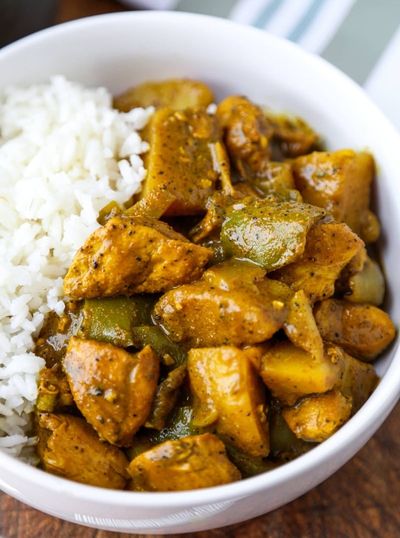
Jamaican curry sits in its own corner of the global curry map: heavier on turmeric and allspice than Indian Madras, lighter on cumin, and built on a technique called "burning the curry" that gives the dish its character. The technique is exactly what it sounds like, dry curry powder hits hot oil and is stirred for 30 seconds until it darkens from yellow to deep gold and smells like toasted spice. That move concentrates the flavours and removes any raw edge. The finished stew is bright yellow stained slightly orange, savoury and aromatic rather than searingly hot, with thyme and a whole pierced Scotch bonnet scenting the gravy without flooring it. Smell: bloomed curry powder, allspice, browned chicken fat. Not difficult, but requires confidence in the 30-second bloom (under-do it and the dish is flat; over-do it and you have to start over). A Sunday-dinner staple across Jamaica and the diaspora, served over white rice with the gravy spooned generously over.

Jamaican 2 hours 30 minutes Serves4
Bacalhau à Brás

Bacalhau à Brás

Bacalhau à Brás is the dish Portugal turns to when the salt cod, the onions and the eggs all need to find their place in one pan: scrambled together with a tangle of fine matchstick chips so the whole thing reads as somewhere between a hash and a loose carbonara. The salt cod needs the usual day or two of cold soaks to draw the salt down, then a brief simmer to soften it; the onions take their time in olive oil with a few smashed garlic cloves until almost jam-like; the matchstick chips (palha) are fried separately so they stay crisp. Everything comes together in a wide pan, the eggs are whisked in over a low heat, and you stop the moment the eggs coat the cod and potato like a sauce. Never let them set firm. Olives, parsley and a wedge of lemon at the table.

Portuguese 45 minutes Serves4
Bacon Fried Cabbage and Sausage

Bacon Fried Cabbage and Sausage

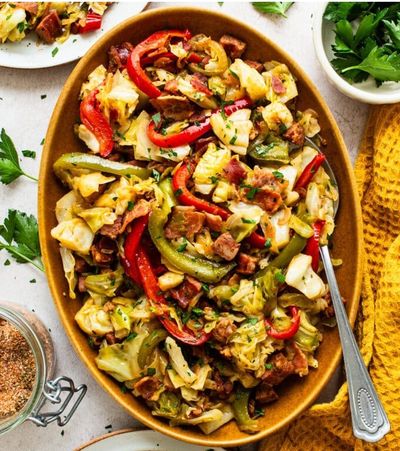
A heartier descendant of Southern fried cabbage and its more substantial sibling, this version is a complete dinner rather than a side. Bacon fat is the carrier through every step: it crisps first, then andouille browns in the rendered fat, then onion and bell peppers caramelise, then cabbage steams down. The result tastes deeply smoked and just slightly sweet (from the brown sugar and the caramelised onion), with a sharp Dijon-and-vinegar tang cutting through the richness and Cajun seasoning bringing warmth across the back. Texturally it's a stir-up: tender cabbage with crisp bacon edges, andouille bite-pieces with their snap intact, peppers softened but not collapsed. Smell when the bacon hits the pan starts the dish off correctly. Not difficult but a 35-minute project that wants the pan to stay hot throughout. A Southern weeknight dinner across the Carolinas and Georgia, traditionally with cornbread on the side to mop the bacon juices; the dish lives in the same neighbourhood as Hoppin' John and red beans and rice without being either.

American 50 minutes Serves6
Bahamian Souse

Bahamian Souse

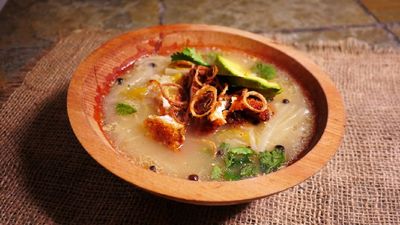
The Bahamas' Saturday-morning hangover cure, the breakfast bowl that arrives steaming in fish shacks and family kitchens across the islands the morning after a wedding or a heavy Friday. You poach bone-in chicken pieces (legs or wings) in lightly salted water with onion, celery, allspice, bay and a whole goat pepper for an hour or so, until the meat falls easily from the bone and the broth has taken on the perfume of the spice. Potatoes go in for the last fifteen minutes so they cook through but hold their shape. Off the heat, you acidify the souse hard with the juice of four or five limes (the souse is meant to taste sharply citric, not gently lemony) and a final tweak of salt. Ladle into deep bowls with the goat pepper floated on top for whoever's brave, and serve with johnnycake or grits on the side to soak.

Bahamian 1 hour 30 minutes Serves4-6
Bahamian Stew Chicken

Bahamian Stew Chicken

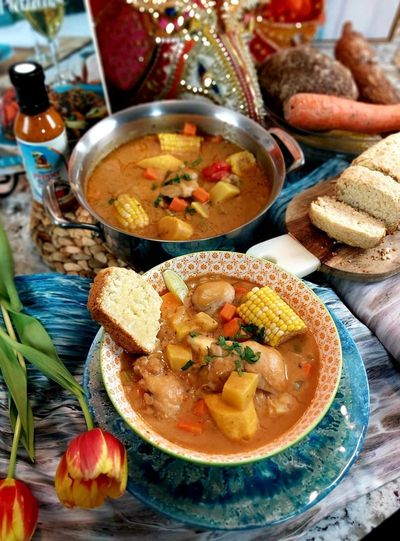
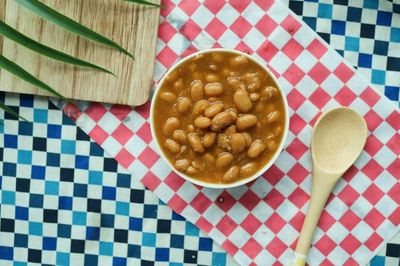
A dark, brown-roux-thickened stew that sits closer to Louisiana gumbo than to Jamaican brown stew chicken, a tell of how strong the Gulf Coast crossover is in Bahamian cooking. The dark roux is the defining step: flour cooked in oil until it goes the colour of cocoa or dark caramel, building toasted-nut depth that the rest of the dish leans on. The flavour profile is layered savoury: thyme as the dominant herb, smoked paprika for smoke, allspice (in the seasoned salt) for Caribbean lift, a single Scotch bonnet for fruity heat, lime juice at the end to wake everything up. The vegetables make it a complete dish, sweet potato, cassava, carrot, corn-on-the-cob pieces and yellow plantain, all hearty and starchy, all picking up the dark sauce. Smell is roasted flour, thyme, and slow-cooked tomato. Not hard but not quick, the roux needs unbroken attention for 5-8 minutes to avoid burning, and the rest is patient stewing. A Sunday-lunch staple across the Bahamas, traditionally served with rice and Johnny Cake (a Bahamian cornbread), and the kind of dish where the leftovers on day two are arguably better than day one.
Bahamian 1 hour 15 minutes Serves4
Baharat

Baharat

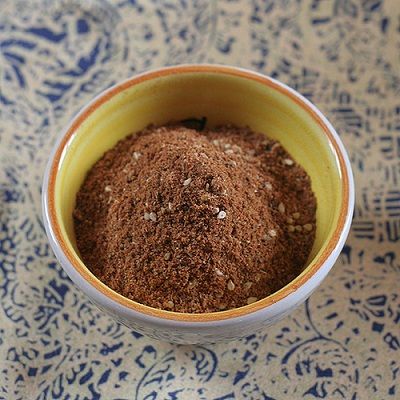
Baharat is the signature spice blend of the Eastern Mediterranean and Arabian cuisine. It balances warm aromatics (cinnamon, cardamom, cloves) with peppery heat and depth from allspice and paprika. This is not a finishing blend but a foundational one, used to season meat dishes, rice, soups, and slow-cooked foods. The warm spices reflect the climate and trade history of the region, cinnamon from Sri Lanka, cardamom from India, tempered by local paprika. Each country has slight variations, but the core character remains: sophisticated, warm, and complex.

Spices 10 minutes Serves115
Balachaung

Balachaung

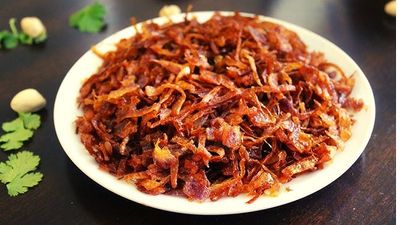
The Burmese dried-shrimp relish that sits in a jar in every Yangon kitchen, the seasoning you reach for to lift a plate of plain rice into something memorable. You pulse-grind dried shrimp to a coarse floss, then fry a pile of sliced garlic and shallot in oil until they're deep golden and crisp. The dried shrimp joins them and toasts to a fragrant rust colour. Chilli powder, fish sauce, tamarind, sugar and a splash of water turn the lot into a sticky red-brown relish. Cook until the oil clears (twelve to fifteen minutes), cool, store in a jar. Eat by the spoonful with rice, or as a side to grilled meat or fish.

Sides 40 minutes Serves12
Balti Chicken Stock

Balti Chicken Stock

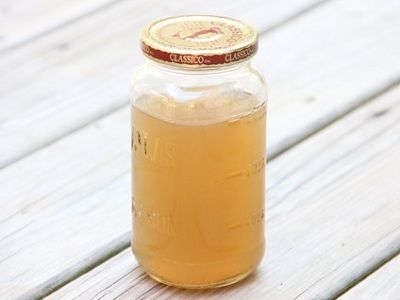
Balti chicken stock is a transformed use of the chicken carcass, the skeletal frame remaining after a roasted or dressed chicken has been filleted or butchered for other preparations. Unlike classical French stocks that rely entirely on bones, Balti stock leverages the entire carcass (including marrow and any remaining connective tissue) combined with Balti masala paste and aromatic vegetables to create a distinctly spiced, flavorful base perfectly suited for Balti curries, spiced gravies, and Indian-influenced preparations. Success depends on removing the skin from the carcass (which creates greasy stock), using genuine Balti masala paste (not a substitute spice blend), and splitting the cooking into two 30-minute stages with thorough initial skimming. The finished stock should be clear, amber in color, distinctly aromatic with Balti spice complexity, and ready for freezing in convenient 200-millilitre portions. This stock represents resourceful, zero-waste cooking: transforming what would otherwise be discarded into a valuable ingredient.

Stocks 1 hour 25 minutes Serves900
← Prev Page 2 of 38 Next →