Boerewors

Boerewors

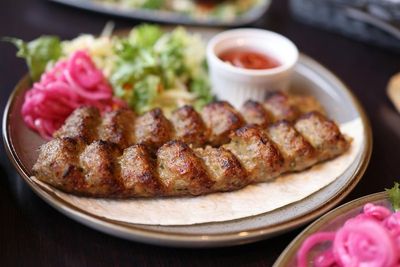
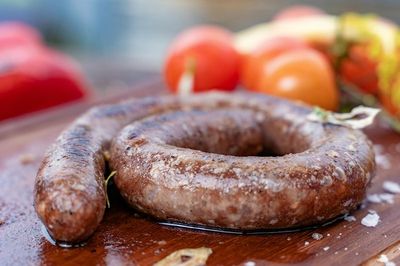
Boerewors, literally "farmer's sausage" in Afrikaans, is the national sausage of South Africa and the obligatory centrepiece of any braai. South African law actually defines it: minimum 90 per cent meat (beef the dominant component, often with pork or lamb for fat), no more than 30 per cent fat overall, no offal, and a defined spice profile led by toasted ground coriander. That coriander is the signature; combined with clove, nutmeg, allspice and black pepper, and brought together with a splash of malt or brown vinegar, it produces a flavour quite unlike any European sausage. The sausage is always coiled rather than linked, and grilled in a single long spiral that can be turned in one piece with a pair of long forks. Difficulty for the home cook is very low if you can buy ready-made boerewors from a South African butcher, deli or online supplier, which is the practical route for most. Making it from scratch needs a meat grinder and sausage stuffer but the spicing is straightforward. Cooking is the part everyone gets wrong: boerewors is a coarse-ground sausage with chunks of fat in the meat, and it cooks at medium heat, never high. Too hot and the casing splits, fat renders out and the sausage shrivels; just right and it stays plump, juicy, with a deep mahogany crust. The classic accompaniments are pap (a stiff white maize porridge), tomato-and-onion relish (sous), or stuffed into a fresh bread roll with tomato chutney and crispy fried onions as a boerie roll.
South African 35 minutes Serves6
Chapli Kebab

Chapli Kebab

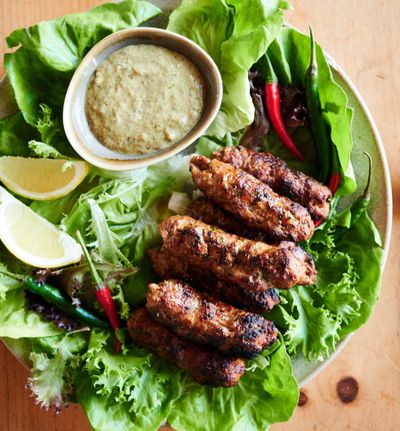
Chapli kebabs are the spiced beef patties sizzling on a wide flat tawa at any roadside grill from Peshawar to Kabul, big enough to wrap a hand around and seasoned with the unusual punch of dried pomegranate seeds and coriander. The mince mixes with grated onion, chopped fresh tomato, ginger, garlic, beaten egg and a little gram flour to bind, plus the signature Afghan spice blend (coriander seed, pomegranate seeds, chilli flakes, cumin and garam masala). A thirty-minute rest lets the gram flour absorb the moisture and the spices marry. Pat thin and wide (the word chapli means "flat" or "slipper-shaped"), then fry hard in oil three or four minutes a side until darkly crusted. Eat hot from the pan, wrapped in fresh naan with sliced raw onion and a green chutney.

Afghanistan 1 hour 10 minutes Serves4
Classic American Potato Salad

Classic American Potato Salad

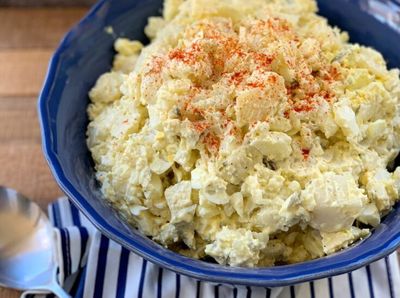
Few dishes feel as woven into American summer as potato salad. It appears at backyard barbecues, church potlucks, and Fourth of July tables from Maine to Texas, and although every family insists their version is the only correct one, the bones are reassuringly consistent: waxy potatoes, hard-boiled eggs, a generous slick of mayonnaise, and the bright bite of mustard and pickle. The taste is creamy and cool, savoury with a gentle sweet-sour tang, punctuated by crisp celery and the sting of raw onion. It smells faintly of vinegar and paprika, like a 1950s deli counter on a hot afternoon. The texture is the real prize. Potatoes should be tender enough to yield to a fork but still hold their shape, so the salad reads as chunky rather than mashed. Difficulty is low, which is part of its charm. The only real technique is seasoning the warm potatoes so they drink in the vinegar before the mayo goes on, a small step that separates a flat salad from a great one. Make it the day before if you can. A night in the fridge lets the flavours marry, the onion mellow, and the dressing settle into every crevice, which is exactly what you want when you pull it out alongside burgers, pulled pork, or grilled chicken.

Sides 40 minutes Serves6
Deviled Eggs

Deviled Eggs

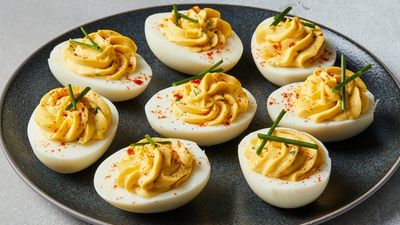
Deviled eggs are one of America's most enduring party foods, a fixture of Easter brunches, Thanksgiving tables, summer barbecues, and Sunday potlucks from coast to coast. The dish itself is much older than its American identity. Stuffed eggs flavoured with mustard, vinegar, and spices appear in Roman writings and remained popular across medieval Europe, but the term "deviled", meaning seasoned hot and spicy, took hold in eighteenth-century England and crossed the Atlantic with Anglo settlers. By the twentieth century, the American version had crystallised into the formula we recognise today: hard-boiled eggs split lengthwise, yolks scooped out and whipped smooth with mayonnaise, mustard, and a splash of vinegar, then piped or spooned back into the whites and finished with a dusting of paprika. The taste is luxurious in its simplicity. Creamy and rich, with a gentle tang and just enough mustard heat to justify the name, set against the cool, slightly springy bite of the white. Difficulty is genuinely low, but two details lift them from good to memorable: cooking the eggs just enough so the yolks are fully set but never grey-ringed, and seasoning the filling assertively, since cold dulls flavour. They are best made the day they will be eaten, although the eggs themselves can be boiled and peeled a day ahead.

Sides 25 minutes Serves6
Ensaladang Talong (Grilled Eggplant Salad)

Ensaladang Talong (Grilled Eggplant Salad)

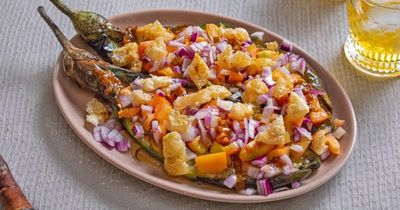
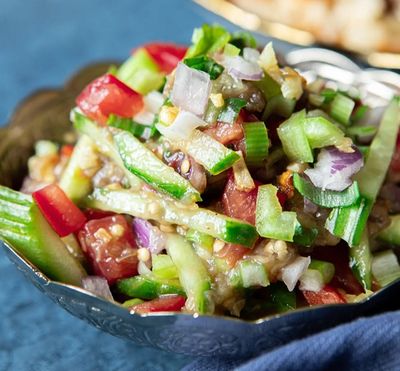
Long Asian aubergines char directly over a gas flame or hot grill until blackened all over and totally soft inside (poke through to test, no resistance). Cool for 10 minutes; peel away the charred skin (it slips off if cooked enough). Tear the flesh into 5 cm strips. Dress with diced tomato, thin-sliced red onion, fish sauce, white-cane vinegar and calamansi juice. Rest for 5 minutes to let the eggplant absorb the dressing. Serve room temperature.

Sides 27 minutes Serves4
Gai Yang

Gai Yang

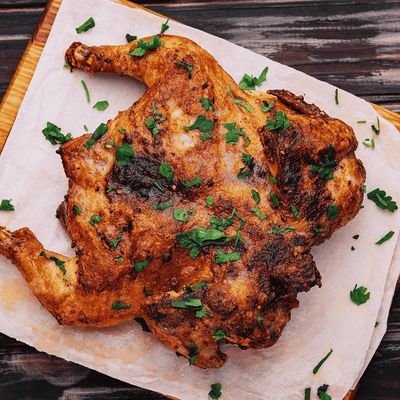
Gai yang ("grilled chicken") is one of the cornerstones of Isaan cooking, the cuisine of north-eastern Thailand that has spread across the whole country and into Thai restaurants worldwide. The defining flavour is coriander root, an ingredient barely used in Western cooking but central to Thai marinades. Pounded in a granite mortar with garlic, white peppercorns and a pinch of salt, it forms an aromatic paste that's then mixed with fish sauce, oyster sauce and a touch of sugar. The chicken is butterflied (spatchcocked) so it lies flat on the grill, marinated for at least 4 hours, then cooked slowly over moderate charcoal. The proper Isaan technique is patient: 30 minutes or more, turning often, sometimes pressed flat between two bamboo splints, so the skin slowly crisps and the meat takes on smoke without burning. The flavour is savoury-funky from fish sauce, peppery-warm from white pepper, deeply garlic-and-herb from the paste, with no chilli in the marinade itself; heat comes from the dipping sauce. Difficulty is low for the home cook: a good mortar or a small food processor makes the paste in 2 minutes, butterflying a chicken is a single cut down the backbone, and any covered grill or kettle does the cooking. Eaten by hand with balls of sticky rice and dipped into nam jim jaew, the toasted-rice-and-tamarind dipping sauce.

Thai 5 hours Serves4
Grilled Eggplant Salad

Grilled Eggplant Salad

A juicy room-temperature salad built around the smoky soft flesh of whole-roasted eggplant. The eggplant flavour anchors everything, mildly bitter, deeply smoky if you can blister the skin first, almost meaty in texture once scooped. Around it, finely chopped tomato and cucumber release their water and form a brothy dressing on the bottom of the bowl, sweetened slightly by the addition of a pinch of sugar and sharpened by black rice vinegar (Chinkiang, the malty, dark, slightly sweet variety, not the white-rice kind). Browned garlic in olive oil folds in last and carries the aroma. Easy to make and forgiving; the only step that requires care is roasting the eggplants long enough that the flesh is properly soft. Sits alongside polo or naan as a fresh, juicy counter to the heavier mains of the Uyghur table, and the kind of dish made every day in summer when eggplants are cheap and good in the Kashgar bazaars.

Sides 45 minutes Serves4
Jerk Chicken

Jerk Chicken

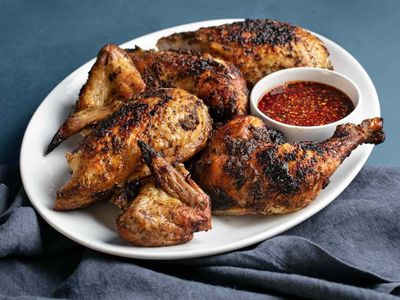
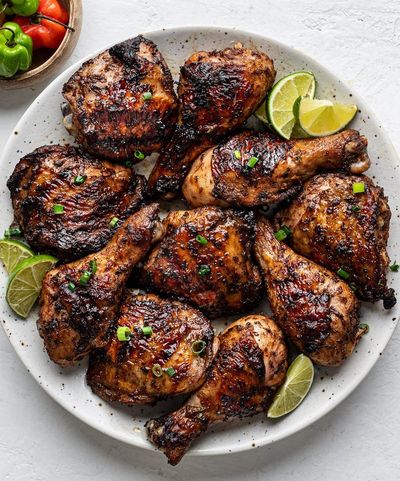
A wet jerk paste: scotch bonnet chillies, garlic, ginger, spring onions, thyme, allspice (whole or ground), brown sugar, soy sauce, lime, oil, salt and pepper, pureed in a blender. The chicken (bone-in skin-on thighs and drumsticks, or spatchcocked whole bird) marinates for 12 hours minimum. Slow-grilled over indirect heat with a pile of pimento wood chips or allspice berries on the coals for the signature smoke; alternatively, an oven-bake at 180°C with a final blast under the grill, supplemented with allspice in the marinade.

Jamaican 13 hours 5 minutes Serves4
Lyulya-Kebab

Lyulya-Kebab

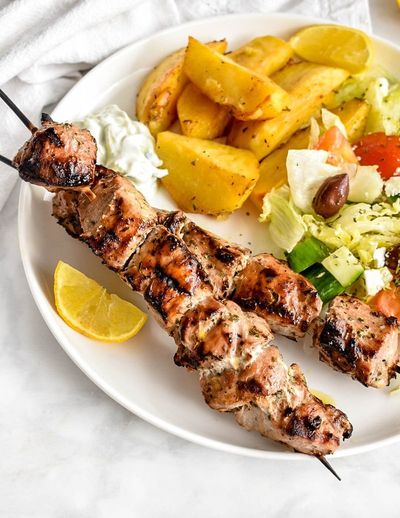
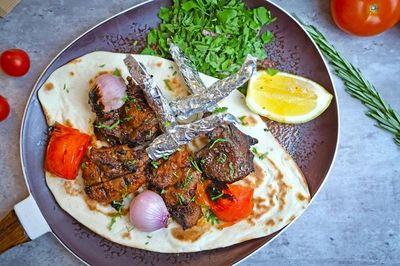
The Azeri grill at its purest, and one of the most technically demanding kebabs in the Caucasus: a minced lamb sausage moulded onto a flat skewer and grilled over charcoal until the outside is charred and the inside still juicy. You mince fatty lamb shoulder twice or pulse it smooth in a processor, and grate a large onion fine with the juice squeezed out (excess water makes the meat slip off the skewer). Then you knead the onion and lamb together with salt, pepper and ground sumac for a full five minutes until the mixture goes from loose to tacky. This is the equivalent of bread's windowpane stage for meat, and it's the trick to skewer adhesion. The mix chills for two hours, then pats onto flat skewers in fifteen-centimetre sausages, grills over charcoal five or six minutes per side, rests two minutes, comes to the table on the skewer with lavash, grilled tomatoes and onions, and a wedge of lemon.

Azerbaijan 2 hours 42 minutes Serves4
Mojo Pork

Mojo Pork

Mojo, pronounced moh-ho, is the foundational citrus and garlic marinade of Cuban cooking, and lechon asado al mojo, a whole pig or shoulder marinated in it and roasted slowly, is the centrepiece of Christmas Eve dinners across Cuba and the Cuban diaspora in Miami, Tampa and beyond. The defining ingredient is naranja agria, the sour or bitter orange, whose juice is sharper and more aromatic than regular orange and which provides the acid backbone of the marinade. If you cannot find sour oranges, the universal substitute is two parts fresh orange juice to one part lime juice, with a splash of grapefruit if you have it. The rest of the mojo is generous: a head of garlic crushed into paste, dried oregano (Cuban oregano if possible, regular Mediterranean otherwise), cumin, salt and good olive oil. The pork shoulder is stabbed all over and the marinade pushed deep into the flesh, then left overnight so the acid begins to break down the muscle fibres. The roast itself is forgiving: low and slow, fat-side up, until the meat pulls apart with a fork and the skin crackles. Leftovers become the heart of a Cuban sandwich, layered with ham, Swiss cheese, mustard and pickles in pressed bread. Difficulty is low. The only thing to plan for is time: the marinade needs overnight, and the roast takes most of an afternoon.

Cuban 4 hours 20 minutes Serves8
Pan Kabap

Pan Kabap

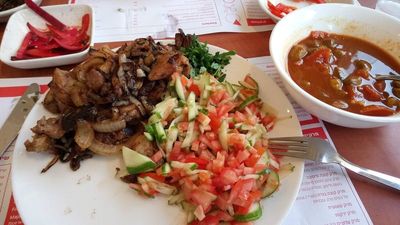
The dish is essentially a stripped-back tonur kebab: thin slices of fatty lamb, cumin, sweet chilli pepper powder, salt, no marinade and no skewer. The pleasure is in what you don't add. Cumin coats the slices in layered passes (two or three small sprinkles rather than one large dump), so the spice toasts gently into the rendering fat instead of scorching. The result is meat that tastes intensely of cumin and lamb fat with a deep gold sear on the edges. Smell carries across a flat: cumin and animal fat at high heat is one of the most evocative aromas in Central Asian cooking. Genuinely fast and forgiving as long as you respect two rules: the lamb must have fat on it, and the pan must already be smoking when the meat goes in. The home-kitchen version of a tradition that's centuries old across Xinjiang, the Hexi Corridor and into Kazakhstan, whenever a household couldn't fire up a clay oven for skewers, this is what they cooked instead.

Uyghur 20 minutes Serves1-2
Piri Piri Chicken

Piri Piri Chicken

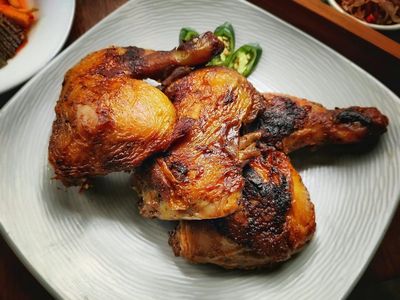
Piri-piri chicken is the dish that travelled from Mozambique to Portugal to the high street, and the original is still the best: a whole chicken spatchcocked flat, marinated overnight in a vivid red paste of bird's-eye chillies, garlic, paprika, lemon and olive oil, then grilled hard over charcoal until the skin is darkly blistered and the meat just-cooked through. The marinade itself takes five minutes in a blender. The bird wants a minimum of four hours in it, ideally overnight. A home broiler on max works if you do not have a barbecue, but the smoke from the coals is half the dish. Serve with a second bowl of the same marinade as a sauce, a green salad, and chips.

Portuguese 5 hours Serves4
Pollo Asado

Pollo Asado

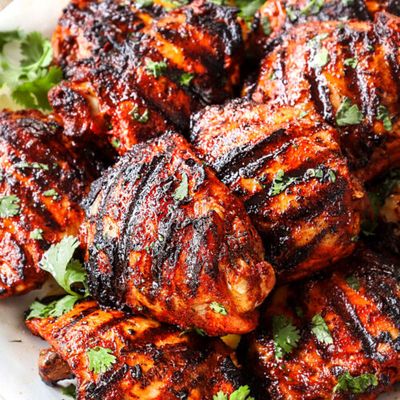
Pollo asado is the Mexican answer to grilled chicken, and the marinade is the entire point. Achiote paste (ground annatto seed with garlic, cumin, oregano and vinegar) provides both the dish's distinctive brick-orange colour and a subtle, almost peppery earthiness. Sour orange (naranja agria) is the traditional citrus, though a blend of orange and lime juice mimics it where bitter orange isn't available. The chicken is marinated for at least 4 hours, ideally overnight, so the acid tenderises the meat and the achiote stains right through to the bone. On the grill, the marinade caramelises into a deeply coloured crust while the meat underneath stays juicy thanks to the bone-in cuts. Regional differences matter: Yucatán-style pollo asado leans heavily on achiote and sour orange, drawing from pibil traditions; northern Mexican versions add more cumin and chilli; the version popular in Los Angeles and Texas often gets a touch of tomato paste in the marinade for extra colour. Difficulty for home cooks is low: it's grilled chicken with a confident marinade. The main pitfall is high direct heat scorching the achiote-stained skin before the meat cooks through; a two-zone fire fixes that. Served with charred spring onions, warm corn tortillas, lime wedges, and salsa or guacamole.

Mexican 4 hours 50 minutes Serves4
Pulled Pork

Pulled Pork

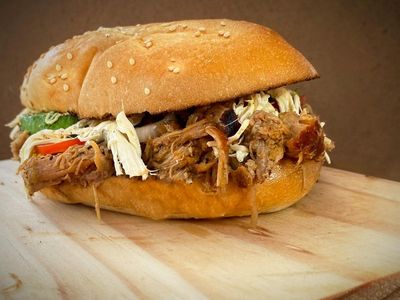
Pulled pork is the slowest, simplest hero of American Southern barbecue. A whole bone-in pork shoulder, often called a Boston butt despite coming from the front of the pig, is rubbed with salt, sugar and spices and left to absorb seasoning overnight. The next morning it goes onto a smoker or a low oven and stays there for eight or nine hours until the collagen has fully broken down and a fork sinks in like wet sand. There are two great traditions: the eastern North Carolina style, where the whole hog is cooked and dressed with a thin cider vinegar and chilli flake sauce; and the Memphis or Kansas City style, where shoulder is the cut of choice and the sauce leans sweeter and tomato-based. The recipe here splits the difference: a Memphis-style sweet-and-savoury rub on the meat, then a sharp Carolina vinegar sauce to dress the pulled strands. The technique is forgiving. Internal temperature is the only thing that really matters, and you are looking for 95 degrees, well past the point where most cookbooks stop. That last twenty degrees is where the connective tissue finally surrenders. Wrap it in foil with a splash of cider when the bark sets, rest it long, and pull it warm. Pile onto a soft white bun with cold slaw, and you have the easiest crowd-feeder in the BBQ canon.

American 8 hours 20 minutes Serves8
Suya

Suya

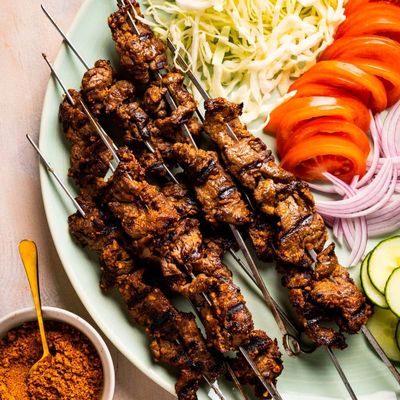
Beef sirloin or rump is sliced very thin across the grain. A suya spice (yaji) is made by grinding dry-roasted unsalted peanuts with ground ginger, cayenne, paprika, garlic powder, onion powder, ground cloves and salt, the peanut acts as the carrier and gives suya its unique nutty edge. Half the spice rubs into the beef; the strips marinate for 1 hour. They're threaded onto pre-soaked bamboo skewers in an accordion fold, brushed with oil, and grilled over high heat 4-5 minutes per side until charred at the edges. Fresh out of the fire, the skewers are dipped/rolled in the reserved dry spice, served with sliced raw red onion, tomato and shredded cabbage. Maggi and a wedge of lime alongside.

Nigerian 1 hour 37 minutes Serves4
← Prev Page 1 of 2 Next →