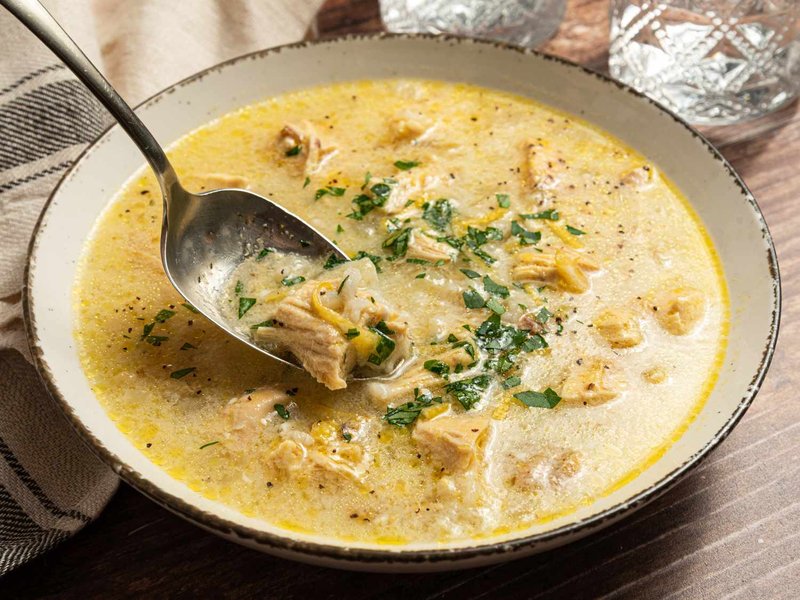
Avgolemono
Greek lemon-egg-rice soup: chicken broth thickened with eggs and finished with lemon juice. Light, lemony, restorative; the Greek answer to chicken soup. Served with shredded chicken from the broth.
Overview
A whole chicken poaches in water with onion, carrot and celery, building broth and tender meat at the same time. Rice (or orzo) cooks in the strained broth. Eggs and lemon juice whisk together, get tempered with hot broth, then stir back into the soup off the heat. The eggs thicken the broth into a velvet finish.
Ingredients
- 1 whole chicken (1 ½ kg) or 4 chicken legs
- 2 onions (peeled, halved)
- 2 carrots (peeled)
- 2 celery sticks
- 2 bay leaves
- 1 teaspoon black peppercorns
- 2 litres water
- 100 g long-grain rice (or orzo)
- 3 eggs (large)
- 2 lemons (juice)
- salt
- pepper
- A small bunch of dill (chopped, to finish)
Method
Stage 1 - Poach the chicken
- Place the chicken, vegetables, bay and peppercorns in a large pot.
- Cover with the water; bring to a gentle simmer.
- Skim any scum that rises.
- Cook 45 minutes until the chicken is tender and the broth is well-flavoured.
Stage 2 - Strain
- Lift out the chicken; shred the meat from the bones.
- Strain the broth through a fine sieve; discard the vegetables. You should have about 1 ½ litres.
Stage 3 - Cook the rice
- Return the broth to the pot; bring to a simmer.
- Add the rice (or orzo); cook 18 minutes for rice or 8 minutes for orzo, until tender.
Stage 4 - Avgolemono (egg-lemon liaison)
- In a bowl, whisk the eggs with the lemon juice until foamy.
- Slowly ladle in 250 ml of hot broth, whisking continuously (this tempers the eggs so they don't scramble).
- Take the soup off the heat.
- Pour the egg-lemon mixture back into the pot, stirring continuously.
- The soup will turn pale, glossy and slightly thickened. Don't return to high heat or the eggs scramble.
Stage 5 - Finish
- Stir in the shredded chicken.
- Season with salt and white pepper. Taste; the lemon should be assertive.
- Ladle into bowls; top with chopped dill.
Notes
- Temper the eggs: Cold eggs into hot broth = scrambled. Slowly adding hot broth to the eggs first warms them gently.
- Off the heat: Once the eggs go in, no more boiling. The residual heat is enough.
- Lemon juice generously: Avgolemono is a lemon-forward soup; underdone lemon gives an underwhelming bowl.
Storage
- Best fresh; reheating risks splitting the eggs.
- Broth and shredded chicken (without the egg-lemon finish) keep 3 days; add the avgolemono fresh when reheating.
More like this
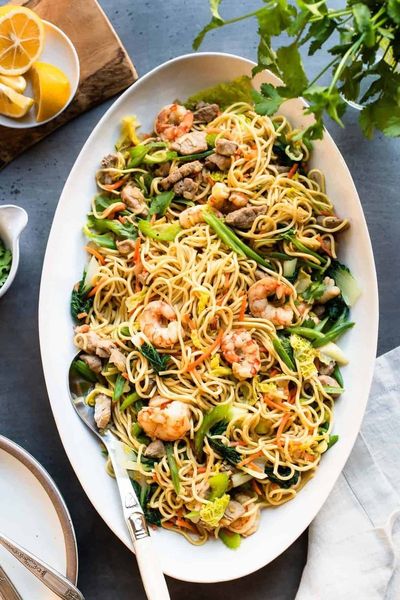
Pancit Canton
Aromatics fry, then chicken and prawns sauté fast. Vegetables and Chinese sausage join. The noodles soak briefly to soften, then go in the wok with sauce and stock to absorb everything in 5 minutes. Lemon or kalamansi at the table.
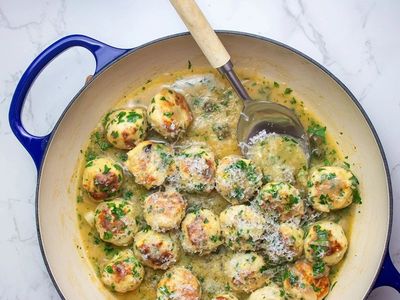
Chicken Piccata Meatballs
Chicken piccata, the Italian-American mid-century classic of pounded chicken cutlets in a lemon-butter-caper pan sauce, reshaped into meatball form, which trades the precise look of cutlets for a juicier, more forgiving texture. The flavour is unmistakably piccata: butter as the body of the sauce, lemon as the brightness, capers as the salty-vinegary punctuation. Underneath sits a chicken meatball lightened by ricotta (it keeps the lean ground chicken from going dry and dense) and parmesan, with parsley, garlic, smoked paprika and a pinch of red pepper flakes lifting the seasoning. The meatballs themselves stay tender because the mix isn't overworked and because they finish cooking in the sauce rather than the pan. Smell is melted butter, lemon and capers, the same smell every Italian-American restaurant kitchen has on a Tuesday lunch service. Easy enough for a weeknight, restrained enough not to feel like a stand-in dish; the technique is essentially "make meatballs, build pan sauce, return meatballs". Serves over pasta, rice or crusty bread to mop the sauce.
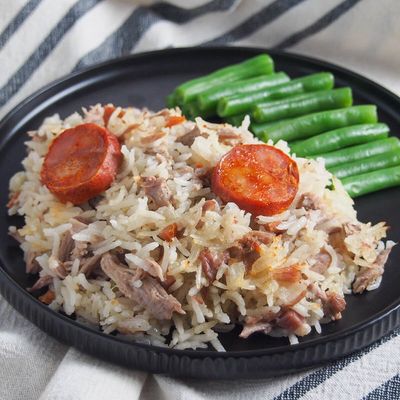
Arroz de Pato
Arroz de pato is Portugal's answer to paella, except baked rather than simmered, and the rice picks up a top crust of crisped chouriço at the end. You poach a whole duck for two hours with onion, bay, cloves and lemon peel until the meat falls apart, then strip the meat off the bones and put the bones back to extract another half hour of flavour from the stock. The strained duck stock cooks the rice, the shredded meat folds back in, and the whole thing goes into a baking dish under a layer of paper-thin chouriço slices. Twenty minutes in a hot oven and the top emerges deeply burnished, the chouriço slices crisp at their edges and slick at their centres. Sunday lunch, ideally with a heavy red from the Douro.
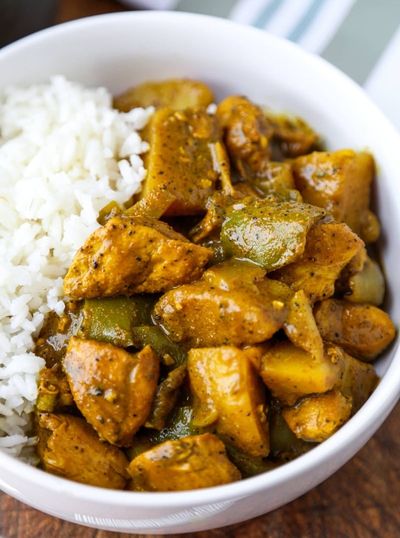
Authentic Jamaican Curry Chicken
Jamaican curry sits in its own corner of the global curry map: heavier on turmeric and allspice than Indian Madras, lighter on cumin, and built on a technique called "burning the curry" that gives the dish its character. The technique is exactly what it sounds like, dry curry powder hits hot oil and is stirred for 30 seconds until it darkens from yellow to deep gold and smells like toasted spice. That move concentrates the flavours and removes any raw edge. The finished stew is bright yellow stained slightly orange, savoury and aromatic rather than searingly hot, with thyme and a whole pierced Scotch bonnet scenting the gravy without flooring it. Smell: bloomed curry powder, allspice, browned chicken fat. Not difficult, but requires confidence in the 30-second bloom (under-do it and the dish is flat; over-do it and you have to start over). A Sunday-dinner staple across Jamaica and the diaspora, served over white rice with the gravy spooned generously over.