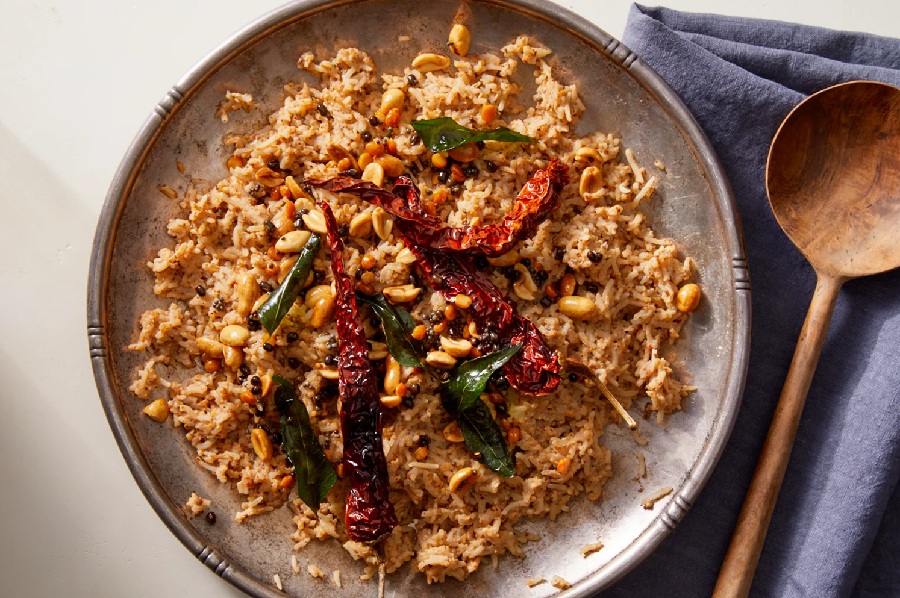
Tamarind Rice
Puliyodarai: South Indian tamarind rice, the temple-prasad classic. Cooked rice tossed with a spiced tamarind paste (puli) thick with peanuts, sesame and curry leaves. Lunchbox legend; travels well, tastes better cold.
Overview
A spiced tamarind paste is built with a dry-roast of coriander, cumin, fenugreek, chana dal and dried red chilli ground to a powder, then tamarind extract is simmered with the powder, turmeric, jaggery and salt until thick. A temper of peanuts, mustard seeds and curry leaves is bloomed in sesame oil and folded through cooked rice with the tamarind paste, the dish left to rest so the flavour settles. Famously gets better overnight.
Ingredients
Rice
- 250 g basmati (or sona masuri rice, cooked and cooled, about 600 g cooked weight)
Tamarind paste
- 60 g tamarind (lump; or 4 tablespoons of tamarind concentrate paste)
- 250 ml hot water
- 1 teaspoon turmeric
- 1 tablespoon jaggery (or soft brown sugar)
- 1 teaspoon salt (to taste)
Spice powder
- 1 tablespoon coriander seeds
- 1 teaspoon cumin seeds
- ½ teaspoon fenugreek seeds
- 1 tablespoon chana dal
- 1 tablespoon urad dal
- 3 dried red chillies
- 1 tablespoon sesame seeds
Temper
- 4 tablespoons sesame oil (or gingelly oil)
- 1 teaspoon black mustard seeds
- 50 g raw peanuts (skinless if possible)
- 1 teaspoon urad dal
- 1 teaspoon chana dal
- 2 dried red chillies (broken in half)
- 25 fresh curry leaves
- A pinch of asafoetida (hing)
Method
Stage 1 - Make the tamarind extract
- If using lump tamarind, soak in the hot water for 15 minutes, then squeeze and strain through a sieve to get a thick brown liquid; discard the solids. (Concentrate paste users can dissolve directly in 250 ml hot water.)
Stage 2 - Toast the spice powder
- In a dry pan over medium-low heat, toast the coriander, cumin, fenugreek, chana dal and urad dal for 1-2 minutes until fragrant.
- Add the dried red chillies and toast for 30 seconds.
- Add the sesame seeds; toast for 30 seconds (until they start to pop).
- Cool completely, then grind to a coarse powder.
Stage 3 - Cook the tamarind paste
- Pour the tamarind extract into a small pan.
- Add the turmeric, jaggery and salt.
- Bring to a simmer and cook for 5-6 minutes, stirring, until thick enough to coat a spoon.
- Stir in 2 tablespoons of the spice powder; cook for 1 more minute.
- Pull from the heat (reserve the remaining spice powder for the rice).
Stage 4 - Temper
- Heat the sesame oil in a wide pan over medium heat.
- Add the mustard seeds; when they pop, add the peanuts.
- Cook for 2-3 minutes until the peanuts turn pale gold.
- Add the urad dal, chana dal and dried red chillies; cook for 30 seconds until the dals turn golden.
- Add the curry leaves and asafoetida; sizzle for 5 seconds.
Stage 5 - Combine
- Pull the pan from the heat.
- Add the tamarind paste to the tempered oil and stir to combine.
- Add the cooked rice in two batches, folding gently.
- Sprinkle the remaining spice powder over.
- Toss until every grain is coated.
- Taste and adjust salt.
Stage 6 - Rest and serve
- Cover and rest for 30 minutes at room temperature for the flavours to settle.
- Serve at room temperature with a side of yogurt or potato roast.
Notes
- Rest the rice: Puliyodarai is the rare rice dish that gets better with time. Eat the day after for the best flavour; the colours and aromas deepen.
- Don't overdo the tamarind: The paste should taste sharp on its own but balanced once tossed with rice. Too much and the dish is sour.
- Peanut texture: The peanuts go in just at the start of the temper so they fry to golden. Adding them later means soft, half-cooked peanuts.
Storage
- Refrigerate up to 3 days; serve at room temperature.
- Doesn't freeze (the rice texture suffers).
More like this
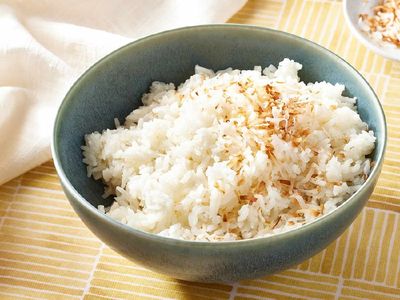
Coconut Rice
Plain steamed rice (often last night's leftovers) is the base. A hot temper of mustard seeds, urad dal, chana dal, cashews, dried red chilli and curry leaves is bloomed in coconut oil, then fresh grated coconut is folded in and warmed through. The rice is tossed through everything off the heat, so the grains stay separate and pick up flavour rather than soften.
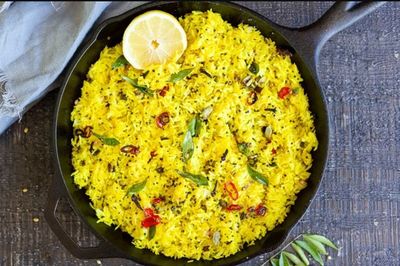
Lemon Rice
A temper of mustard seeds, chana dal, urad dal, peanuts, dried red chilli and curry leaves is bloomed in sesame oil. Turmeric is stirred in for colour. Cooked, cooled rice is tossed through off the heat, then lemon juice is added at the end so the heat doesn't dull the acidity. Bright lunchbox classic; the dish should taste fresh and tart, not muddled.
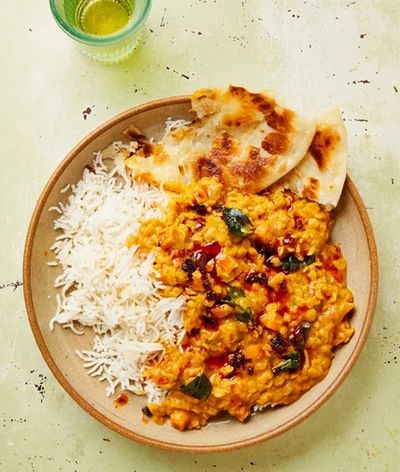
Malaysian Dhal Curry
Yellow split peas (chana dal) simmer with onion, turmeric and tomato until very soft. The lentils break down into a thick soup. Right at the end, a tempering of mustard seeds, curry leaves, dried red chillies, garlic and shallots is poured sizzling-hot over the surface. The aromatic oil seeps through; the dish transforms.
Malaysian Curry Laksa (Laksa Lemak)
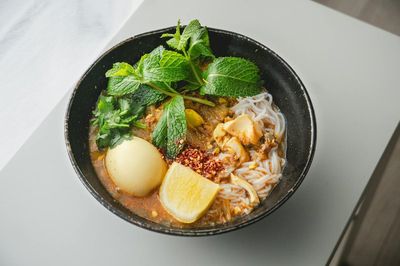
A two-part dish: a deeply concentrated prawn-and-chicken stock built from roasted prawn shells, layered with a freshly pounded laksa paste of dried chilli, galangal, lemongrass and candlenuts. The two are joined with coconut cream to create a glossy, fragrant broth that bathes rice vermicelli, tofu puffs and prawns. Finished at the table with sambal, lime, fresh coriander and bean sprouts.