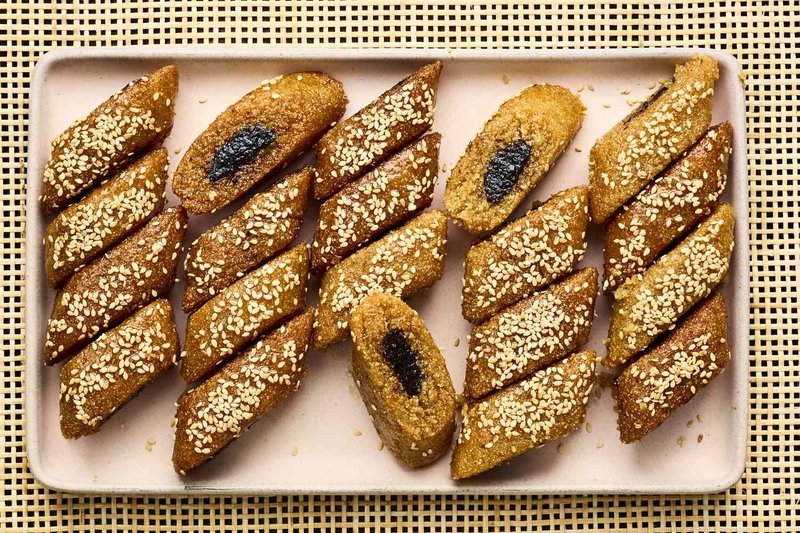
Makroud
North Africa's date diamonds: a buttery semolina dough wrapped around softened date paste, cut into diamonds, fried, then dipped in honey-orange syrup.
Overview
Semolina mixes with melted butter and rests so it absorbs fully, the result is a fragrant, buttery, slightly grainy dough. Dates soften with butter, cinnamon and rosewater into a smooth filling. The dough rolls into a long log; the date paste extrudes into the centre; the cylinder rolls together and slices into diamonds. Fried briefly and dipped hot into orange-blossom syrup.
Ingredients
Dough
- 500 g coarse semolina
- 250 g unsalted butter (melted)
- ½ teaspoon salt
- 1 teaspoon ground cinnamon
- 2 tablespoons orange blossom water
- 100 ml warm water (approximately)
Filling
- 400 g pitted dates (chopped)
- 30 g unsalted butter
- 1 teaspoon ground cinnamon
- ½ teaspoon ground cloves
- 1 tablespoon rosewater
Syrup
- 300 g caster sugar
- 200 ml water
- 4 tablespoons honey
- 2 tablespoons orange blossom water
- ½ lemon (juice)
Frying
- Vegetable oil for shallow-frying
Topping (optional)
- Sesame seeds (toasted)
Method
Stage 1 - Dough
- Place the semolina, salt and cinnamon in a wide bowl.
- Pour over the melted butter; mix with hands until every grain is coated.
- Cover; rest 30 minutes (the semolina absorbs the butter fully).
- Sprinkle in the orange blossom water and warm water gradually; mix to a soft, slightly tacky dough that just holds together.
- Knead briefly to combine; rest 15 minutes more.
Stage 2 - Filling
- Combine the dates, butter, cinnamon and cloves in a small heavy pan.
- Cook over low heat 5-8 minutes, mashing with a fork, until smooth.
- Stir in the rosewater. Cool to lukewarm.
Stage 3 - Syrup
- Combine the sugar, water and lemon juice in a small pan.
- Simmer 8-10 minutes until slightly thickened.
- Off the heat, stir in the honey and orange blossom water.
- Keep warm but not boiling.
Stage 4 - Shape
- Divide the dough into 4 equal pieces.
- Roll each into a log about 3 cm thick on a lightly oiled surface.
- Press a deep groove down the centre of each log with the side of a wooden spoon.
- Pipe or spoon the date paste along the groove (a piping bag works well; or use your fingers).
- Fold the dough over the date filling; pinch the seam closed; roll smooth.
Stage 5 - Cut
- Flatten each log slightly to about 2 cm thick.
- Cut on the diagonal into 4 cm diamonds.
Stage 6 - Fry
- Heat 2 cm of oil in a wide pan to 170°C.
- Fry the diamonds in batches 90 seconds per side until pale gold (don't take them dark).
- Lift onto kitchen paper to drain briefly.
Stage 7 - Dip in syrup
- While still hot, dip each makroud in the warm syrup for 5 seconds; lift onto a serving platter.
Stage 8 - Finish
- Sprinkle with toasted sesame seeds if using.
- Cool fully so the syrup soaks in and the dough firms.
Notes
- Soak time matters: The dough rest is what makes the texture right - semolina takes 30 minutes to fully hydrate. Skip this step and the dough is gritty.
- Pale, not deep golden: Makroud are fried fast and dipped while still pale; the syrup gives the final colour. Dark-fried makroud taste burnt against the sweet syrup.
- Pipe the date paste: Easier than spooning; gives a cleaner cylinder when you fold.
Storage
- Keeps 2 weeks in an airtight tin; flavour deepens.
- Freezes 2 months.
More like this
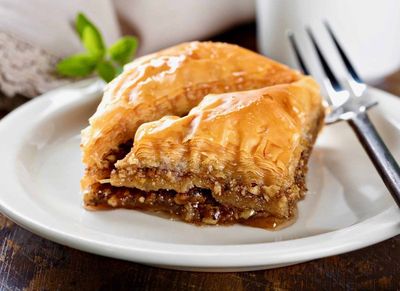
Greek Baklava
A 30 × 22 cm tin is built in layers: 8 buttered filo sheets on the bottom; walnut-cinnamon filling; 4 buttered filo sheets; more walnut; 4 more filo; walnut; finally 8 more buttered filo on top. The top is scored into squares; a clove is pressed into the centre of each. Baked for 45 minutes at 180°C till amber. Syrup of honey, sugar, water, lemon and cinnamon stick simmers separately. The COOL syrup is poured over the HOT baklava. Rested overnight, non-negotiable.
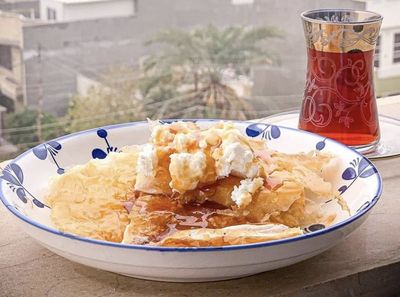
Kahi
A simple flour-and-water dough rests for 30 minutes. Stretches paper-thin on an oiled surface (filo-style). Brushed with melted samna; folded into a long strip; coiled into a flat round; rolled flat. Pan-baked or oven-baked at 200°C until darkly gold. Plunged briefly into hot saffron-cardamom-rose sugar syrup. Topped with thick clotted cream (geymar, or substitute Devonshire / Cornish clotted cream).
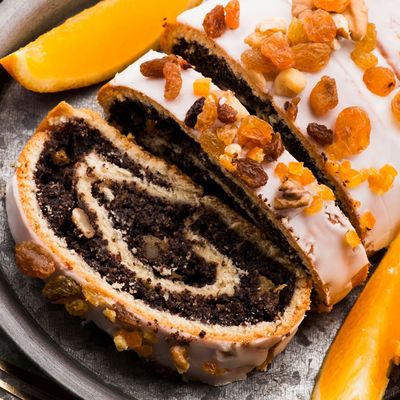
Makowiec
The filling starts the night before: poppy seeds soak then simmer in milk and cook to a thick paste with honey, butter, vanilla, raisins, walnuts and candied peel. The next day, an enriched yeast dough rolls into a thin rectangle, spreads thickly with the cold poppy filling, and rolls into a tight log. After a final prove, it bakes in a long tin until the dough is bronze. Once cool, a thin lemon glaze drizzles across the top and a scatter of candied peel finishes it.
Pakhlava (Azerbaijani)
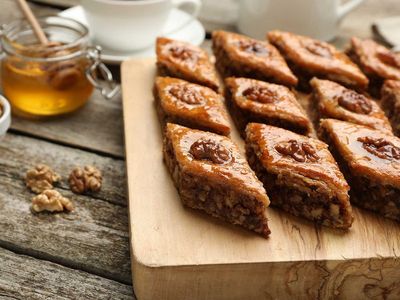
The Azerbaijani take on the pan-Caucasus pastry that goes by half a dozen names across the region. You make an enriched dough from flour, butter, milk, egg yolks and yeast, then roll it into eight layers stacked with a heavy filling of crushed walnuts spiced with cardamom and saffron between each one. The top gets scored in the traditional diamond pattern, brushed with saffron-tinted egg yolk so it bakes to a deep amber, and a single walnut pressed into the centre of each diamond as a marker. Forty-five minutes at 180°C, then a saffron-honey syrup poured generously over while it's still hot from the oven. The trick the recipe insists on is the overnight rest before slicing; that's when the syrup absorbs fully and the layers set so the diamonds cut cleanly. Eaten at Novruz, weddings and feast days, with strong black tea on the side.