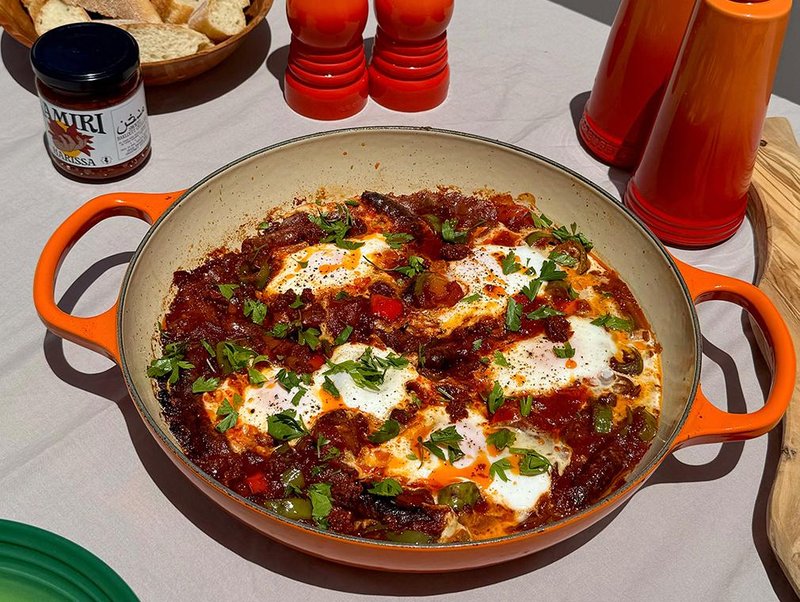
Ojja with Merguez
Tunisia's pan supper: harissa-spiced tomato sauce loaded with charred merguez and finished with eggs cracked over the top.
Overview
Merguez sausages are browned in a wide deep pan, lifted out and roughly cut into bite pieces. Sliced onion and red pepper sweat in the merguez fat; garlic, caraway, cumin, ground coriander and harissa go in; tinned tomatoes follow and simmer for 12 minutes until thick. The merguez returns; 4 eggs are cracked into wells in the sauce; lid on; gentle 5-minute cook until the whites are set. Sprinkled with parsley and served hot from the pan.
Ingredients
- 400 g merguez sausages (Tunisian-style lamb merguez, ideally - sold at North African shops and many supermarkets)
- 2 tablespoons olive oil (if needed - depends how fatty the sausages are)
- 1 onion (large, sliced)
- 1 red bell pepper (sliced thin)
- 4 garlic cloves (sliced)
- 1 teaspoon caraway seeds
- 1 teaspoon ground cumin
- 1 teaspoon ground coriander
- 1-2 tablespoons Harissa (to taste - Tunisian harissa is fiery)
- 1 teaspoon sweet paprika
- 800 g tins chopped tomatoes (or 800 g passata)
- 1 teaspoon caster sugar
- 1 teaspoon salt
- ½ teaspoon black pepper
- 4 eggs (large)
To finish
- 3 tablespoons fresh flat-leaf parsley (chopped)
- 1 tablespoon extra-virgin olive oil (drizzle)
- A squeeze of lemon
- Crusty bread
Method
Stage 1 - Brown the merguez
- Heat a wide deep heavy pan or a wide tagine over medium-high.
- Add the merguez whole (no oil - they release plenty).
- Brown 6 minutes, turning, until the casings are crisp at the edges and the sausages are 80% cooked through.
- Lift onto a plate; cut into 3 cm pieces. Reserve.
Stage 2 - Build the sauce
- Pour off all but 2 tablespoons of the merguez fat. (If they were lean, add olive oil.)
- Reduce heat to medium; add onion and red pepper.
- Cook 7 minutes until soft.
- Add garlic; cook 1 minute.
- Stir in caraway, cumin, coriander, harissa and paprika; cook 30 seconds - the kitchen will smell strongly fragrant.
Stage 3 - Tomatoes
- Tip in the tinned tomatoes (and the sugar to balance acidity).
- Add salt and pepper.
- Bring to a simmer; cook 12 minutes, stirring occasionally, until the sauce has thickened and the colour deepens to a rich red-orange.
- Taste; adjust salt and harissa.
Stage 4 - Return the merguez
- Tip the merguez pieces and any juices on the plate back into the sauce.
- Stir gently; simmer 2 minutes to warm through.
Stage 5 - Eggs
- With the back of a spoon, make 4 small wells in the sauce between the merguez pieces.
- Crack an egg into each well.
- Sprinkle a tiny pinch of salt on each yolk.
- Cover with a lid (or foil).
- Reduce heat to low.
- Cook 4-5 minutes - the whites set; the yolks stay runny.
Stage 6 - Serve
- Scatter parsley.
- Drizzle olive oil; squeeze of lemon.
- Bring the pan to the table; serve with bread for dipping.
Notes
- Real merguez: Tunisian or Algerian merguez has a fierce harissa-and-paprika-and-cumin colour and flavour. French-supermarket merguez can be milder; if so, double the harissa in the sauce.
- Caraway is the giveaway: Caraway seeds are the difference between Tunisian ojja and Moroccan-style shakshouka. Don't substitute fennel or anise - the flavour profile shifts wrong.
- Don't overcook the eggs: Soft yolks are the dish. Pull off the heat when the whites are just set; carryover heat will finish them.
Storage
- Best fresh.
- The sauce without eggs refrigerates 3 days; reheat and add fresh eggs.
- Doesn't freeze well with the eggs in.
More like this
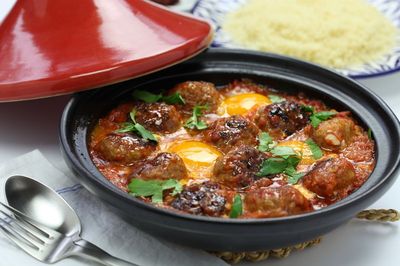
Kefta Tagine
Beef or lamb mince is mixed with grated onion, garlic, fresh parsley and coriander, cumin, paprika, cinnamon, salt and pepper; shaped into small (3 cm) balls. A tomato sauce is built in the tagine: onion sweats in olive oil, garlic, cumin and paprika join, tomato passata and a stock cube simmer for 10 minutes. The meatballs are nestled in; cooked for 12 minutes turning once. Eggs are cracked into wells; lid on; 4 minutes more until the whites are just set. Scattered with parsley and served hot.
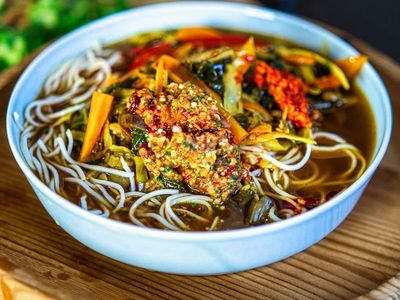
Thukpa
A simple wheat-flour dough rests while a clear, ginger-and-garlic-forward broth simmers with beef (standing in for yak), Sichuan peppercorn and a tomato. The dough is rolled and cut into thin noodles, or, if you prefer, store-bought egg noodles. Vegetables and greens go in at the end; fresh coriander and chilli on top. Honest, restorative, not fancy.
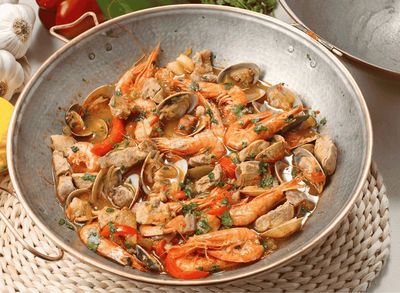
Cataplana de Marisco
A cataplana is a hinged copper clamshell pan, and the seafood stew named after it is one of those dishes where the cookware does the work. You build a base of onions, peppers, sliced chouriço, smoked paprika, tomato and white wine in the bottom of the cataplana, then layer clams, mussels, prawns and chunks of firm white fish on top, clamp the lid shut, and steam it all for less than ten minutes. The lid lifts at the table to release a cloud of paprika-and-wine-scented steam, which is the entire point of the dish. If you do not have a cataplana, any wide pan with a tight lid does the same job. Coriander and lemon at the end, crusty bread for the broth, and vinho verde for everything else.
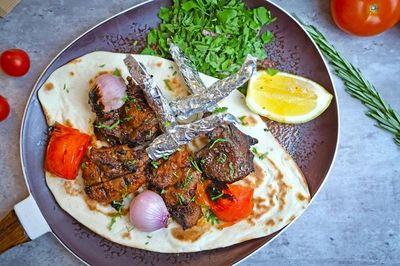
Chapli Kebab
Chapli kebabs are the spiced beef patties sizzling on a wide flat tawa at any roadside grill from Peshawar to Kabul, big enough to wrap a hand around and seasoned with the unusual punch of dried pomegranate seeds and coriander. The mince mixes with grated onion, chopped fresh tomato, ginger, garlic, beaten egg and a little gram flour to bind, plus the signature Afghan spice blend (coriander seed, pomegranate seeds, chilli flakes, cumin and garam masala). A thirty-minute rest lets the gram flour absorb the moisture and the spices marry. Pat thin and wide (the word chapli means "flat" or "slipper-shaped"), then fry hard in oil three or four minutes a side until darkly crusted. Eat hot from the pan, wrapped in fresh naan with sliced raw onion and a green chutney.