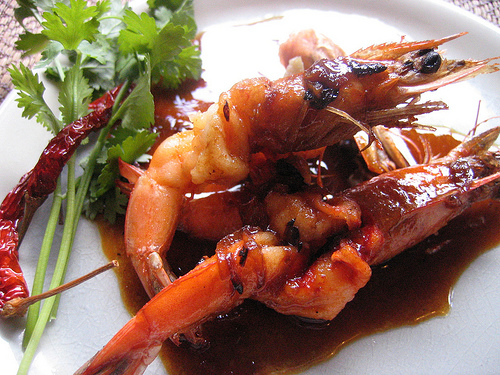
Tamarind Sauce
Tamarind sauce is superb with steamed firm-fleshed fish, such as halibut or monkfish or shellfish like prawn.
Overview
A Thai-inspired sauce balancing tart tamarind with umami-rich fish sauce and aromatic ginger. This complex, gloss-coated accompaniment brings bright acidity and subtle heat to steamed fish and prawns.
Ingredients
Base oil
- 2 tablespoons groundnut oil
Aromatics
- 4 spring onions (3 cm julienne)
- 3 cloves garlic
- 2 tablespoons ginger (grated)
Flavourings
- 2 tablespoons light soy sauce
- 1 tablespoon palm sugar
- 2 tablespoons tamarind paste
- 1 tablespoon fish sauce
- 10 black peppercorns (crushed)
Method
Stage 1 - Cook aromatics
- Heat the groundnut oil in a frying pan, add the spring onions and sauté over a medium heat until softened.
- Add the garlic and ginger, reduce the heat to low and cook for 2 minutes.
Stage 2 - Add flavourings
- Add the remaining ingredients to the pan and simmer gently, stirring occasionally, for a further 2 minutes.
- Transfer the sauce to a bowl and cover with cling film, piercing it in a few places.
- Leave to stand for about 20 minutes before serving.
Notes
- Tamarind paste: Essential for tart, complex flavour; use fresh paste from Asian suppliers, not bottled concentrate.
- Fish sauce: This pungent ingredient adds depth; use sparingly as it is very strong.
- Palm sugar: Use this rather than regular sugar for authentic Thai flavour; available in Asian markets.
Serving
Serve at room temperature with steamed firm-fleshed fish (halibut, monkfish, sea bass), prawns, or other shellfish. Also excellent with Thai curries.
Storage
- Keeps refrigerated for 3-4 days in an airtight container.
- Freezes well for up to 1 month.
- Best eaten at room temperature; flavours develop as it sits.
More like this
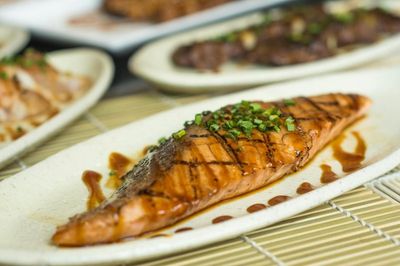
Honey Soy Salmon (One-Pan)
Salmon fillets sear skin-side down for crisp skin, then bathe in a quick honey-soy-mirin-ginger reduction that lacquers them. Broccoli or bok choy steams in the same pan with a splash of stock. Twenty minutes; one pan; serve over rice.
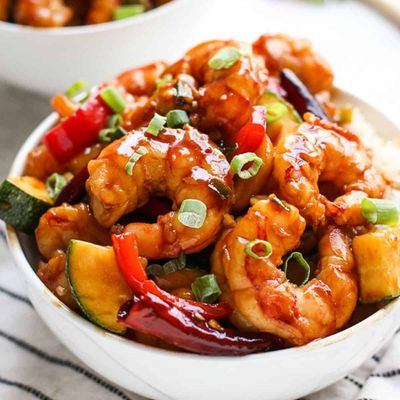
Kung Pao Shrimp
Kung pao (gongbao) shrimp is the seafood cousin of the classic Sichuan gongbao jiding, named for the 19th-century governor-general Ding Baozhen whose title was Gong Bao. Where the chicken version uses diced meat, the shrimp version keeps the prawns whole or halved so they curl into bright pink commas around the chillies and peanuts. The flavour profile is the signature Sichuan "lychee" balance: a touch of sweetness from sugar, sourness from black vinegar, salt and umami from soy, and the warm tingle (ma la) of toasted Sichuan peppercorn paired with the smoky bite of dried er jing tiao chillies. This is a fast dish, fundamentally a wok exercise: every ingredient must be prepped and lined up before the heat goes on, because once the chillies hit the oil you have maybe ninety seconds before everything is overcooked. Difficulty is moderate for a home cook with a working wok and high burner; the trick is keeping the chillies dark red and fragrant without scorching them black, and pulling the shrimp out the moment they curl. Served over plain rice it is one of the most rewarding ten-minute meals in the repertoire.
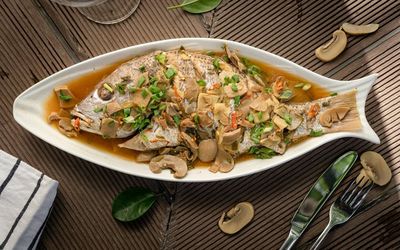
Steamed Fish
Steaming is a great southern Chinese tradition and is considered the preferred method of cooking fish as it brings out the purest flavours. Because it is such a gentle cooking technique, nothing masks the fresh taste of the fish, which remains moist and tender. Simple aromatics, ginger, garlic, and spring onion, infuse the fish without overwhelming its delicate character.
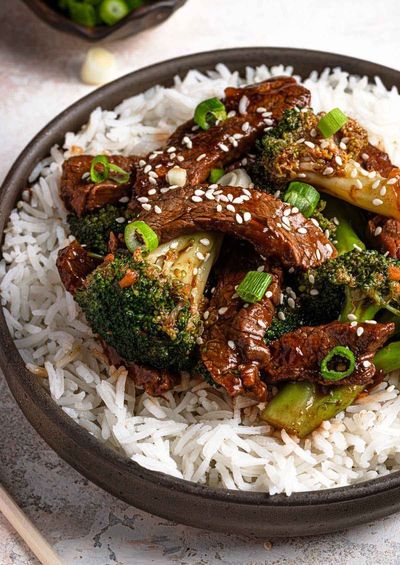
Beef and Broccoli
Sliced beef velvets briefly in cornflour and soy, broccoli florets blanch to bright green, and the lot stir-fries hard with garlic and ginger in a soy-oyster-rice-wine sauce. Served over steamed rice.