Samosa
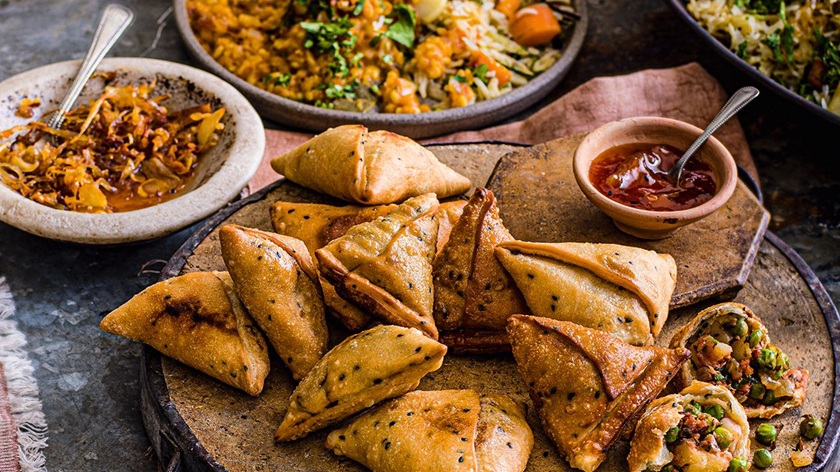
India's iconic tea-time triangle: a crisp pastry pocket stuffed with spiced potato and peas, deep-fried golden. Served with tamarind and mint.
Overview
A stiff oil-rich plain-flour dough (maida) rolls thin and crisps in the fryer with the characteristic blistered surface. The filling is dry: boiled potato, peas, ginger, green chilli, cumin, coriander seed, garam masala and amchur (dried mango powder) for sourness. The pastry is rolled into ovals, halved into semicircles, formed into cones, stuffed, sealed and fried in two stages: low-temperature first to set the pastry without browning, then a hot finish to blister and crisp.
Ingredients
Pastry
- 300 g plain flour
- 4 tablespoons ghee (or vegetable oil)
- 1 teaspoon ajwain (carom) seeds
- ¾ teaspoon salt
- 120 ml cold water (approximately)
Filling
- 500 g floury potatoes (Maris Piper or King Edward; boiled in skins, peeled, roughly crushed)
- 100 g frozen peas (thawed)
- 2 tablespoons vegetable oil
- 1 teaspoon cumin seeds
- 1 tablespoon ginger (finely grated)
- 2 green chillies (finely chopped)
- 1 teaspoon coriander seeds (lightly crushed)
- 1 teaspoon ground cumin
- 1 teaspoon Garam Masala
- ½ teaspoon ground turmeric
- 1 ½ teaspoons amchur (dried mango powder)
- ½ teaspoon Kashmiri chilli powder
- 1 teaspoon salt
- 1 small handful coriander leaves (chopped)
- ½ lemon (juice)
To fry
- 1 litre vegetable oil (or sunflower oil)
Method
Stage 1 - Pastry
- Combine the flour, ajwain and salt in a bowl.
- Rub in the ghee with your fingertips until the mixture resembles coarse breadcrumbs and clumps when squeezed.
- Add the cold water a tablespoon at a time, mixing to a stiff, firm dough (much firmer than chapati dough).
- Knead for 2 minutes until smooth.
- Wrap in cling film; rest 30 minutes at room temperature.
Stage 2 - Filling
- Heat the oil in a wide pan over medium heat.
- Add the cumin seeds; sizzle 10 seconds.
- Add the ginger and green chilli; cook 30 seconds.
- Add the coriander seeds, ground cumin, turmeric and chilli powder; stir 20 seconds.
- Add the crushed potato and peas; mix to coat in the spices; cook 3-4 minutes.
- Stir in the garam masala, amchur, salt, lemon juice and coriander leaves.
- Taste, adjust salt and amchur (the filling should be vivid, slightly sour, salty).
- Cool completely before filling (warm filling tears the pastry).
Stage 3 - Shape
- Divide the dough into 6 equal balls.
- Roll one ball into a thin oval, about 18 cm long, 12 cm wide, 2 mm thick.
- Cut in half across the middle to make 2 semicircles.
- Brush the straight edge with a little water.
- Bring the two corners of the straight edge together to form a cone; press to seal the seam (the seam must be tight or filling escapes).
- Hold the cone open; spoon in 2 tablespoons of filling; press down to compact.
- Brush the open edge with water; pinch closed in a flat seam, pressing firmly.
- Press the top seam flat in a small pleat or fold to give the classic ridge.
- Repeat with the rest. Rest the formed samosas 10 minutes on a tray.
Stage 4 - Fry
- Heat the oil to 140°C in a deep heavy pan (lower than usual; this is critical for blistering).
- Lower 4 samosas in at a time.
- Fry slowly 8-10 minutes at this gentle heat - they should not colour, only set and lightly puff.
- Raise the heat to 180°C.
- Fry another 2-3 minutes until deep golden and crisp with the classic blistered surface.
- Lift onto kitchen paper.
Notes
- Two-stage frying: The low-temperature first fry sets the pastry and develops the blistered ridges. Frying hot from the start gives a smooth, soft, pale samosa.
- Ajwain is signature: The carom seeds give the unmistakable bitter-thymey note of samosa pastry. Don't skip them.
- Stiff dough: A wet, soft dough fries soggy. The dough should be firmer than bread dough, almost like pasta dough.
- Amchur substitute: If you can't get amchur, use 1 tablespoon lemon juice extra; the flavour is slightly different but acceptable.
Variations
Keema samosa: Replace half the potato with 250 g lamb mince browned with onion, ginger and the same spices. Baked samosa: Brush with oil; bake at 200°C for 25 minutes, turning halfway. Lighter but the pastry is bread-like, not blistered.
Serving
Serve with: tamarind chutney, mint-coriander chutney, sliced raw onion, lemon wedges. Temperature: hot, freshly fried. Drink: masala chai.
Storage
- Best eaten within 30 minutes of frying.
- Unfried, formed samosas freeze 2 months on a tray then bagged; fry from frozen at 140°C for 12 minutes, then 180°C for 3 minutes.
- Cooked samosas reheat at 180°C oven for 8 minutes; never microwave (the pastry goes leathery).
Recipes mentioned here
Keema Samosa
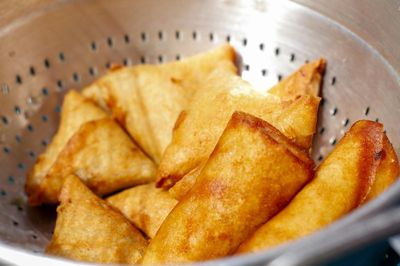
Lamb mince fries with onion, garlic, ginger and a spice mix of garam masala, cumin, coriander and chilli. Frozen peas thaw into the dry filling at the end; lemon juice and chopped coriander finish it. Left to cool. Spring-roll pastry strips fold around a generous tablespoon of filling into triangular packets (flag-fold) and seal with flour paste. Deep-fried 175°C until deep gold.
Samosas
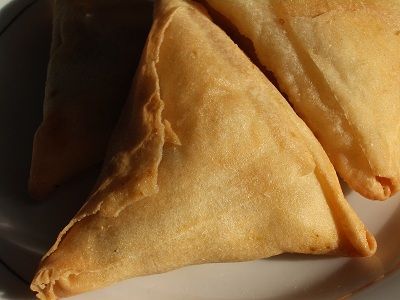
Samosas are the ultimate Indian snack: crispy, angular parcels of golden filo pastry enclosing spiced, fragrant filling. The technique is simple yet satisfying, triangular folding, egg wash sealing, and oven-baking creates a light, shattering crust. Unlike deep-fried versions, these are baked for a lighter result while maintaining crispness. Serve warm with chutney, raita, or lemon juice. These are elegant enough for entertaining, casual enough for snacking.
More like this
Aloo Tikki
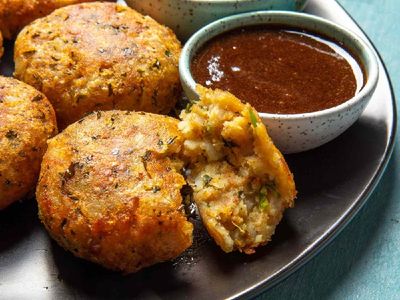
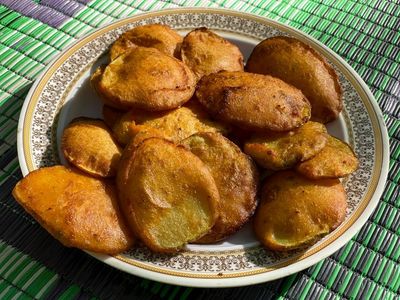
Floury potatoes boil in their skins, then mash dry. A spice paste of green chilli, ginger and roasted cumin folds in with chopped coriander, mint and amchur for sourness. Cornflour and gram flour bind without making the tikki gummy. Patties form, chill to firm up, then shallow-fry in shallow oil on a flat pan for 4-5 minutes per side until deep gold and crisp with a soft interior. The chilled rest is what stops them falling apart.
Vegetable Pakora
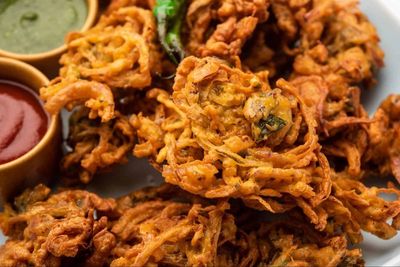
Gram (chickpea) flour combines with rice flour for extra crispness, with ajwain, chilli, turmeric and a pinch of baking soda for the airy texture. Cold water makes a thick coating batter (not pancake-thin). Mixed vegetables are tossed in the batter and dropped into hot oil in clusters; each one stays loose, with crisp tendrils of onion and the soft give of potato inside. Two batches: the second fry gives the deep-fried lacquered crunch.*
Mixed Vegetable Pakora
A thick batter of gram (chickpea) flour, rice flour, ajwain, turmeric, chilli powder and salt mixes with cold water to a thick coating consistency. Sliced onion, cubed potato, cauliflower florets and chopped spinach toss through the batter until thickly coated. Small ragged clusters drop into hot oil (170°C) and fry for 3-4 minutes per side until deep gold and crisp.
Pav Bhaji
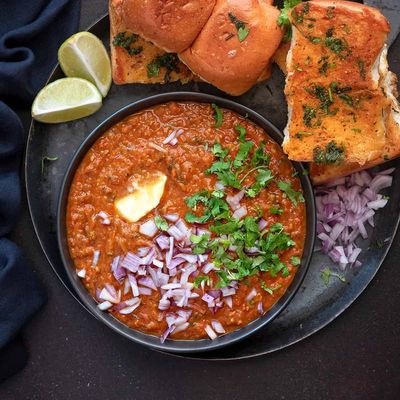
Potatoes, cauliflower, peas boil until tender. A masala base softens onions and tomatoes in butter with ginger-garlic paste, then chilli powder, turmeric and pav bhaji masala. Capsicum joins. Boiled vegetables mash in roughly; everything cooks together 10-15 minutes, mashing as you go, until the bhaji turns a deep orange-red and the consistency is thick-spreadable. Finishes with extra butter, lemon juice, coriander. Pav rolls split horizontally, griddle-fry in butter with a sprinkle of pav bhaji masala till the cut sides char. Serve bhaji in shallow bowls topped with diced raw onion, lemon wedges, a coriander shower; pav on the side.