Aromatic Salt (Two Versions)

Aromatic Salt (Two Versions)

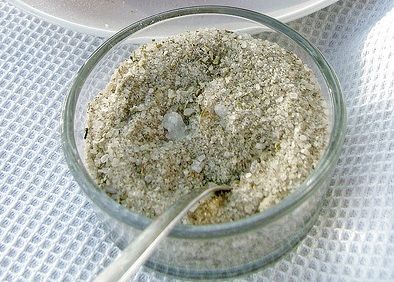
Aromatic salt is specifically designed for British-Indian Balti cooking, a finishing salt that brings subtle spice notes rather than aggressive heat. This is about using salt as a vehicle for flavor rather than just seasoning. The two versions allow choice between delicate (light version) and more assertive (spicy version). Both blend sea salt with warm spices, creating finishing touches that elevate a dish without overwhelming it.

Spices 10 minutes Serves120-130
Burmese Samosa

Burmese Samosa

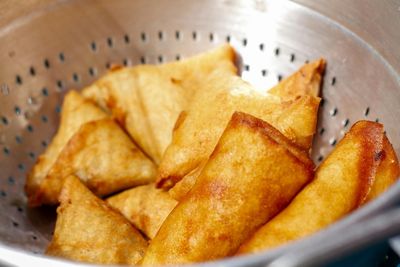
The Burmese take on the South Asian samosa, with a thinner, crisper pastry and a milder filling than its Indian cousin. You make a hot-water dough that rolls out very thin so the fried shell ends up glassy and crisp rather than bready. The filling is mild by Indian standards: turmeric, ginger, fried onion and a whisper of cumin folded into mashed potato and peas, finished with crushed peanuts for the nuttiness that marks the Burmese version. The triangles fry at moderate heat until amber and crackling, the pastry blistering as it goes. Eaten hot dipped in tamarind sauce, or torn into chunks for a samusa-thoke salad later.

Snacks 1 hour 5 minutes Serves4
Caponata

Caponata

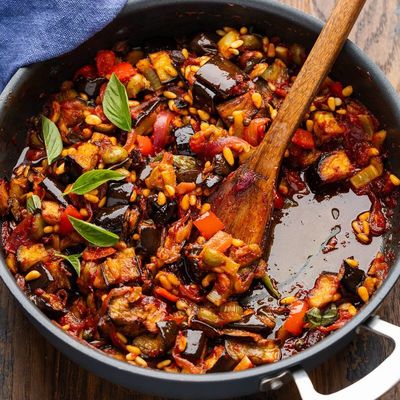
Aubergine cubes are salted to weep, fried hard in olive oil to deep gold, and reserved. A separate pan is used to soften diced onion and sliced celery in olive oil; garlic joins briefly; chopped tomatoes simmer with red wine vinegar and sugar to make the agrodolce base. Green olives, capers, sultanas (optional) and toasted pine nuts are stirred in. The fried aubergine is returned and simmers for 10 minutes to meld. Off heat, fresh basil is scattered. Rested at least 2 hours (ideally overnight) before serving at room temperature.

Sides 1 hour 40 minutes Serves6
Charoset

Charoset

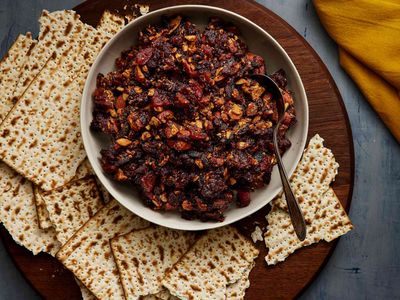
The Ashkenazi version, simplest and most common in northern Europe and the United States: tart apples chopped fine, walnuts crushed coarse, cinnamon, a little brown sugar, and sweet kosher red wine to bind. Stirred together and left for the flavours to meld. Some households add a pinch of ground ginger or a squeeze of lemon. There are dozens of regional variants (Sephardi versions use dates and figs); this one is the most familiar at a North American seder.

Sides 15 minutes Serves8
Fatayer Sabanikh

Fatayer Sabanikh

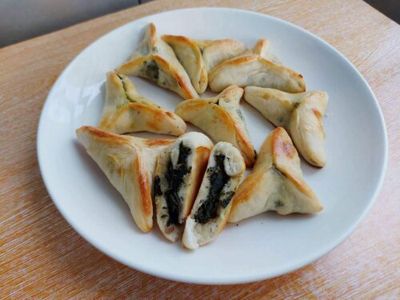
A soft yeasted olive-oil dough rises for 45 minutes. The filling: spinach wilts briefly in salted water and is squeezed bone-dry; chopped onion massages with salt to soften and weep; the two combine with sumac, lemon juice, pomegranate molasses, olive oil and toasted pine nuts. The dough divides into 12 balls; each rolls into a 12 cm disc; a spoon of filling sits in the centre; the disc folds into a tricorn (three corners pinched up to meet at the top). Baked at 220°C 15-18 minutes until deep gold.

Palestinian 1 hour 38 minutes Serves4
Jhal Muri

Jhal Muri

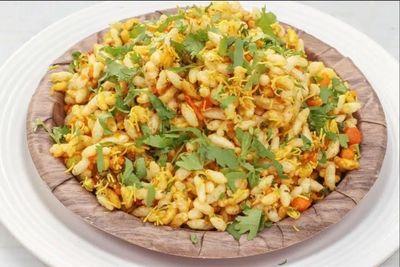
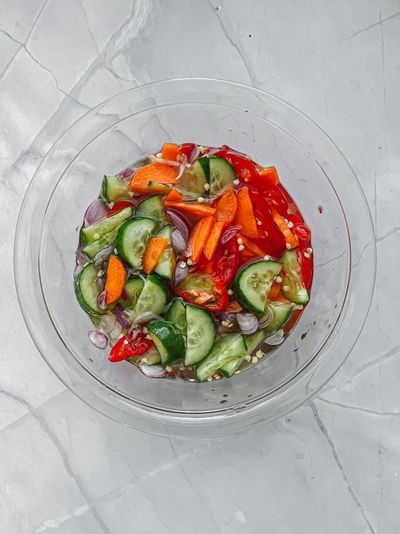
Jhal muri (literally "spicy puffed rice") is the most democratic snack in Bengal: assembled in seconds from a tin trunk by a muriwala, tipped into a rolled-newspaper cone, and eaten standing on a pavement for the price of a few rupees. The base is muri (puffed rice), and everything else is built around the principle of contrast. Raw mustard oil is the soul of the dish, sharp and nasal and slightly bitter; without it you have a salad, not jhal muri. The vegetables stay raw and crunchy, onion, green chilli, cucumber, tomato, chopped into tiny dice so each spoonful gets one of each. Peanuts and chana chur (or sev) add fat and crunch; black salt and chaat masala add the funky-tangy depth that makes Indian street snacks addictive. The lime goes in last so the puffs don't soften. This is a dish where technique matters less than ingredient quality: muri must be crisp (refresh in a dry pan if it's gone soft), mustard oil must be the proper pungent kind, and the lime must be fresh. It is everywhere in Bengal, tea-time at home, train platforms, the Maidan on a winter afternoon, and there is no recipe in any cookbook that quite captures the feel of it being mixed in front of you in a paper cone.
Snacks 10 minutes Serves2
Kuli-Kuli (Roasted Peanut Sticks)

Kuli-Kuli (Roasted Peanut Sticks)

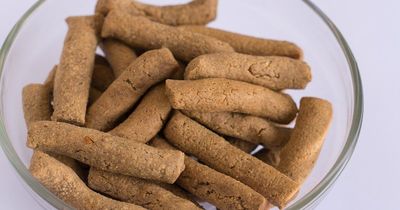
Raw peanuts toast in a dry pan 10 min till deep gold and fragrant; skins rub off. The roasted peanuts pulse to a coarse paste, then a fine paste, eventually the oil starts to release. The paste squeezes hard in clean cloths to extract the oil; the de-oiled paste tightens into a clay-like dough seasoned with salt, ground chilli, ground ginger. Shapes into thin sticks or small rings. Deep-fries in vegetable oil 3-4 minutes till deep gold.

Desserts 1 hour 15 minutes Serves400
Makdous

Makdous

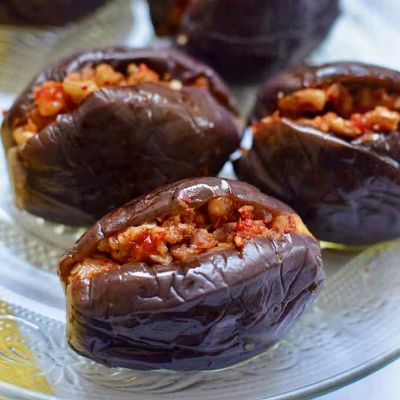
Tiny aubergines (the small Middle-Eastern variety) blanched in salted water 6 minutes until just tender. Drain. Salt and pressed under weight 4-6 hours to drain bitter water. Each aubergine slits lengthwise (don't cut all the way through). A walnut-garlic-red-pepper-paste mixture stuffs into each slit. The stuffed aubergines pack tightly into a sterilised glass jar; covered in olive oil to fully submerge. Sealed and left at room temperature for 7-21 days. The oil takes on the spice; the aubergines mellow.

Snacks 30 minutes Serves8
Nhom Trav

Nhom Trav

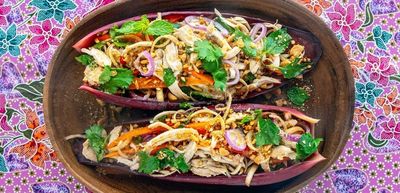
A Cambodian banana flower salad, the kind of bright herby starter that opens a Khmer meal. You slice banana flower thin and submerge it immediately in lemon water to stop the browning (banana flower oxidises within seconds of cutting, going from pale ivory to brown). Tofu cubes (or shredded chicken in the non-vegetarian version) join for substance. Peanuts toast in a dry pan; shallots fry crisp in oil. The dressing is lime, palm sugar, soy and chilli pounded together in a mortar, and everything tosses with fresh herbs at the last minute - mint, coriander, Thai basil, whatever is around. Eaten as a starter or alongside grilled meat, the bitter floral note of the banana flower balanced by the salty-sweet dressing and the crunch of peanuts.

Cambodian 30 minutes Serves4
Sambal Oelek

Sambal Oelek

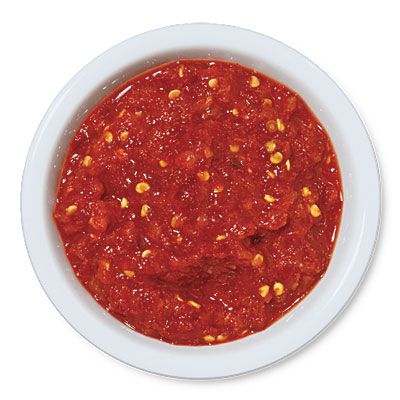
Sambal oelek is the simplest condiment in Indonesian cuisine: nothing more than fresh chillies and salt, pounded together into a coarse paste. There's no hiding behind other flavors, the quality of chillies determines everything. This is straightforward, honest cooking. The result is vibrant red, fiery hot, and utterly essential for spice-loving Southeast Asian cooks. Sambal oelek is served alongside virtually every savory Indonesian dish as a condiment for individual adjustment of heat.

Sambal 10 minutes Serves400-450
Shwe Htamin

Shwe Htamin

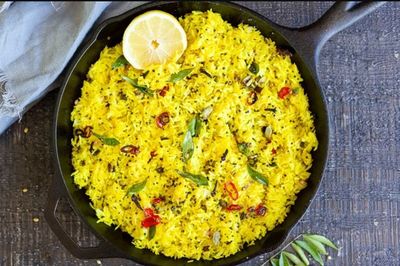
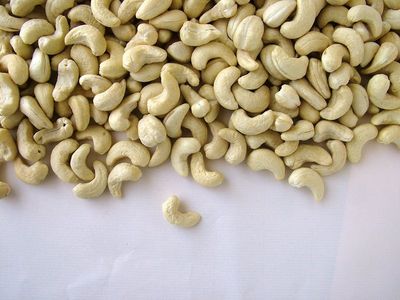
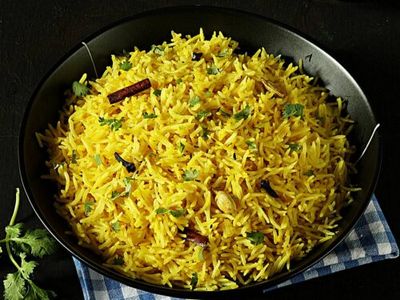
The Burmese golden rice, the everyday turmeric-stained rice that turns up alongside curries and stews on the home table. You toast long-grain rice briefly in oil with a chopped onion, turmeric and a small handful of cashews (optional but traditional). Water and salt go in, the pot covers tightly, and the rice cooks undisturbed for eighteen minutes. A five-minute rest off the heat finishes the steam. The grains come out the colour of pale gold, perfumed faintly with onion and turmeric, ready to soak up whatever curry sauce hits the plate.

Sides 30 minutes Serves4
← Prev Page 1 of 2 Next →