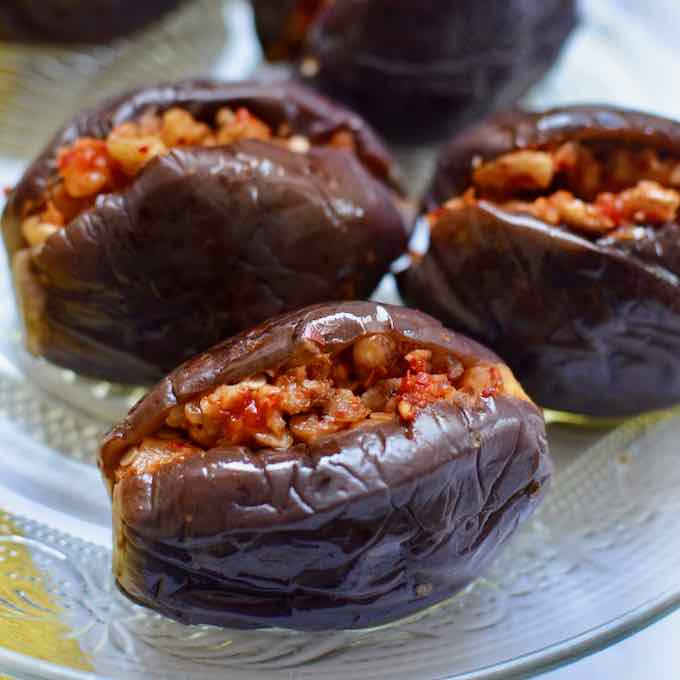
Makdous
Palestine's winter pantry preserve: tiny aubergines stuffed with walnuts, garlic and red pepper paste, submerged in olive oil for weeks.
Overview
Tiny aubergines (the small Middle-Eastern variety) blanched in salted water 6 minutes until just tender. Drain. Salt and pressed under weight 4-6 hours to drain bitter water. Each aubergine slits lengthwise (don't cut all the way through). A walnut-garlic-red-pepper-paste mixture stuffs into each slit. The stuffed aubergines pack tightly into a sterilised glass jar; covered in olive oil to fully submerge. Sealed and left at room temperature for 7-21 days. The oil takes on the spice; the aubergines mellow.
Ingredients
Aubergines
- 600 g baby aubergines
- 2 tablespoons salt (for boiling)
Stuffing
- 200 g walnut halves (chopped to a coarse rubble, not paste)
- 8 garlic cloves (crushed to a paste with ¾ teaspoon salt)
- 2 tablespoons hot red pepper paste (Syrian / Aleppo-style red pepper paste, sold in jars; or substitute a mix of 1 tablespoon tomato paste + 1 teaspoon Aleppo pepper + ½ teaspoon paprika)
- 1 teaspoon dried red chilli flakes
- 1 teaspoon ground cumin
- 1 teaspoon salt
- ½ teaspoon black pepper
- 1 tablespoon olive oil (to bind)
Salting
- 2 tablespoons salt (for the drain)
To preserve
- 350-500 ml extra-virgin olive oil (enough to fully cover the aubergines in the jar)
Equipment
- 1 (1-litre) glass jar, sterilised (washed in hot soapy water, dried in a 130°C oven 15 minutes)
- A small heatproof plate / weight that fits inside the jar mouth
Method
Stage 1 - Blanch
- Snip the stem ends off the aubergines but don't peel.
- Bring a wide pot of water with 2 tablespoons salt to a boil.
- Add the aubergines; cook 5-6 minutes until just tender (a knife should slip in but not collapse the flesh).
- Drain.
Stage 2 - Drain and press
- Cut a lengthwise slit along the side of each aubergine, about ¾ of the length, not cutting all the way through.
- Open each slit gently with a fingertip.
- Sprinkle the inside of each with a pinch of salt.
- Place the slit aubergines on a clean tea towel; cover with another tea towel; press with a weight (a heavy chopping board with a few cans) for 4-6 hours. This draws out the bitter water.
Stage 3 - Stuffing
- Mix walnut rubble, garlic-salt paste, red pepper paste, chilli flakes, cumin, salt, black pepper and olive oil into a thick paste.
Stage 4 - Stuff
- Open each pressed aubergine; spoon in 1-2 teaspoons of stuffing, packing it into the slit firmly.
Stage 5 - Pack the jar
- Place stuffed aubergines tightly into the sterilised jar (slit-side up if possible), packing tightly to maximise count.
- Pour olive oil to fully submerge - every aubergine must be under the oil line; expose-to-air = mould.
- Press the small plate / weight on top to keep aubergines submerged.
Stage 6 - Cure
- Seal the jar.
- Keep at cool room temperature (16-20°C) for 1-3 weeks.
- Check every few days: if any aubergine pokes above the oil line, press it back down or top up oil. Discard if mould forms.
Stage 7 - Serve
- After 7 days minimum, lift out one aubergine.
- Place on a small plate, drizzled with a little of the jar oil.
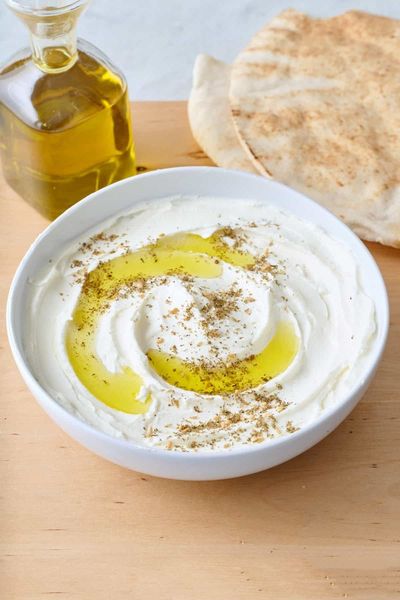
- Eat as part of breakfast (with labneh, olives, and bread), on a mezze platter, or sliced onto toast.
Notes
- Tiny aubergines are the dish: Big eggplant doesn't work - the cure takes too long, the stuffing-to-aubergine ratio is wrong. Look for the 5-7 cm aubergines sold at Middle Eastern shops; if unavailable, the closest substitute is baby aubergines from supermarkets (somewhat larger but workable).
- Fully submerged in oil: Anything above the oil line moulds. The weight on top keeps everything submerged. Check every few days.
- Salt-and-press is essential: Skipping this stage gives bitter, soggy makdous. The 4-6 hour weighted press is the technique.
Storage
- After 7 days curing, refrigerate for safety (the oil-and-salt cure is preservation, but home conditions vary). Refrigerated keeps 3-6 months.
- Once a jar is opened, eat within 1 month, keeping the remaining aubergines under oil.
- The flavoured oil at the end of the jar is exceptional - use as a finishing oil on hummus, labneh, salads, or grilled fish.
More like this
Spicy Peanut Balls
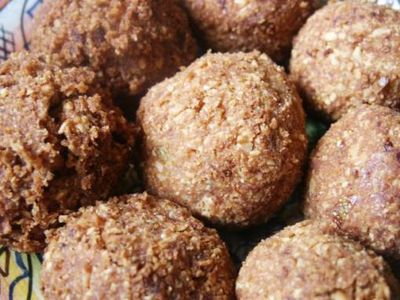
Spicy peanut balls are deep-fried rice balls seasoned with garlic, ginger, chilli, soy sauce, and lime, then coated in chopped peanuts for a satisfying crunch. They make an excellent snack or starter, and pair naturally with a chilli dipping sauce.
Burmese Tea-Leaf Snack Mix
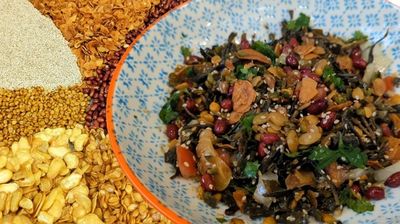
The older, more ceremonial form of lahpet, the version that predates the salad. Unlike lahpet thoke (the salad), there's no cabbage, no tomato, no fresh dressing - the fermented tea leaves stay pungent and concentrated, and the fried elements supply texture and salt. You keep all the components separate on a divided plate until they reach the table, so the crispy bits don't soften, and each guest builds their own bite from the spread. Eaten as an afternoon teashop snack with a small cup of green tea, or traditionally at the close of formal meals as a sign of welcome and reconciliation - a Burmese custom that dates back centuries and still turns up at weddings.
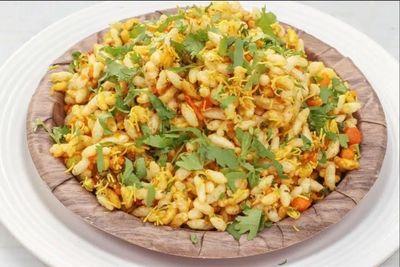
Jhal Muri
Jhal muri (literally "spicy puffed rice") is the most democratic snack in Bengal: assembled in seconds from a tin trunk by a muriwala, tipped into a rolled-newspaper cone, and eaten standing on a pavement for the price of a few rupees. The base is muri (puffed rice), and everything else is built around the principle of contrast. Raw mustard oil is the soul of the dish, sharp and nasal and slightly bitter; without it you have a salad, not jhal muri. The vegetables stay raw and crunchy, onion, green chilli, cucumber, tomato, chopped into tiny dice so each spoonful gets one of each. Peanuts and chana chur (or sev) add fat and crunch; black salt and chaat masala add the funky-tangy depth that makes Indian street snacks addictive. The lime goes in last so the puffs don't soften. This is a dish where technique matters less than ingredient quality: muri must be crisp (refresh in a dry pan if it's gone soft), mustard oil must be the proper pungent kind, and the lime must be fresh. It is everywhere in Bengal, tea-time at home, train platforms, the Maidan on a winter afternoon, and there is no recipe in any cookbook that quite captures the feel of it being mixed in front of you in a paper cone.
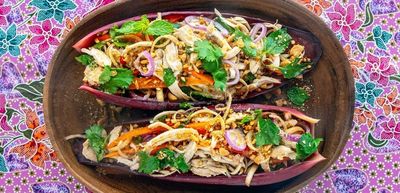
Nhom Trav
A Cambodian banana flower salad, the kind of bright herby starter that opens a Khmer meal. You slice banana flower thin and submerge it immediately in lemon water to stop the browning (banana flower oxidises within seconds of cutting, going from pale ivory to brown). Tofu cubes (or shredded chicken in the non-vegetarian version) join for substance. Peanuts toast in a dry pan; shallots fry crisp in oil. The dressing is lime, palm sugar, soy and chilli pounded together in a mortar, and everything tosses with fresh herbs at the last minute - mint, coriander, Thai basil, whatever is around. Eaten as a starter or alongside grilled meat, the bitter floral note of the banana flower balanced by the salty-sweet dressing and the crunch of peanuts.