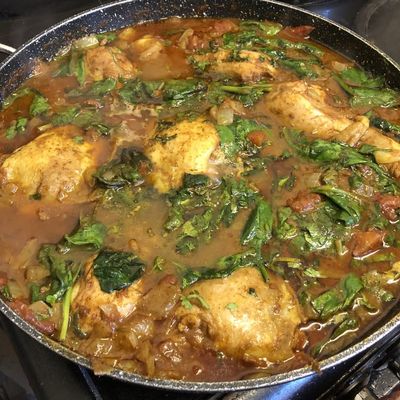
Agra Ginger Chicken
A light, cleansing chicken curry from Agra with fresh ginger, warm spices and bright tomato notes. This vibrant dish is designed to be accessible and fresh, with spinach and lime lifting the finished curry.
Indian
Tap a chip to add another filter, or use Clear all below.
A light, cleansing chicken curry from Agra with fresh ginger, warm spices and bright tomato notes. This vibrant dish is designed to be accessible and fresh, with spinach and lime lifting the finished curry.
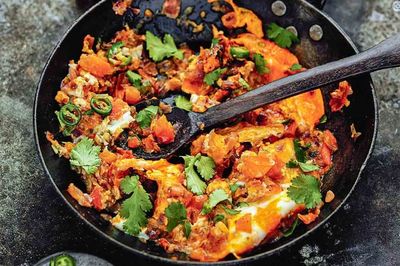
Silky scrambled eggs infused with warm spices and fresh aromatics. The turmeric adds a earthy golden color while ginger and chilli provide warmth and complexity. Served with fresh coriander, this makes an excellent quick snack, elegant starter, or gourmet canapé topping.
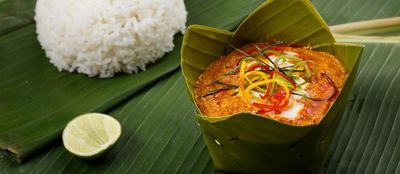
Cambodia's national dish, the centrepiece of any Khmer feast and the proper-occasion food across the country. You start by pounding kroeung fresh in a mortar (the paste of lemongrass, galangal, turmeric, garlic, shallots, kaffir lime zest and coriander root that defines Khmer cooking, and that no shop-bought paste comes close to matching). The kroeung fries briefly to bloom its aromatics, coconut cream and stock loosen it, and eggs whisk in to set the eventual custard. Chunks of firm white fish fold through with chopped greens (traditionally noni leaves, with spinach or chard standing in), and the whole mix spoons into banana-leaf cups (or small ramekins). Twenty minutes in a steamer turns the custard just-set around the soft fish, and the banana leaves perfume everything. Served from the parcels with steamed rice and a wedge of lime.
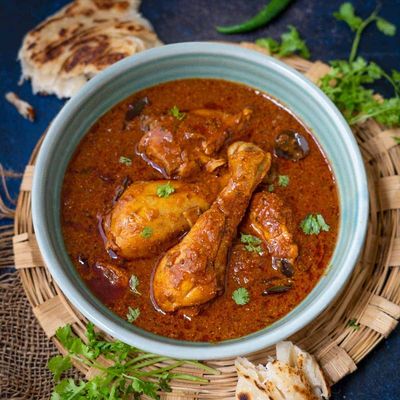
Chicken thighs are marinated briefly with turmeric, ginger-garlic paste, yogurt and a pinch of red chilli. A dry-roast of poppy seeds, sesame seeds, coconut, fennel, coriander and dried red chillies is ground with a splash of water into a coarse paste. The base is built with shallots, curry leaves and tomato; the chicken is browned in stages; and the masala paste is folded in for the long, gentle simmer. Tamarind and a curry-leaf temper finish.
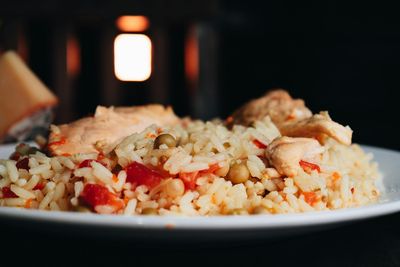
Rice is rinsed but not soaked (this is Portuguese-style rice, where short-grain is preferred for its slight starchiness). Goan chouriço is rendered in olive oil with garlic and bay, onion is softened, tomato is cooked down to a paste, and the rice is toasted briefly before stock is poured in for a covered steam. Peas are folded through in the final minutes. The dish has a faintly smoky paprika colour and a clear Portuguese DNA.
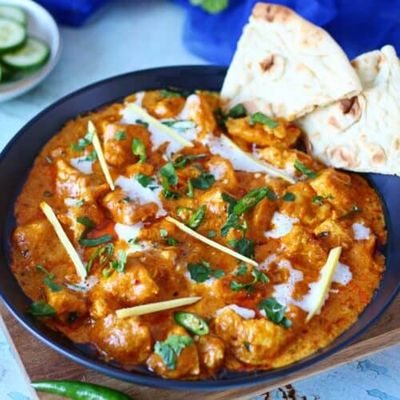
A rich, ghee-laden chicken handi cooked in the traditional style, featuring tender chicken thighs simmered in a spiced tomato-onion base with yoghurt and cream. Named for the handi pot, this dish varies by chef but delivers deep, authentic flavors.
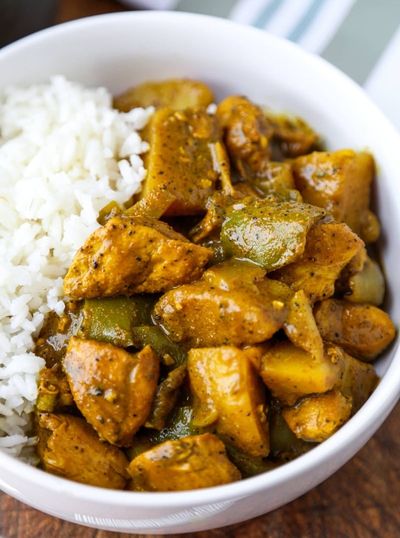
Jamaican curry sits in its own corner of the global curry map: heavier on turmeric and allspice than Indian Madras, lighter on cumin, and built on a technique called "burning the curry" that gives the dish its character. The technique is exactly what it sounds like, dry curry powder hits hot oil and is stirred for 30 seconds until it darkens from yellow to deep gold and smells like toasted spice. That move concentrates the flavours and removes any raw edge. The finished stew is bright yellow stained slightly orange, savoury and aromatic rather than searingly hot, with thyme and a whole pierced Scotch bonnet scenting the gravy without flooring it. Smell: bloomed curry powder, allspice, browned chicken fat. Not difficult, but requires confidence in the 30-second bloom (under-do it and the dish is flat; over-do it and you have to start over). A Sunday-dinner staple across Jamaica and the diaspora, served over white rice with the gravy spooned generously over.
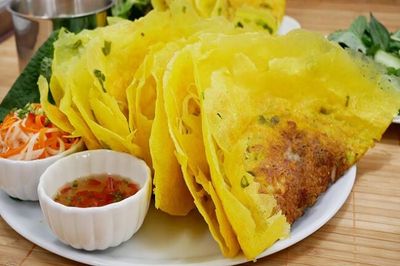
Rice flour, turmeric, coconut milk and water make a thin yellow batter. Filling vegetables, mushrooms, sliced onion, tofu, are sautéed in a hot pan; the batter is poured over to form a thin pancake; beansprouts pile in last; the lot is folded in half and slides out crisp. Pieces are wrapped in lettuce with herbs and dipped in nuoc cham.
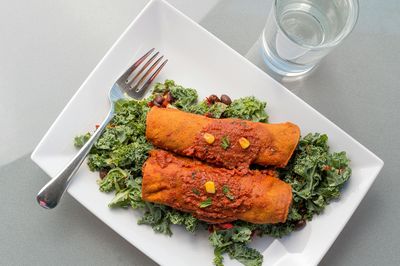
This Tex-Mex-inspired beef enchilada recipe is richly seasoned, easy to make, and always such a crowd favourite. Tender flour tortillas are filled with seasoned ground beef and black beans, rolled, and smothered in homemade red enchilada sauce, then topped with melted cheese and fresh coriander for a comforting, flavourful dish.
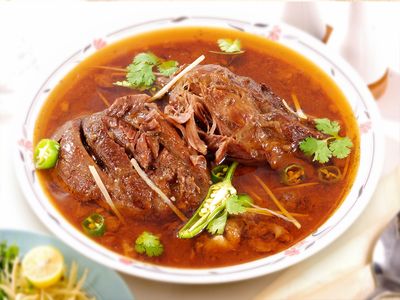
Beef shank with bones browns in ghee; onions cook to deep golden; whole spices bloom. Stock simmers everything for 3-4 hours until the meat is fork-tender. A wheat-flour slurry whisks in to thicken to a glossy, slightly silky gravy. Tarka of fried garlic and Kashmiri chilli pours over hot. Served with naan and a heavy plate of garnishes.
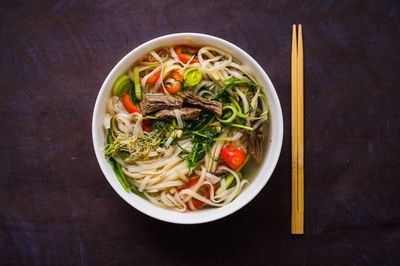
This dish works best with raw beef that has been sliced paper thin, as it cooks in seconds when placed in the hot broth.
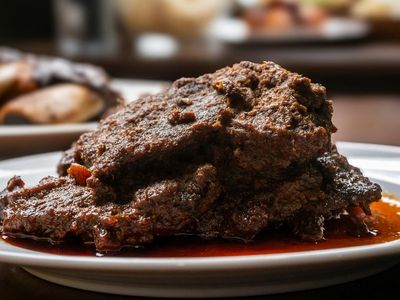
Rendang is a spicy meat dish which originated from the Minangkabau ethnic group of Indonesia, and is now commonly served across the country. One of the characteristic foods of Minangkabau culture, it is served at ceremonial occasions and to honour guests. This rich, aromatic curry features beef slowly simmered in coconut milk and spices until deeply flavoured.
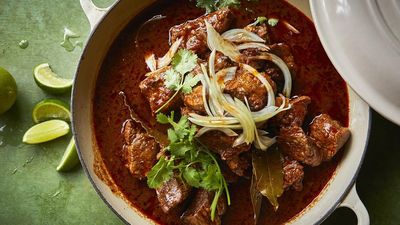
Birria is a Mexican braise of long, patient ambition. Originally a goat or lamb dish from Jalisco, it has long since adopted beef in much of Mexico and almost entirely in the popular taco version. The flavour comes from a layered chile base: guajillo for fruit and colour, ancho for raisin sweetness, pasilla for earthy depth, and a handful of arbol for a sharper heat. These are simmered with onion, garlic, cinnamon and peppercorns, blended smooth with chipotles in adobo and fire-roasted tomato, then poured over seared chuck and short rib for a long oven braise. Three hours later the meat is meltingly tender, sitting in a rust-red consomme that is the whole point: ladled over the shredded beef in a bowl, scattered with raw onion, cilantro and lime, or used to dip crisp taco shells for the now-iconic quesabirria. The recipe takes time but very little technique; almost everything happens unattended in the oven. Plan ahead and make it a day in advance so the flavours settle and the fat lifts cleanly off the top before you reheat.
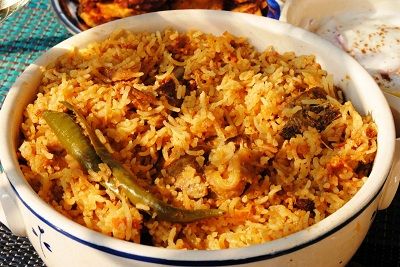
Biryani represents the height of Indian culinary technique: multiple components prepared separately with precision, then assembled in layers where flavors permeate through steam cooking. This isn't a one-step rice dish; rather, it's an architectural construction where yogurt-marinated lamb develops tenderization and flavor, then cooks slowly with warm spices and tomato, while basmati rice is independently flavored with saffron infusion and whole spices. Upon assembly, the two elements marry through steam, creating a unified dish where lamb and rice are inseparable in flavor. Traditionally cooked during festivals and royal celebrations, biryani requires patience and multiple steps but rewards with sophistication.
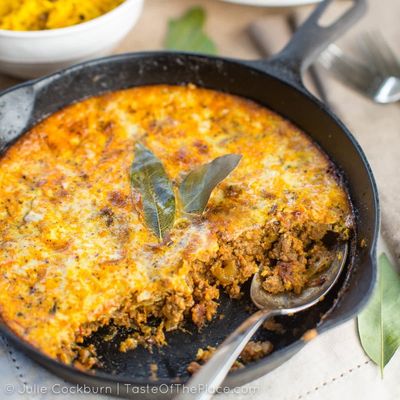
Bread is soaked in milk; mince is browned with onions; curry powder, turmeric and Cape Malay spices bloom. Apricot jam, mango chutney, vinegar and lemon balance the spice with sweet-sour notes. Raisins, toasted almonds and the soaked bread are folded through. The mixture is pressed into a baking dish; eggs are whisked with the leftover milk and poured over; bay leaves are stuck into the surface; the lot is baked until the topping is just-set with a faint wobble.
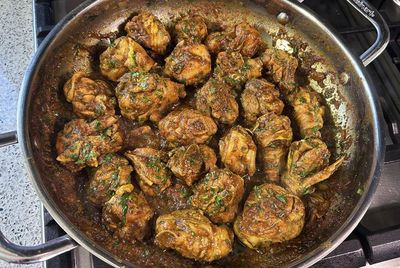
A dry curry rather than a saucy one, "bunjay" is Trinidadian patois for "fry-down", the technique of cooking meat in its own juices until the gravy completely disappears and the spices coat the surface of the meat in a sticky, glaze-like crust. The flavour is concentrated rather than diluted; nothing's been thinned with water or coconut milk, so what you taste is bone-in chicken, rendered chicken fat, and toasted spice. The spice mix is the East Indian Trinidadian signature: turmeric for colour and earth, roasted geera (toasted cumin, ground) for nuttiness, anchar masala for tang, regular curry powder for breadth. The pan oil splits and separates around the chicken at the end, which is the visual cue you're looking for. Smell when the curry powder hits hot oil is deeply aromatic, almost incense-like. Not difficult but it requires attention during the cook-down phase; if you walk away the curry burns onto the bottom of the pan. A Trinidadian household staple, eaten across the country with white rice and dhal, and a clean example of how Indian indentured labourers' descendants in the Caribbean evolved a distinct curry tradition over 150 years.
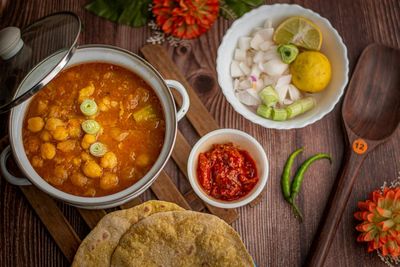
Buss-up-shut, also called paratha roti, is the flaky-layered Trinidadian roti that takes its English name from "burst-up shirt", a buss-up-shut roti is one that has been beaten the moment it comes off the tawa until it explodes into soft, irregular shreds. It is descended from the South Asian paratha, brought by indentured Indian labourers in the 19th century and rebuilt in Trinidad with a softer, more elastic dough and a finishing technique that is uniquely local. The recipe here covers the roti itself, which is the demanding part, with a short Trini channa-aloo curry on the side so you have a proper plate to scoop with. The layering technique (rolling, brushing with oil, coiling, resting, rolling out) is what creates the laminated, flaky structure. The beating step uses two wooden spatulas (called "klappers" in some roti shops) and looks dramatic but is straightforward. Difficulty is moderate; the dough is forgiving but the rolling-and-coiling step needs a little practice. Once you have a feel for it, you will make this every fortnight.
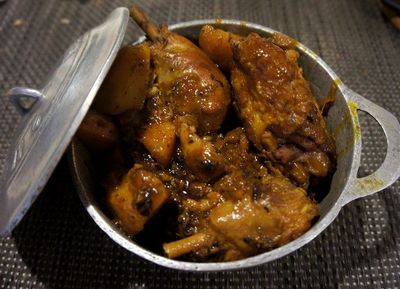
Mauritian cuisine is a layered conversation between Indian, African, Chinese and French traditions, and cari poulet is one of its clearest expressions. The Creole community took the Indian template of a wet curry and rebuilt it with local fresh herbs, particularly thyme and curry leaves grown in the yard, plus tomato, and a masala that is gentler and more aromatic than its mainland Indian cousins. Chicken on the bone is browned for fond, then potatoes are added and the whole pot is simmered in a curry-leaf and tomato gravy until the meat is falling off the bone and the potatoes are creamy on the outside but holding shape. The colour leans red-brown from paprika and turmeric rather than the bright yellow of a Punjabi-style curry. Heat is moderate, intended to complement rice and a chilli-based satini, not overwhelm them. For a home cook the difficulty is low to moderate; the only real demand is patience while the masala blooms in the oil at the start, which is what gives the dish its depth. Serve over plain steamed rice with a coriander satini and a spoon of green chilli pickle, the classic Mauritian Sunday plate.
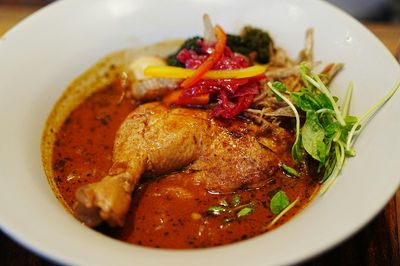
In many Caribbean stew dishes there is an initial step of burning sugar in oil which is used to brown the meat in. This adds a very unique sweetness to the stews from this region and this sweetness paired with the unmistakable flavour (and heat) from the wonderful scotch bonnet chilli is simply astounding. This curry uses curry powder for a fragrant and delicious result that captures the essence of Caribbean cooking.
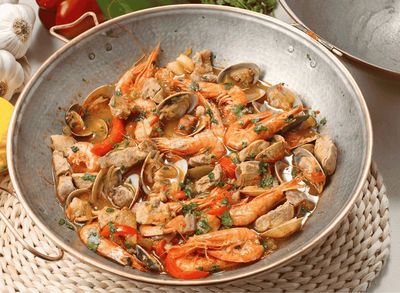
A cataplana is a hinged copper clamshell pan, and the seafood stew named after it is one of those dishes where the cookware does the work. You build a base of onions, peppers, sliced chouriço, smoked paprika, tomato and white wine in the bottom of the cataplana, then layer clams, mussels, prawns and chunks of firm white fish on top, clamp the lid shut, and steam it all for less than ten minutes. The lid lifts at the table to release a cloud of paprika-and-wine-scented steam, which is the entire point of the dish. If you do not have a cataplana, any wide pan with a tight lid does the same job. Coriander and lemon at the end, crusty bread for the broth, and vinho verde for everything else.