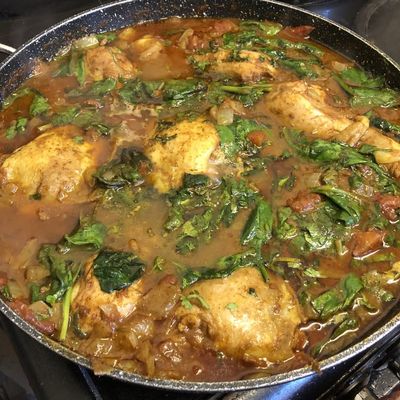
Agra Ginger Chicken
A light, cleansing chicken curry from Agra with fresh ginger, warm spices and bright tomato notes. This vibrant dish is designed to be accessible and fresh, with spinach and lime lifting the finished curry.
Indian
Tap a chip to add another filter, or use Clear all below.
Tap any item to find recipes that use it.
A light, cleansing chicken curry from Agra with fresh ginger, warm spices and bright tomato notes. This vibrant dish is designed to be accessible and fresh, with spinach and lime lifting the finished curry.
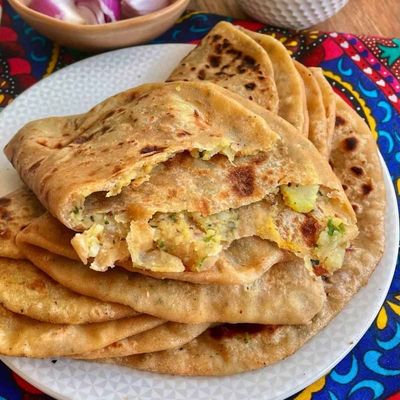
Whole-wheat (atta) flour is mixed with salt and just enough warm water to make a soft dough; rests for 20 minutes. Potatoes boil whole, peel hot, mash with cumin, garam masala, ginger, green chilli, amchoor and coriander. The dough divides into balls. Each ball flattens into a small disc; a heaped spoon of potato sits in the middle; the dough pleats up around the filling and pinches closed; flattens again carefully; rolls out gently to a 20 cm disc. Each cooks on a hot tawa or non-stick pan with ghee, 2 minutes per side, until crispy and gold.
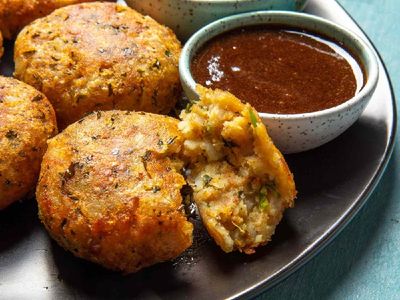
Floury potatoes boil in their skins, then mash dry. A spice paste of green chilli, ginger and roasted cumin folds in with chopped coriander, mint and amchur for sourness. Cornflour and gram flour bind without making the tikki gummy. Patties form, chill to firm up, then shallow-fry in shallow oil on a flat pan for 4-5 minutes per side until deep gold and crisp with a soft interior. The chilled rest is what stops them falling apart.
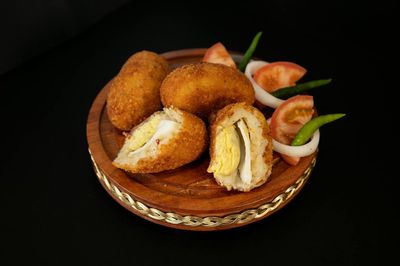
Alur chop (alu meaning potato, chop being a Bengali loan-word for a fried cutlet, inherited from the British "chop") is the workhorse of Bengali street snacks: every tea stall, every train platform, every late-afternoon adda has a stack of these warming under a glass cover. The construction is two layers. The inner mash is heavily seasoned: boiled potato folded through fried onion, ginger, green chilli, roasted cumin and a measured punch of Bengali bhaja moshla (a dry-roasted spice blend of cumin, coriander and dried chilli). Some versions add a few peanuts or roasted chana dal for crunch; in Kolkata the mash often includes a slick of mustard oil for fragrance. The outer shell is a thin chickpea-flour batter, the same family as beguni and piyaju, fried hot so it sets into a thin crisp casing rather than a heavy crust. The trick is contrast: a shell crisp enough to crackle, a centre soft and yielding and a touch wet from the onion. They are sold individually wrapped in newspaper for a few rupees and eaten standing up, often with muri puffed rice and a small dollop of kasundi (Bengali fermented mustard sauce) on the side. A monsoon and winter snack above all, when the cold air makes the hot oil and the inside-warm chop feel particularly right.
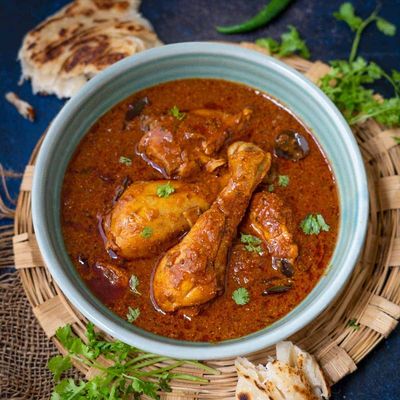
Chicken thighs are marinated briefly with turmeric, ginger-garlic paste, yogurt and a pinch of red chilli. A dry-roast of poppy seeds, sesame seeds, coconut, fennel, coriander and dried red chillies is ground with a splash of water into a coarse paste. The base is built with shallots, curry leaves and tomato; the chicken is browned in stages; and the masala paste is folded in for the long, gentle simmer. Tamarind and a curry-leaf temper finish.
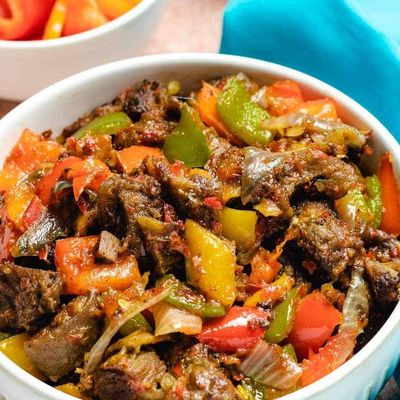
Goat meat (bone-in pieces, ideally) simmers in water with onion, garlic, bay, salt and bouillon till tender (45 min). Lifts out; pats dry; grills over high heat (or under a hot grill / on a griddle pan) till charred (8-10 min). Pepper base: scotch bonnet, red pepper, onion, garlic blitz to paste; sautés in oil with curry powder, thyme, ginger till fragrant. Charred meat tosses in the pepper paste; cooks for 5 minutes more; tops with fresh chopped onion. Eats hot.
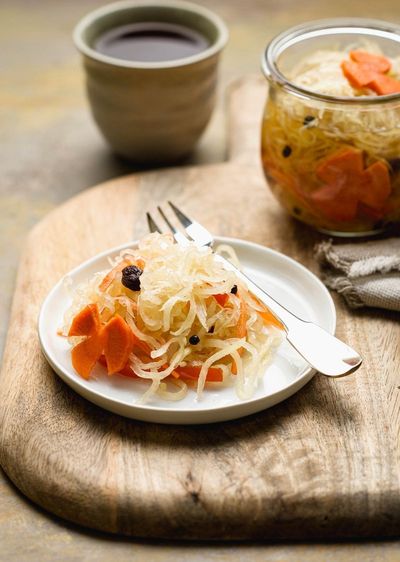
Green papaya is peeled, seeded and shredded on a coarse grater. Carrot, ginger, garlic, red pepper, onion and raisins are all prepared in matching shreds. The vegetables are salted and rested for 1 hour to draw water; rinsed and squeezed dry. A syrup of cane vinegar, sugar and whole peppercorns simmers for 5 minutes. Hot syrup is poured over the vegetables in a sterilised jar. The jar is sealed, cooled and refrigerated overnight before eating. Improves over the following week.
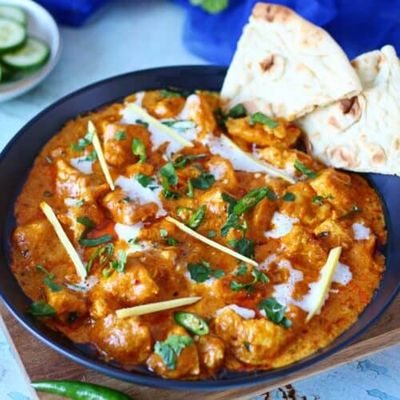
A rich, ghee-laden chicken handi cooked in the traditional style, featuring tender chicken thighs simmered in a spiced tomato-onion base with yoghurt and cream. Named for the handi pot, this dish varies by chef but delivers deep, authentic flavors.
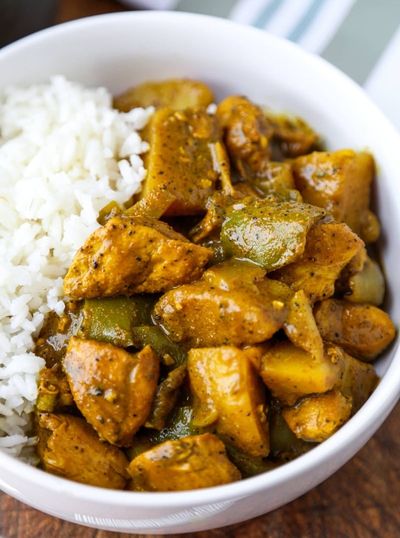
Jamaican curry sits in its own corner of the global curry map: heavier on turmeric and allspice than Indian Madras, lighter on cumin, and built on a technique called "burning the curry" that gives the dish its character. The technique is exactly what it sounds like, dry curry powder hits hot oil and is stirred for 30 seconds until it darkens from yellow to deep gold and smells like toasted spice. That move concentrates the flavours and removes any raw edge. The finished stew is bright yellow stained slightly orange, savoury and aromatic rather than searingly hot, with thyme and a whole pierced Scotch bonnet scenting the gravy without flooring it. Smell: bloomed curry powder, allspice, browned chicken fat. Not difficult, but requires confidence in the 30-second bloom (under-do it and the dish is flat; over-do it and you have to start over). A Sunday-dinner staple across Jamaica and the diaspora, served over white rice with the gravy spooned generously over.
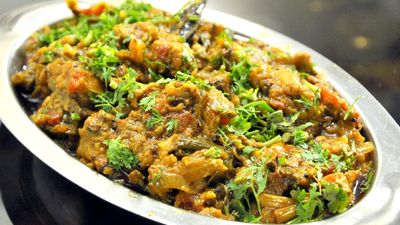
A whole aubergine is charred directly over a gas flame until the skin is blackened and the flesh inside is soft. The charred skin is peeled off and the flesh roughly mashed. A masala of onion, garlic, ginger, green chilli and tomato is cooked down to a thick base, and the smoky aubergine flesh is folded through with a finishing touch of garam masala and coriander. Vegetable-side or vegetarian main; the smoke is what makes it.
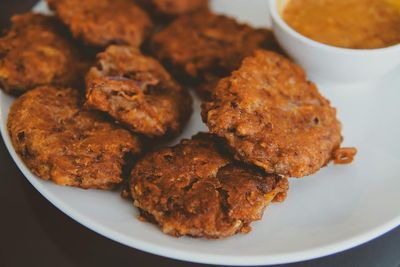
The Burmese yellow split-pea fritter, sold by street vendors in hot oil-spattered cones of newspaper across Yangon's evening markets. You soak yellow split peas overnight until they're softened but not mushy, then blitz to a coarse sandy paste with shallot, garlic, ginger, turmeric and coriander. No flour, no binder; the natural starch in the peas holds the fritters together as they fry. Tablespoonfuls drop into hot oil and fry until they're deep gold and craggy at the edges. Eaten hot from the cone with a sour-sweet tamarind dipping sauce, a wedge of lime, and whatever you can carry while you walk on through the evening crowds.
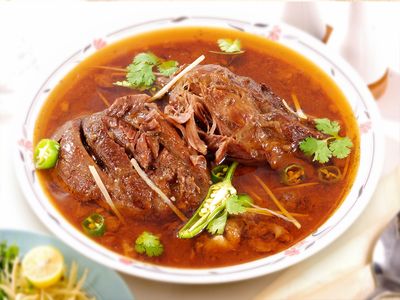
Beef shank with bones browns in ghee; onions cook to deep golden; whole spices bloom. Stock simmers everything for 3-4 hours until the meat is fork-tender. A wheat-flour slurry whisks in to thicken to a glossy, slightly silky gravy. Tarka of fried garlic and Kashmiri chilli pours over hot. Served with naan and a heavy plate of garnishes.
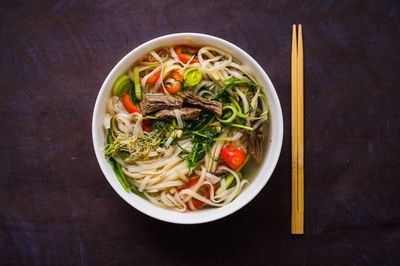
This dish works best with raw beef that has been sliced paper thin, as it cooks in seconds when placed in the hot broth.
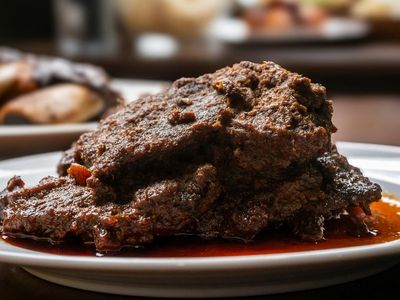
Rendang is a spicy meat dish which originated from the Minangkabau ethnic group of Indonesia, and is now commonly served across the country. One of the characteristic foods of Minangkabau culture, it is served at ceremonial occasions and to honour guests. This rich, aromatic curry features beef slowly simmered in coconut milk and spices until deeply flavoured.
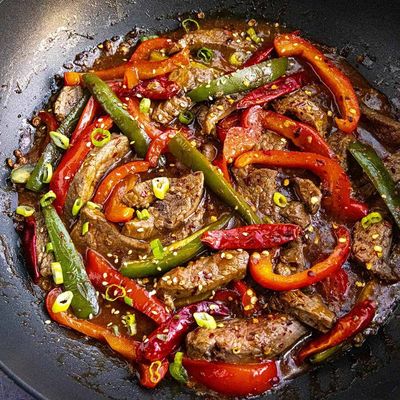
A Burmese curry from the country's Indian-origin community, sitting somewhere between a Madras and a Burmese ohn-no in spice profile. You marinate chunks of beef chuck or shin in turmeric, fish sauce and salt while you fry onions in oil until they're deep brown - that long onion fry is the foundation. The beef browns in the same oil, then ginger-garlic paste, paprika and chilli powder go in, then tomato and water turn it into a stew. Two hours of slow simmer until the meat falls apart at a fork. The signature finish is the see byan, a deep red-orange oil slick that rises to the top of the curry as it reduces, which is what the dish is named for. Eaten with rice or paratha, and a small bowl of pickled vegetable on the side.
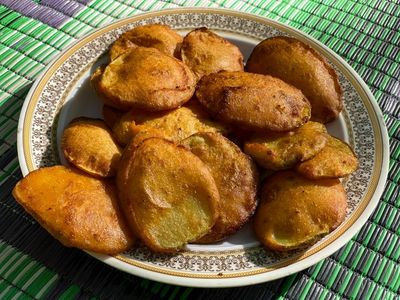
Beguni (from begun, the Bengali word for brinjal/eggplant) is the simplest of the great Bengali pakoras: long thin slices of aubergine, dipped in seasoned chickpea-flour batter and deep-fried. Done well, the contrast is everything, a shatteringly crisp shell with the lightly bitter, custard-soft eggplant inside. It is the defining iftar fritter across Bangladesh, where it appears every evening during Ramadan alongside piyaju (onion fritters) and chickpea ghugni; in West Bengal it is the tea-stall companion of muri and a monsoon-day comfort food. The technique is short on ingredients but particular: the eggplant must be salted first to draw out bitter water and prevent the slice from absorbing oil; the batter must be just thick enough to coat the back of a spoon, with the texture of double cream; and the oil must be hot enough (around 180 C) that the batter sets instantly into a crisp shell. The traditional fat is mustard oil heated until just smoking, then cooled briefly to take the raw edge off; this gives beguni its characteristic mustardy back-note. Nigella seeds (kalonji) in the batter are non-negotiable in Bangladesh, they pop slightly in the hot oil and give the fritter its distinctive aroma. Eat immediately, with a few slivers of raw onion, a green chilli and a wedge of lime.