In season

May produce

Tap any item to find recipes that use it.

Dal Makhani

Dal Makhani

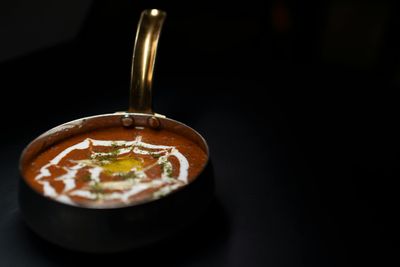
Whole black urad lentils and a small handful of red kidney beans are soaked overnight, then pressure-cooked or simmered until completely tender. A tomato-and-spice masala is built separately with onion, garlic, ginger and a careful hand with the spices. The lentils are folded into the masala and simmered, low and slow, for two hours, while butter and cream are stirred through in the final stage. The lentils break down into a glossy, almost-velvet finish.

Indian 3 hours 15 minutes Serves6
Diri Ak Djon Djon

Diri Ak Djon Djon

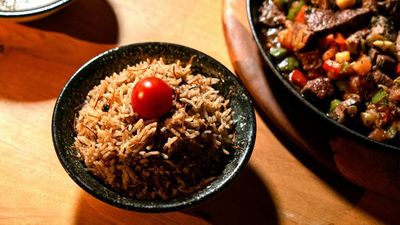
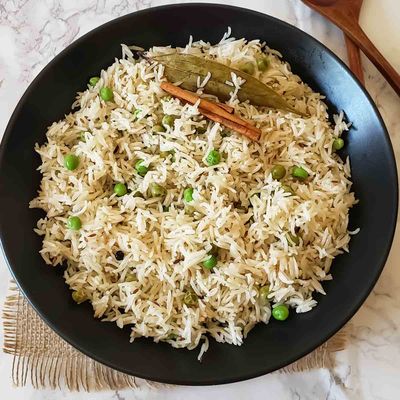
Dried djon djon mushrooms are soaked in hot water for 30 minutes; the inky black soaking liquid is strained and reserved (the mushrooms themselves are mostly discarded or used minimally). Aromatics, shallot, garlic, thyme, parsley, Scotch bonnet, épis, are sweated in oil, then green peas and lima beans are added, then long-grain rice is stirred in to coat. The djon djon broth is poured over the rice; the pot is covered and steamed gently until the rice is tender and slate-black. Garnished with parsley and served as the centrepiece of any meal it appears in.

Haitian 1 hour 30 minutes Serves6
Jasha Maru

Jasha Maru

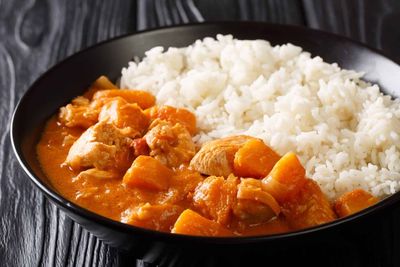
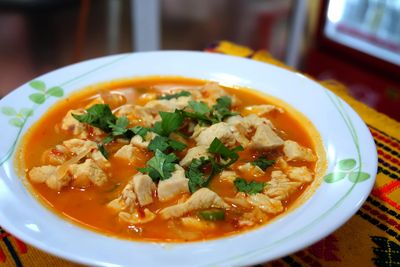
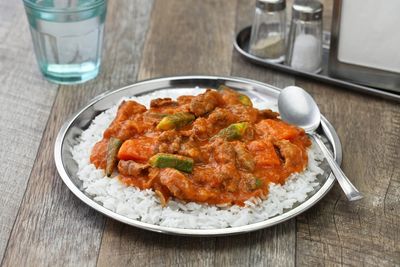
The Bhutanese weeknight chicken stew, the dish a Thimphu cook turns to after a long day. You joint a whole bone-in chicken and stew it with onion, tomato, plenty of fresh garlic and ginger, three or four green chillies, and butter or vegetable oil with a splash of water. The cook is fast: a brief sear to colour the meat, a simmer with the tomato until the chicken is cooked through and falling off the bone, and a finish with chopped coriander and spring onion just before serving. What you get back is a brothy, fresh, gently spicy chicken dish that sits somewhere between Indian and East Asian cookery, which is exactly where Bhutan sits geographically. Eaten with red rice, perhaps a small bowl of ema datshi on the side for whoever wants to push the heat further.

Bhutanese 50 minutes Serves4
Kabsa

Kabsa

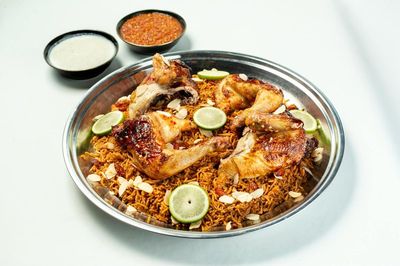
Saudi Arabia's national dish, the one platter you'll meet at almost every gathering from family lunch through wedding banquet. You brown chicken pieces or lamb shoulder hard in a heavy pot, then build a base of onion, garlic and ginger softened in the same fat, with tomato and a spoonful of baharat (or a dedicated kabsa spice mix) blooming until the kitchen fills with cardamom and cinnamon. The protein simmers in tomato and stock until it's tender and pulling away from the bone, then long-grain rice goes in to cook absorption-style in the same liquid, drinking up every layer of flavour the broth carries. You finish with almonds toasted in butter, raisins plumped briefly, and a fresh salsa of tomato, onion, chilli and parsley spooned on the side to cut the richness. Eaten communally from the centre platter, with hands or a long spoon.

Arabian 1 hour 35 minutes Serves6
Lahori Chana Pulao

Lahori Chana Pulao

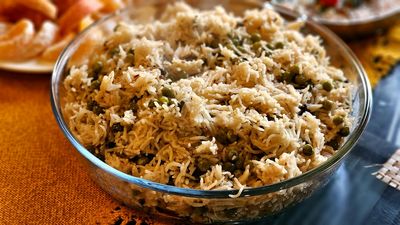
Whole chickpeas are soaked overnight and simmered until tender (or pressure-cooked). The chickpea cooking liquor is measured and reserved as part of the rice cooking liquid. A fried-onion base is built in ghee with whole spices, ginger-garlic paste and ground spices, and the cooked chickpeas are folded in. Soaked basmati is toasted in the base, then the measured cooking liquor goes in for the steam. A scatter of fried onion and coriander finishes.

Rice 2 hours 15 minutes Serves4-6
Rajma

Rajma

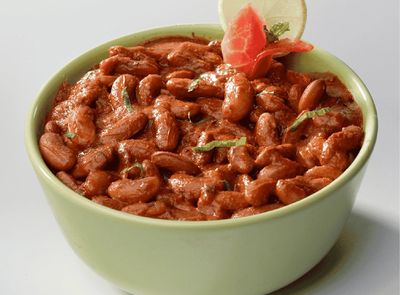
Dried kidney beans are soaked overnight and pressure-cooked (or simmered for 2 hours) until completely tender. A separate pan builds a base of onion, ginger and garlic browned with whole spices, then a tomato puree is added and cooked down with the ground spices until the oil separates. The cooked beans and a portion of their cooking liquor are folded in and simmered for 30 minutes to thicken; a few are mashed against the pan to thicken the sauce. Finished with garam masala and butter.

Indian 1 hour 45 minutes Serves4-6
Samgyeopsal

Samgyeopsal

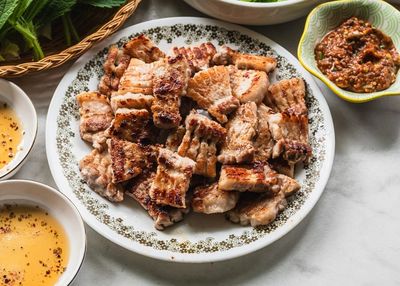
Samgyeopsal, literally "three-layered flesh" after the visible stripes of meat and fat, is the most beloved grill-at-the-table meal in South Korea. It is not a marinade-heavy preparation: the entire point is the quality of the pork belly itself, sliced thick and grilled fresh over charcoal or a hot griddle while everyone sits around the table with side dishes, garlic, and a pile of lettuce leaves. The eating ritual is as important as the cooking. You take a leaf of lettuce or sesame perilla, lay on a piece of grilled belly fresh off the heat, add a smear of ssamjang (a thick, savoury paste of doenjang fermented soybean paste and gochujang chilli paste), a sliver of raw garlic grilled briefly in the pork fat, maybe a strand of spring onion salad, then wrap the whole thing tight, pop it into your mouth in one bite, and chase it with a shot of soju. Korean restaurants do not slice the belly for you at the table on purpose: the host or eldest cuts it with kitchen scissors as it cooks, in messy diagonals, which is part of the relaxed, social character of the meal. Difficulty is low; the cook is essentially supervision and a pair of tongs. The skill is in the side dishes (banchan) and the pacing. Sourcing matters: ask for skin-off pork belly cut between 1 ½ and 2 cm thick. Thin belly burns; thicker belly stays juicy.
Korean 35 minutes Serves4