Samgyeopsal
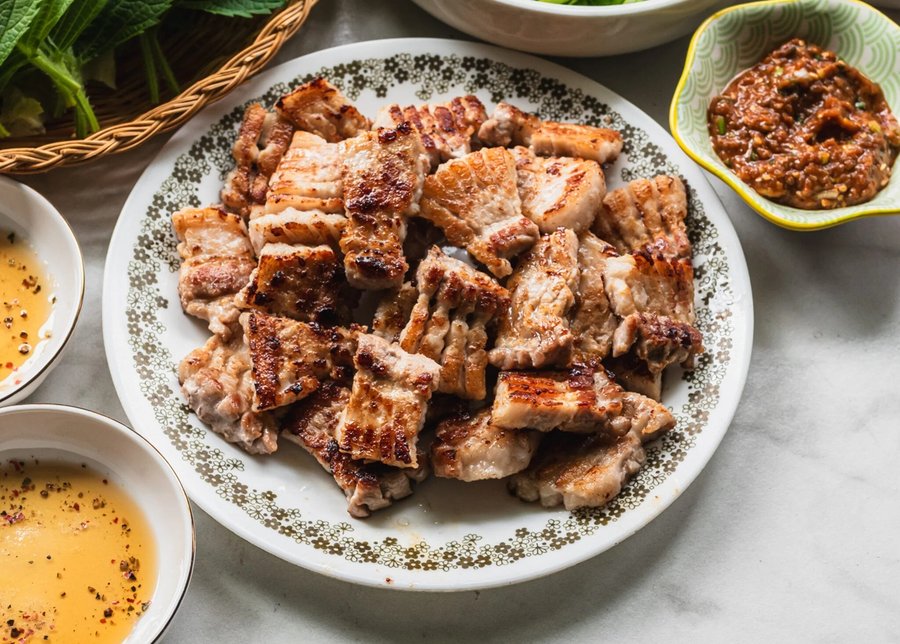
Thick slabs of pork belly sizzling on a tabletop grill, the fat rendering into glassy puddles, edges curling and turning amber. The air smells of sesame oil, raw garlic and toasted perilla, and everyone reaches in with chopsticks for the next crackling piece.
Overview
Samgyeopsal, literally "three-layered flesh" after the visible stripes of meat and fat, is the most beloved grill-at-the-table meal in South Korea. It is not a marinade-heavy preparation: the entire point is the quality of the pork belly itself, sliced thick and grilled fresh over charcoal or a hot griddle while everyone sits around the table with side dishes, garlic, and a pile of lettuce leaves. The eating ritual is as important as the cooking. You take a leaf of lettuce or sesame perilla, lay on a piece of grilled belly fresh off the heat, add a smear of ssamjang (a thick, savoury paste of doenjang fermented soybean paste and gochujang chilli paste), a sliver of raw garlic grilled briefly in the pork fat, maybe a strand of spring onion salad, then wrap the whole thing tight, pop it into your mouth in one bite, and chase it with a shot of soju. Korean restaurants do not slice the belly for you at the table on purpose: the host or eldest cuts it with kitchen scissors as it cooks, in messy diagonals, which is part of the relaxed, social character of the meal. Difficulty is low; the cook is essentially supervision and a pair of tongs. The skill is in the side dishes (banchan) and the pacing. Sourcing matters: ask for skin-off pork belly cut between 1 ½ and 2 cm thick. Thin belly burns; thicker belly stays juicy.
Ingredients
Pork
- 800 g skinless pork belly, cut into slabs 1 ½ to 2 cm thick
Ssamjang
- 2 tbsp doenjang (Korean fermented soybean paste)
- 1 tbsp gochujang (Korean chilli paste)
- 1 tsp sesame oil
- 1 tsp toasted sesame seeds
- 1 garlic clove, grated
- 1 spring onion, finely chopped
- 1 tsp honey (or rice syrup)
Spring onion salad (pa muchim)
- 4 spring onions, julienned lengthwise and soaked in iced water
- 1 tbsp gochugaru (Korean chilli flakes)
- 1 tsp rice vinegar
- 1 tsp soy sauce
- 1 tsp sesame oil
- ½ tsp sugar
- 1 tsp toasted sesame seeds
For the table
- 1 head of soft butter lettuce, leaves separated and washed
- 12 sesame perilla leaves (kkaennip), if available
- 1 whole bulb garlic, cloves thinly sliced
- 2 green chillies, sliced
- Coarse salt mixed with a few twists of black pepper, in a small dish
- 2 tbsp toasted sesame oil mixed with a pinch of salt, for dipping
- Kimchi (Cabbage)
- Steamed white rice
Method
Stage 1 - Ssamjang
- Stir all the ssamjang ingredients together until smooth and glossy. Set out in a small bowl.
Stage 2 - Spring onion salad
- Drain the soaked spring onions thoroughly and pat dry; they should curl.
- Toss with gochugaru, vinegar, soy, sesame oil, sugar and sesame seeds just before serving.
Stage 3 - Set the table
- Wash lettuce and perilla leaves and dry them well. Arrange on a platter.
- Set out the sliced garlic, chillies, salt-pepper dish, sesame oil dip, ssamjang, spring onion salad, kimchi and rice.
- Heat a tabletop grill or heavy cast-iron pan to high.
Stage 4 - Grill
- Lay the pork belly slabs onto the dry hot grill, fat side down first if possible. Do not crowd.
- Let them sizzle undisturbed for 3 to 4 minutes until the underside is deep golden and the fat is glassy.
- Flip with tongs. Cook another 3 to 4 minutes.
- Tip in a few slices of garlic and chilli into the rendered fat to crisp gently alongside the meat.
- Use kitchen scissors to cut each slab into bite-sized pieces directly on the grill.
Stage 5 - Eat
- Take a lettuce leaf in your palm, optionally layer a perilla leaf on top.
- Add a piece of pork, a dab of ssamjang, a slice of grilled garlic, a few strands of spring onion salad.
- Wrap into a tight parcel and eat in one bite. Repeat. Drink soju.
Notes
- Thickness is everything: under 1 ½ cm and the belly turns to crackling before the inside has rendered. A butcher's belly cut to order is ideal.
- Dry pan: no oil needed. The pork's own fat is the cooking medium and a key part of the flavour.
- Sesame oil dip: the small dish of sesame oil with salt is non-negotiable in Korean restaurants. Dip the cooked pork into it before wrapping.
- Perilla leaves: sesame perilla (kkaennip) tastes nothing like Japanese shiso despite the similar look. If you cannot find it, just use lettuce.
- One bite: Korean ssam etiquette is to make the wrap small enough to eat in a single mouthful. Anything bigger is considered greedy.
Storage
- Best eaten as it comes off the grill. Leftover cooked belly keeps 2 days; slice cold into kimchi fried rice. Ssamjang keeps 2 weeks refrigerated.
Recipes mentioned here
Fried Rice
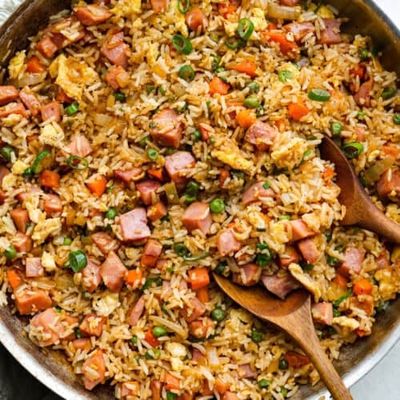
Fried rice is fundamentally about texture contrast: individual grains coated entirely with hot oil, remaining crispy and separate, never clumped or greasy. Success requires three critical elements: Cold rice (overnight-refrigerated best), sufficiently hot oil (nearly smoking), and a light hand with seasonings. The beaten egg is never pre-cooked; instead, it's added raw to the hot rice and oil where residual heat cooks it silkily, coating the grains. Bean sprouts provide fresh textural contrast. This is not comfort food; it's refined technique applied to simple ingredients.
Kimchi (Cabbage)
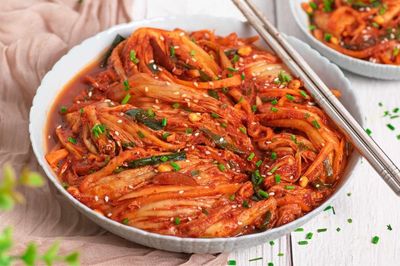
Napa cabbage quarters and salts in heavy salt water 4 hours; rinses well; drains. A sweet rice-flour porridge cooks briefly and cools. Aromatic paste: garlic, ginger, fish sauce, onion, apple/pear, gochugaru, sugar, pulses smooth, mixes with porridge. Daikon and carrot julienne fine; spring onion slices. Everything tosses with the paste. Cabbage stuffs leaf-by-leaf with the spiced mix. Packs tight in a jar. Ferments at room temperature 1-3 days, then refrigerates.
More like this
Buldak
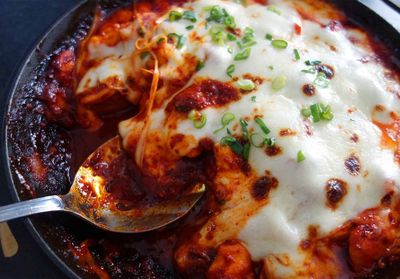
Boneless chicken thighs cube small; marinate for 1 hour in gochujang, gochugaru, soy, garlic, ginger, sugar and sesame oil. Pan-grill in a wide cast-iron skillet over medium-high until the sauce caramelises and the chicken is just cooked. Off heat, generous mozzarella scatters across the top; cover briefly or finish under a grill to melt. Top with sesame seeds and spring onions.
Cantonese BBQ Chicken
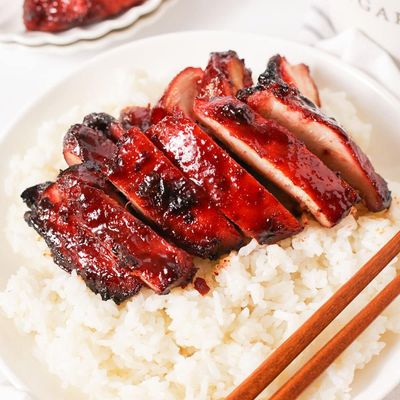
This is summer-BBQ adaptation of the lacquered red roast meats that hang in the windows of Cantonese siu mei shops. The marinade borrows from char siu (hoisin, soy, Shaoxing wine, five-spice, fermented bean curd, garlic, ginger) but pulls back on the sugar slightly because chicken does not need as much sweetness as pork shoulder. Bone-in skin-on thighs are the right cut: they stay juicy on the grill, the skin renders down and crisps, and the bones give the meat shape. A two-stage glaze does the rest. The thighs cook over indirect heat first to render the fat and set the meat, then move directly over the coals for the last few minutes while a honey-maltose mixture is brushed on repeatedly. Every brush of glaze caramelises, blackens slightly at the edges, then gets brushed again. The result is sticky-shiny with a smell that is half five-spice, half woodsmoke. Difficulty is low if you control your heat. A two-zone fire (one side coals piled high, the other side empty) is the only real requirement; on a gas grill, two burners on full and one off does the same job. Serve sliced over plain rice with sliced cucumber and a spoon of chilli oil, or stuffed into bao with hoisin and spring onion.
Chicken Inasal
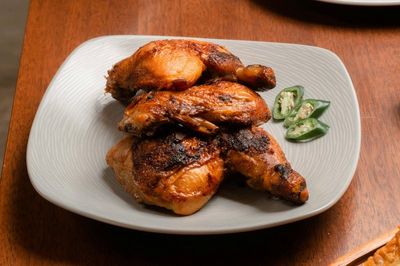
Chicken inasal is the pride of Bacolod City on Negros Occidental, where streetside grill houses serve nothing else: trays of chicken parts skewered on bamboo, smoking over long coal pits, with the cook brushing on bright orange annatto oil every few turns. The marinade is what marks it as Filipino: calamansi (a small, sour citrus halfway between lime and tangerine), cane vinegar, ginger, lemongrass, garlic and a generous slug of black pepper. The annatto oil (atsuete) is just neutral oil warmed gently with annatto seeds until it stains a vivid orange-red; this is the dish's signature look and a mild peppery flavour. Basting starts halfway through cooking so the colour goes onto skin that's already partly cooked, and continues right up to the moment the chicken leaves the grill. Difficulty for a home cook is low; the only special ingredients are calamansi (lime juice plus a touch of orange juice substitutes well) and annatto seeds (sometimes sold as achiote, found in any Filipino or Latin American shop). The flavour profile is sharp, herbal, slightly smoky, with a peppery edge from black pepper rather than chilli, and ribbon-thin lemongrass perfume running through everything. Service is non-negotiable: a heap of garlic rice (sinangag), a saucer of toyomansi (soy-calamansi-vinegar dipping sauce with sliced chillies), and the cook's pot of warm annatto oil for the table.
Crispy Honey Garlic Chicken
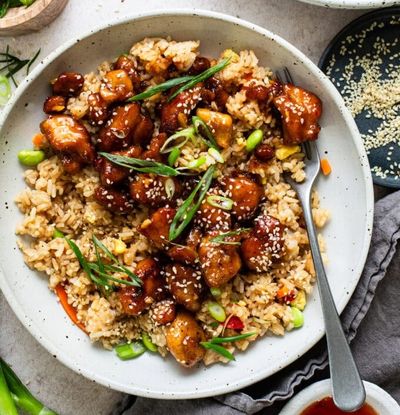
An Asian-American takeout standard reimagined for the home kitchen, with one specific upgrade: 10 cloves of garlic, chopped rather than minced, so the pieces stay visible and bite back. The flavour is the canonical sweet-salty-spicy balance of American Chinese cookery, honey for sweetness, soy for salt and umami, sweet chilli sauce (Mae Ploy or similar Thai bottled brand) for vinegared chilli warmth, garlic for sharpness across the back. Crisp comes from a cornstarch dust on the chicken, which gives a more even, lacier crust than flour does and stays crisp longer once the sauce hits it. The chicken thighs themselves stay juicy because they're cubed, not pounded; the small pieces cook fast and the seasoning penetrates. Smell when the chicken hits the sauce is honey-and-soy hitting hot oil, which is one of the more universally appealing kitchen smells. Easy and fast, active cooking under 20 minutes once the marinade has rested. The dish has no claim to traditional Chinese cookery; it's the product of decades of evolution in American Chinese restaurants and the home-cook adaptations that followed.