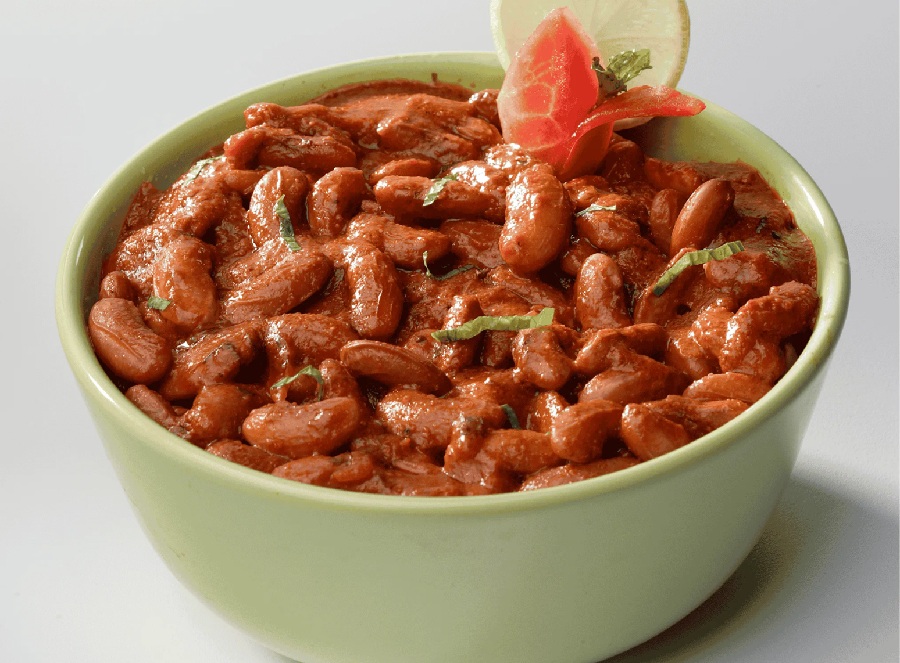
Rajma
Punjabi red kidney bean curry, simmered in a deeply spiced tomato-onion gravy. Served the traditional way: rajma-chawal, with steamed basmati rice.
Overview
Dried kidney beans are soaked overnight and pressure-cooked (or simmered for 2 hours) until completely tender. A separate pan builds a base of onion, ginger and garlic browned with whole spices, then a tomato puree is added and cooked down with the ground spices until the oil separates. The cooked beans and a portion of their cooking liquor are folded in and simmered for 30 minutes to thicken; a few are mashed against the pan to thicken the sauce. Finished with garam masala and butter.
Ingredients
Beans
- 300 g dried red kidney beans (soaked overnight in plenty of cold water)
- 1.2 litres water (for cooking)
- 1 teaspoon salt
- 1 bay leaf
Whole spices
- 3 tablespoons ghee (or oil + butter)
- 1 teaspoon cumin seeds
- 1 cinnamon stick (small)
- 2 black cardamom pods (or 3 green if unavailable)
- 4 cloves
- 1 bay leaf
Masala
- 2 onions (finely chopped)
- 6 garlic cloves (finely chopped)
- 30 g fresh ginger (finely grated)
- 2 green chillies (slit)
- 4 ripe tomatoes (pureed, or 400 g tinned chopped tomatoes blended smooth)
- 1 tablespoon tomato paste
- 1 teaspoon Kashmiri chilli powder
- 1 teaspoon ground coriander
- 1 teaspoon ground cumin
- ½ teaspoon turmeric
- 1 teaspoon Garam Masala
- 1 teaspoon salt (to taste)
To finish
- 1 teaspoon Garam Masala
- 1 teaspoon kasuri methi (crushed between palms)
- A knob of butter
To serve
- A handful of coriander
- Steamed basmati rice
Method
Stage 1 - Cook the beans
- Drain the soaked kidney beans and rinse.
- Place in a large pot with 1.2 litres of water, the salt and bay leaf.
- Bring to a boil; skim the foam.
- Reduce to a low simmer and cook for 1 hour 30 minutes to 2 hours, until completely tender (a pressure cooker reduces this to 25-30 minutes).
- Test by pressing a bean between your fingers; it should crush with no resistance.
Stage 2 - Build the whole spice base
- Melt the ghee in a wide pan over medium heat.
- Add the cumin seeds, cinnamon, black cardamom, cloves and bay; let them sizzle for 30 seconds.
- Add the chopped onions and a pinch of salt.
- Cook for 12-15 minutes, stirring, until the onions are deep golden brown (the colour of the gravy depends on this).
Stage 3 - Build the masala
- Add the garlic, ginger and green chilli; cook for 2 minutes.
- Stir in the tomato paste, Kashmiri chilli, ground coriander, ground cumin, turmeric and 1 teaspoon garam masala; cook for 1 minute.
- Pour in the tomato puree and salt.
- Cook for 10-12 minutes, stirring, until the oil separates from the masala at the edges (this means the tomato has cooked through; rajma made before this point tastes raw).
Stage 4 - Combine
- Tip the cooked kidney beans and 400 ml of their cooking liquor into the masala.
- Bring to a gentle simmer.
- Mash about ¼ of the beans against the side of the pan with the back of a spoon (this thickens the gravy and gives the dish its body).
- Simmer for 30 minutes, stirring occasionally, until the gravy thickens to coat the back of a spoon.
Stage 5 - Finish
- Stir in the remaining 1 teaspoon of garam masala, the kasuri methi and the knob of butter.
- Cook for 3 minutes.
- Taste and adjust salt.
Stage 6 - Serve
- Scatter coriander and serve with steamed basmati rice and a wedge of lime.
Notes
- Cook the beans through: Undercooked kidney beans are tough and can cause stomach upset (kidney beans contain a toxin destroyed only by full cooking). Boil hard for the first 10 minutes, then drop to simmer.
- Mash some beans: This step thickens the gravy without adding flour or cream. It's the difference between rajma and a thin bean stew.
- The colour: Properly browned onions and properly cooked tomatoes give a deep mahogany-red gravy. Pale rajma is undercooked rajma.
Storage
- Refrigerate up to 4 days; the flavour deepens overnight.
- Freezes well for 2 months.
More like this
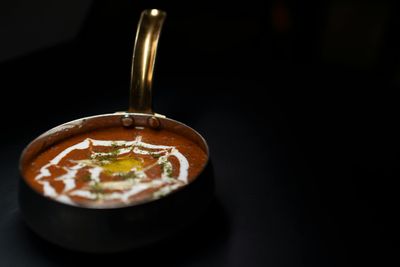
Dal Makhani
Whole black urad lentils and a small handful of red kidney beans are soaked overnight, then pressure-cooked or simmered until completely tender. A tomato-and-spice masala is built separately with onion, garlic, ginger and a careful hand with the spices. The lentils are folded into the masala and simmered, low and slow, for two hours, while butter and cream are stirred through in the final stage. The lentils break down into a glossy, almost-velvet finish.
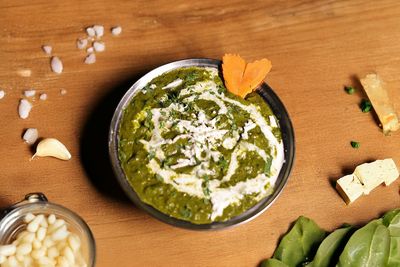
Palak Paneer
Spinach is blanched for one minute then plunged into iced water (a step that locks the colour bright green). The drained spinach is blended with green chilli into a smooth puree. A masala of onion, ginger, garlic and tomato is built and the puree stirred in. Cubes of paneer, lightly pan-fried, are added at the end so they sit on top of the gravy rather than dissolving into it. Finished with cream and kasuri methi.
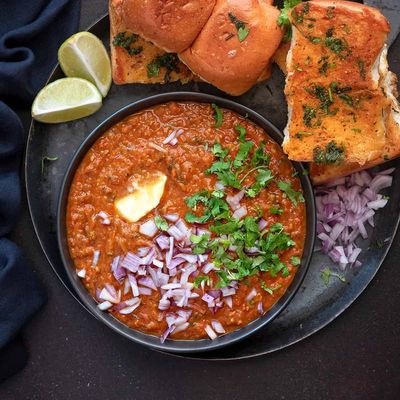
Pav Bhaji
Potatoes, cauliflower, peas boil until tender. A masala base softens onions and tomatoes in butter with ginger-garlic paste, then chilli powder, turmeric and pav bhaji masala. Capsicum joins. Boiled vegetables mash in roughly; everything cooks together 10-15 minutes, mashing as you go, until the bhaji turns a deep orange-red and the consistency is thick-spreadable. Finishes with extra butter, lemon juice, coriander. Pav rolls split horizontally, griddle-fry in butter with a sprinkle of pav bhaji masala till the cut sides char. Serve bhaji in shallow bowls topped with diced raw onion, lemon wedges, a coriander shower; pav on the side.

Authentic Chicken Handi
A rich, ghee-laden chicken handi cooked in the traditional style, featuring tender chicken thighs simmered in a spiced tomato-onion base with yoghurt and cream. Named for the handi pot, this dish varies by chef but delivers deep, authentic flavors.