Jasha Maru
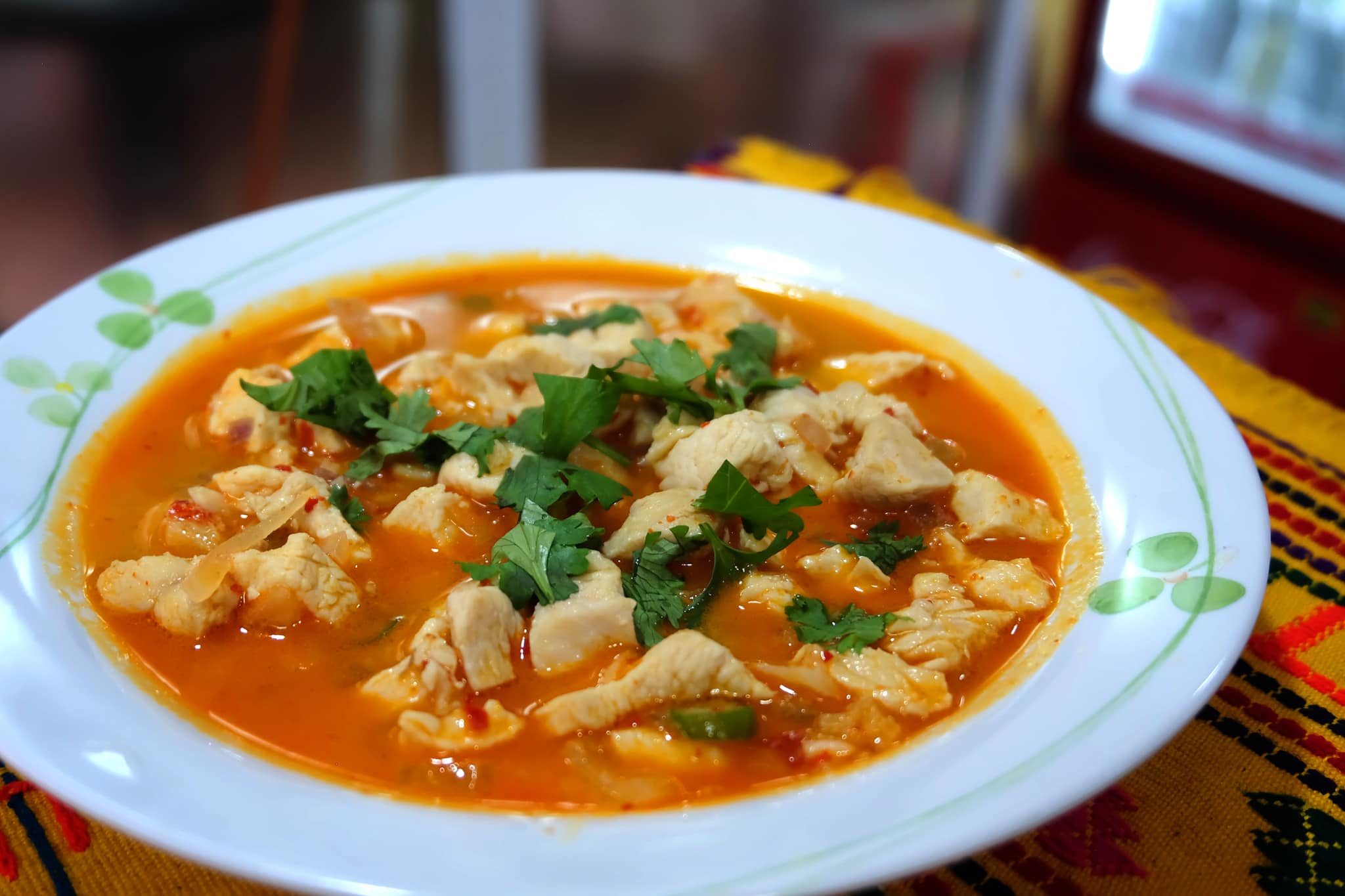
Bhutan's weeknight chicken stew, the dish a cook turns to after work. Bone-in chicken with ginger, garlic, tomato and chillies.
Overview
The Bhutanese weeknight chicken stew, the dish a Thimphu cook turns to after a long day. You joint a whole bone-in chicken and stew it with onion, tomato, plenty of fresh garlic and ginger, three or four green chillies, and butter or vegetable oil with a splash of water. The cook is fast: a brief sear to colour the meat, a simmer with the tomato until the chicken is cooked through and falling off the bone, and a finish with chopped coriander and spring onion just before serving. What you get back is a brothy, fresh, gently spicy chicken dish that sits somewhere between Indian and East Asian cookery, which is exactly where Bhutan sits geographically. Eaten with red rice, perhaps a small bowl of ema datshi on the side for whoever wants to push the heat further.
Ingredients
Chicken
- 1 chicken (~1.2 kg), jointed into 8 pieces (or 1 kg bone-in chicken thighs)
- 1 teaspoon salt
- ½ teaspoon ground turmeric
Stew
- 2 tablespoons butter (or vegetable oil)
- 2 brown onions (medium, finely sliced)
- 6 garlic cloves (crushed)
- 6 cm fresh ginger (peeled and julienned)
- 4 green chillies (slit lengthways; reduce to 2 for less heat)
- 3 tomatoes (medium, chopped)
- 1 teaspoon Sichuan pepper (lightly crushed, optional but traditional)
- 500 ml water (or light chicken stock)
To finish
- 1 small bunch fresh coriander (chopped, leaves and stems)
- 4 spring onions (sliced)
- ½ teaspoon freshly ground black pepper
To serve
- Red rice (or plain steamed rice)
- Ezay (Bhutanese chilli relish), optional
Method
Stage 1 - Prep
- Joint the chicken into 8 pieces, or buy bone-in thighs.
- Rub the chicken with the salt and turmeric. Set aside 10 minutes.
- Slice the onions, crush the garlic, julienne the ginger, slit the chillies, chop the tomatoes.
Stage 2 - Brown the chicken
- Heat the butter in a wide heavy pan over medium-high heat.
- Add the chicken in a single layer, skin-side down. Brown 4-5 minutes per side until golden.
- Lift the chicken onto a plate. Pour off all but 1 tablespoon of fat.
Stage 3 - Build the aromatics
- Reduce heat to medium. Add the onions and a pinch of salt; cook 6-8 minutes until softened and lightly golden.
- Add the garlic, ginger and Sichuan pepper; stir 1 minute.
- Add the green chillies; stir 30 seconds.
- Add the tomatoes; cook 4-5 minutes until they collapse into a rough sauce.
Stage 4 - Stew
- Return the chicken and any resting juices to the pan.
- Pour in the water or stock to come halfway up the chicken pieces.
- Bring to a simmer; cover loosely and cook 18-20 minutes, turning the chicken once, until cooked through (75°C / 165°F internal).
- Uncover for the last 5 minutes if the gravy is too watery; the finished sauce should be loose but not soupy.
Stage 5 - Finish
- Scatter the chopped coriander and spring onion over the pan.
- Grind over the black pepper.
- Taste; adjust salt.
- Stir once and turn off the heat. Let it sit covered for 5 minutes before serving.
Stage 6 - Serve
- Ladle into bowls over red rice; spoon broth over the rice.
- Serve with a small dish of ezay on the side.
Notes
- Bone-in chicken is essential: the bones give the broth its body. Boneless chicken thigh works in a pinch but the dish loses its broth-like character.
- Fresh chillies, not dried: unlike phaksha paa, jasha maru is built on fresh green chillies (in Bhutan, often the small fiery sha ema). Use serranos or hot green finger chillies; jalapeños are milder and you may need an extra one or two.
- Sichuan pepper makes it Bhutanese: without yer ma (Sichuan pepper) the dish reads as a generic chicken curry. The floral tingle is what locates it geographically.
- Coriander is finished in, not cooked: the green stuff goes in at the end so the coriander keeps its bright herbal note.
- No tomato puree: the dish uses fresh tomato only. Tomato puree thickens too much and overshadows the fresh aromatics.
Variations
Jasha Tshoem: a thicker, drier variant with less liquid and a finish of butter and cheese stirred in - lavish for special occasions. With datshi: a generous handful of crumbled blue cheese or feta stirred in at the very end pulls the dish toward ema datshi territory. Not traditional in every region but common in Thimphu home cooking.
Serving
Serve with: red rice or plain steamed white rice (a heap, to soak up the broth), a side of greens stir-fried with garlic, and a small dish of ezay for those who want more heat. A glass of cold buttermilk or salted butter tea on the side.
Storage
- Keeps 3 days refrigerated; the broth deepens overnight. Reheat gently in a covered pan with a splash of water if it tightens too much.
- Freezes 2 months. Thaw overnight in the fridge; reheat slowly.
Recipes mentioned here
Phaksha Paa
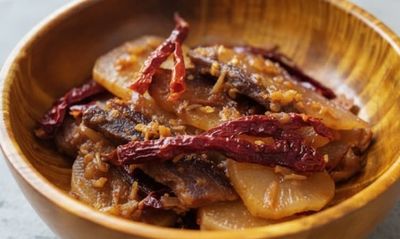
A Bhutanese pork belly braise that leans Sichuanese on the spice rack, the Himalayan border showing in the dish. You cut pork belly into thumb-length strips and start it on its own in a heavy pot to render the fat and brown the meat properly, the rendered juices becoming the cooking fat for everything that follows. Then in go whole dried red chillies, daikon cut into chunks, ginger, garlic, a measure of soy and a generous spoon of Sichuan pepper, and the lot braises gently in the pork's own rendered juices until the radish has gone soft and the sauce has thickened into a glossy red-brown lacquer that coats the pork. The whole chillies sit in the pot still intact, and the cook at the table can choose to eat them or push them to one side. Eaten with red Bhutanese rice, the broth ladled over.
Chicken Curry
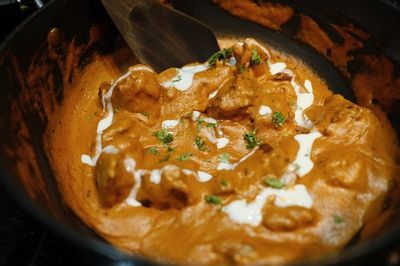
A curry-house style chicken curry that builds flavor from whole spices and fresh aromatics rather than premade base sauces. The method takes a little more time, but rewards you with a rich, home-style curry sauce and tender chicken. Add extra chilli or more garam masala to increase heat for your preference.
More like this
Kabsa
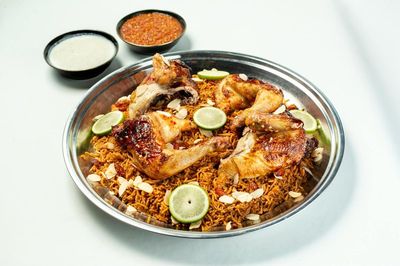
Saudi Arabia's national dish, the one platter you'll meet at almost every gathering from family lunch through wedding banquet. You brown chicken pieces or lamb shoulder hard in a heavy pot, then build a base of onion, garlic and ginger softened in the same fat, with tomato and a spoonful of baharat (or a dedicated kabsa spice mix) blooming until the kitchen fills with cardamom and cinnamon. The protein simmers in tomato and stock until it's tender and pulling away from the bone, then long-grain rice goes in to cook absorption-style in the same liquid, drinking up every layer of flavour the broth carries. You finish with almonds toasted in butter, raisins plumped briefly, and a fresh salsa of tomato, onion, chilli and parsley spooned on the side to cut the richness. Eaten communally from the centre platter, with hands or a long spoon.
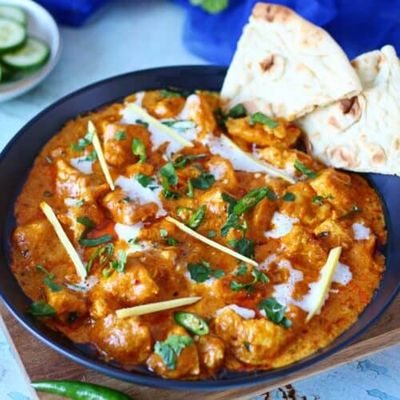
Authentic Chicken Handi
A rich, ghee-laden chicken handi cooked in the traditional style, featuring tender chicken thighs simmered in a spiced tomato-onion base with yoghurt and cream. Named for the handi pot, this dish varies by chef but delivers deep, authentic flavors.
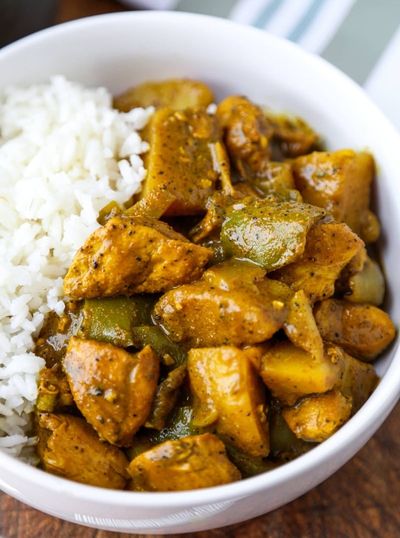
Authentic Jamaican Curry Chicken
Jamaican curry sits in its own corner of the global curry map: heavier on turmeric and allspice than Indian Madras, lighter on cumin, and built on a technique called "burning the curry" that gives the dish its character. The technique is exactly what it sounds like, dry curry powder hits hot oil and is stirred for 30 seconds until it darkens from yellow to deep gold and smells like toasted spice. That move concentrates the flavours and removes any raw edge. The finished stew is bright yellow stained slightly orange, savoury and aromatic rather than searingly hot, with thyme and a whole pierced Scotch bonnet scenting the gravy without flooring it. Smell: bloomed curry powder, allspice, browned chicken fat. Not difficult, but requires confidence in the 30-second bloom (under-do it and the dish is flat; over-do it and you have to start over). A Sunday-dinner staple across Jamaica and the diaspora, served over white rice with the gravy spooned generously over.
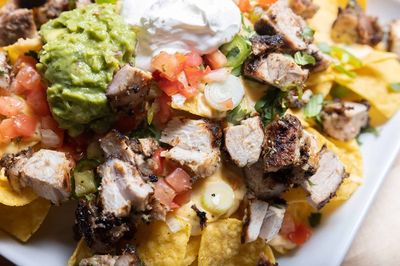
Cheesy Jerk Chicken Nachos
A Caribbean-American fusion that works because both food cultures speak the language of "everything on one tray". The base is American nachos: tortilla chips, melted cheese, black beans. On top sits jerk-marinated chicken thigh, which carries the dish's flavour, allspice, Scotch bonnet, nutmeg, cinnamon, thyme, soy and brown sugar blended into a wet jerk paste, marinated into the meat overnight, then oven-baked and sliced. The fresh element on top is a Trinidadian-style fruit chow: diced mango, pineapple, red bell pepper and red onion dressed with lime juice and cilantro. The chow is what makes this work; without it the nachos are just spicy meat-and-cheese, with it the dish has acid, crunch and sweetness to cut through the richness. Smell is melted cheese hitting jerk seasoning, with a citrus-tropical lift from the chow on top. Not difficult but it's three components running on different timelines, so plan ahead. A modern party-and-Super-Bowl-tray dish rather than something a Kingston grandmother makes, popularised by Caribbean-American food bloggers in the 2010s.