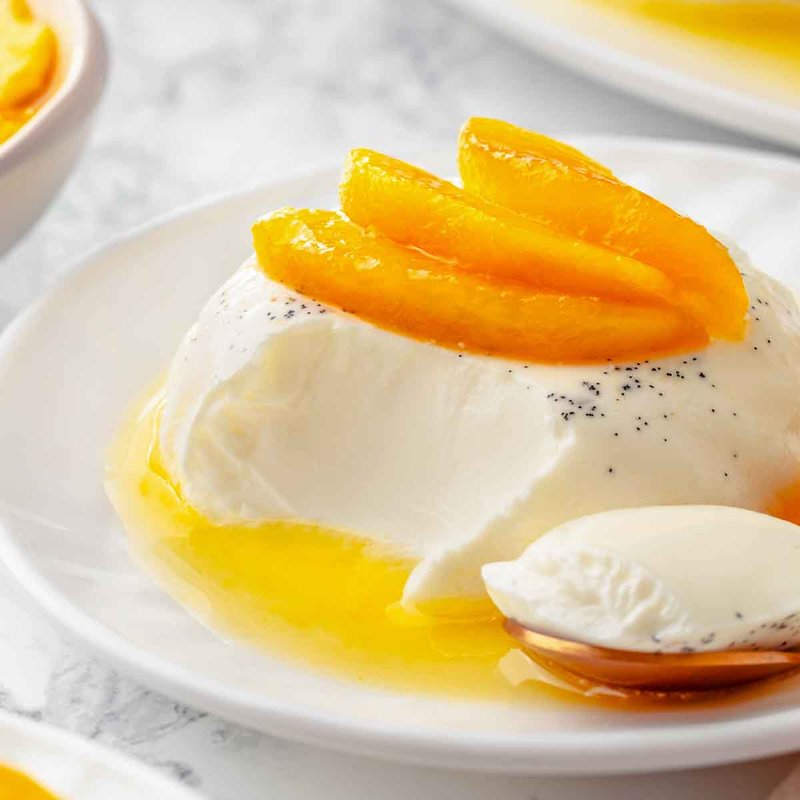
Panna Cotta
Piedmont's cooked cream: cream, sugar and vanilla set with a touch of gelatin, turned out on a plate and crowned with berry compote.
Overview
Powdered gelatin blooms in cold milk 5 minutes. Double cream, the remaining milk, sugar and a vanilla pod (split and scraped) heat gently to just under a simmer, never to a boil. Off heat, the bloomed gelatin stirs in until dissolved. The mixture strains through a sieve into 6 small ramekins or dariole moulds. Refrigerated for 4-6 hours (ideally overnight) until set. To serve: briefly dip each mould in hot water; invert onto a plate; spoon over the berry compote.
Ingredients
Panna cotta
- 8 g powdered gelatin (about 1 ½ teaspoons, or 4 leaves)
- 100 ml whole milk (cold, for blooming)
- 500 ml double cream
- 150 ml whole milk (additional, for the mixture)
- 80 g caster sugar
- 1 vanilla pod (split lengthwise, seeds scraped, or 2 teaspoons vanilla bean paste)
- A pinch of salt
Berry compote
- 300 g mixed berries (raspberries, strawberries, blueberries, blackberries - fresh or frozen)
- 60 g caster sugar
- 1 tablespoon lemon juice
- 1 tablespoon water
- 1 teaspoon vanilla extract (optional)
To serve
- Fresh mint sprigs
- Optional: a small drizzle of cream
Method
Stage 1 - Bloom the gelatin
- Powdered: sprinkle 8 g gelatin over 100 ml cold milk in a small bowl; let stand 5 minutes - the powder absorbs the liquid and swells into a soft, slightly bouncy mass.
- Leaf: soak 4 leaves in plenty of cold water 5 minutes; squeeze out excess water before using.
Stage 2 - Heat the cream
- In a saucepan, combine double cream, 150 ml additional milk, caster sugar, the split vanilla pod (and its scraped seeds), and a pinch of salt.
- Heat over medium-low, stirring occasionally to dissolve the sugar.
- Bring to JUST under a simmer (about 80°C - small bubbles at the edges, no rolling boil).
- Off heat.
Stage 3 - Combine with gelatin
- Pour about half the hot cream into the bowl with the bloomed gelatin.
- Whisk to dissolve the gelatin completely - no specks left.
- Pour back into the saucepan; whisk thoroughly to combine.
Stage 4 - Strain and pour
- Strain the mixture through a fine sieve into a measuring jug (catches the vanilla pod and any specks).
- Pour into 6 dariole moulds, ramekins, or small glasses (about 120-130 ml each).
- Let cool 15 minutes at room temperature (gelatin sets better with a gradual chill).
Stage 5 - Set
- Cover each ramekin loosely with cling film (don't let it touch the surface).
- Refrigerate at least 4 hours, ideally overnight.
- The panna cotta is set when it wobbles uniformly but doesn't slosh.
Stage 6 - Compote
- In a saucepan, combine berries, sugar, lemon juice and water.
- Bring to a simmer over medium heat; cook 5-8 minutes, stirring gently, until the berries break down and the juice thickens to a loose syrup.
- Off heat; stir in vanilla extract if using.
- Cool; chill in the fridge.
Stage 7 - Unmould and serve
- To unmould: run a thin knife around the inside edge of each ramekin.
- Dip the bottom of the ramekin in a bowl of hot tap water for 5-8 seconds - feel it loosen.
- Place a serving plate over the top; invert; lift the ramekin away. The panna cotta should slide out as a domed disc.
- Spoon the berry compote around the base.
- Garnish with a mint sprig.
Stage 8 - Serve
- Eat slightly cold, but not fridge-fresh. The flavours open at slightly-cool temperature.
Notes
- Gelatin proportion is precise: 8 g powdered (or 4 leaves) for 750 ml of liquid gives the right wobble. Less and it won't hold its shape; more and it's gummy. If using a different brand of gelatin, check the packet - some are stronger than others.
- Don't boil the cream: Boiling denatures the gelatin and the panna cotta won't set properly. Just below a simmer is right.
- Vanilla pod is worth it: The pod is what gives panna cotta its delicate fragrance. Bean paste works as a substitute; vanilla extract added at the end works in a pinch but lacks the depth.
- Mould vs glass: Traditional Italian panna cotta is unmoulded onto a plate. Modern presentations often serve it in glass jars or coupes (no unmoulding needed). Both work; the dramatic flat-top dome is the classic visual.
Storage
- Refrigerate (in moulds, covered) 3 days.
- Once unmoulded, eat the same day - it's fragile.
- The berry compote keeps 1 week in the fridge.
More like this
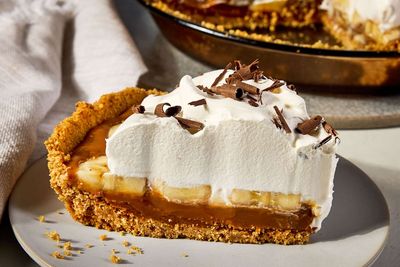
Banoffee Pie
The toffee layer is the only stage that takes time: an unopened tin of sweetened condensed milk simmered in water for 3 hours turns into deep amber dulce de leche. The biscuit base is digestives crushed and bound with melted butter, pressed into a tart tin and chilled. The toffee goes on cold, the bananas are sliced just before serving (so they don't brown), the cream is whipped to soft peaks. Assembled in order. Dusted with cocoa or grated dark chocolate. Cut with a knife dipped in hot water for clean slices.
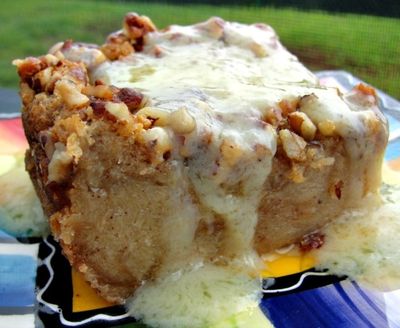
Bread Pudding (Creole)
Stale French bread (a day-old baguette is perfect) tears into 3 cm chunks. Custard: whole milk, eggs, sugar, vanilla, cinnamon, nutmeg, lemon zest. Raisins steep in 4 tablespoons bourbon for plump. Bread soaks in custard 30 minutes; raisins fold in. Tips into a buttered 25 × 18 cm dish; dots with butter. Bakes for 45-50 minutes at 175°C till the top is bronzed and the centre is set but still custardy. Whiskey sauce: butter melts with sugar; cream and bourbon stir in; warmed but not boiled. Pours over the pudding at the table.
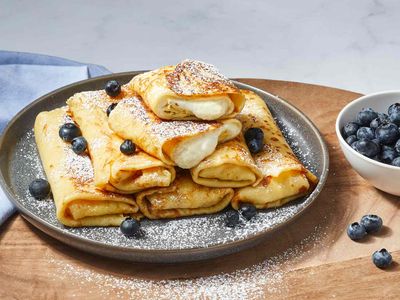
Cheese Blintzes
A two-stage dish. First, thin crepes (much thinner than a pancake - almost see-through) cooked one side only on a buttered pan, stacked under a clean cloth. Then a filling of farmer cheese (or ricotta drained well) mashed with egg yolk, sugar, vanilla and a little lemon zest. A heaping tablespoon of filling on the cooked side of each crepe, folded into a tight envelope, and fried briefly in butter on both sides until golden. Served warm with cold sour cream and a spoon of red-berry compote.
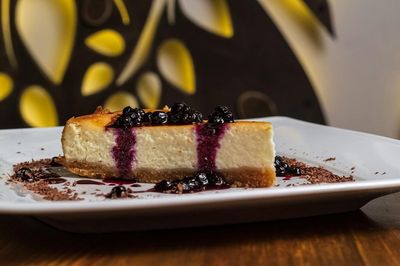
New York Cheesecake
A graham-cracker base is pressed into a 23 cm springform tin and pre-baked for 10 minutes. Filling: cream cheese is softened to room temperature (cold cream cheese gives lumpy batter), then beaten with sugar, eggs one at a time, sour cream, vanilla and lemon. The tin is wrapped in foil so the water bath doesn't seep in. Baked at 160°C in a water bath for 60-75 minutes until the edges are set but the centre wobbles a 7 cm circle. Cooled in the oven with the door cracked for 1 hour (avoids cracks). Chilled overnight. Served chilled.