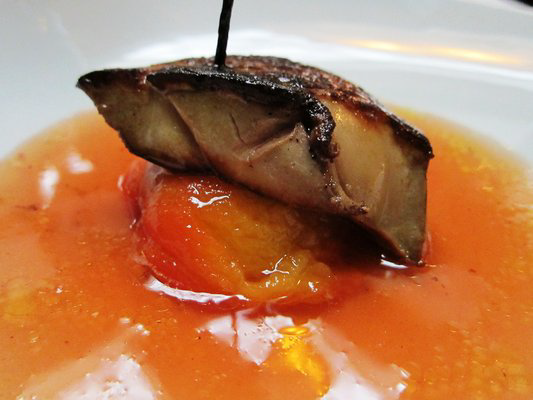
Peach Sauce
This sauce goes particularly well with roasted pigeon or young duckling.
Overview
A sophisticated fruit sauce balancing delicate peach sweetness with wine reduction and veal stock depth. The aromatic notes from fennel and clove complement roasted game birds, while the finishing butter creates silky richness.
Ingredients
Fruit
- 2 very ripe peaches
Aromatics & base
- 30 grams butter
- 30 grams caster sugar
Liquid
- 20 ml cognac
- 3 tablespoons red wine vinegar
- 100 ml red wine (preferably Burgundy)
- 300 ml veal stock
Spices & finishing
- 1 clove
- 2 teaspoons fennel seeds
- 40 grams butter (chilled and diced)
- salt
- pepper
Method
Stage 1 - Prepare peaches
- To peel the peaches, lightly score around the middle, then immerse in boiling water until the skin starts to lift.
- Refresh in iced water, then peel, stone and cut into cubes.
Stage 2 - Caramelize & build
- Melt the butter in a frying pan, add the sugar and stir until lightly caramellised.
- Add the peaches, increase the heat and cook, stirring continuously, until almost collapsed into a purée.
- Add the Cognac, bubble briefly, then add the wine vinegar and bubble for 1 minute.
Stage 3 - Reduce sauce
- Add the red wine and spices and cook gently for 10 minutes, skimming as necessary.
- Pour in the veal stock and simmer for 30 minutes, or until reduced and thickened.
Stage 4 - Finish
- Strain into a clean pan and whisk in the butter, a little at a time.
- Season and serve.
Notes
- Peach ripeness: Use fragrant, ripe peaches; they should yield slightly to pressure. Overripe fruit becomes mushy.
- Wine reduction: This step is crucial; let the wine fully reduce to concentrate flavours and remove excessive acidity.
- Mounting butter: Add cold butter in small pieces to create silky sauce; whisk vigorously to emulsify.
Serving
Serve warm as an accompaniment to roasted pigeon, young duck, pheasant, or other game birds.
Storage
- Best eaten immediately after preparation.
- Keeps refrigerated for 1-2 days; reheat gently over low heat, whisking constantly.
- Does not freeze well due to the butter emulsion breaking down.
More like this
Andouille Skewers
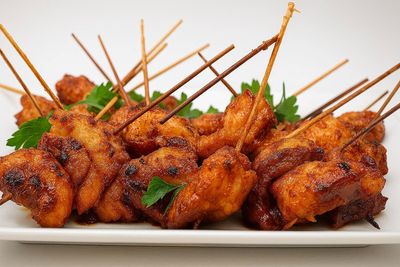
A Cajun cookout skewer, the kind of thing that comes off the grill at a Louisiana backyard barbecue while the gumbo is finishing on the back burner. You take andouille (the heavily smoked, garlicky Cajun pork sausage) and cut it into thick coins, then thread them onto pre-soaked wooden skewers (or metal) with chunks of red and green pepper, red onion, and a few halved cherry tomatoes. Brush with a quick Cajun glaze of melted butter, garlic, brown sugar, hot sauce and Cajun seasoning. Onto a hot grill over high heat for just long enough to char the vegetables and bring the sausage shiny and sticky. Eaten straight off the skewer with a beer in the other hand, the smoke still hanging in the air.
Aussie Burger with Beetroot
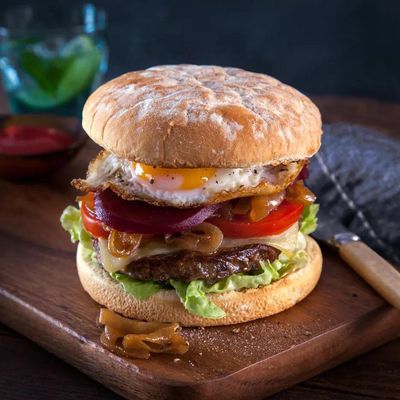
The Aussie burger, sometimes called "the lot", is a milk-bar institution that emerged in Australia in the mid-twentieth century when European immigrants and returning soldiers reshaped the corner takeaway. What distinguishes it from any American or British burger is the insistence on tinned pickled beetroot, a slice of canned pineapple, a fried egg and rashers of streaky bacon, all stacked under a thick beef patty on a toasted bun. The beetroot is non-negotiable: it stains the bread, it stains your fingers, it leaks down your wrist, and it is the entire point. The combination sounds chaotic but works because each layer plays a clear role: sweet pineapple against salty bacon, earthy beetroot against rich egg yolk, sharp tomato chutney cutting through melted cheese. The patty itself is generously sized, hand-shaped, and seasoned simply so the toppings can do the talking. Difficulty is low; the only real skill is timing several pans at once so the egg, bacon and patty all arrive hot together. This is not delicate food. It is built to be eaten leaning forward over a paper wrapper with napkins and a cold drink. Serve it at a backyard barbecue and watch grown adults negotiate the architecture of the bite.
Baghali Polo Ba Mahiche
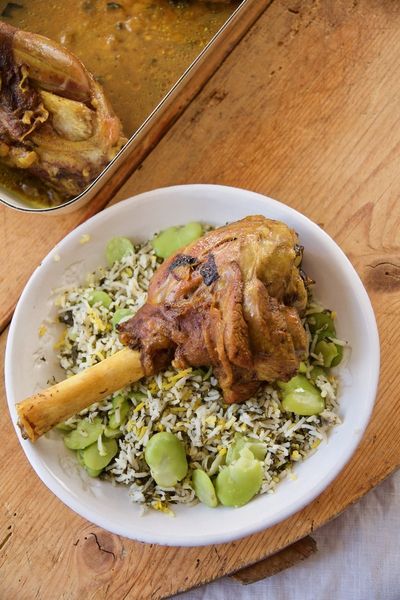
Lamb shanks brown hard; cook for 2 hours 30 minutes with onion, garlic, turmeric, cinnamon and saffron in a covered pot with a small amount of stock until fork-tender. Meanwhile, basmati rinses and soaks for 1 hour. Frozen (or fresh, podded) broad beans simmer briefly until tender; the rice parboils for 6 minutes in heavily salted water; drains. The rice layers in the cooking pot with the broad beans, dill and saffron: bottom oil-and-rice for tahdig; then a mixed layer of rice + beans + dill; another rice-and-bean-and-dill layer; topped with rice and saffron-water; lid-wrapped-in-towel; steam for 40 minutes. Plated with the lamb shanks alongside.
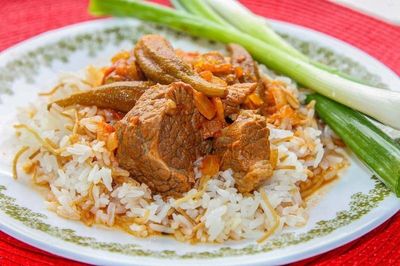
Bamia Iraqi
Lamb shoulder is browned hard; onion is softened; garlic, baharat and tomato paste join. Stock, tamarind, dried lime and tinned tomato deglaze. The lamb is braised for 75 minutes. Small whole okra goes in the last 25 minutes (long enough to soften, short enough not to disintegrate). Taqliya, crushed garlic and coriander sizzled in oil, is drizzled over at the end.