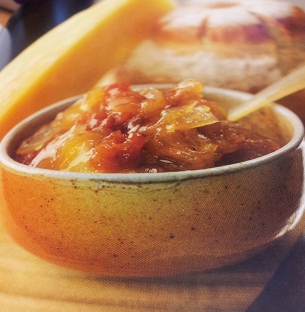
Onion and Green Apple Chutney
This chutney is superb with mature cheese, sausage and roast pork - hot or cold. This also works with left over partridge or pheasant.
Overview
A caramelized onion preserve with tart apple and bright tomato notes. This complex chutney balances deep sweetness with vinegary sharpness and spiced warmth, making it an ideal accompaniment to mature cheeses, sausages, and roasted meats.
Ingredients
Base
- 50 ml groundnut oil
- 400 grams onions (thinly sliced)
- 120 grams soft brown sugar
- 150 ml white wine vinegar
Fruit & vegetables
- 150 grams apple (Granny Smith, Peeled, cored and large dice)
- 150 grams very ripe tomatoes (peeled, de-seeded and small dice)
Spices & seasoning
- 10 white peppercorns (crushed)
- ½ teaspoon fine sea salt
- 1 clove garlic (crushed into a purée)
- ½ teaspoon chilli powder
- pinch ground cinnamon
Method
Stage 1 - Caramelize onions
- Heat the groundnut oil in a heavy-based saucepan, add the onions and sweat gently over a low heat for 10 minutes.
- Add the sugar, increase the heat slightly and cook until the onions are golden and lightly caramelised, stirring every minute or so with a wooden spoon.
Stage 2 - Add remaining ingredients
- Pour in the wine vinegar to deglaze and cook for 3 minutes, then add the remaining ingredients.
Stage 3 - Cook down
- Cook, stirring frequently, over a gently heat for 45 minutes until thick.
- The chutney is thick enough when a wooden spoon drawn across the bottom of the pan leaves a clear channel for a few seconds.
Stage 4 - Jar
- Pour the chutney into a warm, sterilised preserving jar and seal with a vinegar proof lid.
- Store in the fridge for up to 1 month.
Notes
- Caramelizing: Take time with this step; deeply golden onions develop complex, sweet flavours that define the chutney.
- Apple choice: Granny Smith's tartness is essential; they provide acidity to balance the sweetness and prevent the chutney from becoming cloying.
- Texture: The chutney thickens as it cools; it should be spreadable, not runny, once fully set.
Serving
Serve with mature cheeses, cured meats, roasted pork, and sausages. Also excellent with roasted game and terrines.
Storage
- Keeps refrigerated for up to 1 month in sealed jars.
- Does not freeze well; texture becomes grainy when thawed.
- Flavours improve after 2-3 days of storage.
More like this
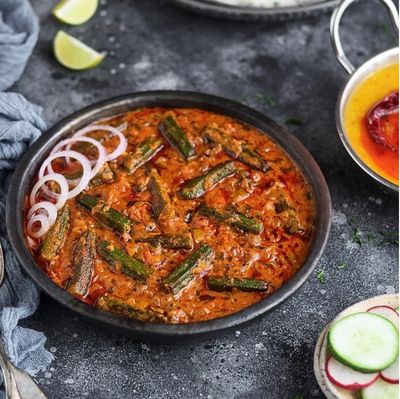
Bhindi Masala
The okra is washed, dried thoroughly and trimmed, then cut into 2 cm pieces. A dry-fry over high heat for 10 minutes cooks away the surface moisture that causes slime. Onion is then browned with whole cumin in a separate go, ginger and garlic added, tomato cooked down with the ground spices, and the dry-fried okra folded in for a final dry simmer. Finished with garam masala, amchur and coriander.
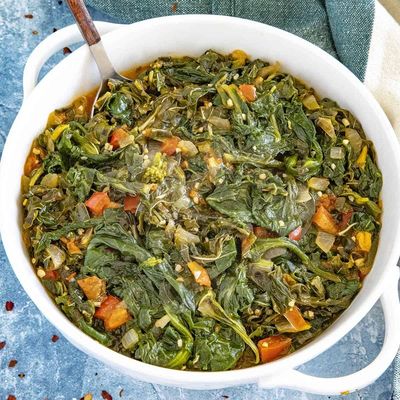
Callaloo
Onion, garlic and tomato cook in oil until softened. Callaloo (or spinach) goes in by the handful; thyme and scotch bonnet add. Everything covers and steam-cooks until the greens are tender. Salt, pepper, a splash of water if needed; finish quickly so the colour stays vivid.
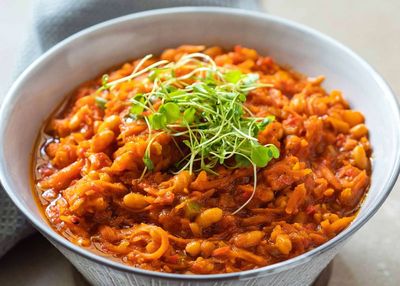
Chakalaka
Onion is softened in oil; garlic, ginger and curry powder bloom. Carrots cook briefly to tender-crisp. Peppers (red and green) and chillies join. Tomatoes simmer everything down. Tinned baked beans go in last with a splash of vinegar to balance. Eaten warm or at room temperature; tastes better the next day.
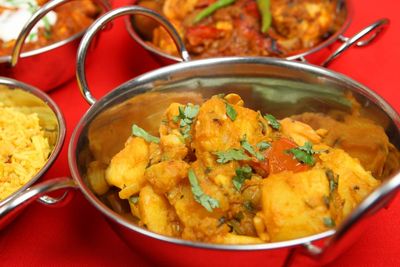
Easy Ugandan Curry Potatoes
Ugandan curry potatoes are one of those everyday dishes that say more about a country's cooking than the showpiece feast plates do. Curry powder reached Uganda via the Indian and Goan communities of the East African coast and the railway-building era, and was quickly absorbed into the local repertoire as a flavour for stews rather than as a separate cuisine. The result here is mild, fragrant and unmistakably Ugandan: small chunks of waxy potato cooked through in a sauce built on onions sweated until soft, fresh tomato simmered down, and a generous spoon of mild yellow curry powder bloomed in the oil. Garlic and ginger run quietly underneath; a single chopped chilli does the heat work if you want it. It is a vegetarian dish in most homes, though it sits happily alongside fried fish or chicken stew on a fuller plate. The difficulty for a home cook is low, it is almost foolproof, but watch the potatoes; the dish is best when they hold their shape and the sauce just hugs them rather than dissolving everything into a mash. Eat with chapati to mop up the gravy, or with steamed rice, posho, or matooke.