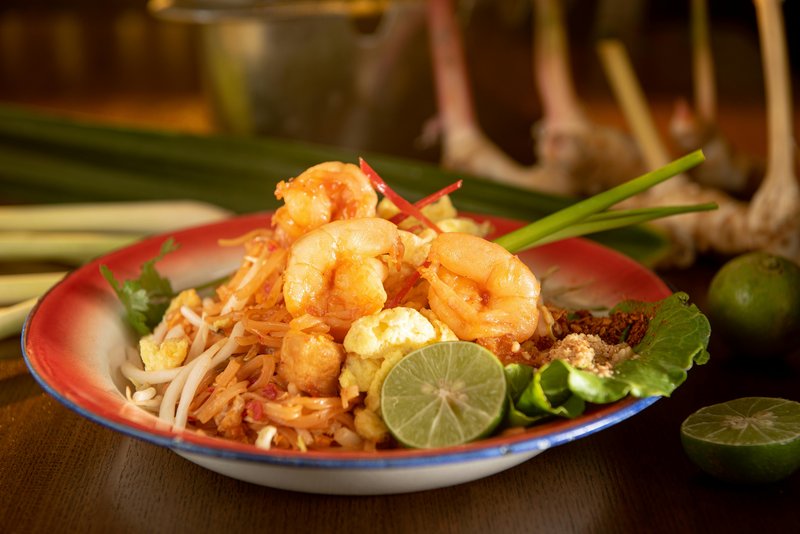
Traditional Pad Thai
Thailand's traditional pad thai: rice noodles stir-fried with prawns, dried shrimp, preserved radish, egg and a tamarind sauce.
Overview
Pad thai began as a 1930s government-promoted national dish during a campaign to reduce rice consumption, and has since become Thailand's best-known noodle export. The success of any version comes down to the sauce: equal parts fish sauce, tamarind and palm sugar, with a spoonful of finely chopped pickled radish for backbone. Once the sauce is mixed the wok work is fast, with soft rice noodles, chicken, tofu, dried shrimp and egg joining in quick succession before the dish is finished with peanuts, chives, lime and chilli at the table.
Ingredients
Pad Thai Sauce
- 3 tablespoons fish sauce
- 3 tablespoons tamarind puree (or 2 tablespoons tamarind concentrate loosened with 1 tablespoon water)
- 3 tablespoons palm sugar (finely grated, or substitute soft brown sugar)
- 2 tablespoons finely chopped pickled radish (chai po, optional but traditional)
Stir-Fry
- 200 grams dried rice stick noodles (5 mm wide)
- 1 tablespoon vegetable oil
- 400 grams chicken thigh fillets (thinly sliced)
- 2 tablespoons dried shrimp
- 50 grams firm tofu (finely diced)
- 2 eggs (lightly whisked)
- ½ cup Chinese garlic chives (or spring onion, cut into batons)
- ¼ cup bean sprouts
To Serve
- ¼ cup roasted peanuts (roughly chopped)
- Chilli powder
- Lime wedges
Method
Stage 1 - Soak the Dried Shrimp
- Place the dried shrimp in a small bowl and cover with warm water.
- Soak for 15 minutes to soften slightly.
- Drain and discard the soaking water.
Stage 2 - Mix the Sauce
- In a small bowl, combine the fish sauce, tamarind puree, palm sugar and pickled radish (if using).
- Stir until the sugar dissolves into a smooth, glossy sauce.
Stage 3 - Cook the Noodles
- Bring a large pot of water to the boil.
- Add the rice stick noodles and cook for 7 to 8 minutes, until just tender.
- Drain and rinse under cold water to stop them cooking further.
- Set aside.
Stage 4 - Stir-Fry & Combine
- Heat the vegetable oil in a wok or large frying pan over high heat.
- Add the chicken and stir-fry until just cooked through.
- Add the softened dried shrimp and the diced tofu.
- Stir-fry for another 30 seconds, until warmed through.
- Push everything to one side of the pan.
- Pour the whisked eggs into the empty side, spread them out and let them set briefly until golden on the bottom.
- Break up the egg with a spatula and mix it through the other ingredients.
- Add the cooked noodles and the pad thai sauce.
- Stir-fry until everything is well combined and glossy.
- Toss through the garlic chives or spring onion, followed by the bean sprouts.
- Remove the pan from the heat.
Stage 5 - Plate Up
- Divide the noodles between serving plates.
- Sprinkle generously with the chopped peanuts.
- Serve with chilli powder and lime wedges on the side.
Notes
- Pickled radish (chai po): Salty-sweet fermented daikon, sold at Asian grocers. It's the traditional crunch in pad thai. The recipe still works without it; just bump the fish sauce by ½ teaspoon.
- Tamarind: Look for tamarind puree or concentrate in the Asian aisle. If you only have tamarind block, soak 30 g in 60 ml hot water, mash, and strain to get the puree.
- Palm sugar: Sold in small discs or jars. Grate it finely so it dissolves cleanly into the sauce.
- Wok hei: A high heat is essential. The noodles should pick up a hint of char, not steam in their own moisture.
- Don't overcook the noodles: They finish cooking in the wok with the sauce. Drain them while still slightly firm in the centre.
Variations
Prawn pad thai: Replace the chicken with 300 g of peeled, deveined prawns added at the start of Stage 4. Vegetarian: Drop the chicken and dried shrimp; double the tofu and use mushroom-based vegetarian fish sauce. Spicier: Add 1 to 2 sliced bird's eye chillies to the wok with the chicken, or stir a teaspoon of chilli powder into the sauce.
Serving
Serve with: A wedge of lime, chilli powder, extra peanuts and a small bowl of pickled chillies in vinegar Garnish with: A handful of fresh coriander leaves and a few extra bean sprouts piled on top
Storage
- Best eaten immediately while the noodles are still glossy
- Leftovers keep 1 day refrigerated; reheat in a hot wok with a splash of water to loosen the noodles
- Pad thai sauce keeps 1 week refrigerated in a sealed jar
More like this
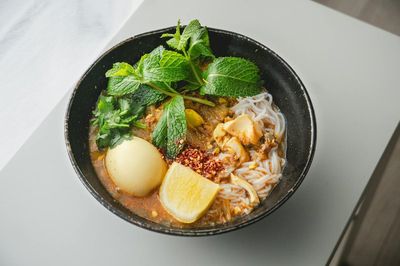
Malaysian Curry Laksa (Laksa Lemak)
A two-part dish: a deeply concentrated prawn-and-chicken stock built from roasted prawn shells, layered with a freshly pounded laksa paste of dried chilli, galangal, lemongrass and candlenuts. The two are joined with coconut cream to create a glossy, fragrant broth that bathes rice vermicelli, tofu puffs and prawns. Finished at the table with sambal, lime, fresh coriander and bean sprouts.
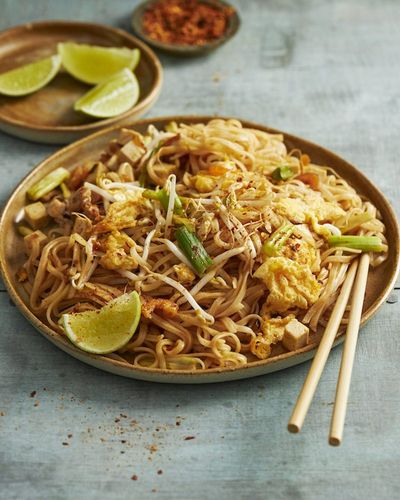
Prawn and Pork Pad Thai
This classic Thai dish of noodles is both aromatic and lightly spicy, serving well as either a main course or a starter. Pad Thai combines stir-fried rice noodles with tender chicken, pork, and prawns in a balanced sauce of curry paste, oyster sauce, and fish sauce. Fresh herbs, crushed peanuts, and a squeeze of lime complete this iconic Thai street food favourite.

Prik King
Prik king paste fries hard in oil until aromatic and the oil splits. Thinly sliced pork (or chicken) joins; sears for 4 minutes. Green beans (snake beans, French beans or fine green beans) go in for 5 minutes; fish sauce, palm sugar and torn kaffir lime leaves finish. Served over jasmine rice with fresh herbs.
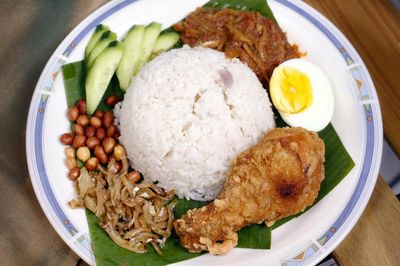
Nasi Lemak
A platter built around fragrant coconut and lemongrass rice, served with a fiery sambal of dried anchovies and rehydrated chillies, then ringed with hard-boiled egg, sliced cucumber and fried peanuts. The sambal does most of the heavy lifting, sweet, sour, smoky and hot. The rice itself is gentle, designed to be a calming counterpoint to everything else on the plate.