
Prik King
A dry Thai curry: prik king paste fried hard with pork or chicken, green beans and kaffir lime leaves. No coconut milk, no broth. Eaten with jasmine rice.
Overview
Prik king paste fries hard in oil until aromatic and the oil splits. Thinly sliced pork (or chicken) joins; sears for 4 minutes. Green beans (snake beans, French beans or fine green beans) go in for 5 minutes; fish sauce, palm sugar and torn kaffir lime leaves finish. Served over jasmine rice with fresh herbs.
Ingredients
Prik king paste (or use 4 tbsp store-bought)
- 8 dried Thai red chillies (de-stemmed, soaked 15 min in hot water, drained)
- 4 garlic cloves
- 4 shallots (small)
- 1 stalk lemongrass (white part only, sliced)
- 1 thumb galangal (sliced)
- 1 teaspoon shrimp paste (kapi)
- 4 kaffir lime leaves (de-stemmed)
- 1 teaspoon ground coriander
- ½ teaspoon ground white pepper
Stir-fry
- 500 g pork shoulder (or chicken thigh, sliced very thin)
- 300 g green beans (snake beans if you can find them - cut into 4 cm pieces)
- 4 tablespoons vegetable oil
- 3 tablespoons fish sauce
- 2 tablespoons palm sugar (or soft brown sugar)
- 4 kaffir lime leaves (extra, torn)
- 2 long red chillies (sliced, optional)
To serve
- 4 servings jasmine rice
- Thai basil leaves
- Lime wedges
Method
Stage 1 - Paste
- If making from scratch: pound soaked chillies, garlic, shallots, lemongrass, galangal, shrimp paste, kaffir lime leaves, coriander and pepper to a thick paste in a mortar (or pulse in a small processor).
Stage 2 - Fry paste
- Heat oil in a wide wok or pan over medium-high heat.
- Add the paste (or 4 tablespoons store-bought); fry 4-5 minutes, stirring, until the oil splits and the paste is deeply aromatic.
Stage 3 - Meat
- Add the sliced pork; toss in the paste 4 minutes until just cooked.
Stage 4 - Beans
- Add green beans; toss; cook 4-5 minutes until tender-crisp.
Stage 5 - Season
- Add fish sauce, palm sugar, torn kaffir lime leaves and red chillies (if using).
- Toss for 1 minute to glaze.
Stage 6 - Serve
- Plate over jasmine rice; scatter Thai basil.
- Lime wedges alongside.
Notes
- Dry curry, no liquid: Prik king is NOT a wet curry. Don't add stock or coconut milk. The paste glazes the meat.
- Beans tender-crisp: Overcooked beans go limp. 4-5 minutes is right.
- Paste source: Authentic homemade paste vs store-bought: home-made is fresher and more vibrant, but a good Thai brand (Maesri, Mae Ploy) works well.
Storage
- Refrigerate 3 days; reheat in a hot pan.
- Freezes 2 months.
More like this
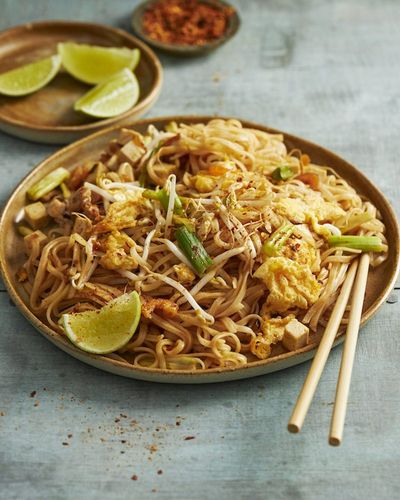
Prawn and Pork Pad Thai
This classic Thai dish of noodles is both aromatic and lightly spicy, serving well as either a main course or a starter. Pad Thai combines stir-fried rice noodles with tender chicken, pork, and prawns in a balanced sauce of curry paste, oyster sauce, and fish sauce. Fresh herbs, crushed peanuts, and a squeeze of lime complete this iconic Thai street food favourite.
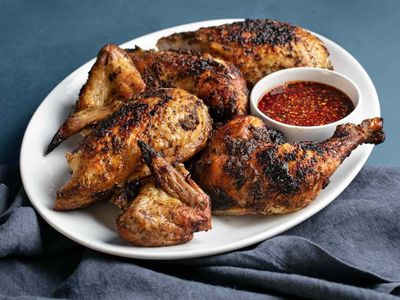
Gai Yang
Gai yang ("grilled chicken") is one of the cornerstones of Isaan cooking, the cuisine of north-eastern Thailand that has spread across the whole country and into Thai restaurants worldwide. The defining flavour is coriander root, an ingredient barely used in Western cooking but central to Thai marinades. Pounded in a granite mortar with garlic, white peppercorns and a pinch of salt, it forms an aromatic paste that's then mixed with fish sauce, oyster sauce and a touch of sugar. The chicken is butterflied (spatchcocked) so it lies flat on the grill, marinated for at least 4 hours, then cooked slowly over moderate charcoal. The proper Isaan technique is patient: 30 minutes or more, turning often, sometimes pressed flat between two bamboo splints, so the skin slowly crisps and the meat takes on smoke without burning. The flavour is savoury-funky from fish sauce, peppery-warm from white pepper, deeply garlic-and-herb from the paste, with no chilli in the marinade itself; heat comes from the dipping sauce. Difficulty is low for the home cook: a good mortar or a small food processor makes the paste in 2 minutes, butterflying a chicken is a single cut down the backbone, and any covered grill or kettle does the cooking. Eaten by hand with balls of sticky rice and dipped into nam jim jaew, the toasted-rice-and-tamarind dipping sauce.
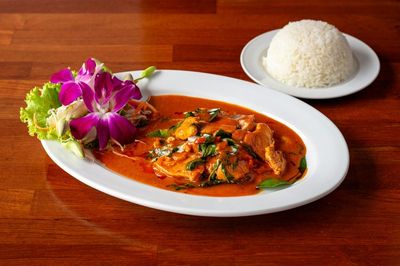
Thai Red Curry
Gaeng phed gai, this classic Thai red curry features tender chicken simmered in a rich, aromatic coconut sauce infused with homemade red curry paste. The chilli paste that forms the basis of this dish has superb flavour and is worth making in quantity, as it's useful in all sorts of spicy dishes. Taking the extra time to pound herbs and spices using a mortar and pestle releases their fragrances perfectly, creating an authentic, restaurant-quality curry.
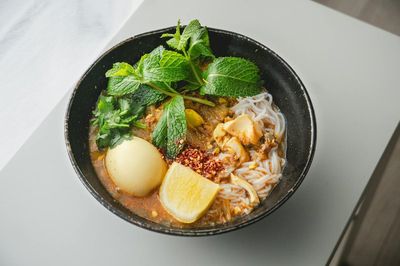
Malaysian Curry Laksa (Laksa Lemak)
A two-part dish: a deeply concentrated prawn-and-chicken stock built from roasted prawn shells, layered with a freshly pounded laksa paste of dried chilli, galangal, lemongrass and candlenuts. The two are joined with coconut cream to create a glossy, fragrant broth that bathes rice vermicelli, tofu puffs and prawns. Finished at the table with sambal, lime, fresh coriander and bean sprouts.