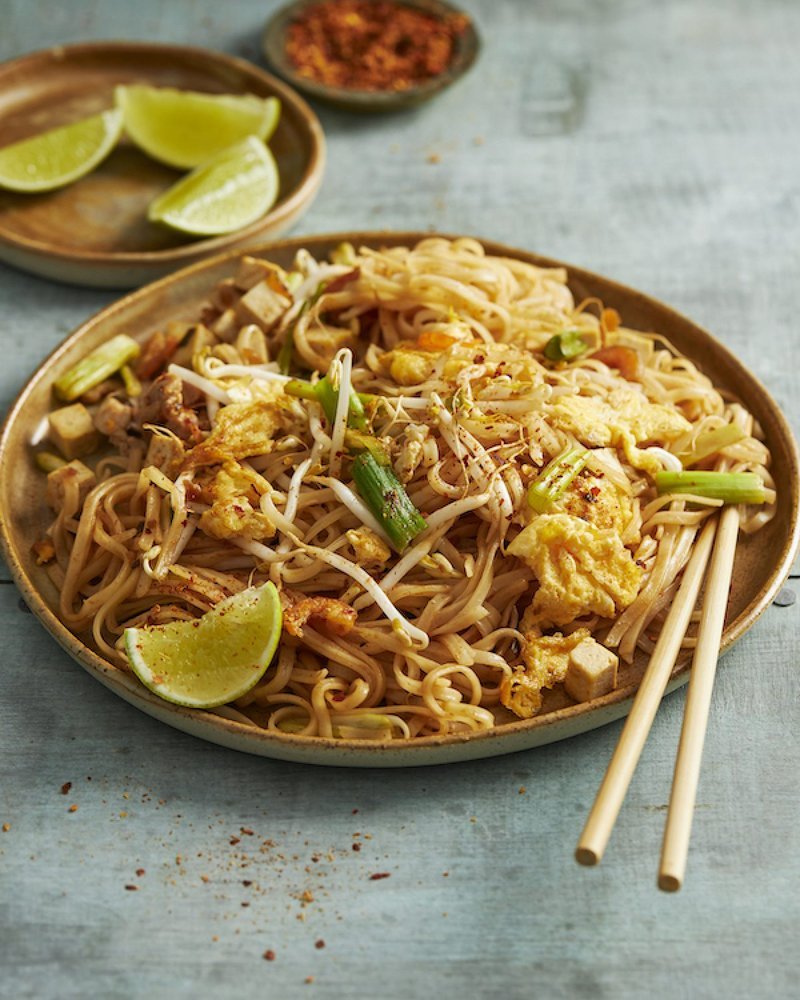
Prawn and Pork Pad Thai
Thailand's pad thai: rice noodles stir-fried with prawns, pork, egg, beansprouts and a sweet-sour tamarind sauce.
Overview
This classic Thai dish of noodles is both aromatic and lightly spicy, serving well as either a main course or a starter. Pad Thai combines stir-fried rice noodles with tender chicken, pork, and prawns in a balanced sauce of curry paste, oyster sauce, and fish sauce. Fresh herbs, crushed peanuts, and a squeeze of lime complete this iconic Thai street food favourite.
Serves: 4 Prep Time: 15 minutes Cook Time: 15 minutes
Ingredients
Noodles & Base
- 110 grams dried rice noodles
- 3 tablespoons groundnut oil
- 200 ml chicken stock
Aromatics & Pastes
- 2 cloves garlic (very finely chopped)
- 3 cm cube of ginger (very finely chopped)
- 1 teaspoon red curry paste
- 1 teaspoon chilli sauce
- 1 teaspoon oyster sauce
Protein
- 100 grams skinned chicken breast (cut into strips)
- 100 grams lean pork (minced)
- 8 cooked king prawns
- 20 raw prawns (peeled and deveined)
Vegetables & Fresh Herbs
- 1 tablespoon red bell pepper (chopped)
- 2 red chillies (chopped)
- 2 tablespoons bean sprouts
- 3 tablespoons spring onions (chopped)
- 2 tablespoons Thai basil leaves (chopped)
- 1 tablespoon coriander leaves (chopped)
Seasoning & Garnish
- Sweet soy sauce (to taste)
- Fish sauce (to taste)
- 2 tablespoons roasted peanuts (roughly crushed)
- 1 teaspoon palm sugar
- Thai basil leaves (for garnish)
- Lime wedges (for serving)
Method
Stage 1 - Prepare Noodles
- Bring 1 litre of water to the boil in a large saucepan.
- Break up the rice noodles a little as you add them to the saucepan.
- Move them around gently to help them break up and soften.
- Remove from heat and set aside (noodles will continue to soften in the residual heat).
Stage 2 - Stir-Fry Aromatics & Pastes
- Heat the groundnut oil in a wok or large frying pan over high heat.
- Add the very finely chopped garlic, ginger, red curry paste, chilli sauce, and oyster sauce.
- Stir-fry for 30 seconds until fragrant and the pastes are well distributed through the oil.
Stage 3 - Cook Chicken & Pork
- Pour in the chicken stock and bring to a simmer.
- Add the chicken strips and minced pork.
- Stir-fry for approximately 3 minutes until the chicken is cooked through and the pork is no longer pink.
Stage 4 - Add Seafood
- Add the cooked king prawns and raw prawns.
- Continue to stir-fry for a further 3 minutes until the raw prawns turn pink and are cooked through.
Stage 5 - Combine Noodles & Vegetables
- Drain the noodles thoroughly.
- Add the drained noodles to the wok with all remaining ingredients: red bell pepper, red chillies, bean sprouts, spring onions, Thai basil, and coriander.
- Toss everything together thoroughly, mixing for 1-2 minutes until well combined and heated through.
Stage 6 - Season & Finish
- Season with sweet soy sauce and fish sauce to taste, starting with small amounts and adjusting as needed.
- Add the palm sugar and stir through.
- Transfer to serving bowls.
- Top with crushed roasted peanuts and garnish with fresh Thai basil leaves.
- Serve immediately with lime wedges on the side.
Notes
- Noodle texture: Rice noodles soften quickly, don't overcook or they'll become mushy. Slightly underdone is better than overdone.
- Protein balance: This dish works with various proteins. Use what you prefer or have available; the amounts can be adjusted.
- Raw prawns essential: Include raw prawns alongside cooked ones for textural contrast and authentic flavour.
- Fish sauce: This is key to authentic Pad Thai flavour. Start with ½ teaspoon and adjust to taste, it adds umami depth.
- High heat essential: Keep the wok or pan very hot throughout cooking to achieve the characteristic slightly caramelized noodle flavour.
- Make-ahead: Prep all ingredients in advance; cooking itself is very quick once you start.
Variations
Vegetarian: Omit all proteins and use extra vegetables (mushrooms, broccoli, carrots) and tofu or chickpeas Shrimp-only: Use 400g large prawns instead of the mixed proteins for a seafood-focused version Extra spicy: Increase red curry paste to 1 ½ teaspoons or add fresh bird's eye chillies With pineapple: Add ½ cup fresh pineapple chunks in Stage 5 for sweetness and tropical flavour Milder version: Reduce chilli sauce and curry paste by half, or omit fresh chillies
Serving
Serve immediately in bowls with: Extra crushed peanuts, fresh lime wedges, Thai basil leaves, and chilli flakes on the side. Pair with jasmine rice or a fresh Thai salad.
Storage
- Best eaten immediately while hot and aromatic
- Can be refrigerated up to 1 day (noodles will soften slightly)
- Reheat gently in a wok or large frying pan over medium heat with a splash of water or stock to prevent sticking
- Not recommended for freezing (noodles become soggy and texture is compromised)
More like this
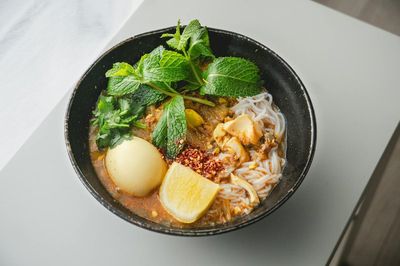
Malaysian Curry Laksa (Laksa Lemak)
A two-part dish: a deeply concentrated prawn-and-chicken stock built from roasted prawn shells, layered with a freshly pounded laksa paste of dried chilli, galangal, lemongrass and candlenuts. The two are joined with coconut cream to create a glossy, fragrant broth that bathes rice vermicelli, tofu puffs and prawns. Finished at the table with sambal, lime, fresh coriander and bean sprouts.
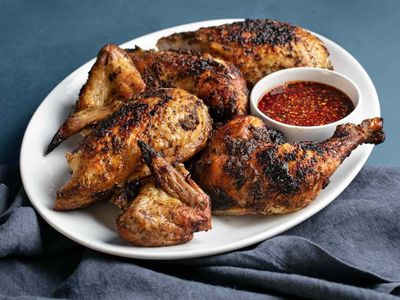
Gai Yang
Gai yang ("grilled chicken") is one of the cornerstones of Isaan cooking, the cuisine of north-eastern Thailand that has spread across the whole country and into Thai restaurants worldwide. The defining flavour is coriander root, an ingredient barely used in Western cooking but central to Thai marinades. Pounded in a granite mortar with garlic, white peppercorns and a pinch of salt, it forms an aromatic paste that's then mixed with fish sauce, oyster sauce and a touch of sugar. The chicken is butterflied (spatchcocked) so it lies flat on the grill, marinated for at least 4 hours, then cooked slowly over moderate charcoal. The proper Isaan technique is patient: 30 minutes or more, turning often, sometimes pressed flat between two bamboo splints, so the skin slowly crisps and the meat takes on smoke without burning. The flavour is savoury-funky from fish sauce, peppery-warm from white pepper, deeply garlic-and-herb from the paste, with no chilli in the marinade itself; heat comes from the dipping sauce. Difficulty is low for the home cook: a good mortar or a small food processor makes the paste in 2 minutes, butterflying a chicken is a single cut down the backbone, and any covered grill or kettle does the cooking. Eaten by hand with balls of sticky rice and dipped into nam jim jaew, the toasted-rice-and-tamarind dipping sauce.

Prik King
Prik king paste fries hard in oil until aromatic and the oil splits. Thinly sliced pork (or chicken) joins; sears for 4 minutes. Green beans (snake beans, French beans or fine green beans) go in for 5 minutes; fish sauce, palm sugar and torn kaffir lime leaves finish. Served over jasmine rice with fresh herbs.
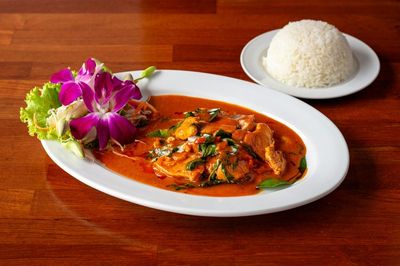
Thai Red Curry
Gaeng phed gai, this classic Thai red curry features tender chicken simmered in a rich, aromatic coconut sauce infused with homemade red curry paste. The chilli paste that forms the basis of this dish has superb flavour and is worth making in quantity, as it's useful in all sorts of spicy dishes. Taking the extra time to pound herbs and spices using a mortar and pestle releases their fragrances perfectly, creating an authentic, restaurant-quality curry.