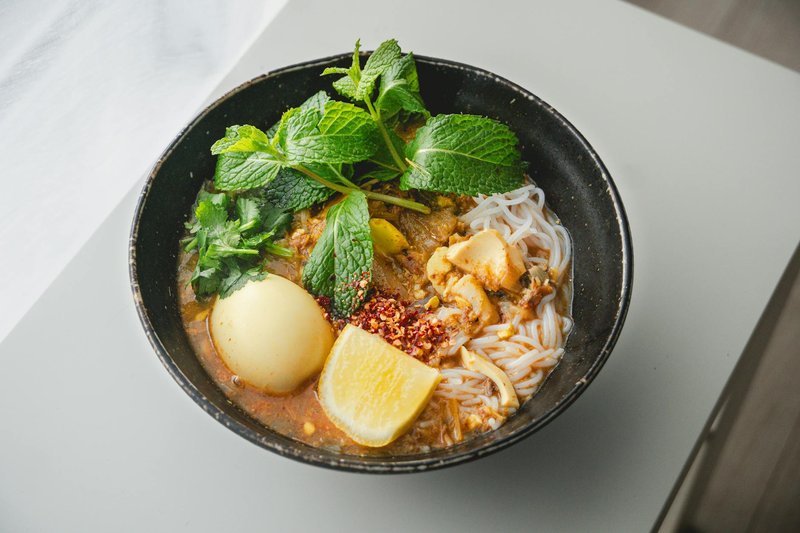
Malaysian Curry Laksa (Laksa Lemak)
A quintessential Peranakan (Nyonya) noodle soup, defined by its rich, spicy coconut and curry-paste broth. The "lemak" in laksa lemak refers to the creamy richness coconut milk lends the soup; the dish itself is a multicultural fixture across Malaysia and Singapore.
Overview
A two-part dish: a deeply concentrated prawn-and-chicken stock built from roasted prawn shells, layered with a freshly pounded laksa paste of dried chilli, galangal, lemongrass and candlenuts. The two are joined with coconut cream to create a glossy, fragrant broth that bathes rice vermicelli, tofu puffs and prawns. Finished at the table with sambal, lime, fresh coriander and bean sprouts.
Ingredients
Prawn Stock
- 600 grams whole raw prawns (unpeeled)
- 3 tablespoons vegetable oil
- 8 cups chicken stock
- 2 bone-in chicken thigh pieces
Laksa Paste
- 8 dried red chillies (large)
- 1 tablespoon dried shrimp
- 1 tablespoon chopped fresh galangal
- 1 tablespoon chopped ginger
- 1 lemongrass stalk (pale part bruised, finely chopped)
- 4 Asian red shallots (roughly chopped)
- 5 garlic cloves (roughly chopped)
- 3 coriander (cilantro) roots (roughly chopped)
- 5 candlenuts (or macadamia nuts)
- 1 teaspoon coriander seeds
- ½ teaspoon turmeric
- 1 ½ teaspoons shrimp paste
- Sea salt
Broth & Finish
- 2 tablespoons vegetable oil
- 400 ml can coconut cream
- 12 fried tofu puffs (halved)
- 4 tablespoons fish sauce (plus extra to taste)
- 1 teaspoon caster sugar
To Serve
- 200 grams dried rice vermicelli noodles
- Sambal oelek
- Lime wedges
- Finely chopped coriander (cilantro)
- Bean sprouts
Method
Stage 1 - Roast the Prawn Shells
- Peel the prawns, reserving the heads and shells. Set the prawn meat aside in the fridge for later.
- Heat the 3 tablespoons of vegetable oil in a large saucepan over high heat.
- Add the prawn heads and shells and cook for 10 minutes, until the shells are deep red.
- Squash the shells and heads with the back of a wooden spoon to release their flavour into the oil.
Stage 2 - Build the Prawn Stock
- Pour in the chicken stock and add the bone-in chicken thigh pieces.
- Bring to a simmer, then reduce the heat to medium-low and cook for 30 minutes.
- Skim the foam from the surface as it simmers, taking care to leave the red oil behind.
- Strain the stock through a fine sieve and discard the solids.
Stage 3 - Pound the Laksa Paste
- Soak the dried chillies and dried shrimp in hot water for 10 to 15 minutes, until softened.
- Lift the chillies and shrimp out of the water; reserve the soaking liquid.
- Roughly chop the chillies and place them in a food processor with the soaked shrimp.
- Add the galangal, ginger, lemongrass, shallots, garlic, coriander roots, candlenuts, coriander seeds, turmeric, shrimp paste and a generous pinch of salt.
- Blend to a smooth paste, adding a tablespoon of the chilli soaking liquid at a time if needed to keep it moving.
Stage 4 - Build the Broth
- Heat the 2 tablespoons of vegetable oil in a saucepan over medium heat.
- Add half the laksa paste and cook, stirring, for about 2 minutes until fragrant. Reserve the remaining paste for another batch.
- Stir in the coconut cream and combine.
- Pour in the prawn stock and add the fish sauce, sugar and a pinch of salt.
- Reduce the heat to low and simmer gently for 15 minutes.
- Stir in the tofu puffs and cook for 10 minutes.
- Add the reserved prawns and simmer until just cooked through, about 2 minutes.
- Taste and adjust with extra fish sauce.
Stage 5 - Cook the Noodles
- Bring a saucepan of water to the boil.
- Cook the rice vermicelli until softened but still slightly firm in the centre.
- Drain and divide between serving bowls.
Stage 6 - Serve
- Ladle the hot laksa over the noodles.
- Top each bowl with a spoonful of sambal oelek, a wedge of lime, a scatter of coriander and a small handful of bean sprouts.
Notes
- Prawn shells: The roasted shells are the soup's secret. Push them around firmly while they cook to bruise them and extract the most flavour.
- Laksa paste: This recipe makes more paste than you need. Freeze the unused half in a sealed container for up to 2 months and defrost overnight in the fridge before use.
- Candlenuts: Candlenuts thicken and enrich the paste. Macadamia nuts are the closest substitute; raw cashews also work.
- Coconut cream vs milk: Coconut cream gives the broth its glossy richness. Coconut milk works in a pinch but the broth will be thinner.
Variations
Mixed protein: Add poached chicken (shredded from the stock thighs), cockles or fish balls alongside the prawns for a more traditional spread. Vegetarian: Replace the prawn stock with a strong mushroom stock, swap the prawns and dried shrimp for extra tofu puffs and fried tempeh, and use light soy in place of fish sauce.
Serving
Serve with: A bowl of fried shallots, sliced fresh chilli and a hard-boiled egg on the side Garnish with: A tangle of bean sprouts and a generous wedge of lime
Storage
- Broth keeps 3 days refrigerated; store noodles separately so they don't go soft
- Laksa paste freezes well up to 2 months
- Reheat gently to avoid splitting the coconut cream; do not boil hard
More like this
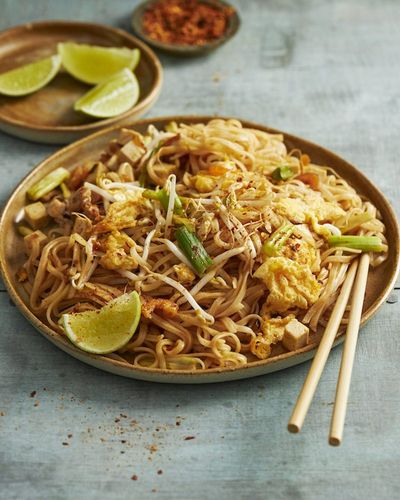
Prawn and Pork Pad Thai
This classic Thai dish of noodles is both aromatic and lightly spicy, serving well as either a main course or a starter. Pad Thai combines stir-fried rice noodles with tender chicken, pork, and prawns in a balanced sauce of curry paste, oyster sauce, and fish sauce. Fresh herbs, crushed peanuts, and a squeeze of lime complete this iconic Thai street food favourite.
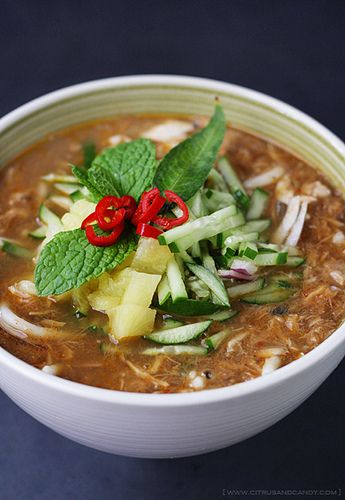
Fennel Shellfish Laksa
A fragrant Malaysian noodle soup combining shellfish with a spicy coconut curry broth, rice noodles, and fresh herbs. The balance of heat from chillies and creaminess from coconut milk makes it a comforting yet exotic dish.
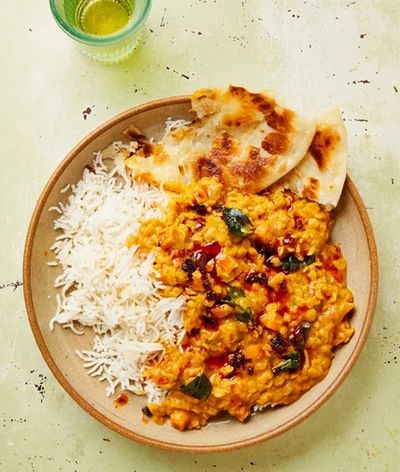
Malaysian Dhal Curry
Yellow split peas (chana dal) simmer with onion, turmeric and tomato until very soft. The lentils break down into a thick soup. Right at the end, a tempering of mustard seeds, curry leaves, dried red chillies, garlic and shallots is poured sizzling-hot over the surface. The aromatic oil seeps through; the dish transforms.
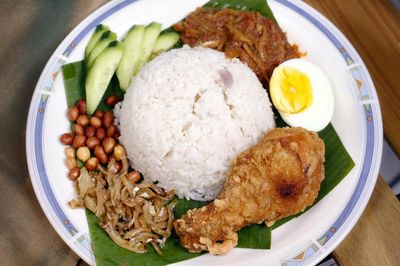
Nasi Lemak
A platter built around fragrant coconut and lemongrass rice, served with a fiery sambal of dried anchovies and rehydrated chillies, then ringed with hard-boiled egg, sliced cucumber and fried peanuts. The sambal does most of the heavy lifting, sweet, sour, smoky and hot. The rice itself is gentle, designed to be a calming counterpoint to everything else on the plate.