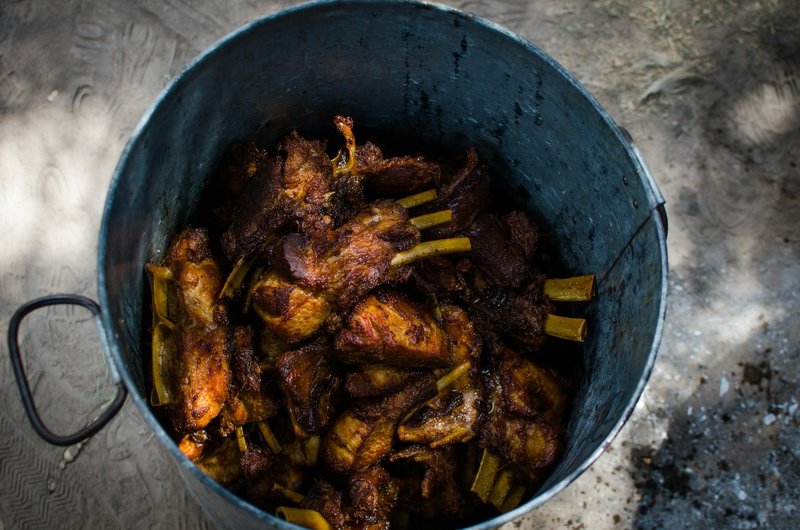
Chilli Pork Spare Ribs
Sichuan's spare ribs: pork ribs marinated in soy, garlic and chilli.
Overview
This showstopper from western Chinese cooking combines spices and sauces in a signature style. Deep-fried spareribs are braised until tender, then finished in the oven with a glossy, spicy coating. The combination of chilli bean sauce, hoisin, and yellow beans creates a complex, savoury flavour profile characteristic of the region. The spareribs can be finished in the oven, under a grill, or on a barbecue.
Serves: 2-4 Prep Time: 10 minutes Cook Time: 40 minutes
Ingredients
Protein
- 700 grams pork spareribs (separated into individual ribs)
- 570 ml groundnut oil (for deep frying)
Braising Sauce
- 900 ml Chinese chicken stock
- 1 tablespoon chilli bean sauce (or 2 teaspoons chilli powder)
- 2 teaspoons sugar
- 70 ml dry sherry (or rice wine)
- 1 tablespoon dark soy sauce
- 1 tablespoon light soy sauce
- 2 teaspoons garlic (finely chopped)
- 1 tablespoon spring onions (finely chopped)
- 1 tablespoon whole yellow bean sauce
- 1 ½ tablespoons hoisin sauce
Method
Stage 1 - Deep-Fry
- Heat the oil in a deep fryer or large wok.
- Deep-fry the spareribs in batches until brown and crisp.
- Drain the spareribs well on kitchen paper and set aside.
Stage 2 - Braise
- Combine all the sauce ingredients in a large pot and bring to the boil.
- Add the deep-fried spareribs and simmer them, covered, for about 40 minutes until tender.
- Drain off the sauce and remove any remaining fat.
- Reserve the sauce (it can be frozen and re-used).
Stage 3 - Finish in Oven
- Pre-heat the oven to 180°C.
- Put the spareribs onto a rack in a roasting tin.
- Bake them in the oven for 15-20 minutes until browned, basting occasionally with the sauce.
- Serve immediately.
Notes
- Chilli bean sauce: Use authentic fermented chilli bean sauce for authentic taste. Chilli powder is an acceptable substitute if unavailable.
- Deep-frying then braising: This two-stage cooking method renders fat while keeping meat tender and succulent.
- Sauce preservation: The braising sauce can be frozen and reused multiple times, developing richer flavour with each use.
- Finishing options: Oven, grill, or barbecue all work beautifully, each imparts different character.
Serving
Serve with: Bok choi or fried rice
Storage
- Keeps 3-4 days refrigerated (flavour improves with age)
- Freezes well up to 2-3 months
- Braising sauce can be frozen separately for future use
More like this
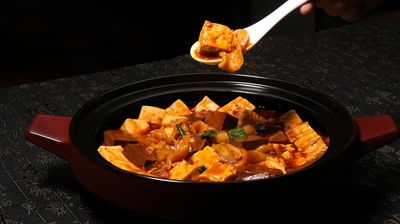
Mapo Tofu
Silken tofu cubes are blanched briefly in salted water (firms slightly and seasons). Pork mince is fried hard in oil; doubanjiang and douchi join, cooking to release oil; garlic, ginger, chilli flakes and ground Sichuan peppercorn are toasted briefly. Stock is poured in; tofu is slipped in; gentle simmer for 5 minutes; cornflour slurry thickens. Spring onions and a final dusting of ground Sichuan peppercorn finish.
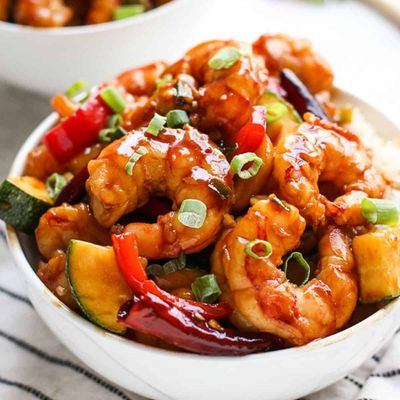
Kung Pao Shrimp
Kung pao (gongbao) shrimp is the seafood cousin of the classic Sichuan gongbao jiding, named for the 19th-century governor-general Ding Baozhen whose title was Gong Bao. Where the chicken version uses diced meat, the shrimp version keeps the prawns whole or halved so they curl into bright pink commas around the chillies and peanuts. The flavour profile is the signature Sichuan "lychee" balance: a touch of sweetness from sugar, sourness from black vinegar, salt and umami from soy, and the warm tingle (ma la) of toasted Sichuan peppercorn paired with the smoky bite of dried er jing tiao chillies. This is a fast dish, fundamentally a wok exercise: every ingredient must be prepped and lined up before the heat goes on, because once the chillies hit the oil you have maybe ninety seconds before everything is overcooked. Difficulty is moderate for a home cook with a working wok and high burner; the trick is keeping the chillies dark red and fragrant without scorching them black, and pulling the shrimp out the moment they curl. Served over plain rice it is one of the most rewarding ten-minute meals in the repertoire.
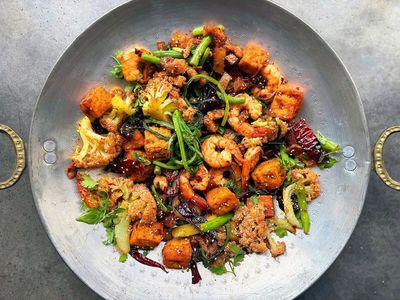
Mala Dry-Pot (Ganguo)
Ganguo, literally "dry pot", is the dry sister of hotpot. Where hotpot is a communal soup simmered at the table, dry pot is a wok composition: each ingredient pre-cooked separately, then everything tossed together at the last moment in a fragrant mala sauce based on Pixian doubanjiang, fermented black beans and chilli oil. The result lands somewhere between a stir-fry, a casserole and a giant heap of bar snacks. The dish is usually credited to Chongqing in the 1990s and exploded into nationwide popularity in the 2000s; it now anchors the menu of countless ganguo restaurants where you point at ingredients on a fridge and they appear minutes later in a single-handled wok at your table. Difficulty for a home cook is low if you accept the rhythm: blanch the vegetables, sear the proteins, then build the final dish from already-cooked components. The trick is restraint with the sauce, generous heat under the wok, and the willingness to commit to a long ingredient list. The recipe is endlessly flexible: lotus root, potato, cauliflower, mushrooms, squid, chicken wings, beef, fish balls, tofu skin, whatever you have, in any combination, totalling 1-1 ½ kg.
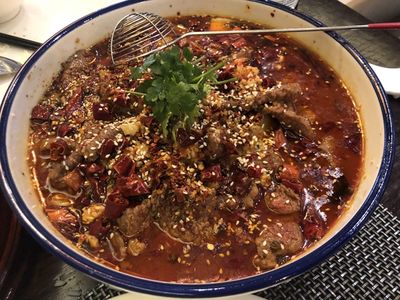
Shuizhu Niurou
Two sensations at once: the bright, immediate burn of dried chilli (la) sitting under the slow numbing-electric prickle of Sichuan peppercorn (ma). That mala pair is the whole point. Beneath that, the broth is salty and fermented-funky from doubanjiang, the deep umami of broad-bean paste that's been aged for months in clay vessels. The hot oil pour at the table is theatre but it does real work: it blooms the dried chillies and Sichuan peppercorn powder right before you smell them, so the aroma arrives in a wave. Texturally: gloriously tender silk-thin beef slices (the cornflour-and-egg-white marinade is what keeps them that way), crisp-on-the-edge bok choy or bean sprouts wilting under the heat, oil swimming on top. Easier than its restaurant-banquet reputation suggests once you have doubanjiang and Sichuan peppercorns in the pantry; the technique is mostly "don't overcook the beef" and "pour the oil while it's smoking". Originates in 1930s Chongqing as a riverboat-worker's dish, water and chillies were cheap, lean cuts of beef tough, then spread through Sichuan in the 1980s as the wider mala movement caught hold.